 A march by the ‘ROTC Patriot Comrades Association’, leading asphalt rallies in Korea. ⒸHankook-Ilbo
The statement "There is no true right-wing in Korea" is not an emotional assessment or criticism. This sentence is based on a specific standard, which is largely derived from the concept of the right-wing as formed in Western political history.
This concept originated from the seating arrangement in the parliament following the late 18th-century French Revolution and was later organized as a political ideology in 19th-century Europe through the combination of conservatism and liberalism.
The Gap Between Borrowed Concepts and Reality
Edmund Burke emphasized gradual change and respect for institutions over radical revolution, while John Stuart Mill presented individual liberty and the right to freedom of expression as core principles. The fusion of these two currents led to the Western right-wing adopting a structure of "maintaining order on the premise of freedom."
However, applying this standard directly to Korea creates problems. Korea's political history has a different starting point from that of Europe. Korea had very little time to independently establish a modern political system until the mid-20th century.
The period of Japanese annexation from 1910 to 1945, the US military government period after liberation in 1945, and the division that began simultaneously with the establishment of the government in 1948 all limited the autonomous formation of political thought. In particular, the Korean War in 1950 fixed the nation's top priorities on survival and security. The identity of political forces during this period was defined by regime maintenance and anti-communism, rather than ideological debate.
The so-called right-wing in Korea, formed under these conditions, is an accumulation of responses to historical circumstances rather than a Western ideological system. The Park Chung-hee regime, which seized power after the military coup in 1961, pursued a strong state-led industrialization. Starting with the first Five-Year Economic Development Plan in 1962, policies to foster heavy and chemical industries continued through the 1970s, during which state power acted as the core driver of economic growth.
Korea's per capita gross national income rose from approximately $79 in 1960 to about $1,700 in 1980. This figure is confirmed by World Bank data. The political order of this period placed greater emphasis on state-led growth and order maintenance than on individual freedom.
Liberalism Meets Nationalism
This experience shaped the character of the Korean right-wing. While the Western right-wing evolved to emphasize markets and individual autonomy, the Korean right-wing was formed by affirming the state's organizational capacity and mobilization power. In other words, it is a combination of liberal principles and nationalistic operational methods. This structure was created out of practical necessity rather than theoretical consistency.
With the democratization process that began after 1987, the political environment changed. Following the constitutional amendment for direct presidential elections, party politics became institutionalized, and freedom of expression and civil rights were expanded. However, even during this period, the Korean right-wing did not undergo sufficient philosophical re-establishment.
While parties existed, the theoretical foundation that permeated them was weak. For example, positions supporting the market economy while simultaneously demanding strong state intervention coexisted, and attitudes that emphasized individual freedom yet readily accepted collective control in security situations were repeated.
This structure is not a simple contradiction but a result of historical conditions. Korea remains divided, and North Korea has maintained a hereditary power structure from Kim Il-sung to Kim Jong-il and Kim Jong-un since its socialist constitution in 1972. The confrontation with this regime has made security a persistent core variable in Korean politics. Under these conditions, liberal principles are always in tension with security logic.
Consequently, the Korean right-wing exists not as a complete ideological system, but as a combination of disparate elements. Anti-communism, economic growth experience, state-centric operational methods, and limitedly adopted liberalism operate simultaneously. This structure is not the result of theoretical organization but of accumulated choices and responses over time.
Korea's Right-Wing is an "Experience-Based Political Collective"
This clarifies the meaning of the statement "There is no right-wing." It does not mean that political forces do not exist, but rather that a consistent ideological system in the Western sense has not been formed. In other words, the name exists, but the concept has not been organized.
So, who are we? This question demands definition, not negation. The Korean right-wing can be defined as an "experience-based political collective."
The three pillars of war, division, and industrialization have shaped this collective's mindset. This collective has prioritized maintaining order and preventing collapse over formalizing freedom as a principle. Therefore, policies tend to be designed for short-term stability rather than long-term theory.
This structure has both strengths and limitations. The strength lies in its ability to respond to reality. The experience of maintaining the state system and achieving economic growth amidst rapid changes is an important asset for this collective.
However, the limitations are also clear. A lack of theory makes it difficult to set direction. In the same situation, reliance is placed on ad-hoc judgments rather than consistent standards, which weakens political trust.
Therefore, what is needed in the future is not the creation of new ideologies, but the consolidation of existing experiences. Elements of freedom, state, market, and security must be reorganized into a single system. Freedom should be organized as a policy standard, not just a slogan, and the role of the state should be redefined within the scope of limitations and responsibilities. The market, too, should be understood as a pillar of order, not merely a means of growth.
Only when this work is accomplished will the concept of "right-wing" in Korea possess both content and form. Otherwise, the current state will continue: political forces will exist, but the language to explain them will remain impoverished.
Rather than saying there is no right-wing in Korea, it exists in an unorganized state. It is not an absence of ideology, but an absence of system. We are already an existing collective; we simply have not yet developed sufficient concepts and theories to explain that collective.
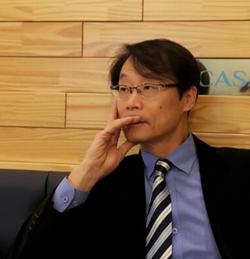
◆ Songsan
A poet and researcher of history and philosophy. Former director of the Syngman Rhee Institute. Currently serving as a research advisor for the Korean Modern and Contemporary History Research Society and as the representative of the philosophy forum Lyceum. He has published four poetry collections, co-translated "Heroes of Chosin Reservoir," and authored "Joseon That Became Myth" and "Humanities on the Tatami." He is actively engaged in research and practice of liberal cultural movements. Songsan is a pen name.

 Iranian Foreign Ministry: "Continuing Message Exchanges with the U.S. and Activities of Mediating Countries"
Esmaeil Baghaei, Spokesperson for the Iranian Ministry of Foreign Affairs [Xinhua, Yonhap News file photo]Esmaeil Baghaei, spokesperson for the Iranian Ministry of Foreign Affairs, stated on the 26th
Iranian Foreign Ministry: "Continuing Message Exchanges with the U.S. and Activities of Mediating Countries"
Esmaeil Baghaei, Spokesperson for the Iranian Ministry of Foreign Affairs [Xinhua, Yonhap News file photo]Esmaeil Baghaei, spokesperson for the Iranian Ministry of Foreign Affairs, stated on the 26th
 President Yoon: "Do You Think You Are Safe from the Special Counsel?"... Final Statement Video Released
President Yoon Suk Yeol rebuking the special prosecutor on the 24th. [Court video / @birds_justice X account subtitle GIF] A video of President Yoon Suk Yeol's closing statement at his trial rega
President Yoon: "Do You Think You Are Safe from the Special Counsel?"... Final Statement Video Released
President Yoon Suk Yeol rebuking the special prosecutor on the 24th. [Court video / @birds_justice X account subtitle GIF] A video of President Yoon Suk Yeol's closing statement at his trial rega
 President Yoon, regarding the first-instance ruling on the Public Official Election Act: “An excessive political verdict that distorts the facts… We will appeal immediately.”
The first-instance sentencing hearing for President Yoon Suk Yeol regarding violations of the Public Official Election Act is being broadcast live at Seoul Station on the 27th. [Photo=Yonhap News]Pres
President Yoon, regarding the first-instance ruling on the Public Official Election Act: “An excessive political verdict that distorts the facts… We will appeal immediately.”
The first-instance sentencing hearing for President Yoon Suk Yeol regarding violations of the Public Official Election Act is being broadcast live at Seoul Station on the 27th. [Photo=Yonhap News]Pres
 WSJ: "SK Hynix ADR Premium Is a Sign of AI Trading Overheat"
Advertisement for SK Hynix ADR listing in New York's Times Square [Reuters=Yonhap News file photo]The Wall Street Journal (WSJ) has pointed out that the price of SK Hynix’s American Depositary Recei
WSJ: "SK Hynix ADR Premium Is a Sign of AI Trading Overheat"
Advertisement for SK Hynix ADR listing in New York's Times Square [Reuters=Yonhap News file photo]The Wall Street Journal (WSJ) has pointed out that the price of SK Hynix’s American Depositary Recei
 'Godfather of Japanese Mystery Novels' Keigo Higashino Passes Away After Battle with Cancer at 68
Famous Japanese mystery novelist Keigo Higashino [AFP=Yonhap News]It has been belatedly reported that Keigo Higashino, the "godfather of Japanese mystery novels" and author of bestsellers such as "The
'Godfather of Japanese Mystery Novels' Keigo Higashino Passes Away After Battle with Cancer at 68
Famous Japanese mystery novelist Keigo Higashino [AFP=Yonhap News]It has been belatedly reported that Keigo Higashino, the "godfather of Japanese mystery novels" and author of bestsellers such as "The
 [Park Pil-kyu Security Column] To the Ignorant Trying to Clothe a Beast in Sheep's Clothing
Rep. Kim Byung-joo of the Democratic Party of Korea [Photo=Yonhap News]“The Air Force Academy doesn't teach you how to fly a plane!” “The Army, Navy, and Air Force academies are exactly the
[Park Pil-kyu Security Column] To the Ignorant Trying to Clothe a Beast in Sheep's Clothing
Rep. Kim Byung-joo of the Democratic Party of Korea [Photo=Yonhap News]“The Air Force Academy doesn't teach you how to fly a plane!” “The Army, Navy, and Air Force academies are exactly the
 [Issue Diagnosis] Two Effects of the Election Petition Review
 [Photo] Evidence of Election Fraud Flooding U.S. Media… Trump Had 2.7 Million Votes Stolen
 [Video] U.S. Semiquincentennial Air Show... 'Art in the Sky' streaks across New York
 [Editorial Cartoon] A Draconian Law That Undermines Freedom of Expression

 List
List










