 Cadets from the Korea Military Academy and Air Force Academy hold a rally in front of Seoul City Hall in support of the May 16 Revolution. [Photo=Encyclopedia of Korean Culture]
On May 16, 1961, the May 16 military coup d'état occurred. Military forces, led by Major General Park Chung-hee, seized key points in Seoul in the early morning hours and declared their takeover of the government through broadcast.
At the time, Yun Posun was the president and Chang Myon was the prime minister. The Second Republic, which emerged after the April 19 Revolution, was already close to a state of political division and administrative paralysis. Records show that over 2,000 protests occurred in 1960 alone.
However, some factions did not view the military regime that emerged from this situation as a systemic change. Assessments such as "temporary military intervention" and "a reactionary transitional period that will soon collapse" were repeatedly made. This judgment was not simply optimism but a conclusion derived from a predetermined framework of historical interpretation. The schema was that reactionaries would inevitably emerge after a revolution, but they would not last long.
Failed Assessment of the Situation and the Trap of the Reactionary Schema
However, reality moved in a completely different direction. The Supreme Council for National Reconstruction, established immediately after the coup, was not a mere interim body. In June 1961, the Korean Central Intelligence Agency was founded, with Kim Jong-pil as its first director.
In August of the same year, the Law for the Purification of Political Activities was enforced, resulting in over 4,000 politicians being banned from political activities. This was not simply a measure to restore order but a process of restructuring the political framework itself.
Changes were also immediate in economic policy. In January 1962, the First Five-Year Economic Development Plan commenced. Its goals were industrialization and export expansion. In 1961, South Korea's per capita national income was around $82. Agriculture was dominant, and there was virtually no industrial base.
However, by the late 1960s, exports increased dramatically. Export value, which was around $100 million in 1964, exceeded $500 million in 1968. This was not merely a numerical change but the beginning of a transformation in the economic structure itself.
By this point, the designation of "temporary reaction" no longer matched reality. Yet, some factions at the time did not acknowledge this change. Instead, they ignored or downplayed reality to maintain their existing interpretation. Economic growth was also disparaged as a "result of external dependence" or a "temporary phenomenon."
The background of this judgment has a clear characteristic: the attitude of tailoring reality to ideology rather than analyzing it. The military regime had to be a reaction, and therefore, the conclusion that it could not last long was made first. All subsequent facts were used as supporting material to maintain this conclusion.
The problem is that this misjudgment led to a lack of strategy. It was judged that there was no need to establish long-term strategies against a regime that would soon collapse. Organization building, the establishment of a mass base, and policy responses were all delayed. A vague expectation that the situation would change if they waited took hold. However, reality was the opposite.
Strategic Bankruptcy Caused by Ignoring Reality
In October 1963, a presidential election was held, and Park Chung-hee was elected, leading to the handover of civilian rule. Although the military rule formally ended, the power structure remained intact. Subsequently, in the 1967 presidential election, he was re-elected, further stabilizing the regime. By this point, the term "temporary" had completely collapsed.
Despite this, the initial judgment was not easily revised. Rather, as the gap with reality widened, internal logic was strengthened. The continuation of the military regime was explained as an exceptional situation, and the argument that it was fundamentally a system destined to collapse was repeated.
This attitude goes beyond a simple error in perception. It is an attitude of not facing reality and a method of distorting or minimizing facts to maintain that attitude. This problem becomes even more serious when connected to the assessment of the North Korean regime.
In the 1960s, North Korea had already established a power structure centered on Kim Il-sung. After the factional strife of August 1956, opposing forces were purged, and in 1967, the ideology of sole leadership was strengthened. Political diversity did not exist, and power was thoroughly centralized.
Despite this, some factions perceived North Korea as a "progressive system" or, at least, evaluated it positively. Conversely, South Korea's military regime was labeled a "reaction." Ideological classification, rather than the actual workings of reality, became the criterion for judgment.
This double standard ultimately further distorted the perception of reality. One side was interpreted positively, irrespective of its actual structure, while the other side was interpreted negatively, irrespective of its actual achievements. In this state, no analysis could be accurate.
In the late 1960s, South Korea was clearly changing. Industrialization had begun, an export-oriented economic structure was forming, and the method of state operation had also changed from before. However, these changes were not properly evaluated. Reality was continuously ignored to maintain the initial classification.
Ultimately, the core issue of this period is one: ideology preceded reality. And the result was repeated failures in judgment. The situation was not read correctly, the direction of change was missed, and responses were always late.
This period after 1961 is not simply a period of political upheaval. It is a case study in how to read reality. If one views reality with a conclusion already predetermined, any change cannot be properly interpreted.
When ideology fails to explain reality, it becomes not an analytical tool but a cause of misjudgment. And that misjudgment does not end in a single instance. It dictates the direction of judgment for years and decades to come.
The misreading of 1961 was the starting point. And the price was paid for a long time.
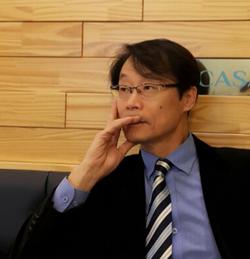
◆ Songsan
A poet and researcher of history and philosophy. Former director of the Rhee Syngman School. Currently serves as an advisor for the Korean Modern and Contemporary History Research Association and as the representative of the philosophical forum Lyceum. He has published four poetry collections, co-translated "Heroes of the Chosin Reservoir," and authored "Joseon That Became Myth" and "Humanities on the Tatami." He is actively engaged in research and practice of liberal cultural movements. Songsan is a pen name.

 Iranian Foreign Ministry: "Continuing Message Exchanges with the U.S. and Activities of Mediating Countries"
Esmaeil Baghaei, Spokesperson for the Iranian Ministry of Foreign Affairs [Xinhua, Yonhap News file photo]Esmaeil Baghaei, spokesperson for the Iranian Ministry of Foreign Affairs, stated on the 26th
Iranian Foreign Ministry: "Continuing Message Exchanges with the U.S. and Activities of Mediating Countries"
Esmaeil Baghaei, Spokesperson for the Iranian Ministry of Foreign Affairs [Xinhua, Yonhap News file photo]Esmaeil Baghaei, spokesperson for the Iranian Ministry of Foreign Affairs, stated on the 26th
 President Yoon: "Do You Think You Are Safe from the Special Counsel?"... Final Statement Video Released
President Yoon Suk Yeol rebuking the special prosecutor on the 24th. [Court video / @birds_justice X account subtitle GIF] A video of President Yoon Suk Yeol's closing statement at his trial rega
President Yoon: "Do You Think You Are Safe from the Special Counsel?"... Final Statement Video Released
President Yoon Suk Yeol rebuking the special prosecutor on the 24th. [Court video / @birds_justice X account subtitle GIF] A video of President Yoon Suk Yeol's closing statement at his trial rega
 President Yoon, regarding the first-instance ruling on the Public Official Election Act: “An excessive political verdict that distorts the facts… We will appeal immediately.”
The first-instance sentencing hearing for President Yoon Suk Yeol regarding violations of the Public Official Election Act is being broadcast live at Seoul Station on the 27th. [Photo=Yonhap News]Pres
President Yoon, regarding the first-instance ruling on the Public Official Election Act: “An excessive political verdict that distorts the facts… We will appeal immediately.”
The first-instance sentencing hearing for President Yoon Suk Yeol regarding violations of the Public Official Election Act is being broadcast live at Seoul Station on the 27th. [Photo=Yonhap News]Pres
 WSJ: "SK Hynix ADR Premium Is a Sign of AI Trading Overheat"
Advertisement for SK Hynix ADR listing in New York's Times Square [Reuters=Yonhap News file photo]The Wall Street Journal (WSJ) has pointed out that the price of SK Hynix’s American Depositary Recei
WSJ: "SK Hynix ADR Premium Is a Sign of AI Trading Overheat"
Advertisement for SK Hynix ADR listing in New York's Times Square [Reuters=Yonhap News file photo]The Wall Street Journal (WSJ) has pointed out that the price of SK Hynix’s American Depositary Recei
 'Godfather of Japanese Mystery Novels' Keigo Higashino Passes Away After Battle with Cancer at 68
Famous Japanese mystery novelist Keigo Higashino [AFP=Yonhap News]It has been belatedly reported that Keigo Higashino, the "godfather of Japanese mystery novels" and author of bestsellers such as "The
'Godfather of Japanese Mystery Novels' Keigo Higashino Passes Away After Battle with Cancer at 68
Famous Japanese mystery novelist Keigo Higashino [AFP=Yonhap News]It has been belatedly reported that Keigo Higashino, the "godfather of Japanese mystery novels" and author of bestsellers such as "The
 [Park Pil-kyu Security Column] To the Ignorant Trying to Clothe a Beast in Sheep's Clothing
Rep. Kim Byung-joo of the Democratic Party of Korea [Photo=Yonhap News]“The Air Force Academy doesn't teach you how to fly a plane!” “The Army, Navy, and Air Force academies are exactly the
[Park Pil-kyu Security Column] To the Ignorant Trying to Clothe a Beast in Sheep's Clothing
Rep. Kim Byung-joo of the Democratic Party of Korea [Photo=Yonhap News]“The Air Force Academy doesn't teach you how to fly a plane!” “The Army, Navy, and Air Force academies are exactly the
 [Issue Diagnosis] Two Effects of the Election Petition Review
 [Photo] Evidence of Election Fraud Flooding U.S. Media… Trump Had 2.7 Million Votes Stolen
 [Video] U.S. Semiquincentennial Air Show... 'Art in the Sky' streaks across New York
 [Editorial Cartoon] A Draconian Law That Undermines Freedom of Expression

 List
List










