U.S. Vice President Vance leaves Pakistan after talks with Iran break down. [Islamabad AFP=Yonhap News]
The United States and Iran engaged in marathon peace talks for 21 hours in Islamabad, the capital of Pakistan, on the 11th-12th (local time), but ultimately failed to reach an agreement.
While this outcome was somewhat expected, given that both countries are adopting a "victor nation" stance and their disagreement over whether to include Israel's attacks on Hezbollah in Lebanon in the ceasefire scope, international concern about the resumption of war is expected to grow as the two-week ceasefire period enters its final countdown.
Based on the joint statements released by both sides after the talks, it is presumed that the significant gap in their positions regarding Iran's denuclearization and the opening of the Strait of Hormuz was the main reason for the breakdown.
At a press conference following the negotiations, U.S. chief negotiator Vice President JD Vance stated, "The simple question is whether we see a fundamental commitment from the Iranians that they will not develop nuclear weapons, not now, not in two years, but for a long period of time. We haven't seen that yet."
Furthermore, Iran's semi-official Tasnim News Agency reported, "The U.S. intended to secure concessions in negotiations that it could not achieve on the battlefield, including issues related to the Strait of Hormuz and the removal of nuclear materials, but the Iranian delegation blocked this."
Ultimately, it appears the U.S. aimed to eliminate Iran's "present nuclear capability" by facilitating the export of all its highly enriched uranium to the U.S., while also suppressing its "future nuclear capability" or "nuclear weapon potential" by restricting Iran's uranium enrichment program, which could be used to produce nuclear materials.
However, Iran, operating under the perception that it suffered successive attacks from the U.S. and Israel last year and this year precisely because it did not possess nuclear weapons, has likely viewed the U.S. demand to abandon even the potential for nuclear weapon development as an "incitement to surrender." Consequently, Iran has maintained its stance that it cannot give up its "right to use peaceful nuclear energy" and has stated it will not abandon uranium enrichment.
Moreover, regarding the Strait of Hormuz, which Iran has blockaded since the outbreak of hostilities, the U.S. is demanding its immediate reopening, while Iran's position is that the strait can only be opened after a final agreement is reached, the U.S. daily New York Times (NYT) reported on the 11th, citing multiple senior Iranian officials familiar with the negotiation process.
For Iran, which is using the blockade of the Strait of Hormuz as a key leverage against the U.S., it appears that the moment the strait is fully opened, it would cede the initiative in the war and negotiations to the U.S., and also lose its most significant bargaining chip.
Conversely, the U.S., which has repeatedly stated it has largely achieved its war objectives, is presumed to have prioritized the lifting of the Strait of Hormuz blockade, which is contributing to rising oil prices and the subsequent deterioration of the U.S. and global economic situation, as the most urgent objective of this negotiation.
The U.S. naval vessels passing through the Strait of Hormuz and preparing for mine countermeasures on the day of the negotiations may have been a pressure tactic against Iran from the U.S. perspective, but Iran could have interpreted this as a sign of American "impatience."
Although the initial negotiations failed, both sides have likely gained insight into each other's positions and narrowed down the key issues to a few critical points, such as Iran's nuclear materials and the opening of the Strait of Hormuz. Therefore, the possibility of the two sides reaching a dramatic agreement through subsequent negotiations cannot be ruled out.
However, given the significant gap in positions on the core issues, it remains uncertain whether an agreement can be reached within the two-week ceasefire period, which ends on the 21st.
Particularly noteworthy is the assessment that Iran, despite facing relentless offensives from the U.S. and Israel, appears to believe that a "race against time" is not disadvantageous to them, considering the "pain" the blockade of Hormuz is inflicting on the U.S.
If the U.S. and Israel intend to retain the option of attacking Iran at any time to prevent nuclear weapons development, Iran's intention may be to prolong the war and endure further damage in order to secure a firm promise of non-aggression by using Hormuz as leverage.
Ultimately, the future negotiation prospects between the U.S. and Iran can be described as "foggy," offering no room for optimism.
Israel could significantly intensify its attacks on Lebanon, targeting the pro-Iranian armed group Hezbollah under the pretext of the U.S. and Iran's "Nodle" (likely a reference to a specific event or agreement not fully explained here, but implied to be a cause for Israeli action), which could then act as another negative factor in the negotiations.
With U.S. President Donald Trump's threat to destroy Iran's civilian infrastructure and Iran's card of long-term blockade of Hormuz causing concern not only to the parties involved in the war but also to the entire world, it is expected that the two sides will frantically oscillate between "crisis of catastrophe" and "seeking dialogue" amidst international mediation efforts.
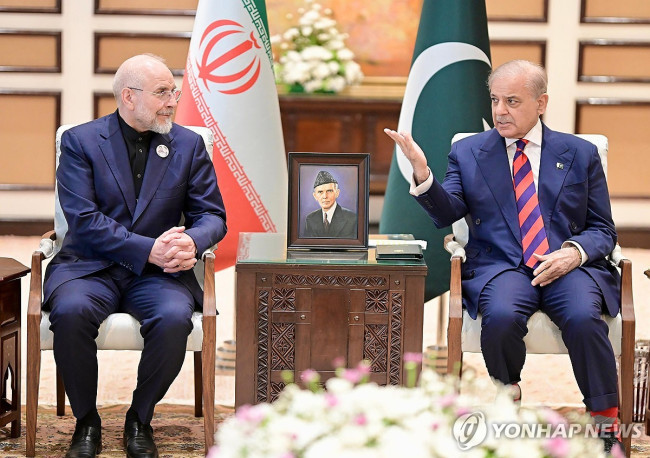 Iranian chief negotiator Ghalibaf (left) meets with Pakistani Prime Minister. [Islamabad UPI=Yonhap News]

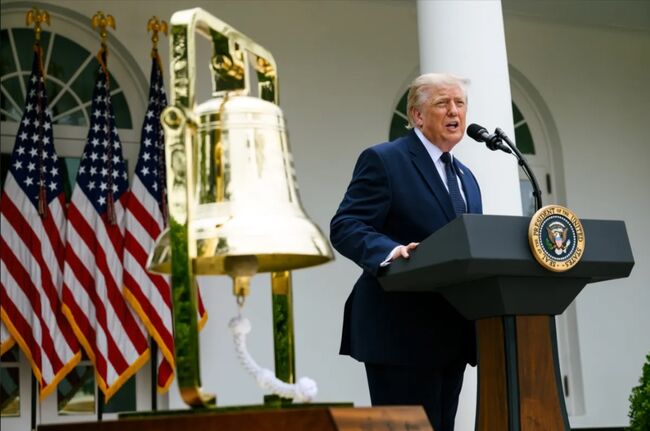 Trump pressures for rate cut again ahead of FOMC... "Should be the lowest in the world"
U.S. President Donald Trump. [Photo = The White House] U.S. President Donald Trump once again pressured the Federal Reserve, the U.S. central bank, to lower interest rates on the 27th (local time
Trump pressures for rate cut again ahead of FOMC... "Should be the lowest in the world"
U.S. President Donald Trump. [Photo = The White House] U.S. President Donald Trump once again pressured the Federal Reserve, the U.S. central bank, to lower interest rates on the 27th (local time
 “Ignoring crisp ballots and damaged seals”… Tongyeong mayoral recount concludes with ‘no change in outcome,’ leaving suspicions and public outrage behind
Suspected counterfeit ballots discovered in Tongyeong [GIF from social media of Representative Hwang Kyo-ahn / Attorney Park Joo-hyun]During a recount of the Tongyeong mayoral election in South Gyeong
“Ignoring crisp ballots and damaged seals”… Tongyeong mayoral recount concludes with ‘no change in outcome,’ leaving suspicions and public outrage behind
Suspected counterfeit ballots discovered in Tongyeong [GIF from social media of Representative Hwang Kyo-ahn / Attorney Park Joo-hyun]During a recount of the Tongyeong mayoral election in South Gyeong
 President Yoon, regarding the first-instance ruling on the Public Official Election Act: “An excessive political verdict that distorts the facts… We will appeal immediately.”
The first-instance sentencing hearing for President Yoon Suk Yeol regarding violations of the Public Official Election Act is being broadcast live at Seoul Station on the 27th. [Photo=Yonhap News]Pres
President Yoon, regarding the first-instance ruling on the Public Official Election Act: “An excessive political verdict that distorts the facts… We will appeal immediately.”
The first-instance sentencing hearing for President Yoon Suk Yeol regarding violations of the Public Official Election Act is being broadcast live at Seoul Station on the 27th. [Photo=Yonhap News]Pres
 WSJ: "SK Hynix ADR Premium Is a Sign of AI Trading Overheat"
Advertisement for SK Hynix ADR listing in New York's Times Square [Reuters=Yonhap News file photo]The Wall Street Journal (WSJ) has pointed out that the price of SK Hynix’s American Depositary Recei
WSJ: "SK Hynix ADR Premium Is a Sign of AI Trading Overheat"
Advertisement for SK Hynix ADR listing in New York's Times Square [Reuters=Yonhap News file photo]The Wall Street Journal (WSJ) has pointed out that the price of SK Hynix’s American Depositary Recei
 'Godfather of Japanese Mystery Novels' Keigo Higashino Passes Away After Battle with Cancer at 68
Famous Japanese mystery novelist Keigo Higashino [AFP=Yonhap News]It has been belatedly reported that Keigo Higashino, the "godfather of Japanese mystery novels" and author of bestsellers such as "The
'Godfather of Japanese Mystery Novels' Keigo Higashino Passes Away After Battle with Cancer at 68
Famous Japanese mystery novelist Keigo Higashino [AFP=Yonhap News]It has been belatedly reported that Keigo Higashino, the "godfather of Japanese mystery novels" and author of bestsellers such as "The
 [Park Pil-kyu Security Column] To the Ignorant Trying to Clothe a Beast in Sheep's Clothing
Rep. Kim Byung-joo of the Democratic Party of Korea [Photo=Yonhap News]“The Air Force Academy doesn't teach you how to fly a plane!” “The Army, Navy, and Air Force academies are exactly the
[Park Pil-kyu Security Column] To the Ignorant Trying to Clothe a Beast in Sheep's Clothing
Rep. Kim Byung-joo of the Democratic Party of Korea [Photo=Yonhap News]“The Air Force Academy doesn't teach you how to fly a plane!” “The Army, Navy, and Air Force academies are exactly the
 [Issue Diagnosis] Two Effects of the Election Petition Review
 [Photo] Evidence of Election Fraud Flooding U.S. Media… Trump Had 2.7 Million Votes Stolen
 [Video] U.S. Semiquincentennial Air Show... 'Art in the Sky' streaks across New York
 [Editorial Cartoon] A Draconian Law That Undermines Freedom of Expression

 List
List