U.S. President Trump (Washington AP=Yonhap News)
U.S. President Donald Trump said on the 16th (local time) that he is very close to an agreement with Iran, with whom he is in ceasefire negotiations, and that the next round of talks may be held this weekend.
There were also claims that Iran stated it would not possess nuclear weapons for over 20 years and agreed to export enriched uranium, but it is unclear whether these are true. He also threatened to resume attacks if an agreement is not reached.
President Trump made these remarks to reporters at the White House before leaving for Las Vegas, Nevada, stating that there has been significant progress in negotiations with Iran and that they are very close to an agreement.
He also said he was unsure if the "two-week ceasefire" agreed upon on the 7th needed to be extended.
President Trump claimed that Iran has agreed not to possess nuclear weapons and to hand over enriched uranium to the United States.
"They (Iran) have a very, very strong document stating they will not possess nuclear weapons for over 20 years," President Trump said.
This is interpreted as indirectly denying reports that the U.S. demanded Iran "cease uranium enrichment for 20 years," emphasizing the U.S.'s intention to prevent Iran from having the potential to develop nuclear weapons virtually permanently.
He added, "Iran has agreed to almost everything. There is a high possibility of the negotiations being resolved," and stated that if the negotiations are resolved, he may go to Islamabad, Pakistan, where the negotiation venue is set up, himself.
It remains unclear whether Iran has agreed to a ban on uranium enrichment for over 20 years and to export its existing enriched uranium to the U.S.
Iran's prohibition of nuclear weapons possession is the biggest negotiation point between the U.S. and Iran. It is possible that this is President Trump's strategy to pressure Iran for a resolution by making an agreement with Iran a fait accompli.
President Trump also attempted to appease domestic public opinion by saying, "If an agreement is reached, oil and prices will fall, and inflation will stabilize."
"If an agreement is not reached, combat will resume," President Trump said. He is pressuring Iran for a resolution by threatening to resume military operations.
Regarding the U.S. naval blockade of Iran, he said, "It's a surprising thing. We are maintaining it very strongly. I believe we are making a lot of progress."
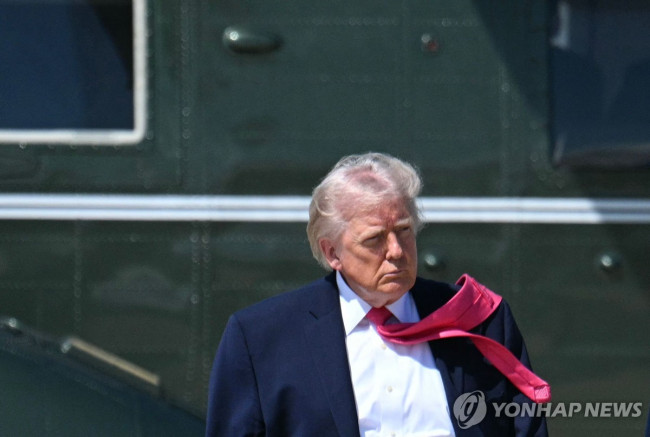 President Trump [AFP Yonhap News]
President Trump's remarks on this day are seen as intended to increase expectations for a negotiated settlement, calm deteriorating domestic public opinion in the U.S., and simultaneously urge Iran toward an agreement favorable to the U.S. However, the gap in positions, even on the issue of limiting uranium enrichment and handling enriched uranium, is considerable, making the swiftness of a resolution uncertain.
The ceasefire between the U.S. and Iran is until the 21st. The two sides met in Pakistan on the 11th for their first negotiations, which broke down.
President Trump also stated that the ten-day ceasefire between Israel and Lebanon, which took effect at 5 p.m. Eastern Time on the 16th (6 a.m. Korean time on the 17th), includes the pro-Iranian armed group Hezbollah in Lebanon. Hezbollah's participation is a key factor in the implementation of the ceasefire between Israel and Lebanon.
He also said that the leaders of Israel and Lebanon may meet at the White House within one to two weeks.
It is anticipated that he will boast about his role as a "peacemaker" by emphasizing his mediation in ending decades of hostility between Israel and Lebanon by co-attending their White House meeting.
When asked about Australia's increase in defense spending, President Trump criticized Australia, saying he doesn't like the country and that it hasn't helped the U.S. when it was needed.
He then brought up the North Atlantic Treaty Organization (NATO), stating that the U.S. has poured a vast amount of money into NATO and helped with the war in Ukraine, yet did not receive assistance from Australia when the U.S. needed it to open the Strait of Hormuz.

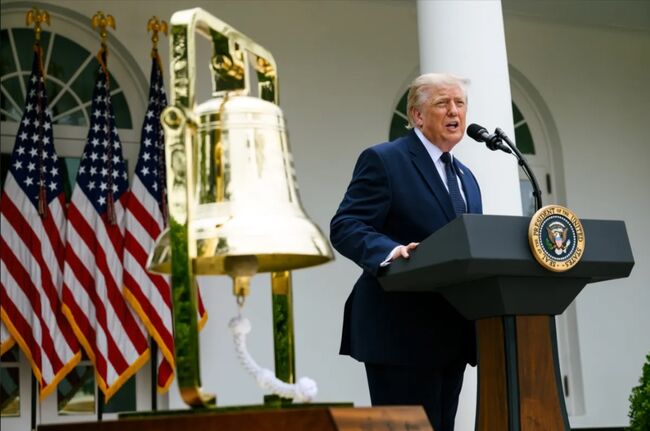 Trump pressures for rate cut again ahead of FOMC... "Should be the lowest in the world"
U.S. President Donald Trump. [Photo = The White House] U.S. President Donald Trump once again pressured the Federal Reserve, the U.S. central bank, to lower interest rates on the 27th (local time
Trump pressures for rate cut again ahead of FOMC... "Should be the lowest in the world"
U.S. President Donald Trump. [Photo = The White House] U.S. President Donald Trump once again pressured the Federal Reserve, the U.S. central bank, to lower interest rates on the 27th (local time
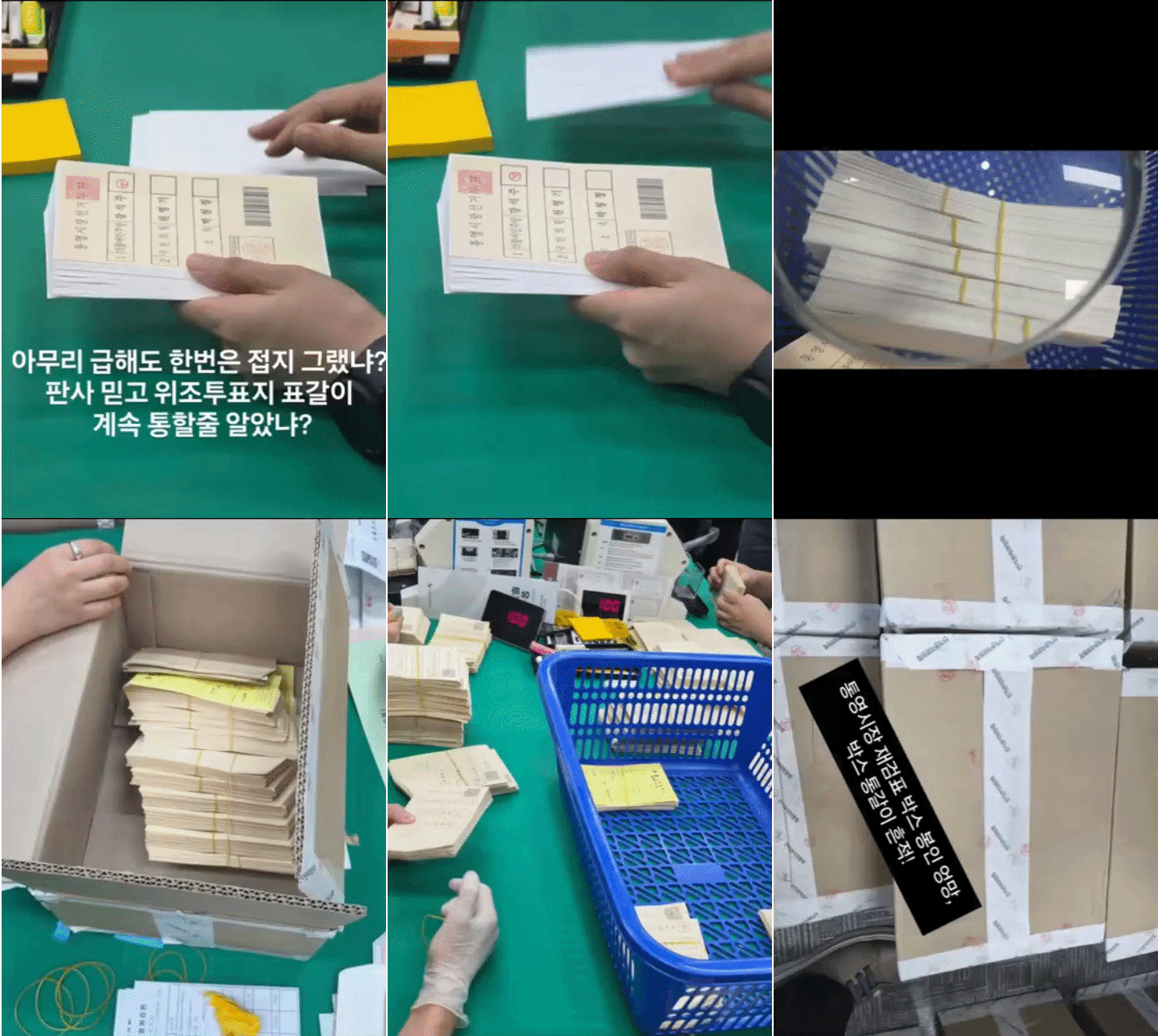 “Ignoring crisp ballots and damaged seals”… Tongyeong mayoral recount concludes with ‘no change in outcome,’ leaving suspicions and public outrage behind
Suspected counterfeit ballots discovered in Tongyeong [GIF from social media of Representative Hwang Kyo-ahn / Attorney Park Joo-hyun]During a recount of the Tongyeong mayoral election in South Gyeong
“Ignoring crisp ballots and damaged seals”… Tongyeong mayoral recount concludes with ‘no change in outcome,’ leaving suspicions and public outrage behind
Suspected counterfeit ballots discovered in Tongyeong [GIF from social media of Representative Hwang Kyo-ahn / Attorney Park Joo-hyun]During a recount of the Tongyeong mayoral election in South Gyeong
 President Yoon, regarding the first-instance ruling on the Public Official Election Act: “An excessive political verdict that distorts the facts… We will appeal immediately.”
The first-instance sentencing hearing for President Yoon Suk Yeol regarding violations of the Public Official Election Act is being broadcast live at Seoul Station on the 27th. [Photo=Yonhap News]Pres
President Yoon, regarding the first-instance ruling on the Public Official Election Act: “An excessive political verdict that distorts the facts… We will appeal immediately.”
The first-instance sentencing hearing for President Yoon Suk Yeol regarding violations of the Public Official Election Act is being broadcast live at Seoul Station on the 27th. [Photo=Yonhap News]Pres
 WSJ: "SK Hynix ADR Premium Is a Sign of AI Trading Overheat"
Advertisement for SK Hynix ADR listing in New York's Times Square [Reuters=Yonhap News file photo]The Wall Street Journal (WSJ) has pointed out that the price of SK Hynix’s American Depositary Recei
WSJ: "SK Hynix ADR Premium Is a Sign of AI Trading Overheat"
Advertisement for SK Hynix ADR listing in New York's Times Square [Reuters=Yonhap News file photo]The Wall Street Journal (WSJ) has pointed out that the price of SK Hynix’s American Depositary Recei
 'Godfather of Japanese Mystery Novels' Keigo Higashino Passes Away After Battle with Cancer at 68
Famous Japanese mystery novelist Keigo Higashino [AFP=Yonhap News]It has been belatedly reported that Keigo Higashino, the "godfather of Japanese mystery novels" and author of bestsellers such as "The
'Godfather of Japanese Mystery Novels' Keigo Higashino Passes Away After Battle with Cancer at 68
Famous Japanese mystery novelist Keigo Higashino [AFP=Yonhap News]It has been belatedly reported that Keigo Higashino, the "godfather of Japanese mystery novels" and author of bestsellers such as "The
 [Park Pil-kyu Security Column] To the Ignorant Trying to Clothe a Beast in Sheep's Clothing
Rep. Kim Byung-joo of the Democratic Party of Korea [Photo=Yonhap News]“The Air Force Academy doesn't teach you how to fly a plane!” “The Army, Navy, and Air Force academies are exactly the
[Park Pil-kyu Security Column] To the Ignorant Trying to Clothe a Beast in Sheep's Clothing
Rep. Kim Byung-joo of the Democratic Party of Korea [Photo=Yonhap News]“The Air Force Academy doesn't teach you how to fly a plane!” “The Army, Navy, and Air Force academies are exactly the
 [Issue Diagnosis] Two Effects of the Election Petition Review
 [Photo] Evidence of Election Fraud Flooding U.S. Media… Trump Had 2.7 Million Votes Stolen
 [Video] U.S. Semiquincentennial Air Show... 'Art in the Sky' streaks across New York
 [Editorial Cartoon] A Draconian Law That Undermines Freedom of Expression

 List
List