 Workers at Hyundai Heavy Industries in Ulsan during the Great Labor Struggle of 1987. [Photo=KCTU (black and white photo converted to color)]The year 1987 is remembered as the starting point for the Korean Confederation of Trade Unions (KCTU). It is characterized as a year of righteous anger to reclaim rights in the workplace, and as the year when oppressed workers first began to speak as human beings. If one only considers the initial phase, this is accurate. The Korean industrial landscape in the summer of 1987 was dire.
In places like Ulsan Hyundai Engine, Hyundai Heavy Industries, Daewoo Shipbuilding, Kia Motors, the Guro Industrial Complex, the Namdong Industrial Complex in Incheon, and the Changwon Industrial Complex, workers labored for over 12 hours a day, industrial accidents were common, wages were low, and unions were essentially company-controlled organizations.
From July to September 1987, over 3,000 labor disputes erupted nationwide, and according to Ministry of Labor statistics, more than 1,000 new unions were established within a year. Looking at the numbers alone, it was undeniably a major turning point in Korean labor history.
The problem begins from this point. While the Great Labor Struggle of 1987 was initially a workplace fight demanding better wages, working hours, working conditions, and humane treatment, no one can easily deny this aspect.
Indeed, the demands put forth by workers at Hyundai Heavy Industries in Ulsan primarily included increased bonuses, workplace safety, union democratization, and relief from long working hours. The female workers at the Guro Industrial Complex also called for improvements in dormitory controls, low wages, and long working hours.
The anger of the workers during this period was realistic and concrete. Up to this point, the Korean labor movement was able to gain social consensus.
However, radical activist groups quickly latched onto this righteous discontent. From the latter half of 1987, NL and PD faction activist groups rapidly infiltrated factories. University students from Seoul National University, Korea University, Yonsei University, and Sungkyunkwan University entered factories as disguised workers, and the workplace began to transform into a space where struggles for survival were mixed with struggles against the system.
Workers wanted wages and safety, but the activists superimposed anti-American, anti-capitalist, and anti-regime rhetoric on top of their demands. What began to be read in factory cafeterias and night schools were not just industrial safety manuals. Documents on Marx, Lenin, dependency theory, and the theory of people's democratic revolution were circulated alongside them. The workers' anger was soon absorbed as political capital for the activist groups.
This is precisely where the original sin of the KCTU begins. A labor movement should be an organization for the workers. Its focus should be on wages, safety, welfare, working hours, industrial accidents, and employment stability. However, after 1987, the militant labor movement in Korea did not stay on this path for long. The workplace quickly became a site for political experimentation.
Workers began to be re-educated as subjects of revolution before being union members, and unions began to shift their character from wage negotiation organizations to organizations critical of the system. Although they outwardly shouted for "labor liberation," in practice, the expansion of activist organizations often took precedence over the lives of the workers.
The Great Labor Struggle of 1987 was undoubtedly necessary. However, its legitimacy did not last long. The reason was that activist groups superimposed themselves onto the desperation of the workers. The struggle for the right to survival was legitimate, but it was someone else who transformed it into a revolutionary outpost.
The seeds sown at this time later became the Federation of Korean Trade Unions (FKTU), the National Council of Labor Unions (NCLU), and the KCTU. Even though it was a union for the workers, the seeds of a political organization that used workers as raw material were already sown in 1987.
Although the KCTU was founded in 1995, its ideological framework was already completed in 1987. It was an organization that started with the blood of the workers but was the first to convert that blood into political fuel. That is where the beginning of the KCTU lies.
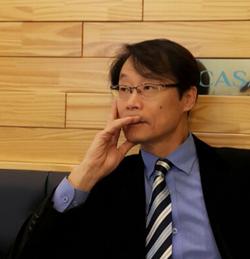
◆ Song San (송산)
Poet and researcher of history and philosophy. Former director of the Syngman Rhee School. Currently serves as a research advisor for the Korean Modern and Contemporary History Research Association and as the representative of the philosophical forum Lyceum. He has published four collections of poetry, co-translated 'Heroes of the Hook Peninsula,' and published 'Joseon That Became Myth' and 'Humanities on a Tatami Mat.' He is actively engaged in the research and practice of liberal cultural movements. Song San is a pen name.

 Iranian Foreign Ministry: "Continuing Message Exchanges with the U.S. and Activities of Mediating Countries"
Esmaeil Baghaei, Spokesperson for the Iranian Ministry of Foreign Affairs [Xinhua, Yonhap News file photo]Esmaeil Baghaei, spokesperson for the Iranian Ministry of Foreign Affairs, stated on the 26th
Iranian Foreign Ministry: "Continuing Message Exchanges with the U.S. and Activities of Mediating Countries"
Esmaeil Baghaei, Spokesperson for the Iranian Ministry of Foreign Affairs [Xinhua, Yonhap News file photo]Esmaeil Baghaei, spokesperson for the Iranian Ministry of Foreign Affairs, stated on the 26th
 President Yoon: "Do You Think You Are Safe from the Special Counsel?"... Final Statement Video Released
President Yoon Suk Yeol rebuking the special prosecutor on the 24th. [Court video / @birds_justice X account subtitle GIF] A video of President Yoon Suk Yeol's closing statement at his trial rega
President Yoon: "Do You Think You Are Safe from the Special Counsel?"... Final Statement Video Released
President Yoon Suk Yeol rebuking the special prosecutor on the 24th. [Court video / @birds_justice X account subtitle GIF] A video of President Yoon Suk Yeol's closing statement at his trial rega
 President Yoon, regarding the first-instance ruling on the Public Official Election Act: “An excessive political verdict that distorts the facts… We will appeal immediately.”
The first-instance sentencing hearing for President Yoon Suk Yeol regarding violations of the Public Official Election Act is being broadcast live at Seoul Station on the 27th. [Photo=Yonhap News]Pres
President Yoon, regarding the first-instance ruling on the Public Official Election Act: “An excessive political verdict that distorts the facts… We will appeal immediately.”
The first-instance sentencing hearing for President Yoon Suk Yeol regarding violations of the Public Official Election Act is being broadcast live at Seoul Station on the 27th. [Photo=Yonhap News]Pres
 WSJ: "SK Hynix ADR Premium Is a Sign of AI Trading Overheat"
Advertisement for SK Hynix ADR listing in New York's Times Square [Reuters=Yonhap News file photo]The Wall Street Journal (WSJ) has pointed out that the price of SK Hynix’s American Depositary Recei
WSJ: "SK Hynix ADR Premium Is a Sign of AI Trading Overheat"
Advertisement for SK Hynix ADR listing in New York's Times Square [Reuters=Yonhap News file photo]The Wall Street Journal (WSJ) has pointed out that the price of SK Hynix’s American Depositary Recei
 'Godfather of Japanese Mystery Novels' Keigo Higashino Passes Away After Battle with Cancer at 68
Famous Japanese mystery novelist Keigo Higashino [AFP=Yonhap News]It has been belatedly reported that Keigo Higashino, the "godfather of Japanese mystery novels" and author of bestsellers such as "The
'Godfather of Japanese Mystery Novels' Keigo Higashino Passes Away After Battle with Cancer at 68
Famous Japanese mystery novelist Keigo Higashino [AFP=Yonhap News]It has been belatedly reported that Keigo Higashino, the "godfather of Japanese mystery novels" and author of bestsellers such as "The
 [Park Pil-kyu Security Column] To the Ignorant Trying to Clothe a Beast in Sheep's Clothing
Rep. Kim Byung-joo of the Democratic Party of Korea [Photo=Yonhap News]“The Air Force Academy doesn't teach you how to fly a plane!” “The Army, Navy, and Air Force academies are exactly the
[Park Pil-kyu Security Column] To the Ignorant Trying to Clothe a Beast in Sheep's Clothing
Rep. Kim Byung-joo of the Democratic Party of Korea [Photo=Yonhap News]“The Air Force Academy doesn't teach you how to fly a plane!” “The Army, Navy, and Air Force academies are exactly the
 [Issue Diagnosis] Two Effects of the Election Petition Review
 [Photo] Evidence of Election Fraud Flooding U.S. Media… Trump Had 2.7 Million Votes Stolen
 [Video] U.S. Semiquincentennial Air Show... 'Art in the Sky' streaks across New York
 [Editorial Cartoon] A Draconian Law That Undermines Freedom of Expression

 List
List









