 The National Council of Labor Unions (Jeonnohyeop) rally in May 1991. This is a colorized version of a black and white photograph.
On January 22, 1990, the National Council of Labor Unions, also known as Jeonnohyeop, was launched at the Cathedral of St. Mary and St. Nicholas in Yongsan, Seoul. Although the Korean Confederation of Trade Unions (KCTU) did not yet exist, its substantive framework was already in place at this time.
To understand the KCTU, one must look at 1990 before 1995. The KCTU was not a spontaneously formed organization. Jeonnohyeop, a vanguard organization, was established first, and the KCTU was its expanded version. From this point on, the Korean labor movement began to shift its character from a negotiating organization dealing with wages and working conditions to a political organization operating under the banner of labor unions.
Activists Enter Factories, Turning Unions into 'Political Headquarters'
At its launch, Jeonnohyeop claimed to represent approximately 600 labor unions nationwide, with about 200,000 members. It was primarily centered in manufacturing. Unions from Hyundai Heavy Industries, Hyundai Engine, Daewoo Shipbuilding, Kia, Daewoo Motors, and the industrial complexes of Incheon/Bucheon and Changwon were its core pillars.
On the surface, it was a "national solidarity of democratic unions." Dissatisfaction was high with the Federation of Korean Trade Unions (FKTU) for compromising under the watchful eyes of the government and corporations, and it was true that demands for an independent labor federation were growing among rank-and-file workers. On the surface, the launch of Jeonnohyeop had ample justification. The argument that an organization was needed to represent field workers, distinct from the pro-government, company-controlled unions, was persuasive.
The issue was what Jeonnohyeop built upon that justification. From the outset, Jeonnohyeop was not merely a federation of unions. Its character was revealed in its inaugural declaration.
In addition to on-site issues such as "improvement of working conditions," "wage increases," and "prevention of industrial accidents," activist slogans like "achieve democracy," "national self-determination," "liberation of the masses," and "anti-foreign independence" were explicitly included. The boundary between whether a labor union was a wage negotiation organization or a system-transformation organization was blurred from the beginning. Although packaged in the language of labor unions, its internal grammar was already that of an activist political organization.
A significant number of Jeonnohyeop's core leaders during this period were not only rank-and-file workers from the field but also activists from the NL (National Liberation) and PD (People's Democracy) factions connected to the 1980s student movement. After the torture and death of Park Jong-chul and being pushed out of the streets following the June Uprising, activists moved into the factories, and Jeonnohyeop became their new rallying point.
Night classes in factories, labor counseling centers, and on-site small group meetings were not merely spaces for labor education. They were channels for injecting anti-American, anti-capitalist, and anti-regime ideologies into the workplace. Workers became political soldiers as well as union members. Wage struggles were increasingly used as a gateway for political mobilization.
Jeonnohyeop distinguished itself from the FKTU by advocating for "struggling democratic unions." The problem was that this "struggle" too quickly took precedence over "negotiation." The purpose of a union should originally be better wages, safer workplaces, and more stable employment.
However, Jeonnohyeop prioritized confrontation over negotiation, strikes over settlements, and street mobilizations over institutional reform. What field workers needed was negotiating power that could endure, but Jeonnohyeop valued the ability to fight for long periods more highly. As a result, workers began to be ranked not by the outcomes of negotiations but by their strike records. Unions transformed from organizations that protected their members into organizations that mobilized them.
Displaying Political Power Through Strikes
From this point, a very detrimental habit took root in the Korean labor movement. Strikes became not a means of negotiation but a tool for displaying political power, and workers became numbers on the streets rather than union members. How many people gathered, how long they blocked roads, and how intensely they clashed were packaged as achievements.
Wage tables, shift systems, and industrial accident rates, which should have been discussed in factory cafeterias and break rooms, began to take a backseat to slogans chanted in public squares and criticism of the government. Jeonnohyeop is the starting point where the labor movement began to distance itself from workers' lives and be encroached upon by activist language.
Jeonnohyeop proclaimed the independence of the Korean labor movement, but in reality, it was an organization that solidified the subservience of the labor movement to activists. Although launched with criticism of the FKTU's subservience to the government, it entered into an even stronger political subjugation for itself. It was not a subordinate of the government, but it became a vanguard for activists.
Although its name was the Council of Labor Unions, it was in substance a political headquarters established in the factories. The KCTU was not born in 1995. The day the activist command center was established under the guise of labor, the KCTU had already begun in 1990.
◆ Songshan
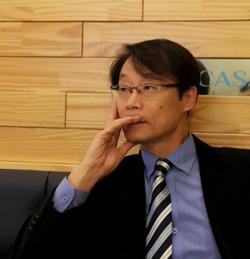
A poet and researcher of history and philosophy. Former director of the Rhee Syngman Institute. Currently serves as a research advisor for the Korean Modern and Contemporary History Research Association and as the representative of the philosophy forum Lyceum. He has published four poetry collections, co-translated "Heroes of the Hookogo Archipelago," and published "Joseon That Became Myth" and "Humanities on the Tatami." He is currently actively engaged in research and practice of the liberal cultural movement. Songshan is a pen name.

 Iranian Foreign Ministry: "Continuing Message Exchanges with the U.S. and Activities of Mediating Countries"
Esmaeil Baghaei, Spokesperson for the Iranian Ministry of Foreign Affairs [Xinhua, Yonhap News file photo]Esmaeil Baghaei, spokesperson for the Iranian Ministry of Foreign Affairs, stated on the 26th
Iranian Foreign Ministry: "Continuing Message Exchanges with the U.S. and Activities of Mediating Countries"
Esmaeil Baghaei, Spokesperson for the Iranian Ministry of Foreign Affairs [Xinhua, Yonhap News file photo]Esmaeil Baghaei, spokesperson for the Iranian Ministry of Foreign Affairs, stated on the 26th
 President Yoon: "Do You Think You Are Safe from the Special Counsel?"... Final Statement Video Released
President Yoon Suk Yeol rebuking the special prosecutor on the 24th. [Court video / @birds_justice X account subtitle GIF] A video of President Yoon Suk Yeol's closing statement at his trial rega
President Yoon: "Do You Think You Are Safe from the Special Counsel?"... Final Statement Video Released
President Yoon Suk Yeol rebuking the special prosecutor on the 24th. [Court video / @birds_justice X account subtitle GIF] A video of President Yoon Suk Yeol's closing statement at his trial rega
 President Yoon, regarding the first-instance ruling on the Public Official Election Act: “An excessive political verdict that distorts the facts… We will appeal immediately.”
The first-instance sentencing hearing for President Yoon Suk Yeol regarding violations of the Public Official Election Act is being broadcast live at Seoul Station on the 27th. [Photo=Yonhap News]Pres
President Yoon, regarding the first-instance ruling on the Public Official Election Act: “An excessive political verdict that distorts the facts… We will appeal immediately.”
The first-instance sentencing hearing for President Yoon Suk Yeol regarding violations of the Public Official Election Act is being broadcast live at Seoul Station on the 27th. [Photo=Yonhap News]Pres
 WSJ: "SK Hynix ADR Premium Is a Sign of AI Trading Overheat"
Advertisement for SK Hynix ADR listing in New York's Times Square [Reuters=Yonhap News file photo]The Wall Street Journal (WSJ) has pointed out that the price of SK Hynix’s American Depositary Recei
WSJ: "SK Hynix ADR Premium Is a Sign of AI Trading Overheat"
Advertisement for SK Hynix ADR listing in New York's Times Square [Reuters=Yonhap News file photo]The Wall Street Journal (WSJ) has pointed out that the price of SK Hynix’s American Depositary Recei
 'Godfather of Japanese Mystery Novels' Keigo Higashino Passes Away After Battle with Cancer at 68
Famous Japanese mystery novelist Keigo Higashino [AFP=Yonhap News]It has been belatedly reported that Keigo Higashino, the "godfather of Japanese mystery novels" and author of bestsellers such as "The
'Godfather of Japanese Mystery Novels' Keigo Higashino Passes Away After Battle with Cancer at 68
Famous Japanese mystery novelist Keigo Higashino [AFP=Yonhap News]It has been belatedly reported that Keigo Higashino, the "godfather of Japanese mystery novels" and author of bestsellers such as "The
 [Park Pil-kyu Security Column] To the Ignorant Trying to Clothe a Beast in Sheep's Clothing
Rep. Kim Byung-joo of the Democratic Party of Korea [Photo=Yonhap News]“The Air Force Academy doesn't teach you how to fly a plane!” “The Army, Navy, and Air Force academies are exactly the
[Park Pil-kyu Security Column] To the Ignorant Trying to Clothe a Beast in Sheep's Clothing
Rep. Kim Byung-joo of the Democratic Party of Korea [Photo=Yonhap News]“The Air Force Academy doesn't teach you how to fly a plane!” “The Army, Navy, and Air Force academies are exactly the
 [Issue Diagnosis] Two Effects of the Election Petition Review
 [Photo] Evidence of Election Fraud Flooding U.S. Media… Trump Had 2.7 Million Votes Stolen
 [Video] U.S. Semiquincentennial Air Show... 'Art in the Sky' streaks across New York
 [Editorial Cartoon] A Draconian Law That Undermines Freedom of Expression

 List
List









