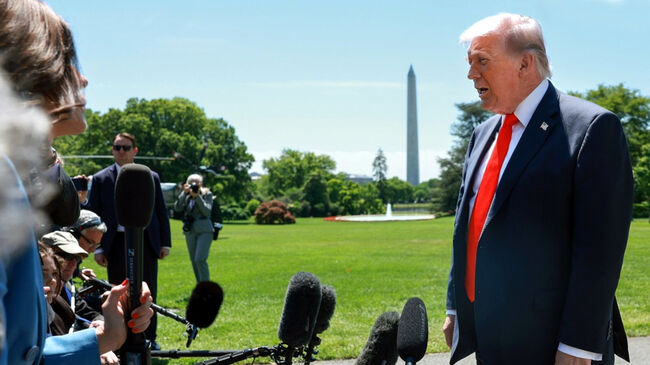
U.S. President Donald Trump stated on March 1 (local time) that he would not seek congressional approval for a war with Iran under the War Powers Act, explaining it would be "unconstitutional."
The War Powers Act of 1973 requires the President to obtain congressional approval within 60 days of notifying Congress if they intend to continue military conflicts involving U.S. troops.
A joint operation by the United States and Israel targeting Iran's political leadership and military infrastructure began on Saturday, February 28, but President Trump only notified Congress on Monday, March 2. Therefore, the 60-day deadline requiring congressional approval falls on Friday, May 1.
President Trump was asked about his reasons for not seeking congressional approval as he departed for Florida, speaking outside the White House.
"Because it has never been asked before," he said. "There have been countless attempts, but none have been accepted. They consider it completely unconstitutional."
"But we are always in contact with Congress. And no one has ever seen this. No one has ever asked for it. It has never been used. So why should we be different?" Trump asked.
President Trump outlined the administration's position in a letter to House Speaker Mike Johnson (R-La.), stating he acted "pursuant to my responsibility to protect the American people and advance the national security and foreign policy interests of the United States."
The letter, submitted under the War Powers Act, detailed the timeline of operations and mentioned a ceasefire in effect since April 7, but did not request congressional approval to continue the conflict. He added that the hostilities that began on February 28 had been "terminated."
Throughout history, presidents of both parties have engaged in military operations without seeking formal approval under the War Powers Act. This has raised constitutional concerns, and the act has often not been considered binding in specific conflicts.
Trump's remarks further elaborate on the administration's assertions regarding the War Powers Act.
Earlier, on Thursday, April 30, Secretary of Defense Pete Hegseth stated at a Senate Armed Services Committee hearing that the ceasefire meant the timeline for initiating war did not apply.
The Senate voted on a resolution to halt the war that day, but it failed by a vote of 47-50. This was the sixth such attempt.
Senators Susan Collins (R-Maine) and Rand Paul (R-Ky.), both Republicans, joined Democrats in voting for the resolution, while Senator John Fetterman (D-Pa.) voted against it with Republicans.
The Associated Press reported that most Republican lawmakers either support President Trump's wartime leadership or are at least willing to give him more time amid an unstable ceasefire situation.
Senator Kevin Cramer (R-N.J.) stated Thursday that he would vote for President Trump if he requested authorization for war. He also questioned the constitutionality of the War Powers Act, which was enacted to curb congressional powers during the Vietnam War.
"Like it or not, our founding fathers created a very strong executive branch," Cramer said.
By Sung Ku Hong, Chief Editor of U.S. NNP / Special Contribution from this publication NNP info@newsandpost.com
What do you think of this article?

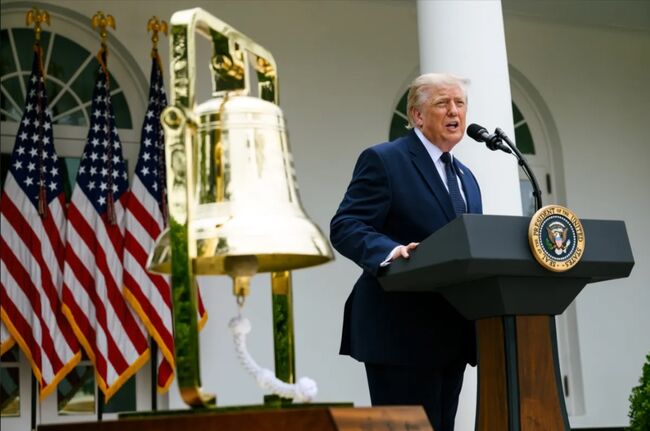 Trump pressures for rate cut again ahead of FOMC... "Should be the lowest in the world"
U.S. President Donald Trump. [Photo = The White House] U.S. President Donald Trump once again pressured the Federal Reserve, the U.S. central bank, to lower interest rates on the 27th (local time
Trump pressures for rate cut again ahead of FOMC... "Should be the lowest in the world"
U.S. President Donald Trump. [Photo = The White House] U.S. President Donald Trump once again pressured the Federal Reserve, the U.S. central bank, to lower interest rates on the 27th (local time
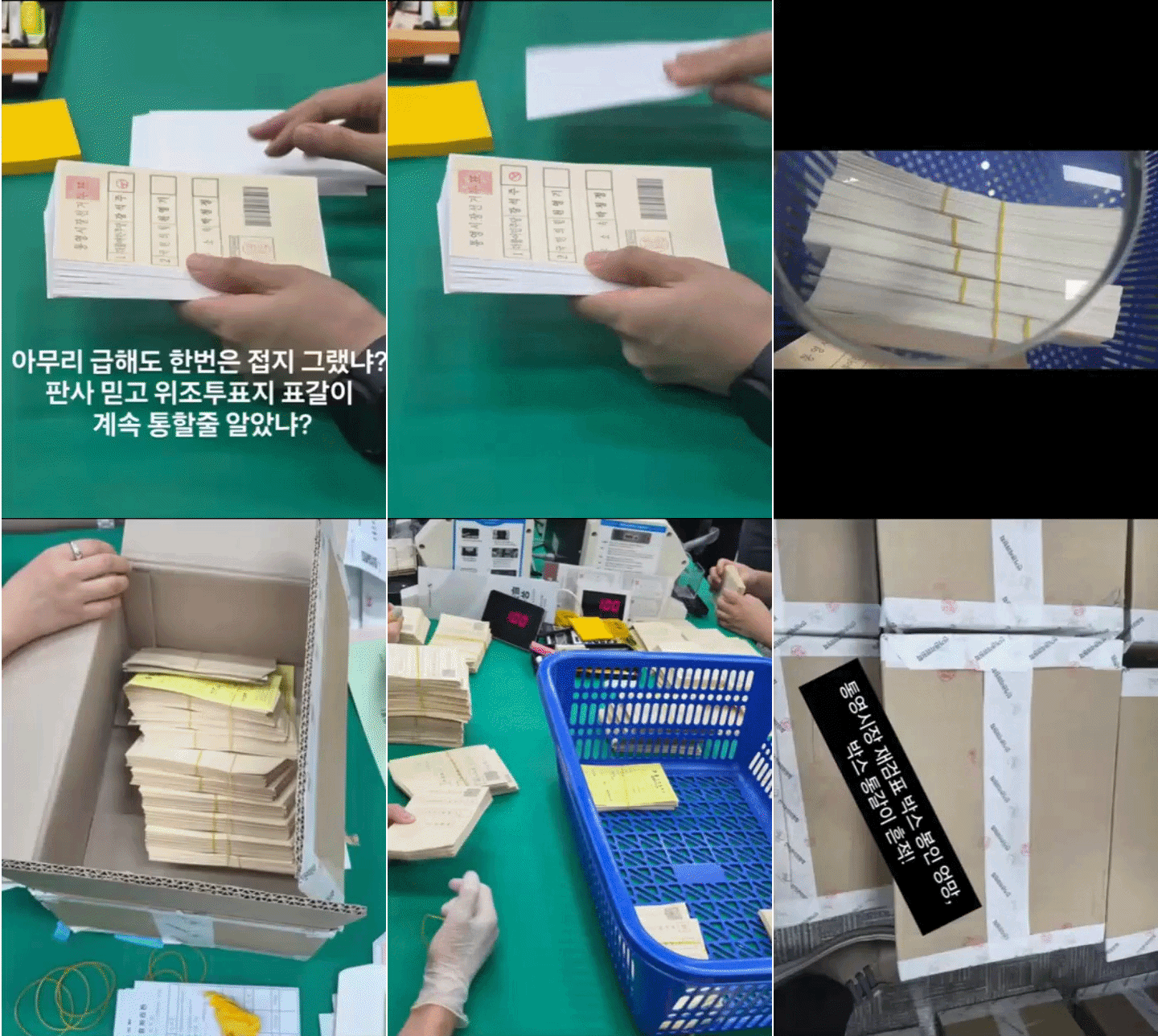 “Ignoring crisp ballots and damaged seals”… Tongyeong mayoral recount concludes with ‘no change in outcome,’ leaving suspicions and public outrage behind
Suspected counterfeit ballots discovered in Tongyeong [GIF from social media of Representative Hwang Kyo-ahn / Attorney Park Joo-hyun]During a recount of the Tongyeong mayoral election in South Gyeong
“Ignoring crisp ballots and damaged seals”… Tongyeong mayoral recount concludes with ‘no change in outcome,’ leaving suspicions and public outrage behind
Suspected counterfeit ballots discovered in Tongyeong [GIF from social media of Representative Hwang Kyo-ahn / Attorney Park Joo-hyun]During a recount of the Tongyeong mayoral election in South Gyeong
 President Yoon, regarding the first-instance ruling on the Public Official Election Act: “An excessive political verdict that distorts the facts… We will appeal immediately.”
The first-instance sentencing hearing for President Yoon Suk Yeol regarding violations of the Public Official Election Act is being broadcast live at Seoul Station on the 27th. [Photo=Yonhap News]Pres
President Yoon, regarding the first-instance ruling on the Public Official Election Act: “An excessive political verdict that distorts the facts… We will appeal immediately.”
The first-instance sentencing hearing for President Yoon Suk Yeol regarding violations of the Public Official Election Act is being broadcast live at Seoul Station on the 27th. [Photo=Yonhap News]Pres
 WSJ: "SK Hynix ADR Premium Is a Sign of AI Trading Overheat"
Advertisement for SK Hynix ADR listing in New York's Times Square [Reuters=Yonhap News file photo]The Wall Street Journal (WSJ) has pointed out that the price of SK Hynix’s American Depositary Recei
WSJ: "SK Hynix ADR Premium Is a Sign of AI Trading Overheat"
Advertisement for SK Hynix ADR listing in New York's Times Square [Reuters=Yonhap News file photo]The Wall Street Journal (WSJ) has pointed out that the price of SK Hynix’s American Depositary Recei
 'Godfather of Japanese Mystery Novels' Keigo Higashino Passes Away After Battle with Cancer at 68
Famous Japanese mystery novelist Keigo Higashino [AFP=Yonhap News]It has been belatedly reported that Keigo Higashino, the "godfather of Japanese mystery novels" and author of bestsellers such as "The
'Godfather of Japanese Mystery Novels' Keigo Higashino Passes Away After Battle with Cancer at 68
Famous Japanese mystery novelist Keigo Higashino [AFP=Yonhap News]It has been belatedly reported that Keigo Higashino, the "godfather of Japanese mystery novels" and author of bestsellers such as "The
 [Park Pil-kyu Security Column] To the Ignorant Trying to Clothe a Beast in Sheep's Clothing
Rep. Kim Byung-joo of the Democratic Party of Korea [Photo=Yonhap News]“The Air Force Academy doesn't teach you how to fly a plane!” “The Army, Navy, and Air Force academies are exactly the
[Park Pil-kyu Security Column] To the Ignorant Trying to Clothe a Beast in Sheep's Clothing
Rep. Kim Byung-joo of the Democratic Party of Korea [Photo=Yonhap News]“The Air Force Academy doesn't teach you how to fly a plane!” “The Army, Navy, and Air Force academies are exactly the
 [Issue Diagnosis] Two Effects of the Election Petition Review
 [Photo] Evidence of Election Fraud Flooding U.S. Media… Trump Had 2.7 Million Votes Stolen
 [Video] U.S. Semiquincentennial Air Show... 'Art in the Sky' streaks across New York
 [Editorial Cartoon] A Draconian Law That Undermines Freedom of Expression

 List
List









