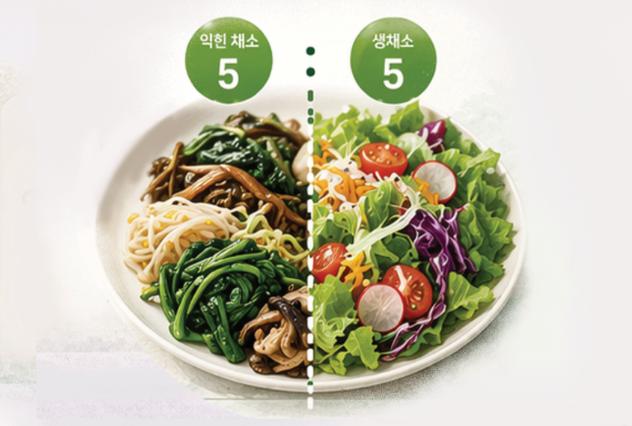
The 5:5 diet, practiced by a doctor couple who overcame cancer. The core of this dietary method is to adjust the meal portion, nutrient composition ratio, and cooking method by a 5:5 (half) ratio.
For example, when serving vegetable side dishes, the ratio of cooked vegetables to raw vegetables is 5:5. Heating vegetables breaks down their cell walls, increasing the body's absorption rate of fat-soluble nutrients such as lycopene (tomatoes) and beta-carotene (carrots).
Maintain a 5:5 Ratio of Cooked to Raw Foods
However, eating only cooked vegetables can lead to missing out on heat-sensitive vitamin C or enzymes, so it is important to eat an equal amount of raw vegetables. This dietary method claims that consuming blanched or stir-fried vegetables (cooked) and salads or leafy greens (raw) in equal proportions strengthens immunity and reduces inflammation in the body.
Furthermore, the 5:5 diet recommends obtaining half of the daily protein intake from animal sources (fish, eggs, etc.) and the other half from plant sources (beans, tofu, etc.). This is because animal protein is a source of essential amino acids, while plant protein is beneficial for vascular health, and they complement each other.
Although Western doctors proposed this diet, the 5:5 diet is actually a dietary method based on Korean medicine theory.
Korean medicine aims to prevent and cure diseases by maintaining the functional balance of the autonomic nervous system and organs in the human body. In essence, finding bodily balance and restoring overall harmony is the core of Korean medicine treatment.
Donguibogam categorizes the causes of disease into five types, broadly classified as toxins from food, stress toxins, exhaustion toxins (勞倦毒), toxins from accidents, and toxins from infections.
Balance Hunger and Fullness
Food toxins, considered the biggest cause of disease, do not mean that food itself is poisonous. Instead, it signifies that excessive eating (overeating), frequent eating (polyphagia), or unbalanced eating (picky eating) makes "what is eaten" into a toxin. In conclusion, illness arises from an imbalance in the quantity, variety, and frequency of food consumption; therefore, achieving balance in overall eating habits becomes the treatment.
The 5:5 diet should not only consider the types of food but also emphasize avoiding overeating and ensuring sufficient fasting periods throughout the day. For example, it is necessary to balance hunger and fullness overall in a 5:5 ratio by having an empty stomach in the morning, a regular meal at lunch, and a half-meal in the evening. Resting the digestive system and conserving digestive enzymes is the first step to good health.
Stress is considered the root of all illnesses, but not all stress is bad. Moderate stress can bring vitality to life and positively impact work and academic efficiency. Korean medicine emphasizes the importance of balancing life with positive stress.
Exhaustion toxins mean that "overwork and fatigue" are the causes of illness. Korean medicine considers both working too hard and being lethargic all day to be harmful to the body. In other words, physical health is maintained by balancing labor and rest.
While Western doctors may consider the 5:5 diet a novel discovery, it is a health practice that has been implemented in Korean medicine for a long time.
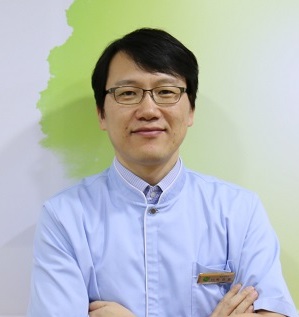
◆ Director Park Chan-young
Director of Eoseongcho Korean Medicine Clinic in Sadang-dong, Seoul. He holds a Doctor of Korean Medicine from Dongguk University. He appeared on TV health programs such as MBN's "The King of Thumb" and initiated a detoxification sensation in Korea. His books include "Atopic Dermatitis Treated with Eoseongcho," "Seasonings Are Medicine," and "The Miracle of Detoxification."

 Iranian Foreign Ministry: "Continuing Message Exchanges with the U.S. and Activities of Mediating Countries"
Esmaeil Baghaei, Spokesperson for the Iranian Ministry of Foreign Affairs [Xinhua, Yonhap News file photo]Esmaeil Baghaei, spokesperson for the Iranian Ministry of Foreign Affairs, stated on the 26th
Iranian Foreign Ministry: "Continuing Message Exchanges with the U.S. and Activities of Mediating Countries"
Esmaeil Baghaei, Spokesperson for the Iranian Ministry of Foreign Affairs [Xinhua, Yonhap News file photo]Esmaeil Baghaei, spokesperson for the Iranian Ministry of Foreign Affairs, stated on the 26th
 President Yoon: "Do You Think You Are Safe from the Special Counsel?"... Final Statement Video Released
President Yoon Suk Yeol rebuking the special prosecutor on the 24th. [Court video / @birds_justice X account subtitle GIF] A video of President Yoon Suk Yeol's closing statement at his trial rega
President Yoon: "Do You Think You Are Safe from the Special Counsel?"... Final Statement Video Released
President Yoon Suk Yeol rebuking the special prosecutor on the 24th. [Court video / @birds_justice X account subtitle GIF] A video of President Yoon Suk Yeol's closing statement at his trial rega
 President Yoon, regarding the first-instance ruling on the Public Official Election Act: “An excessive political verdict that distorts the facts… We will appeal immediately.”
The first-instance sentencing hearing for President Yoon Suk Yeol regarding violations of the Public Official Election Act is being broadcast live at Seoul Station on the 27th. [Photo=Yonhap News]Pres
President Yoon, regarding the first-instance ruling on the Public Official Election Act: “An excessive political verdict that distorts the facts… We will appeal immediately.”
The first-instance sentencing hearing for President Yoon Suk Yeol regarding violations of the Public Official Election Act is being broadcast live at Seoul Station on the 27th. [Photo=Yonhap News]Pres
 WSJ: "SK Hynix ADR Premium Is a Sign of AI Trading Overheat"
Advertisement for SK Hynix ADR listing in New York's Times Square [Reuters=Yonhap News file photo]The Wall Street Journal (WSJ) has pointed out that the price of SK Hynix’s American Depositary Recei
WSJ: "SK Hynix ADR Premium Is a Sign of AI Trading Overheat"
Advertisement for SK Hynix ADR listing in New York's Times Square [Reuters=Yonhap News file photo]The Wall Street Journal (WSJ) has pointed out that the price of SK Hynix’s American Depositary Recei
 'Godfather of Japanese Mystery Novels' Keigo Higashino Passes Away After Battle with Cancer at 68
Famous Japanese mystery novelist Keigo Higashino [AFP=Yonhap News]It has been belatedly reported that Keigo Higashino, the "godfather of Japanese mystery novels" and author of bestsellers such as "The
'Godfather of Japanese Mystery Novels' Keigo Higashino Passes Away After Battle with Cancer at 68
Famous Japanese mystery novelist Keigo Higashino [AFP=Yonhap News]It has been belatedly reported that Keigo Higashino, the "godfather of Japanese mystery novels" and author of bestsellers such as "The
 [Park Pil-kyu Security Column] To the Ignorant Trying to Clothe a Beast in Sheep's Clothing
Rep. Kim Byung-joo of the Democratic Party of Korea [Photo=Yonhap News]“The Air Force Academy doesn't teach you how to fly a plane!” “The Army, Navy, and Air Force academies are exactly the
[Park Pil-kyu Security Column] To the Ignorant Trying to Clothe a Beast in Sheep's Clothing
Rep. Kim Byung-joo of the Democratic Party of Korea [Photo=Yonhap News]“The Air Force Academy doesn't teach you how to fly a plane!” “The Army, Navy, and Air Force academies are exactly the
 [Issue Diagnosis] Two Effects of the Election Petition Review
 [Photo] Evidence of Election Fraud Flooding U.S. Media… Trump Had 2.7 Million Votes Stolen
 [Video] U.S. Semiquincentennial Air Show... 'Art in the Sky' streaks across New York
 [Editorial Cartoon] A Draconian Law That Undermines Freedom of Expression

 List
List









