Judge Shin Jong-oh, who was handling the appellate case of First Lady Kim Keon-hee's stock manipulation, was found dead early on the 6th. [Photo=Yonhap News]
Judge Shin Jong-oh, who was handling the appellate case of First Lady Kim Keon-hee's stock manipulation, was found dead early on May 6, 2026, at 1 AM. He had ruled a sentence of 4 years in prison and a fine of 50 million won, which was more severe than the 1 year and 8 months imprisonment imposed in the first trial, for the First Lady's stock manipulation of Dooyich Motors and her acceptance of a Chanel bag. He had also overturned some of the acquittals from the first trial, finding her complicit in stock manipulation with an accomplice.
Born in Seoul, he followed an elite path in the judiciary and was recognized as an outstanding judge by the Seoul Bar Association in 2023. In his suicide note, he left only the brief message, "I am sorry. I am leaving on my own." Police announced there were no signs of foul play.
Regarding the Possibility of Power-Related Crimes
While we hope the police's announcement is a definitive judgment based on a thorough investigation, it is true that given the recent circumstances surrounding the judiciary, many aspects are questionable.
Na Kyung-won, a member of the People Power Party, has criticized the current administration for intimidating judges by threatening them with the "law distortion crime" and for instilling fear in judges and prosecutors through allegations of entertainment for specific judges, pressure for false testimony against prosecutors, and the formation of a special committee for fabricated indictments.
I fully agree with this view. While it remains to be seen if further facts will emerge through future investigations, the mere conclusion that Judge Shin's death is a simple suicide is highly suspicious in itself.
A promising judge at the age of 55, no matter how high his work-related stress, could he end his life with just a single word of "I am sorry," leaving his family behind? Although his personal duties and social influence may differ, this incident brings to mind the deaths of Hyundai Group Chairman Chung Mong-heon and former President Roh Moo-hyun, which were announced as falls from a height.
According to expert opinions I have encountered, it is common for significant bloodstains to remain at the scene if a fall occurs while a person is alive. Conversely, if the body falls after death, very little bloodstain is found due to immediate blood coagulation. Of course, without access to the police's detailed announcement or the body's photographs from the time, we cannot definitively conclude that all three cases were not falls.
Nevertheless, considering the current political climate, I wish to infer the possibility of "power-related murder" and convey the public's demands to the current administration accordingly.
Concerns about the Politicization of Judicial Rulings
It is a clear fact that Judge Shin's appellate ruling regarding First Lady Kim Keon-hee was more severe than the first trial. If this case was a planned "punishment" driven by political motives, it could be interpreted by the current ruling party's supporters as a message that the sentence was still insufficient.
This aligns with the precedent set during the first trial of former President Yoon's alleged rebellion charges, where criticism arose that a "death sentence" was not imposed despite a life sentence handed down by Judge Ji Gwi-yeon, as the rebellion charge was recognized.
The current Lee Jae-myung administration is undermining the foundation of the rule of law by pursuing the cancellation of the indictment in the "illegal North Korea remittance case" filed by the prosecution through a special prosecutor. In fact, the ruling party is exerting pressure on prosecutor Park Sang-yong, the prosecutor in charge of the case, by accusing him of attempting to sway the defendant (allegations of providing drinks and urging false testimony to former Vice Governor Lee Hwa-young) and fabricating indictments, and forcing his appearance at a National Assembly special investigation committee.
Prosecutor Park Sang-yong refused to take an oath after appearing before the National Assembly, pointing out the impropriety of the parliamentary investigation into an ongoing case. He also stated that he would not testify unless there was a promise that the special prosecution bill, being pushed by the Democratic Party, would exclude the provision for "cancellation of indictment against Lee Jae-myung."
The involvement in an illegal North Korea remittance of $8 million is a violation of the North-South Exchange and Cooperation Act and the Foreign Exchange Transactions Act, as well as an act of bribery to a third party under the Act on the Aggravated Punishment of Specific Crimes. Furthermore, it is a violation of UN and US sanctions against North Korea, a serious crime for which international civil and criminal liability can be pursued.
Despite this, President Lee Jae-myung pursued a so-called "self-exoneration bill" that grants the special prosecutor he appointed the power to cancel indictments in his own trial. This bill, intended to avoid prosecution even after leaving office, was passed on June 7, 2026, with the approval of 106 members of the Democratic Party. At this point, one cannot help but feel the tragic sense that the entire opposition party has become a massive criminal organization.
Legislative Overreach Undermining Separation of Powers
Four months after President Yoon Suk-yeol, elected by the people, declared martial law, the impeachment was upheld. This was the result of the unified decision of left-leaning justices and right-leaning justices presumed to have been swayed by them.
Subsequently, in the presidential election held within 60 days, all safety measures to prevent election fraud, such as the signing of the ballot manager's name, public monitoring of ballot boxes by outsiders, and manual counting, were thoroughly ignored. Ultimately, a vote count that was statistically inexplicable emerged, leading to a criminal suspect, who was awaiting an appellate ruling after a Supreme Court remand for false information disclosure under the Public Official Election Act, being elected president.
In the mere 11 months following his election, a staggering 300 bills were passed in a flurry. These include ruling party-driven bills that dismantle the separation of powers.
Representative examples include judicial reform bills such as the Supreme Court Justice Expansion Act, which increases the number of Supreme Court justices from 14 to 26; the law on judicial distortion, which stipulates a prison sentence of 10 years or less; and the court appeal system, which intends a fourth trial through the Constitutional Court. Furthermore, the prosecution reform bill, which abolishes the prosecutor's office and establishes a public prosecution office, and the amendment to the Government Organization Act, which places investigative powers under the Ministry of the Interior and Safety, have effectively nullified the prosecution's investigative powers.
In the economic sector, companies are suffering from so-called "economic evil laws" such as the Yellow Envelope Act, the amendment to the Commercial Act infringing on majority shareholder rights, the strengthening of the Serious Accidents Punishment Act, and the mandatory incineration of treasury shares. In addition, actions such as the visa-free entry for Chinese group tourists (September 29, 2025 - June 30, 2026) demonstrate a move towards a pro-China administration, raising doubts as to whether the sovereignty of this nation rests with the people.
There are already indications that the Chinese Communist Party has led fraudulent elections in various countries through the A-Web (Association of World Election Bodies) and Huawei's vote counting systems. In this situation, if the 21st presidential election was also unavoidable Chinese Communist Party intervention, Lee Jae-myung's pro-China policies may have been a predictable course of action.
The fact that Supreme Court Chief Justice Cho Hee-dae did not issue a final judgment through a direct ruling instead of a remand in the public official election law violation trial in the past was likely due to fear of the aftermath. It is a reality where even a former president elected by the people faces 8 trials, including charges of rebellion, obstruction of special official duties, general treason, and abuse of power, and cannot even have his human rights protected.
Given that the stock manipulation allegations against First Lady Kim Keon-hee, who was initially innocent, were overturned to guilty in the second trial through a special prosecutor, the intimidation of the judiciary is fully understandable. This is because if Lee Jae-myung's candidacy had been nullified through a direct ruling, it is unimaginable what harm the forces under the protection of the Chinese Communist Party would have inflicted upon individual Supreme Court justices. The subsequent legislative rampage clearly proves this.
Concerns about Realizing a Socialist Dictatorship through Systemic Change
My raising suspicions about Judge Shin Jong-oh's death is not a hasty conclusion that completely excludes the possibility of suicide. This is because I cannot know the specific circumstances Judge Shin personally faced.
However, from a perspective of universal common sense, I strongly question the conclusion of "suicide" reached by the police without any plausible explanation of the circumstances. We have not received any notification regarding why the body was found on the 5th-floor terrace when it fell from the 20-story Seoul High Court building, the condition of the body upon discovery, whether personal grudges or visitor records on the day of the incident were investigated, and most importantly, whether an autopsy was requested from the National Forensic Service.
In contrast to this lack of transparency, the political situation we face is dire. Not only has an individual presumed to be supported by the Chinese Communist Party been elected president without even investigating the fraudulent elections that the people so desperately desired, but the ruling party has also been producing unconstitutional laws that paralyze the separation of powers and exhibit pro-China tendencies.
Recently, there have even been attempts to enshrine a socialist dictatorial system by inserting May 18, the Busan-Masan Uprising, and the April 19 Revolution into the preamble of the Constitution, nullifying the effectiveness of emergency martial law, and mandating regional balanced development.
If such constitutional amendments are completed, it is highly likely that our country will follow Venezuela's path. If approximately 4 million Chinese, presumed to have infiltrated the country, and about 1 million members of the Korean Confederation of Trade Unions, conspire to declare support for a socialist revolution accompanied by social division, political terrorism and murder can be committed at will in the current politically left-leaning situation.
In fact, former Chinese Premier Li Keqiang, who opposed Xi Jinping, died while swimming in a hotel exclusively for top-tier officials, and the US CIA later revealed he was assassinated by poisoning the swimming pool water beforehand. Furthermore, seven individuals around Lee Jae-myung have died consecutively during investigations. Even former US President Trump, a conservative icon, has faced assassination attempts three times.
Moreover, Samsung Electronics Vice Chairman Han Jong-hee, after visiting China at the suggestion of then-leader Lee Jae-myung with Chairman Lee Jae-yong, died shortly after his daughter's wedding reception. While we cannot definitively conclude that all these incidents were murders by China, it is clear that they were somehow connected to China. The death of Judge Shin Jong-oh also has room for interpretation within this political context.
The death of a competent judge is a devastating blow to his family. However, in the current political climate where the separation of powers system is collapsing and judges are exposed to public intimidation, this is not merely a personal tragedy but a matter of grave national importance.
What is the current reality? While individuals colluding with external powers (e.g., Lee Jae-myung) are granted exoneration without even facing trial, those on the opposite end of power (e.g., President Yoon) are subjected to merciless violence accompanied by physical and mental abuse.
Amidst this extreme imbalance, we, the citizens, must watch with wide-open eyes to see if the police are correctly investigating the cause of Judge Shin's death. This is a time when public vigilance is more crucial than ever to prevent the final bastion of judicial justice from crumbling.
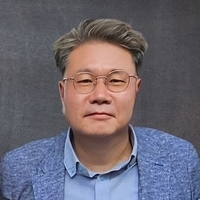
◆ Professor Kim Byung-joon
Former Professor of Silver Industry, Kangnam University
Former Standing Representative of Jagyomo

 Iranian Foreign Ministry: "Continuing Message Exchanges with the U.S. and Activities of Mediating Countries"
Esmaeil Baghaei, Spokesperson for the Iranian Ministry of Foreign Affairs [Xinhua, Yonhap News file photo]Esmaeil Baghaei, spokesperson for the Iranian Ministry of Foreign Affairs, stated on the 26th
Iranian Foreign Ministry: "Continuing Message Exchanges with the U.S. and Activities of Mediating Countries"
Esmaeil Baghaei, Spokesperson for the Iranian Ministry of Foreign Affairs [Xinhua, Yonhap News file photo]Esmaeil Baghaei, spokesperson for the Iranian Ministry of Foreign Affairs, stated on the 26th
 President Yoon: "Do You Think You Are Safe from the Special Counsel?"... Final Statement Video Released
President Yoon Suk Yeol rebuking the special prosecutor on the 24th. [Court video / @birds_justice X account subtitle GIF] A video of President Yoon Suk Yeol's closing statement at his trial rega
President Yoon: "Do You Think You Are Safe from the Special Counsel?"... Final Statement Video Released
President Yoon Suk Yeol rebuking the special prosecutor on the 24th. [Court video / @birds_justice X account subtitle GIF] A video of President Yoon Suk Yeol's closing statement at his trial rega
 President Yoon, regarding the first-instance ruling on the Public Official Election Act: “An excessive political verdict that distorts the facts… We will appeal immediately.”
The first-instance sentencing hearing for President Yoon Suk Yeol regarding violations of the Public Official Election Act is being broadcast live at Seoul Station on the 27th. [Photo=Yonhap News]Pres
President Yoon, regarding the first-instance ruling on the Public Official Election Act: “An excessive political verdict that distorts the facts… We will appeal immediately.”
The first-instance sentencing hearing for President Yoon Suk Yeol regarding violations of the Public Official Election Act is being broadcast live at Seoul Station on the 27th. [Photo=Yonhap News]Pres
 WSJ: "SK Hynix ADR Premium Is a Sign of AI Trading Overheat"
Advertisement for SK Hynix ADR listing in New York's Times Square [Reuters=Yonhap News file photo]The Wall Street Journal (WSJ) has pointed out that the price of SK Hynix’s American Depositary Recei
WSJ: "SK Hynix ADR Premium Is a Sign of AI Trading Overheat"
Advertisement for SK Hynix ADR listing in New York's Times Square [Reuters=Yonhap News file photo]The Wall Street Journal (WSJ) has pointed out that the price of SK Hynix’s American Depositary Recei
 'Godfather of Japanese Mystery Novels' Keigo Higashino Passes Away After Battle with Cancer at 68
Famous Japanese mystery novelist Keigo Higashino [AFP=Yonhap News]It has been belatedly reported that Keigo Higashino, the "godfather of Japanese mystery novels" and author of bestsellers such as "The
'Godfather of Japanese Mystery Novels' Keigo Higashino Passes Away After Battle with Cancer at 68
Famous Japanese mystery novelist Keigo Higashino [AFP=Yonhap News]It has been belatedly reported that Keigo Higashino, the "godfather of Japanese mystery novels" and author of bestsellers such as "The
 [Park Pil-kyu Security Column] To the Ignorant Trying to Clothe a Beast in Sheep's Clothing
Rep. Kim Byung-joo of the Democratic Party of Korea [Photo=Yonhap News]“The Air Force Academy doesn't teach you how to fly a plane!” “The Army, Navy, and Air Force academies are exactly the
[Park Pil-kyu Security Column] To the Ignorant Trying to Clothe a Beast in Sheep's Clothing
Rep. Kim Byung-joo of the Democratic Party of Korea [Photo=Yonhap News]“The Air Force Academy doesn't teach you how to fly a plane!” “The Army, Navy, and Air Force academies are exactly the
 [Issue Diagnosis] Two Effects of the Election Petition Review
 [Photo] Evidence of Election Fraud Flooding U.S. Media… Trump Had 2.7 Million Votes Stolen
 [Video] U.S. Semiquincentennial Air Show... 'Art in the Sky' streaks across New York
 [Editorial Cartoon] A Draconian Law That Undermines Freedom of Expression

 List
List