U.S. President Trump and Supreme Leader of Iran Mojtaba Khamenei [UPI·Yonhap News Agency photo archive]
It has been reported that the United States is effectively setting a 20-year halt to uranium enrichment and the gradual opening of the Strait of Hormuz as its red lines in negotiations with Iran to end the war.
On the 6th (local time), the WSJ reported in an editorial commenting on the peace negotiations with Iran that such demands were revealed through discussions with high-ranking U.S. government officials and their own deliberations.
The media outlet summarized that the U.S. is seeking seven major demands from Iran: ▲ a 20-year suspension of uranium enrichment ▲ dismantling of nuclear facilities in Fordow, Natanz, and Isfahan ▲ prohibition of underground nuclear activities ▲ return of all enriched nuclear materials ▲ commitment to abandon nuclear weapons development ▲ permission for nuclear inspections in Iran and sanctions for violations ▲ and the reopening of the Strait of Hormuz.
Regarding the Strait of Hormuz, the "energy artery" of the world, it has been reported that the U.S. is pursuing a plan for Iran to gradually ease its blockade in line with the U.S.'s easing of maritime blockade, leading to its complete opening upon final agreement.
The WSJ reported that the U.S. is pursuing a 20-year moratorium period for Iran to suspend uranium enrichment.
Although a 12-15 year enrichment moratorium was reportedly discussed during the negotiation process, the U.S. actually demanded a 20-year enrichment moratorium as originally planned.
The return of all enriched uranium possessed by Iran, including nuclear material known as "weapons-grade uranium," is also said to be included in the demands.
The U.S.'s concern is that in addition to the 440 kg of 60% enriched uranium already possessed by Iran, thousands of kilograms of 20% enriched uranium or low-enriched uranium below 5% could serve as a basis for rebuilding its nuclear program in the future.
 Maritime blockade scene released by the U.S. Central Command [AFP=Yonhap News Agency]
The WSJ reported that the U.S. is also demanding the complete dismantling of facilities in Fordow, Natanz, and Isfahan suspected of being used for nuclear weapons development, a ban on underground nuclear activities, immediate nuclear inspections upon request, and sanctions for violations.
However, it is known that Iran is refusing most of the U.S. demands.
According to the Institute for the Study of War (ISW), a U.S. think tank, Behnam Saeedi, vice chairman of the Iranian Parliament's National Security and Foreign Policy Committee, stated on the 7th that Iran's negotiation "red lines" include the right to uranium enrichment, control over the Strait of Hormuz, the complete lifting of sanctions against Iran, and the release of Iran's frozen assets.
Saeedi added that if the U.S. does not recognize Iran's right to uranium enrichment, "negotiations will fail."
Three Iranian officials told The New York Times (NYT) that negotiations are currently in a stalemate because the U.S. has demanded Iran preemptively guarantee the delivery of its highly enriched uranium (HEU) stockpile, closure of key nuclear facilities, and a 20-year suspension of uranium enrichment.
These officials added that Iran has proposed alternatives such as diluting some of its HEU stockpile and transferring the rest to a third country like Russia, along with a 10-15 year enrichment suspension.
Disagreements on the nuclear issue within Iran are also proving difficult to bridge. In particular, Ahmadinejad Vahidi, commander of the Islamic Revolutionary Guard Corps (IRGC), who is known as a major decision-maker in Iran, is known as a "hardliner" skeptical of negotiations with the U.S.
The U.S. and Iran are pursuing a plan to first sign a Memorandum of Understanding (MOU) outlining the broad framework for the peace negotiations, and then attempt to negotiate detailed agenda items during a 30-day ceasefire period starting from that point.

 [Statement by the Seobeokka KMA Patriots Association] ㉛ Recount the ballots openly, as the previous recount covered up election fraud
Recount of the Tongyeong mayoral election [Photo=Yonhap News]South Korea's liberal democracy is dying. The National Election Commission (NEC), which has degraded into a criminal organization through t
[Statement by the Seobeokka KMA Patriots Association] ㉛ Recount the ballots openly, as the previous recount covered up election fraud
Recount of the Tongyeong mayoral election [Photo=Yonhap News]South Korea's liberal democracy is dying. The National Election Commission (NEC), which has degraded into a criminal organization through t
 What is the significance of the "Trump 2028" red hat that keeps reappearing?
It is noteworthy that while it is "highly likely" that President Donald Trump is "seriously considering" a run for the presidency in 2028, he is also "deliberately" fueling speculation regarding wheth
What is the significance of the "Trump 2028" red hat that keeps reappearing?
It is noteworthy that while it is "highly likely" that President Donald Trump is "seriously considering" a run for the presidency in 2028, he is also "deliberately" fueling speculation regarding wheth
 First U.S. Ambassador of Trump's Second Term to Arrive This Week… Will It Provide Momentum to Resolve Pending Issues?
U.S. Ambassador to South Korea Michelle Steel speaks at the opening ceremony of the Korea-U.S. Shipbuilding Cooperation Center held at the Mayflower Hotel in Washington, D.C., on the 23rd (local time)
First U.S. Ambassador of Trump's Second Term to Arrive This Week… Will It Provide Momentum to Resolve Pending Issues?
U.S. Ambassador to South Korea Michelle Steel speaks at the opening ceremony of the Korea-U.S. Shipbuilding Cooperation Center held at the Mayflower Hotel in Washington, D.C., on the 23rd (local time)
 President Yoon, regarding the first-instance ruling on the Public Official Election Act: “An excessive political verdict that distorts the facts… We will appeal immediately.”
The first-instance sentencing hearing for President Yoon Suk Yeol regarding violations of the Public Official Election Act is being broadcast live at Seoul Station on the 27th. [Photo=Yonhap News]Pres
President Yoon, regarding the first-instance ruling on the Public Official Election Act: “An excessive political verdict that distorts the facts… We will appeal immediately.”
The first-instance sentencing hearing for President Yoon Suk Yeol regarding violations of the Public Official Election Act is being broadcast live at Seoul Station on the 27th. [Photo=Yonhap News]Pres
 91% of Net Influx of MZ Generation Goes to Seoul Metropolitan Area… Population Migration Also Shows 'K-shaped Polarization' by Industry
[Provided by Leaders Index]Over the past four years, the MZ generation population has become increasingly concentrated in the Seoul metropolitan area and the Chungcheong region. While cities cen
91% of Net Influx of MZ Generation Goes to Seoul Metropolitan Area… Population Migration Also Shows 'K-shaped Polarization' by Industry
[Provided by Leaders Index]Over the past four years, the MZ generation population has become increasingly concentrated in the Seoul metropolitan area and the Chungcheong region. While cities cen
 'Godfather of Japanese Mystery Novels' Keigo Higashino Passes Away After Battle with Cancer at 68
Famous Japanese mystery novelist Keigo Higashino [AFP=Yonhap News]It has been belatedly reported that Keigo Higashino, the "godfather of Japanese mystery novels" and author of bestsellers such as "The
'Godfather of Japanese Mystery Novels' Keigo Higashino Passes Away After Battle with Cancer at 68
Famous Japanese mystery novelist Keigo Higashino [AFP=Yonhap News]It has been belatedly reported that Keigo Higashino, the "godfather of Japanese mystery novels" and author of bestsellers such as "The
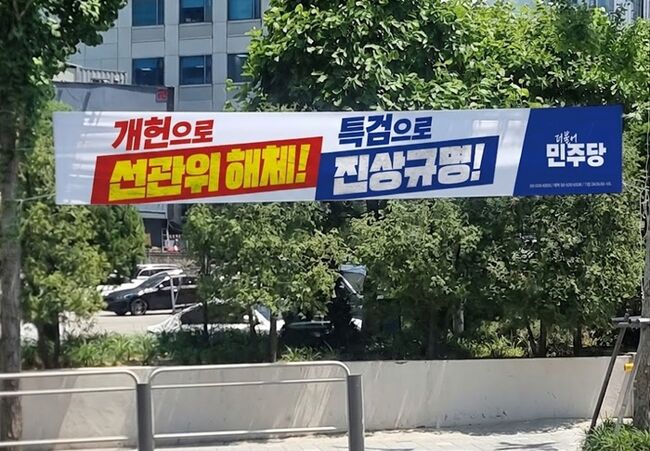 [Cho Yang-geon Column] The NEC: Facing a Fate of "Discarding the Dog After the Hunt"
Banner calling for the "dissolution of the NEC" posted by the Democratic Party. [AI-generated image]Banners calling for the "dissolution of the National Election Commission (NEC)" posted by the Democr
[Cho Yang-geon Column] The NEC: Facing a Fate of "Discarding the Dog After the Hunt"
Banner calling for the "dissolution of the NEC" posted by the Democratic Party. [AI-generated image]Banners calling for the "dissolution of the National Election Commission (NEC)" posted by the Democr
 [Photo] Evidence of Election Fraud Flooding U.S. Media… Trump Had 2.7 Million Votes Stolen
 [Video] U.S. Semiquincentennial Air Show... 'Art in the Sky' streaks across New York
 [Editorial Cartoon] A Draconian Law That Undermines Freedom of Expression

 List
List