- US: "Sanctions remain in place until a deal is signed."
- Iranian Military: "No talks unless sanctions are lifted"
 Iranian President Masoud Pezeshkian (left) and Hassan Hassanzadeh, commander of the Army Corps of the Islamic Revolutionary Guard Corps (IRGC), who died in an Israeli airstrike on March 29. [Getty Images=The Washington Post]
Iran is experiencing severe internal turmoil, divided between a war faction and a negotiation faction.
The Washington Post reported on the 8th (local time) that Iran's internal politics are divided between political elites (president, foreign minister, etc.) who desire peace negotiations and hardline military leaders (IRGC) who want to continue the war, thus delaying mediation with the United States.
According to sources, the Islamic Revolutionary Guard Corps (IRGC) is currently enjoying its strongest period in history and wishes for the war to continue.
The IRGC's adherence to war is to solidify its power by exploiting the crisis and stimulating nationalist sentiments.
In response, the United States is employing a "naval blockade" strategy, effectively blocking Iranian ports.
The U.S. Central Command (CENTCOM) announced via social media X that a U.S. Navy F/A-18 Super Hornet fighter jet neutralized two oil tankers attempting to breach the U.S. blockade of Tehran Port by firing precision-guided munitions at their smokestacks.
The Iranian-flagged Sistar 3 and Sevda were attempting to break through the blockade to reach an Iranian port in the Gulf of Oman. Videos showed black smoke rising from the ships after the attack.
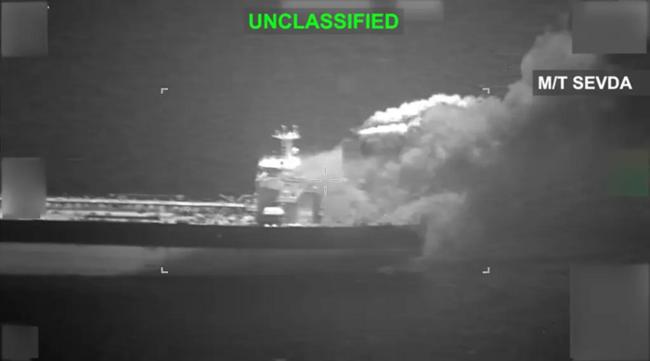 U.S. Central Command (CENTCOM) announced via X that a U.S. Navy F/A-18 Super Hornet fighter jet neutralized two oil tankers attempting to breach the U.S. blockade of Tehran Port by firing precision-guided munitions at their smokestacks. [Photo=U.S. Central Command]
The United States has stated that approximately 15,000 U.S. troops are currently blocking about 70 oil tankers near Iran's coast. The value of the oil alone is estimated at $13 billion (approximately 18 trillion won).
U.S. President Donald Trump, when Iran attacked U.S. naval vessels, casually dismissed it as a "minor contact" and temporarily suspended operations to offer an opportunity for negotiations.
As the conflict prolongs, Iran is threatening ships passing through the Strait of Hormuz by attacking them or demanding tolls. Even China has expressed concern, stating, "Our ships and sailors are in danger."
The Trump administration has cited internal factional conflict within Iran as the reason for delayed negotiations and maintains the stance that "the blockade will continue until a negotiated agreement is signed." Chairman of the Joint Chiefs of Staff Dan Caine also criticized the Iranian regime, stating that it is "led by the IRGC and is essentially trying to hold the global economy hostage."
Meanwhile, the Iranian military is reportedly refusing dialogue unless the blockade is lifted.
Experts predict that "as long as the military continues to gain influence within Iran, this precarious state of ceasefire will persist for the time being."
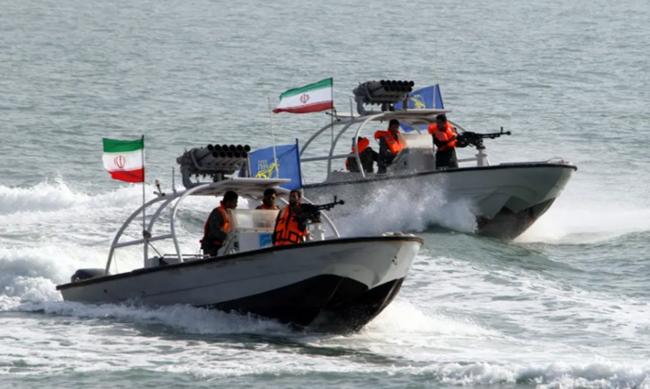 The Islamic Revolutionary Guard Corps attacks other countries' vessels in the Strait of Hormuz using speedboats. [AFP=The Washington Post]
Reporter Lim Yo-hee
What do you think of this article?

 Trump pressures for rate cut again ahead of FOMC... "Should be the lowest in the world"
U.S. President Donald Trump. [Photo = The White House] U.S. President Donald Trump once again pressured the Federal Reserve, the U.S. central bank, to lower interest rates on the 27th (local time
Trump pressures for rate cut again ahead of FOMC... "Should be the lowest in the world"
U.S. President Donald Trump. [Photo = The White House] U.S. President Donald Trump once again pressured the Federal Reserve, the U.S. central bank, to lower interest rates on the 27th (local time
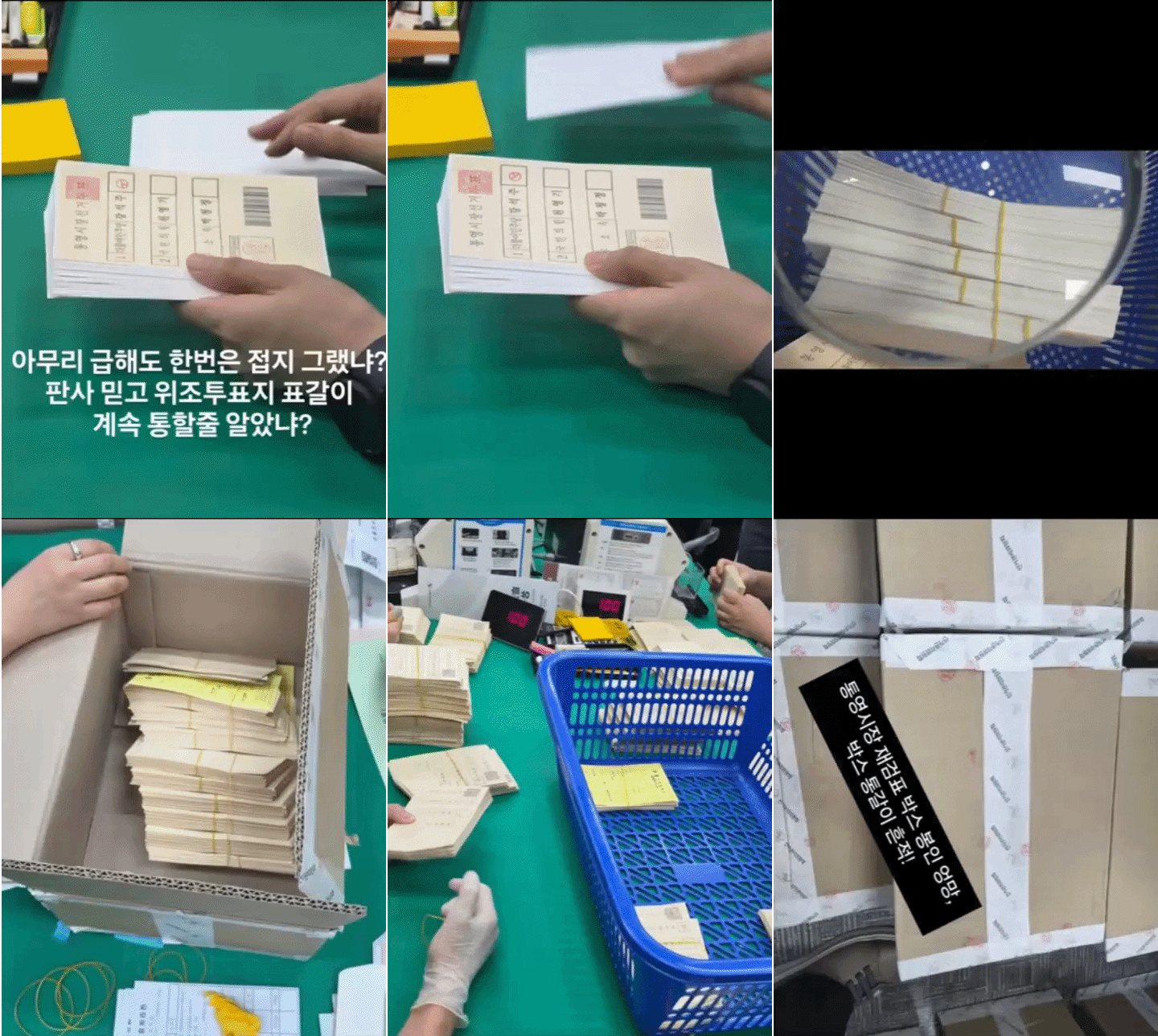 “Ignoring crisp ballots and damaged seals”… Tongyeong mayoral recount concludes with ‘no change in outcome,’ leaving suspicions and public outrage behind
Suspected counterfeit ballots discovered in Tongyeong [GIF from social media of Representative Hwang Kyo-ahn / Attorney Park Joo-hyun]During a recount of the Tongyeong mayoral election in South Gyeong
“Ignoring crisp ballots and damaged seals”… Tongyeong mayoral recount concludes with ‘no change in outcome,’ leaving suspicions and public outrage behind
Suspected counterfeit ballots discovered in Tongyeong [GIF from social media of Representative Hwang Kyo-ahn / Attorney Park Joo-hyun]During a recount of the Tongyeong mayoral election in South Gyeong
 President Yoon, regarding the first-instance ruling on the Public Official Election Act: “An excessive political verdict that distorts the facts… We will appeal immediately.”
The first-instance sentencing hearing for President Yoon Suk Yeol regarding violations of the Public Official Election Act is being broadcast live at Seoul Station on the 27th. [Photo=Yonhap News]Pres
President Yoon, regarding the first-instance ruling on the Public Official Election Act: “An excessive political verdict that distorts the facts… We will appeal immediately.”
The first-instance sentencing hearing for President Yoon Suk Yeol regarding violations of the Public Official Election Act is being broadcast live at Seoul Station on the 27th. [Photo=Yonhap News]Pres
 WSJ: "SK Hynix ADR Premium Is a Sign of AI Trading Overheat"
Advertisement for SK Hynix ADR listing in New York's Times Square [Reuters=Yonhap News file photo]The Wall Street Journal (WSJ) has pointed out that the price of SK Hynix’s American Depositary Recei
WSJ: "SK Hynix ADR Premium Is a Sign of AI Trading Overheat"
Advertisement for SK Hynix ADR listing in New York's Times Square [Reuters=Yonhap News file photo]The Wall Street Journal (WSJ) has pointed out that the price of SK Hynix’s American Depositary Recei
 'Godfather of Japanese Mystery Novels' Keigo Higashino Passes Away After Battle with Cancer at 68
Famous Japanese mystery novelist Keigo Higashino [AFP=Yonhap News]It has been belatedly reported that Keigo Higashino, the "godfather of Japanese mystery novels" and author of bestsellers such as "The
'Godfather of Japanese Mystery Novels' Keigo Higashino Passes Away After Battle with Cancer at 68
Famous Japanese mystery novelist Keigo Higashino [AFP=Yonhap News]It has been belatedly reported that Keigo Higashino, the "godfather of Japanese mystery novels" and author of bestsellers such as "The
 [Park Pil-kyu Security Column] To the Ignorant Trying to Clothe a Beast in Sheep's Clothing
Rep. Kim Byung-joo of the Democratic Party of Korea [Photo=Yonhap News]“The Air Force Academy doesn't teach you how to fly a plane!” “The Army, Navy, and Air Force academies are exactly the
[Park Pil-kyu Security Column] To the Ignorant Trying to Clothe a Beast in Sheep's Clothing
Rep. Kim Byung-joo of the Democratic Party of Korea [Photo=Yonhap News]“The Air Force Academy doesn't teach you how to fly a plane!” “The Army, Navy, and Air Force academies are exactly the
 [Issue Diagnosis] Two Effects of the Election Petition Review
 [Photo] Evidence of Election Fraud Flooding U.S. Media… Trump Had 2.7 Million Votes Stolen
 [Video] U.S. Semiquincentennial Air Show... 'Art in the Sky' streaks across New York
 [Editorial Cartoon] A Draconian Law That Undermines Freedom of Expression

 List
List