Marcus, Director of Indo-Pacific Security at the Atlantic Council, presents the results of the recently conducted 'Guardian Tiger III' tabletop exercise (TTX) and research at a breakfast seminar organized by the 'Defense Writers Group' at a hotel in Washington D.C. on the 13th (local time). [Yonhap News]
An American expert has suggested that thorough preparation is necessary not only for the United States but also for allies like South Korea, as there is a high probability that North Korea will launch 'Limited Nuclear Attacks' (LNA) against South Korea within the next decade.
Marcus, Director of Indo-Pacific Security at the Washington D.C.-based think tank Atlantic Council, presented the results of the recently conducted 'Guardian Tiger III' tabletop exercise (TTX) and research at a breakfast seminar organized by the 'Defense Writers Group' at a hotel in Washington D.C. on the 13th (local time).
The TTX begins with a hypothetical scenario where North Korea, facing an unfavorable turn in the war during a localized conflict in the West Sea, launches a torpedo equipped with a small nuclear warhead at a South Korean warship in the area, sinking it.
In response, the ROK-U.S. Combined Forces conduct a large-scale air strike on North Korean leader Kim Jong-un's family's Wonsan villa, sending a warning message to avoid escalation. However, North Korea instead launches a limited aerial nuclear attack on Dokdo.
Director Marcus stated, "It is very difficult to declare at this point that we will wage full-scale war to end the North Korean regime, as North Korea has sunk a warship with nuclear weapons," adding, "Therefore, this creates a political and operational dilemma for the United States and South Korea."
He also commented on North Korea's attack on Dokdo, stating that it further escalates the situation. "Although it may not have significant military effect due to the island being sparsely populated, it brings about a very important political dilemma on how to respond," he added.
This implies that despite North Korea's preemptive nuclear strike, both the South Korean and U.S. governments hesitate to respond with stronger nuclear retaliation due to concerns about a nuclear war escalating.
The TTX scenario then continues with the war escalating through developments such as: ▲ strengthening nuclear posture, including the deployment of U.S. dual-capable fighters (nuclear and conventional) to Kunsan Air Base ▲ North Korea launching conventional missiles, drones, and cruise missiles equipped with low-yield nuclear warheads from submarines ▲ the ROK-U.S. Combined Forces conducting a limited conventional-nuclear counterattack ▲ North Korea launching multiple short-range ballistic missiles (SRBMs) at Kunsan Air Base.
Ultimately, the ROK-U.S. Combined Forces issue an ultimatum to North Korea, leading to the demise of the North Korean regime when it refuses. The exercise concludes with the conflict escalating into a full-scale war, with North Korea retaliating by launching nuclear missiles towards the U.S. mainland's ballistic missile defense system in Alaska and Pearl Harbor in Hawaii.
Director Marcus advised, "The threat of North Korea's limited nuclear attacks is far more realistic than a large-scale nuclear full-scale war targeting densely populated areas," adding, "We must be better prepared psychologically and militarily for this. Otherwise, deterrence will weaken."
He also warned, "Despite it being a sensitive issue, continuous dialogue between allied governments is necessary for effective management. If we confine this issue to being merely too sensitive or classified, it will be impossible to conduct the appropriate level of training and analysis needed to prepare for these types of threats."
Director Marcus particularly emphasized that this TTX and research are "considerations that must be taken into account when approaching the transition of wartime operational control (OPCON) between South Korea and the United States," and stressed, "Ultimately, this is a threat that the ROK-U.S. alliance must prepare for, regardless of the command and control system it adopts."
This TTX and research, which modeled a limited nuclear attack scenario in East Asia, was conducted by the Atlantic Council with funding from the Defense Threat Reduction Agency (DTRA) under the U.S. Department of Defense.
Director Marcus introduced that the TTX and research comprised a virtual workshop, site visits to key locations including U.S. Strategic Command headquarters and South Korea, and a three-day TTX, with over 150 participants including government and military officials from the United States and allied nations, as well as external experts.

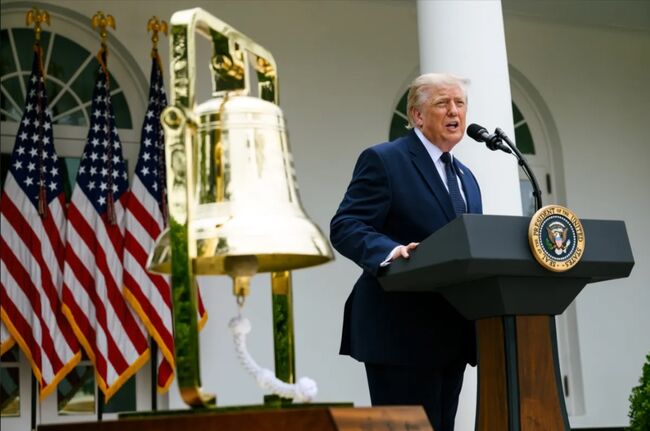 Trump pressures for rate cut again ahead of FOMC... "Should be the lowest in the world"
U.S. President Donald Trump. [Photo = The White House] U.S. President Donald Trump once again pressured the Federal Reserve, the U.S. central bank, to lower interest rates on the 27th (local time
Trump pressures for rate cut again ahead of FOMC... "Should be the lowest in the world"
U.S. President Donald Trump. [Photo = The White House] U.S. President Donald Trump once again pressured the Federal Reserve, the U.S. central bank, to lower interest rates on the 27th (local time
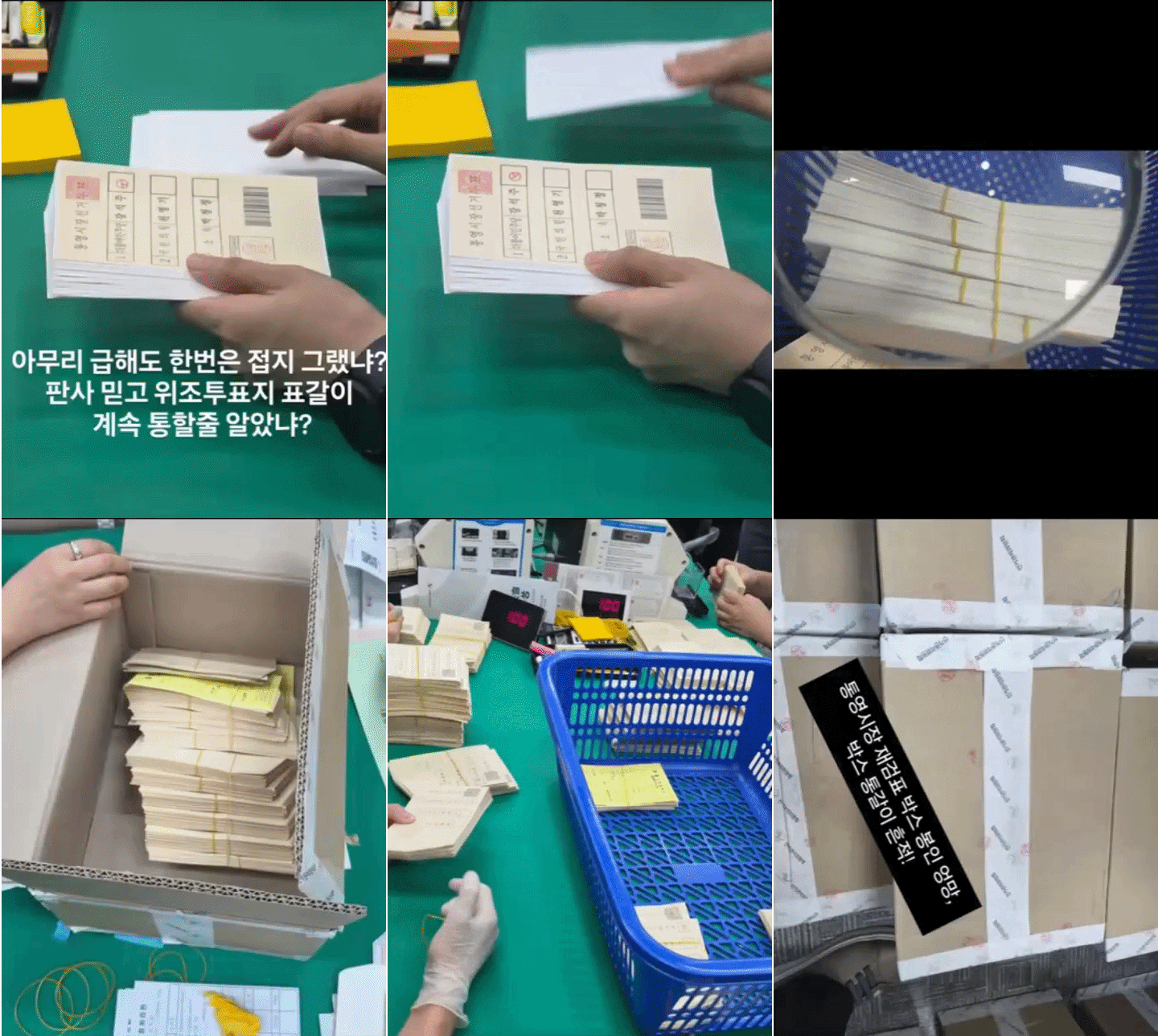 “Ignoring crisp ballots and damaged seals”… Tongyeong mayoral recount concludes with ‘no change in outcome,’ leaving suspicions and public outrage behind
Suspected counterfeit ballots discovered in Tongyeong [GIF from social media of Representative Hwang Kyo-ahn / Attorney Park Joo-hyun]During a recount of the Tongyeong mayoral election in South Gyeong
“Ignoring crisp ballots and damaged seals”… Tongyeong mayoral recount concludes with ‘no change in outcome,’ leaving suspicions and public outrage behind
Suspected counterfeit ballots discovered in Tongyeong [GIF from social media of Representative Hwang Kyo-ahn / Attorney Park Joo-hyun]During a recount of the Tongyeong mayoral election in South Gyeong
 President Yoon, regarding the first-instance ruling on the Public Official Election Act: “An excessive political verdict that distorts the facts… We will appeal immediately.”
The first-instance sentencing hearing for President Yoon Suk Yeol regarding violations of the Public Official Election Act is being broadcast live at Seoul Station on the 27th. [Photo=Yonhap News]Pres
President Yoon, regarding the first-instance ruling on the Public Official Election Act: “An excessive political verdict that distorts the facts… We will appeal immediately.”
The first-instance sentencing hearing for President Yoon Suk Yeol regarding violations of the Public Official Election Act is being broadcast live at Seoul Station on the 27th. [Photo=Yonhap News]Pres
 WSJ: "SK Hynix ADR Premium Is a Sign of AI Trading Overheat"
Advertisement for SK Hynix ADR listing in New York's Times Square [Reuters=Yonhap News file photo]The Wall Street Journal (WSJ) has pointed out that the price of SK Hynix’s American Depositary Recei
WSJ: "SK Hynix ADR Premium Is a Sign of AI Trading Overheat"
Advertisement for SK Hynix ADR listing in New York's Times Square [Reuters=Yonhap News file photo]The Wall Street Journal (WSJ) has pointed out that the price of SK Hynix’s American Depositary Recei
 'Godfather of Japanese Mystery Novels' Keigo Higashino Passes Away After Battle with Cancer at 68
Famous Japanese mystery novelist Keigo Higashino [AFP=Yonhap News]It has been belatedly reported that Keigo Higashino, the "godfather of Japanese mystery novels" and author of bestsellers such as "The
'Godfather of Japanese Mystery Novels' Keigo Higashino Passes Away After Battle with Cancer at 68
Famous Japanese mystery novelist Keigo Higashino [AFP=Yonhap News]It has been belatedly reported that Keigo Higashino, the "godfather of Japanese mystery novels" and author of bestsellers such as "The
 [Park Pil-kyu Security Column] To the Ignorant Trying to Clothe a Beast in Sheep's Clothing
Rep. Kim Byung-joo of the Democratic Party of Korea [Photo=Yonhap News]“The Air Force Academy doesn't teach you how to fly a plane!” “The Army, Navy, and Air Force academies are exactly the
[Park Pil-kyu Security Column] To the Ignorant Trying to Clothe a Beast in Sheep's Clothing
Rep. Kim Byung-joo of the Democratic Party of Korea [Photo=Yonhap News]“The Air Force Academy doesn't teach you how to fly a plane!” “The Army, Navy, and Air Force academies are exactly the
 [Issue Diagnosis] Two Effects of the Election Petition Review
 [Photo] Evidence of Election Fraud Flooding U.S. Media… Trump Had 2.7 Million Votes Stolen
 [Video] U.S. Semiquincentennial Air Show... 'Art in the Sky' streaks across New York
 [Editorial Cartoon] A Draconian Law That Undermines Freedom of Expression

 List
List