 U.S. President Donald Trump (left) shakes hands with Chinese President Xi Jinping at the Great Hall of the People in Beijing on May 14, 2026. [AP=Yonhap News]
On the evening of May 13th, U.S. President Donald Trump's presidential aircraft, Air Force One, landed at Beijing Capital International Airport. This historic visit, approximately nine years after 2017, is more than just a diplomatic event. The two countries are set to engage in in-depth negotiations on issues such as trade disputes, the Iran war, and the Taiwan issue, all revolving around global hegemony, beginning this morning, the 14th.
Trump's delegation, which includes hardliners like Secretary of State Rubio and tech magnates like Elon Musk, appears to be the beginning of a massive dismantling process aimed at putting an end to the U.S.-China hegemony war and breaking the "pro-China shackles" that China has imposed on South Korea for decades.
1. Is the "Incheon Coordination" Code a "Negotiating Card" aimed at South Korea?
The most unconventional scene of this summit occurred just before the leaders' meeting, at Incheon International Airport in South Korea. The fact that U.S. Treasury Secretary Scott Bessant and Chinese Vice Premier He Lifeng finalized the agenda in Incheon sent a powerful message from the United States to the world.
The era when great powers unilaterally decided the fate of the Korean Peninsula is over. The Trump administration has declared South Korea not as a peripheral player in the U.S.-China hegemony struggle, but as the "strategic command center" of a new Northeast Asian order. This signifies that South Korea is no longer someone's "card," but has ascended to the position of a "designer" who shapes the game.
2. Is "Opening Up" a Signal for the Dismantling of the Chinese Communist Party?
While Trump's demand for "China market opening" is ostensibly based on reciprocity and economic logic, it is effectively intended to dismantle China's "state-led economic model," which is a control mechanism of the Chinese Communist Party. If U.S. Big Tech and financial capital are allowed to operate freely within China, the Chinese Communist Party's ability to control information, both internally and externally, will inevitably be undermined.
However, this sword will soon become a boomerang aimed at us. The same standards applied to China will soon define South Korea's platform regulations and data security certifications as "digital trade barriers" for the United States. This demand for complete market opening in exchange for security alliances should be seen as a signal that security and economy will move in tandem. If the current administration does not undergo a transformation, it could lead to a new and intensified crisis.
3. Is the Demand to Halt the "Dandong Pipeline" an Attempt to Separate North Korea from China?
The core of the security demands President Trump will present to President Xi Jinping is the "complete cessation of interference on the Korean Peninsula." The United States will pressure China with two specific examples.
This is a warning that "hostage-taking through economic means," such as the petty Lotte boycott and the Hallyudae (Korean Wave ban) that occurred during the THAAD deployment in 2016, will no longer be tolerated. Any act that twists South Korea's sovereign security decisions through economic leverage will be considered a direct challenge to the United States.
They will demand the immediate halt of the "Dandong-Sinuiju pipeline," which accounts for 90% of North Korea's crude oil imports, and illicit ship-to-ship transfers on the high seas. This will be a death sentence for China's practice of supplying oil to North Korea as a "shield" to counter the U.S.
4. Is Starlink, the Liberator of Information, a Dagger Aimed at the North Korean Regime?
The presence of Elon Musk in the delegation to China poses a greater threat to the North Korean regime than missiles. Trump is likely to pressure China for concessions that would legalize or tacitly approve the influx of information into North Korea.
Once low-orbit satellite communication networks like Starlink, which break down information blockades in dictatorial countries, penetrate the closed skies of North Korea, the "information control" fortress that supports Kim Jong Un's regime will crumble.
The U.S.'s overwhelming AI intelligence network will track every move of North Korea's underground nuclear facilities and mobile launchers (TELs) in real-time. The era when China secretly supplied information is over, and the era of U.S. "digital sovereignty" covering the entire Korean Peninsula (as per the Constitution of the Republic of Korea) will dawn.
5. Are We Moving Beyond the "Gray Zone" Towards the Time of Free Unification?
It is now impossible to continue the "Anmi Gyeongjung" (peace with America, economic dealings with China) tightrope walk of enjoying economic benefits while looking to China under America's security umbrella. Trump's message is clear: "Either come under the US Standard, or be buried in the gray zone with China."
If China's backing is cut off and America's technological superiority supports the Korean Peninsula, it will be a golden opportunity for South Korea to accelerate its long-cherished goal of "free democratic unification." This means the days of looking over our shoulders in the space between great powers are over, and we must directly turn the clock on the Korean Peninsula towards the time of free unification.
We Must Begin the Journey to Free Unification by Rebuilding the Security Walls
The Beijing negotiations, held under strict control, ask us: Will we remain as sentinels waiting for someone to protect us, or will we become masters designing a new era? The news from Beijing on May 14, 2026, will tell us what security walls we must rebuild.
Heaven protect us, it is time to remove the old shadows of China, align our military power with the US-ROK alliance standard, and embark on the great journey of free unification. Will we restore national sovereignty weakened by the current administration's pro-China and subservient policies, and create a new history of free unification through active popular sovereignty? Today is a critical juncture.
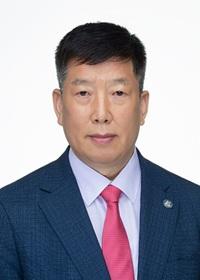
◆ Park Pil-gyu
Editorial Board Member, Hankook Ilbo
40th graduating class, Korea Military Academy

 Iranian Foreign Ministry: "Continuing Message Exchanges with the U.S. and Activities of Mediating Countries"
Esmaeil Baghaei, Spokesperson for the Iranian Ministry of Foreign Affairs [Xinhua, Yonhap News file photo]Esmaeil Baghaei, spokesperson for the Iranian Ministry of Foreign Affairs, stated on the 26th
Iranian Foreign Ministry: "Continuing Message Exchanges with the U.S. and Activities of Mediating Countries"
Esmaeil Baghaei, Spokesperson for the Iranian Ministry of Foreign Affairs [Xinhua, Yonhap News file photo]Esmaeil Baghaei, spokesperson for the Iranian Ministry of Foreign Affairs, stated on the 26th
 President Yoon: "Do You Think You Are Safe from the Special Counsel?"... Final Statement Video Released
President Yoon Suk Yeol rebuking the special prosecutor on the 24th. [Court video / @birds_justice X account subtitle GIF] A video of President Yoon Suk Yeol's closing statement at his trial rega
President Yoon: "Do You Think You Are Safe from the Special Counsel?"... Final Statement Video Released
President Yoon Suk Yeol rebuking the special prosecutor on the 24th. [Court video / @birds_justice X account subtitle GIF] A video of President Yoon Suk Yeol's closing statement at his trial rega
 President Yoon, regarding the first-instance ruling on the Public Official Election Act: “An excessive political verdict that distorts the facts… We will appeal immediately.”
The first-instance sentencing hearing for President Yoon Suk Yeol regarding violations of the Public Official Election Act is being broadcast live at Seoul Station on the 27th. [Photo=Yonhap News]Pres
President Yoon, regarding the first-instance ruling on the Public Official Election Act: “An excessive political verdict that distorts the facts… We will appeal immediately.”
The first-instance sentencing hearing for President Yoon Suk Yeol regarding violations of the Public Official Election Act is being broadcast live at Seoul Station on the 27th. [Photo=Yonhap News]Pres
 WSJ: "SK Hynix ADR Premium Is a Sign of AI Trading Overheat"
Advertisement for SK Hynix ADR listing in New York's Times Square [Reuters=Yonhap News file photo]The Wall Street Journal (WSJ) has pointed out that the price of SK Hynix’s American Depositary Recei
WSJ: "SK Hynix ADR Premium Is a Sign of AI Trading Overheat"
Advertisement for SK Hynix ADR listing in New York's Times Square [Reuters=Yonhap News file photo]The Wall Street Journal (WSJ) has pointed out that the price of SK Hynix’s American Depositary Recei
 'Godfather of Japanese Mystery Novels' Keigo Higashino Passes Away After Battle with Cancer at 68
Famous Japanese mystery novelist Keigo Higashino [AFP=Yonhap News]It has been belatedly reported that Keigo Higashino, the "godfather of Japanese mystery novels" and author of bestsellers such as "The
'Godfather of Japanese Mystery Novels' Keigo Higashino Passes Away After Battle with Cancer at 68
Famous Japanese mystery novelist Keigo Higashino [AFP=Yonhap News]It has been belatedly reported that Keigo Higashino, the "godfather of Japanese mystery novels" and author of bestsellers such as "The
 [Park Pil-kyu Security Column] To the Ignorant Trying to Clothe a Beast in Sheep's Clothing
Rep. Kim Byung-joo of the Democratic Party of Korea [Photo=Yonhap News]“The Air Force Academy doesn't teach you how to fly a plane!” “The Army, Navy, and Air Force academies are exactly the
[Park Pil-kyu Security Column] To the Ignorant Trying to Clothe a Beast in Sheep's Clothing
Rep. Kim Byung-joo of the Democratic Party of Korea [Photo=Yonhap News]“The Air Force Academy doesn't teach you how to fly a plane!” “The Army, Navy, and Air Force academies are exactly the
 [Issue Diagnosis] Two Effects of the Election Petition Review
 [Photo] Evidence of Election Fraud Flooding U.S. Media… Trump Had 2.7 Million Votes Stolen
 [Video] U.S. Semiquincentennial Air Show... 'Art in the Sky' streaks across New York
 [Editorial Cartoon] A Draconian Law That Undermines Freedom of Expression

 List
List










