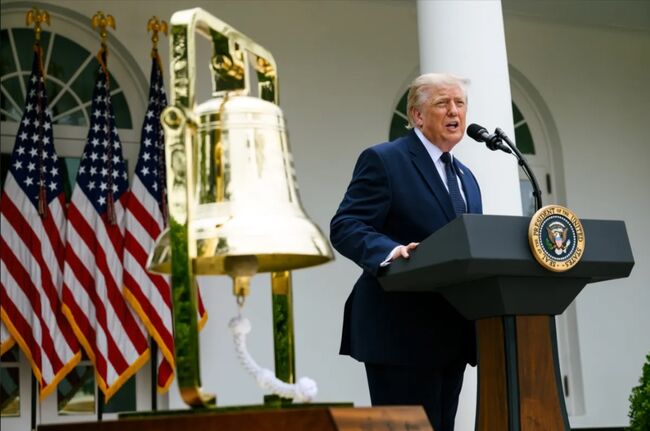
Secretary of State Marco Rubio stated that the United States will adhere to its long-standing policy on Taiwan as it strives to maintain strategic stability with China, following a meeting between President Donald Trump and Chinese President Xi Jinping.
In an interview with NBC News on the 13th (local time), Secretary Rubio mentioned that President Xi Jinping reiterated that Taiwan remains the "most important issue" in U.S.-China relations, a position Beijing has consistently maintained.
Secretary Rubio responded by stating that the U.S. opposes any "forced change to the status quo," warning that such a move would destabilize not only the two nations but also the global economy as a whole.
Secretary Rubio emphasized that the U.S. policy on Taiwan "has not changed" and has remained largely consistent across multiple administrations.
While confirming that the Taiwan issue was discussed during the summit, he noted that China's stance on U.S. arms sales to Taiwan was "not a major agenda item" at the meeting.
"The Taiwan issue remains unchanged, just as the discussions we had today," Secretary Rubio added, stating that Washington continues to support strategic stability and open communication with Beijing to avoid miscalculation and greater conflict.
The Secretary of State identified peaceful political unification with Taiwan as China's preferred outcome, but warned that any attempt to force unification through military means would be a "terrible mistake" with global repercussions.
Secretary Rubio also pointed to the rapid modernization of the Chinese military, stating that the pace of Beijing's military buildup over the past decade is "unprecedented."
He said that China's ambitions extend beyond Taiwan and that its will to exert influence globally is becoming increasingly evident amid competition with the United States.
These remarks underscore the diplomatic tightrope Washington continues to walk with Beijing.
When asked if he believes China will invade Taiwan, Secretary Rubio replied that China would prefer Taiwan to voluntarily unify with China through methods like a referendum. He added that President Xi Jinping desires to achieve such reunification within his term.
The U.S. officially adheres to the "One China" policy, recognizing Beijing as the government of China, while maintaining unofficial relations with Taiwan.
Simultaneously, the U.S. is committed to assisting Taiwan in maintaining its capacity for self-defense under the Taiwan Relations Act.
This balancing act, often referred to as "strategic ambiguity," is designed to deter both Chinese invasion and a formal declaration of independence by Taiwan, while avoiding direct military conflict between the two global powers.
As China expands its military presence in the Indo-Pacific and intensifies pressure on Taiwan through military exercises and naval deployments, U.S. officials are working to reassure allies, support Taiwan's defense capabilities, and maintain economic ties with China without provoking escalation.
By U.S. NNP=Reporter Sung Ku Hong / Special to this paper NNP info@newsandpost.com

 Trump pressures for rate cut again ahead of FOMC... "Should be the lowest in the world"
U.S. President Donald Trump. [Photo = The White House] U.S. President Donald Trump once again pressured the Federal Reserve, the U.S. central bank, to lower interest rates on the 27th (local time
Trump pressures for rate cut again ahead of FOMC... "Should be the lowest in the world"
U.S. President Donald Trump. [Photo = The White House] U.S. President Donald Trump once again pressured the Federal Reserve, the U.S. central bank, to lower interest rates on the 27th (local time
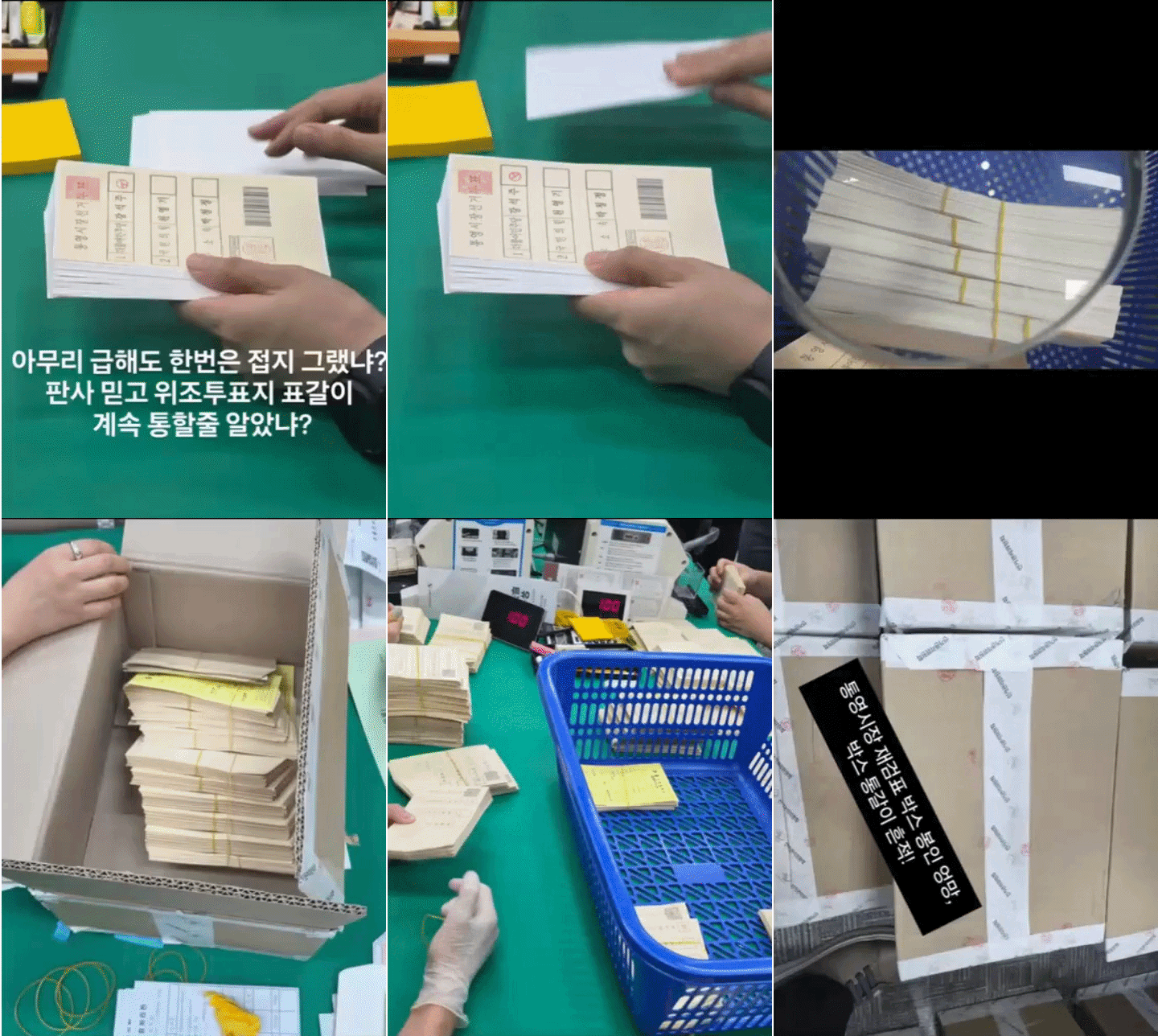 “Ignoring crisp ballots and damaged seals”… Tongyeong mayoral recount concludes with ‘no change in outcome,’ leaving suspicions and public outrage behind
Suspected counterfeit ballots discovered in Tongyeong [GIF from social media of Representative Hwang Kyo-ahn / Attorney Park Joo-hyun]During a recount of the Tongyeong mayoral election in South Gyeong
“Ignoring crisp ballots and damaged seals”… Tongyeong mayoral recount concludes with ‘no change in outcome,’ leaving suspicions and public outrage behind
Suspected counterfeit ballots discovered in Tongyeong [GIF from social media of Representative Hwang Kyo-ahn / Attorney Park Joo-hyun]During a recount of the Tongyeong mayoral election in South Gyeong
 President Yoon, regarding the first-instance ruling on the Public Official Election Act: “An excessive political verdict that distorts the facts… We will appeal immediately.”
The first-instance sentencing hearing for President Yoon Suk Yeol regarding violations of the Public Official Election Act is being broadcast live at Seoul Station on the 27th. [Photo=Yonhap News]Pres
President Yoon, regarding the first-instance ruling on the Public Official Election Act: “An excessive political verdict that distorts the facts… We will appeal immediately.”
The first-instance sentencing hearing for President Yoon Suk Yeol regarding violations of the Public Official Election Act is being broadcast live at Seoul Station on the 27th. [Photo=Yonhap News]Pres
 WSJ: "SK Hynix ADR Premium Is a Sign of AI Trading Overheat"
Advertisement for SK Hynix ADR listing in New York's Times Square [Reuters=Yonhap News file photo]The Wall Street Journal (WSJ) has pointed out that the price of SK Hynix’s American Depositary Recei
WSJ: "SK Hynix ADR Premium Is a Sign of AI Trading Overheat"
Advertisement for SK Hynix ADR listing in New York's Times Square [Reuters=Yonhap News file photo]The Wall Street Journal (WSJ) has pointed out that the price of SK Hynix’s American Depositary Recei
 'Godfather of Japanese Mystery Novels' Keigo Higashino Passes Away After Battle with Cancer at 68
Famous Japanese mystery novelist Keigo Higashino [AFP=Yonhap News]It has been belatedly reported that Keigo Higashino, the "godfather of Japanese mystery novels" and author of bestsellers such as "The
'Godfather of Japanese Mystery Novels' Keigo Higashino Passes Away After Battle with Cancer at 68
Famous Japanese mystery novelist Keigo Higashino [AFP=Yonhap News]It has been belatedly reported that Keigo Higashino, the "godfather of Japanese mystery novels" and author of bestsellers such as "The
 [Park Pil-kyu Security Column] To the Ignorant Trying to Clothe a Beast in Sheep's Clothing
Rep. Kim Byung-joo of the Democratic Party of Korea [Photo=Yonhap News]“The Air Force Academy doesn't teach you how to fly a plane!” “The Army, Navy, and Air Force academies are exactly the
[Park Pil-kyu Security Column] To the Ignorant Trying to Clothe a Beast in Sheep's Clothing
Rep. Kim Byung-joo of the Democratic Party of Korea [Photo=Yonhap News]“The Air Force Academy doesn't teach you how to fly a plane!” “The Army, Navy, and Air Force academies are exactly the
 [Issue Diagnosis] Two Effects of the Election Petition Review
 [Photo] Evidence of Election Fraud Flooding U.S. Media… Trump Had 2.7 Million Votes Stolen
 [Video] U.S. Semiquincentennial Air Show... 'Art in the Sky' streaks across New York
 [Editorial Cartoon] A Draconian Law That Undermines Freedom of Expression

 List
List