Vessels anchored and stopped in the Strait of Hormuz [AP=Yonhap News Photo]
According to announcements from Iranian state media and the Islamic Revolutionary Guard Corps, Iran allowed approximately 30 vessels, including several linked to China, to pass through the Strait of Hormuz from Thursday night to Friday morning. This action was described by Tehran as an "Iranian-administered transit agreement."
This move signals a partial easing of Iran's strict control over one of the world's most strategically vital maritime routes, while also demonstrating strengthening cooperation between Tehran and Beijing amid Middle East conflicts disrupting global energy markets.
Iranian officials stated that the passage of these ships was conducted in "close consultation" with China and followed security procedures established by Tehran after it gained effective control over the strait following the outbreak of war earlier this year.
State-run Tasnim news agency reported that the agreement reflected a "strategic partnership" between Tehran and Beijing, and Iranian military officials emphasized that access to the narrow sea lane remains subject to Iranian approval.
The Strait of Hormuz, connecting the Persian Gulf with the Gulf of Oman and the Arabian Sea, has historically handled about one-fifth of the world's oil supply.
Iran has repeatedly warned that commercial traffic must be authorized by Iranian authorities since the outbreak of the war.
A commander from the Islamic Revolutionary Guard Corps (IRGC) reportedly stated that passage for vessels associated with countries considered "enemies" by Iran remains prohibited, suggesting Tehran continues to leverage this waterway as a means of pressure against the United States and its allies.
Reports indicate that Iran is directly benefiting from a limited transit system through this selective reopening.
Previous reports suggested that Tehran could charge up to $2 million per vessel for ensuring safe passage through the strait, although Iranian officials have not officially confirmed any fee collection agreements.
Recent developments further highlight Washington's inability to restore full freedom of navigation through the vital maritime passage, despite repeated military deployments by the U.S. and international demands for unimpeded passage, according to Newsmax.
While the U.S. Navy has increased its military presence in the region, Iran's de facto control over transit approvals appears to largely persist. This is significantly influenced by the fears of commercial shipping companies.
Consequently, mainstream media outlets are reporting that this situation represents a significant strategic victory for Tehran.
The reopening of the strait emerged as a key topic of discussion during the meeting between President Donald Trump and Chinese President Xi Jinping in Beijing this week.
According to the White House, the two leaders agreed that the waterway must remain open for international energy transportation. President Trump later stated that President Xi Jinping offered Beijing's support in promoting stability in the region and reopening commercial shipping lanes.
Following the talks, President Trump revealed that President Xi Jinping assured him that China would not provide military assistance to Iran.
"President Xi made it clear that they would not be providing military equipment," President Trump told Fox News, adding that President Xi said, "I would be happy to help if there is anything I can do."
Meanwhile, a broader regional ceasefire remains precarious, Newsmax pointed out.
The U.S. has been working to maintain a temporary ceasefire between Israel and Lebanon, with an expiration date approaching on Sunday.
Israeli and Lebanese officials met in Washington this week to work towards preventing a wider escalation, but fighting continues in border areas.
Israel stated on Thursday that it had struck over 65 Hezbollah targets throughout Lebanon, while Hezbollah claimed responsibility for drone attacks targeting Israeli forces in northern Israel.
Concerns are being raised that the ongoing violence could lead to a complete breakdown of the ceasefire, risking further regional instability and complicating efforts to restore normal shipping operations through the strait.
U.S. NNP=Reporter Sung Ku Hong / Special Correspondent for this paper NNP info@newsandpost.com

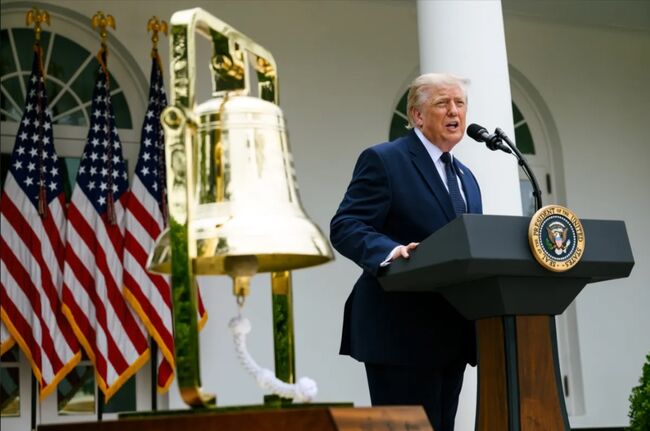 Trump pressures for rate cut again ahead of FOMC... "Should be the lowest in the world"
U.S. President Donald Trump. [Photo = The White House] U.S. President Donald Trump once again pressured the Federal Reserve, the U.S. central bank, to lower interest rates on the 27th (local time
Trump pressures for rate cut again ahead of FOMC... "Should be the lowest in the world"
U.S. President Donald Trump. [Photo = The White House] U.S. President Donald Trump once again pressured the Federal Reserve, the U.S. central bank, to lower interest rates on the 27th (local time
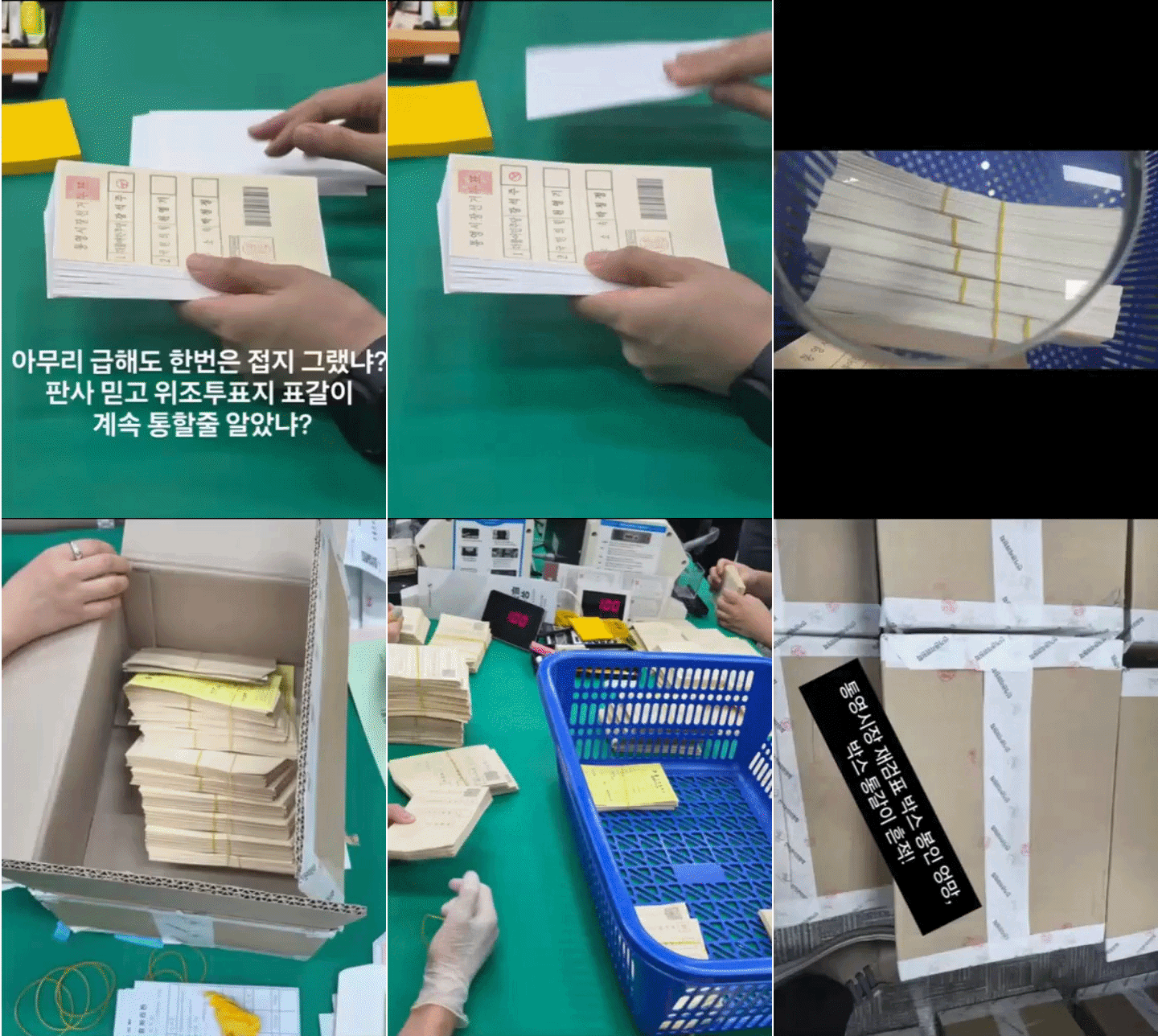 “Ignoring crisp ballots and damaged seals”… Tongyeong mayoral recount concludes with ‘no change in outcome,’ leaving suspicions and public outrage behind
Suspected counterfeit ballots discovered in Tongyeong [GIF from social media of Representative Hwang Kyo-ahn / Attorney Park Joo-hyun]During a recount of the Tongyeong mayoral election in South Gyeong
“Ignoring crisp ballots and damaged seals”… Tongyeong mayoral recount concludes with ‘no change in outcome,’ leaving suspicions and public outrage behind
Suspected counterfeit ballots discovered in Tongyeong [GIF from social media of Representative Hwang Kyo-ahn / Attorney Park Joo-hyun]During a recount of the Tongyeong mayoral election in South Gyeong
 President Yoon, regarding the first-instance ruling on the Public Official Election Act: “An excessive political verdict that distorts the facts… We will appeal immediately.”
The first-instance sentencing hearing for President Yoon Suk Yeol regarding violations of the Public Official Election Act is being broadcast live at Seoul Station on the 27th. [Photo=Yonhap News]Pres
President Yoon, regarding the first-instance ruling on the Public Official Election Act: “An excessive political verdict that distorts the facts… We will appeal immediately.”
The first-instance sentencing hearing for President Yoon Suk Yeol regarding violations of the Public Official Election Act is being broadcast live at Seoul Station on the 27th. [Photo=Yonhap News]Pres
 WSJ: "SK Hynix ADR Premium Is a Sign of AI Trading Overheat"
Advertisement for SK Hynix ADR listing in New York's Times Square [Reuters=Yonhap News file photo]The Wall Street Journal (WSJ) has pointed out that the price of SK Hynix’s American Depositary Recei
WSJ: "SK Hynix ADR Premium Is a Sign of AI Trading Overheat"
Advertisement for SK Hynix ADR listing in New York's Times Square [Reuters=Yonhap News file photo]The Wall Street Journal (WSJ) has pointed out that the price of SK Hynix’s American Depositary Recei
 'Godfather of Japanese Mystery Novels' Keigo Higashino Passes Away After Battle with Cancer at 68
Famous Japanese mystery novelist Keigo Higashino [AFP=Yonhap News]It has been belatedly reported that Keigo Higashino, the "godfather of Japanese mystery novels" and author of bestsellers such as "The
'Godfather of Japanese Mystery Novels' Keigo Higashino Passes Away After Battle with Cancer at 68
Famous Japanese mystery novelist Keigo Higashino [AFP=Yonhap News]It has been belatedly reported that Keigo Higashino, the "godfather of Japanese mystery novels" and author of bestsellers such as "The
 [Park Pil-kyu Security Column] To the Ignorant Trying to Clothe a Beast in Sheep's Clothing
Rep. Kim Byung-joo of the Democratic Party of Korea [Photo=Yonhap News]“The Air Force Academy doesn't teach you how to fly a plane!” “The Army, Navy, and Air Force academies are exactly the
[Park Pil-kyu Security Column] To the Ignorant Trying to Clothe a Beast in Sheep's Clothing
Rep. Kim Byung-joo of the Democratic Party of Korea [Photo=Yonhap News]“The Air Force Academy doesn't teach you how to fly a plane!” “The Army, Navy, and Air Force academies are exactly the
 [Issue Diagnosis] Two Effects of the Election Petition Review
 [Photo] Evidence of Election Fraud Flooding U.S. Media… Trump Had 2.7 Million Votes Stolen
 [Video] U.S. Semiquincentennial Air Show... 'Art in the Sky' streaks across New York
 [Editorial Cartoon] A Draconian Law That Undermines Freedom of Expression

 List
List