US and China Presidents Meet in Beijing [UPI Yonhap News]
China's Ministry of Commerce has stated its position that it will discuss tariff reductions on goods worth $30 billion each with the United States and will research issues related to export controls on key minerals such as rare earths with the U.S.
On the 20th, an official from the Ministry of Commerce's Department of the Americas and Oceania (equivalent to the 'Bureau' in Korean central government ministries) stated that the U.S. and China have achieved "positive common understandings (agreements)" by discussing the concrete outcomes of consultations from the high-level negotiations held in South Korea on the 12th-13th of this month and the summit in Beijing on the 13th-15th.
The Ministry of Commerce explained that through the Trade Commission, which the two countries agreed to establish, they "principally agreed to discuss a framework for reciprocal tariff reductions on goods of equal value" and that "the scale (of goods value) is $30 billion each or more."
It added that "for mutually concerning goods designated for discussion by both countries, there is a possibility of applying most-favored-nation tariff rates or even lower rates."
Furthermore, it stated, "If this plan is implemented, it will not only help stabilize and expand China-U.S. bilateral trade but also provide a beneficial reference point for global openness and cooperation," adding, "The economic and trade teams of both countries will maintain close communication to finalize concrete plans and implement them promptly."
Regarding rare earths, which have emerged as a powerful weapon for China in the U.S.-China trade dispute, the Ministry of Commerce announced its intention to "research" with the United States without specific commitments.
In its statement on "rare earth export controls" on this day, the Ministry of Commerce said, "The U.S.-China economic and trade teams have engaged in sufficient communication and exchanges regarding export control issues, and both countries will jointly research to address each other's reasonable and legitimate concerns."
It also emphasized, "The Chinese government is implementing export controls on key minerals such as rare earths in accordance with laws and regulations, and is reviewing permit applications for lawful and civilian use. China is willing to create favorable conditions with the U.S. to promote reciprocal cooperation between businesses of both countries and ensure the safety and stability of global industrial and supply chains."
In addition, the Ministry of Commerce stated, "In accordance with the agreement between President Xi Jinping and President Donald Trump, Chinese airlines will introduce 200 Boeing aircraft in line with their own aviation transport development needs and commercial principles," and added, "At the same time, the United States will provide guarantees for the supply of sufficient engines and parts to China."
On this day, the Ministry of Commerce welcomed the entry of excellent American agricultural products into the Chinese market and mentioned that China's dairy products and some agricultural and aquatic products have potential demand in the U.S. market. It also stated that the two countries agreed to include some agricultural products within the framework of mutual tariff reductions as measures to expand agricultural trade.
The decision was also made to restore the Chinese registration qualifications for U.S. beef exporters whose export channels to China had been blocked due to the expiration of their qualifications for some time.
The Ministry of Commerce of China explained that both countries have reached a consensus on non-tariff barriers for some agricultural products.
The United States has decided to lift the automatic seizure measures that have been applied since 2008 to Chinese dairy and dairy-containing food products and three types of aquatic products exported to the U.S., and has agreed to the trial export of Chinese bonsai to the U.S. China, in turn, has decided to lift sanctions related to the spread of highly pathogenic AI to certain U.S. states that meet the requirements and resume imports of poultry products from those states.
China's Ministry of Commerce stated, "The Chinese side hopes to work with the U.S. side to fully leverage the comparative advantages of each other's agricultural resources, deepen bilateral agricultural cooperation, and create favorable conditions to promote trade."
Earlier, the White House also issued a fact sheet on the outcomes of the U.S.-China summit on the 17th (local time), which included China's large-scale purchase of U.S. agricultural products and the establishment of a U.S.-China Trade Committee.
According to the fact sheet, China has committed to purchasing a minimum of $17 billion worth of U.S. agricultural products annually by 2028.
The fact sheet also included information similar to China's announcement today, such as China renewing export permits for more than 400 U.S. beef facilities and cooperating with U.S. regulatory authorities to lift all restrictions on U.S. beef facilities, and the purchase of 200 Boeing aircraft by the U.S.
However, regarding rare earths and key minerals, the document cited yttrium, scandium, neodymium, and indium as examples, but only included the phrase that "China will address U.S. concerns regarding supply chain shortages."

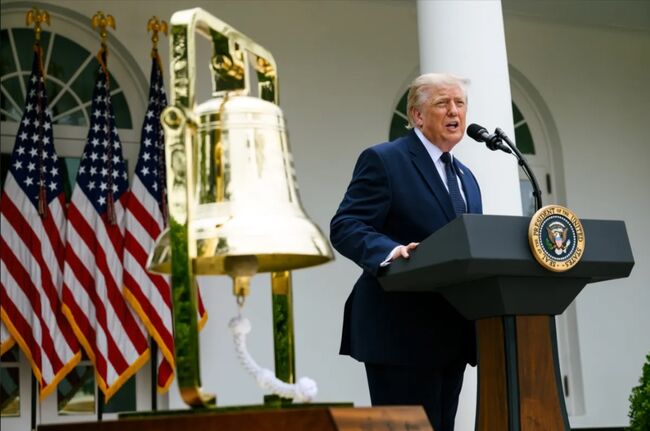 Trump pressures for rate cut again ahead of FOMC... "Should be the lowest in the world"
U.S. President Donald Trump. [Photo = The White House] U.S. President Donald Trump once again pressured the Federal Reserve, the U.S. central bank, to lower interest rates on the 27th (local time
Trump pressures for rate cut again ahead of FOMC... "Should be the lowest in the world"
U.S. President Donald Trump. [Photo = The White House] U.S. President Donald Trump once again pressured the Federal Reserve, the U.S. central bank, to lower interest rates on the 27th (local time
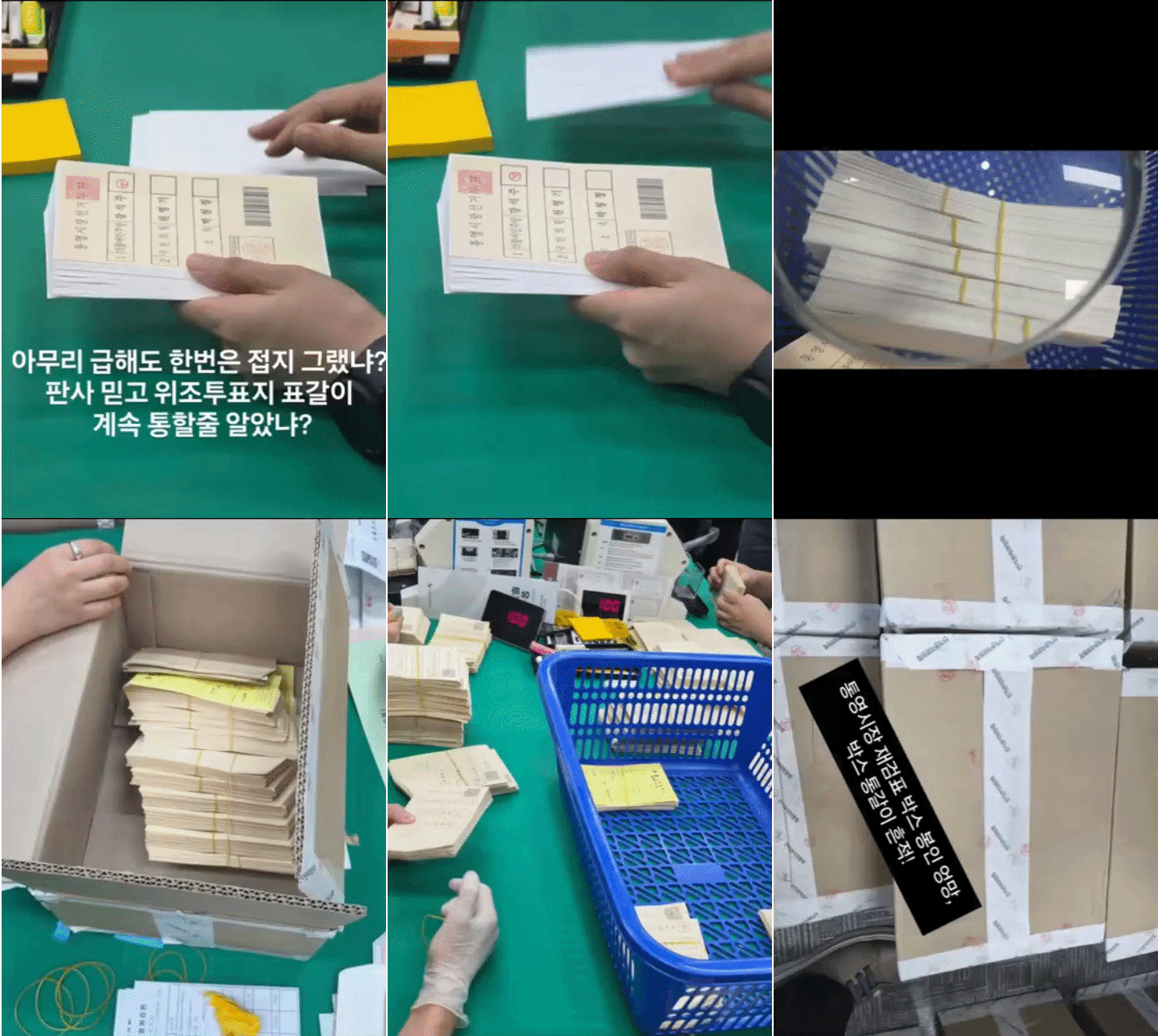 “Ignoring crisp ballots and damaged seals”… Tongyeong mayoral recount concludes with ‘no change in outcome,’ leaving suspicions and public outrage behind
Suspected counterfeit ballots discovered in Tongyeong [GIF from social media of Representative Hwang Kyo-ahn / Attorney Park Joo-hyun]During a recount of the Tongyeong mayoral election in South Gyeong
“Ignoring crisp ballots and damaged seals”… Tongyeong mayoral recount concludes with ‘no change in outcome,’ leaving suspicions and public outrage behind
Suspected counterfeit ballots discovered in Tongyeong [GIF from social media of Representative Hwang Kyo-ahn / Attorney Park Joo-hyun]During a recount of the Tongyeong mayoral election in South Gyeong
 President Yoon, regarding the first-instance ruling on the Public Official Election Act: “An excessive political verdict that distorts the facts… We will appeal immediately.”
The first-instance sentencing hearing for President Yoon Suk Yeol regarding violations of the Public Official Election Act is being broadcast live at Seoul Station on the 27th. [Photo=Yonhap News]Pres
President Yoon, regarding the first-instance ruling on the Public Official Election Act: “An excessive political verdict that distorts the facts… We will appeal immediately.”
The first-instance sentencing hearing for President Yoon Suk Yeol regarding violations of the Public Official Election Act is being broadcast live at Seoul Station on the 27th. [Photo=Yonhap News]Pres
 WSJ: "SK Hynix ADR Premium Is a Sign of AI Trading Overheat"
Advertisement for SK Hynix ADR listing in New York's Times Square [Reuters=Yonhap News file photo]The Wall Street Journal (WSJ) has pointed out that the price of SK Hynix’s American Depositary Recei
WSJ: "SK Hynix ADR Premium Is a Sign of AI Trading Overheat"
Advertisement for SK Hynix ADR listing in New York's Times Square [Reuters=Yonhap News file photo]The Wall Street Journal (WSJ) has pointed out that the price of SK Hynix’s American Depositary Recei
 'Godfather of Japanese Mystery Novels' Keigo Higashino Passes Away After Battle with Cancer at 68
Famous Japanese mystery novelist Keigo Higashino [AFP=Yonhap News]It has been belatedly reported that Keigo Higashino, the "godfather of Japanese mystery novels" and author of bestsellers such as "The
'Godfather of Japanese Mystery Novels' Keigo Higashino Passes Away After Battle with Cancer at 68
Famous Japanese mystery novelist Keigo Higashino [AFP=Yonhap News]It has been belatedly reported that Keigo Higashino, the "godfather of Japanese mystery novels" and author of bestsellers such as "The
 [Park Pil-kyu Security Column] To the Ignorant Trying to Clothe a Beast in Sheep's Clothing
Rep. Kim Byung-joo of the Democratic Party of Korea [Photo=Yonhap News]“The Air Force Academy doesn't teach you how to fly a plane!” “The Army, Navy, and Air Force academies are exactly the
[Park Pil-kyu Security Column] To the Ignorant Trying to Clothe a Beast in Sheep's Clothing
Rep. Kim Byung-joo of the Democratic Party of Korea [Photo=Yonhap News]“The Air Force Academy doesn't teach you how to fly a plane!” “The Army, Navy, and Air Force academies are exactly the
 [Issue Diagnosis] Two Effects of the Election Petition Review
 [Photo] Evidence of Election Fraud Flooding U.S. Media… Trump Had 2.7 Million Votes Stolen
 [Video] U.S. Semiquincentennial Air Show... 'Art in the Sky' streaks across New York
 [Editorial Cartoon] A Draconian Law That Undermines Freedom of Expression

 List
List