During a Senate confirmation hearing on Wednesday the 20th, attended by U.S. Ambassador nominee to South Korea, Michelle Park Steel (70, Korean name Park Eun-ju), senators openly expressed distrust towards the South Korean government.
This distrust was addressed in three aspects. First, issues related to security were pointed out.
Senator Jim Risch (Republican, Idaho), Chairman of the Senate Foreign Relations Committee, noted, "In the past, both North and South Korea had departments related to unification, but now they are all gone." He added that he has been hearing news of North Korea increasingly challenging South Korea, stating, "This does not paint a good picture, and the outlook for the future is not very bright. I would like to hear your thoughts on this."
Senator Pete Ricketts (Republican, Nebraska) recalled that a Korean War veteran was proud of what he had done in Korea, saying, "I believe the relationship with South Korea is the core of alliances and security in the Indo-Pacific. South Korea, as a free nation, is a prime example of what we can do against tyranny."
Nominee Steel reiterated that her parents fled North Korea to escape communism and said, "We all know how many people are suffering in North Korea. That is why we need a very strong alliance between the United States, Japan, and South Korea."
"This is not just about protecting South Korea, but about protecting the entire Indo-Pacific region," she added. "That is why we must have a strong alliance with the United States. The two countries have worked together, and our relationship is truly solid and very, very strong."
The second point of concern was the $350 billion investment in the U.S.
Senator Ricketts stated, "During President Trump's term, the security-focused 'partnership' with South Korea evolved to prioritize the economy and supply chains. Last year's Strategic Trade and Investment Agreement with South Korea was a historic leap, with promises made to remove non-tariff barriers for American companies and end discrimination. However, the U.S. Trade Representative's (USTR) 2026 National Trade Estimate report tells a slightly different story, highlighting various barriers in South Korea that hinder the progress of American agriculture and digital services."
He further elaborated, "What is particularly concerning is South Korea's recent decision to halt voluntary additions to its soybean import quotas. The United States supplies about 80% of South Korea's soybean imports, and this policy harms the farmers in my home state of Nebraska."
Ricketts concluded, "As long as existing barriers remain or new ones are created, we cannot celebrate new agreements. American farmers and businesses deserve to enjoy all the benefits of the agreements we have made. Therefore, if confirmed, will you commit to ensuring the full implementation of the Strategic Trade and Investment Agreement with South Korea?"
Regarding trade, Nominee Steel referred to the agreement reached between President Trump and Lee Jae-myung, mentioning the joint fact sheet released in November of the previous year.
She stated, "There are three most important issues between South Korea and the United States. One is strengthening the military power of the ROK-US alliance, and the second is trade issues, specifically concerning trade in soybeans and other animal feed ingredients. If (my appointment) is confirmed, I will meet with the South Korean government and whoever is in charge of these trade issues to discuss them. This is because the joint fact sheet does not clearly detail the $350 billion and the $150 billion in the shipbuilding industry. Therefore, I want to understand exactly what factors have led to South Korea's trade surplus exceeding $50 billion under the current free trade agreement between South Korea and the United States. I believe that free trade is always a win-win strategy that benefits both sides, and I am open to renegotiations."
Senator Jeanne Shaheen (Democrat, New Hampshire) expressed her pleasure, saying, "I am glad you want to know where the $350 billion is coming from. When we were in Seoul earlier this year, this issue was raised, but there was absolutely no transparency regarding the use of funds, and the administration has not transparently disclosed investment agreements with South Korea or Japan to Congress. Therefore, this lack of transparency raises many questions."
Senator Shaheen asked Nominee Steel if she would commit to sharing information related to these funds with the Senate Foreign Relations Committee. Nominee Steel replied, "Yes, I will."
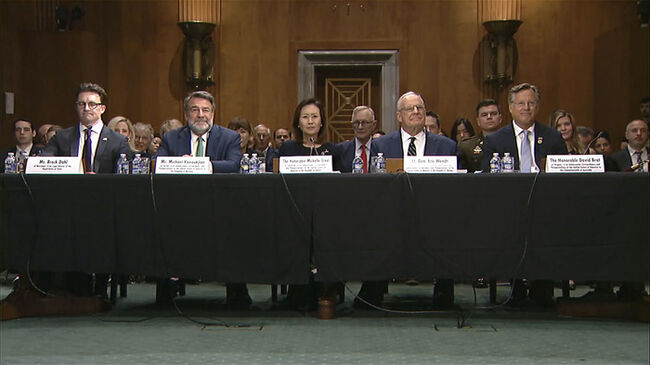
The third concern raised was the controversy over discrimination against American companies.
Senator Bill Hagerty (Republican, Tennessee) mentioned the ongoing 'Korea Zinc' project in Tennessee, stating, "This is a very strategic business related to critical minerals," and requested cooperation to ensure the project proceeds smoothly.
Senator Hagerty continued, "There is one more issue that I hope the South Korean government will work on for us. Considering our deep relationship with our technology companies in particular, it is a concern to me that they appear to be discriminated against in South Korea. I would be very grateful if you would pay attention to this issue to ensure that Coupang and all American companies, especially technology companies, do not face any discrimination in South Korea compared to other companies, including Chinese companies."
Nominee Steel again referred to the joint fact sheet on bilateral agreements, stating, "That joint document clearly states that American companies should not be discriminated against and should not face unnecessary barriers. If I am confirmed, I will definitely uphold this. Just as all Korean companies in the United States are treated equally, I believe that American companies in South Korea should receive the same treatment as their domestic companies."
On this day, senators, regardless of party affiliation, did not address any issues regarding Nominee Steel's qualifications. Instead, they expressed their concerns about the South Korean government, appearing to discuss the duties and direction of the next U.S. Ambassador to South Korea.
Nominee Steel, whose parents fled North Korea during the Korean War, was born in Seoul in 1955. She moved to Japan with her father, a diplomat, and then to the United States in 1975. She served as an elected member of the California State Board of Equalization and as an Orange County Supervisor before serving as a Republican member of the House of Representatives for four years from 2021, working on committees such as the Committee on Ways and Means and the Select Committee on the Strategic Competition between the United States and the Chinese Communist Party.
Following this hearing, Nominee Steel can be appointed as ambassador only after her nomination passes the Foreign Relations Committee and the full Senate. As a former member of Congress with no controversies, her confirmation is expected to proceed quickly.
By Hong Sung-koo, Chief Editor, NNP USA / Special Contributor to this newspaper NNP info@newsandpost.com

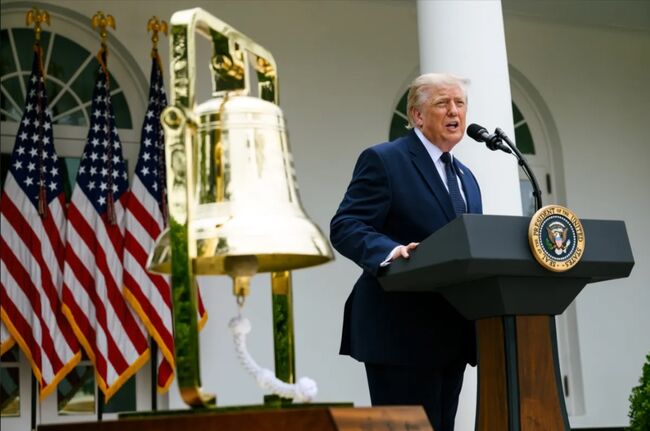 Trump pressures for rate cut again ahead of FOMC... "Should be the lowest in the world"
U.S. President Donald Trump. [Photo = The White House] U.S. President Donald Trump once again pressured the Federal Reserve, the U.S. central bank, to lower interest rates on the 27th (local time
Trump pressures for rate cut again ahead of FOMC... "Should be the lowest in the world"
U.S. President Donald Trump. [Photo = The White House] U.S. President Donald Trump once again pressured the Federal Reserve, the U.S. central bank, to lower interest rates on the 27th (local time
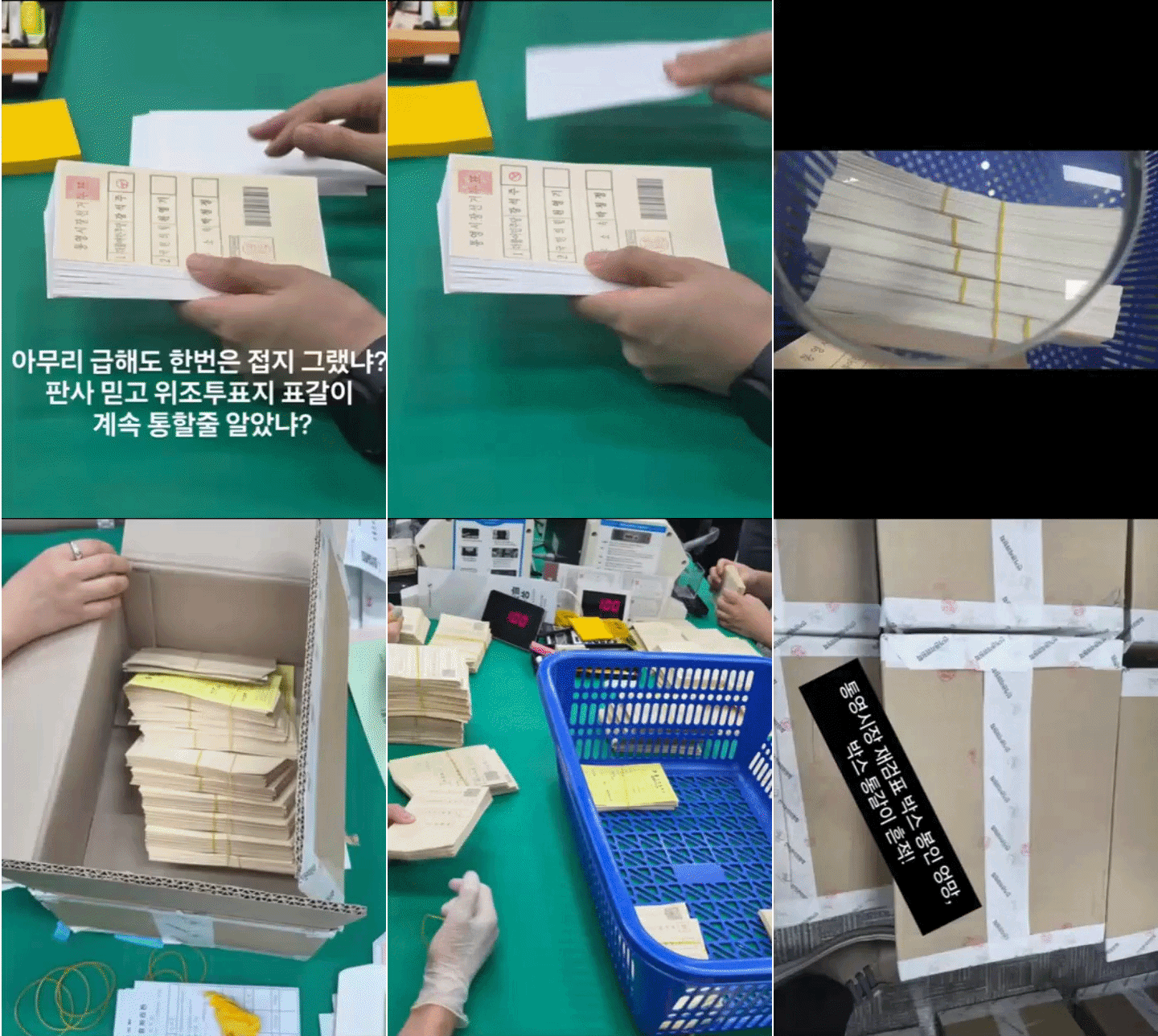 “Ignoring crisp ballots and damaged seals”… Tongyeong mayoral recount concludes with ‘no change in outcome,’ leaving suspicions and public outrage behind
Suspected counterfeit ballots discovered in Tongyeong [GIF from social media of Representative Hwang Kyo-ahn / Attorney Park Joo-hyun]During a recount of the Tongyeong mayoral election in South Gyeong
“Ignoring crisp ballots and damaged seals”… Tongyeong mayoral recount concludes with ‘no change in outcome,’ leaving suspicions and public outrage behind
Suspected counterfeit ballots discovered in Tongyeong [GIF from social media of Representative Hwang Kyo-ahn / Attorney Park Joo-hyun]During a recount of the Tongyeong mayoral election in South Gyeong
 President Yoon, regarding the first-instance ruling on the Public Official Election Act: “An excessive political verdict that distorts the facts… We will appeal immediately.”
The first-instance sentencing hearing for President Yoon Suk Yeol regarding violations of the Public Official Election Act is being broadcast live at Seoul Station on the 27th. [Photo=Yonhap News]Pres
President Yoon, regarding the first-instance ruling on the Public Official Election Act: “An excessive political verdict that distorts the facts… We will appeal immediately.”
The first-instance sentencing hearing for President Yoon Suk Yeol regarding violations of the Public Official Election Act is being broadcast live at Seoul Station on the 27th. [Photo=Yonhap News]Pres
 WSJ: "SK Hynix ADR Premium Is a Sign of AI Trading Overheat"
Advertisement for SK Hynix ADR listing in New York's Times Square [Reuters=Yonhap News file photo]The Wall Street Journal (WSJ) has pointed out that the price of SK Hynix’s American Depositary Recei
WSJ: "SK Hynix ADR Premium Is a Sign of AI Trading Overheat"
Advertisement for SK Hynix ADR listing in New York's Times Square [Reuters=Yonhap News file photo]The Wall Street Journal (WSJ) has pointed out that the price of SK Hynix’s American Depositary Recei
 'Godfather of Japanese Mystery Novels' Keigo Higashino Passes Away After Battle with Cancer at 68
Famous Japanese mystery novelist Keigo Higashino [AFP=Yonhap News]It has been belatedly reported that Keigo Higashino, the "godfather of Japanese mystery novels" and author of bestsellers such as "The
'Godfather of Japanese Mystery Novels' Keigo Higashino Passes Away After Battle with Cancer at 68
Famous Japanese mystery novelist Keigo Higashino [AFP=Yonhap News]It has been belatedly reported that Keigo Higashino, the "godfather of Japanese mystery novels" and author of bestsellers such as "The
 [Park Pil-kyu Security Column] To the Ignorant Trying to Clothe a Beast in Sheep's Clothing
Rep. Kim Byung-joo of the Democratic Party of Korea [Photo=Yonhap News]“The Air Force Academy doesn't teach you how to fly a plane!” “The Army, Navy, and Air Force academies are exactly the
[Park Pil-kyu Security Column] To the Ignorant Trying to Clothe a Beast in Sheep's Clothing
Rep. Kim Byung-joo of the Democratic Party of Korea [Photo=Yonhap News]“The Air Force Academy doesn't teach you how to fly a plane!” “The Army, Navy, and Air Force academies are exactly the
 [Issue Diagnosis] Two Effects of the Election Petition Review
 [Photo] Evidence of Election Fraud Flooding U.S. Media… Trump Had 2.7 Million Votes Stolen
 [Video] U.S. Semiquincentennial Air Show... 'Art in the Sky' streaks across New York
 [Editorial Cartoon] A Draconian Law That Undermines Freedom of Expression

 List
List