 According to Statistics Korea data, the average assets of the top 10% of households far exceed those of the bottom 10% by tens of times. [Graphic=Yonhap News] The world of Saha (娑婆世界) originally means "the land that must be endured." However, the weight and landscape of that endurance vary dramatically from person to person.
If we broadly categorize the sentient beings living in this world by their life trajectories, they are clearly divided into two groups: those who take for granted the prosperity beyond the stratosphere, and those who endure the harsh breathing of the earth.
The Stratosphere: Where Social and Material Abundance is the Default Value in Life
First, those residing in the stratosphere include: △ 'Limousine Left and Right Wings' △ Senior public officials △ High-level executives of large corporations △ University professors with overseas study experience △ Lawyers at large law firms △ Emerging IT tycoons △ Politicians enjoying power △ Real estate magnates △ Famous entertainers and sports stars △ And the approximately 89,000 employees of the memory division at Samjeonnix (Samsung Electronics & Hynix).
These are the new aristocrats of our time, who enjoy social and material abundance as the default value (Default) of their lives. They live without directly facing the storms of the world, riding in the limousine of solid academic backgrounds, connections, and the authority of high positions.
For them, the 'suffering' of the Saha world is abstract or akin to a selective game. They are the privileged class of this era, looking down on the earth from the prosperous stratosphere, irrespective of factional logic.
On the opposite side are the 'ordinary sentient beings' who endure the earthly storms with their entire bodies. Below the stratosphere are the vast majority of citizens who live supporting the weight of their daily livelihoods and households. For them, abundance is not a given default value, but a fruit that must be won and protected through strenuous endurance.
These individuals personally experience the original meaning of the Saha world, 'Int'o (忍土 - Land of Endurance),' carrying the burdens of their children's education and their own old age, and silently sharing joys and sorrows. They are the true protagonists of our time.
Statistics Prove the Cruel Gap in 'Default Values'
The chasm between these two worlds is not a vague feeling but is proven by cold statistical figures. For people in the stratosphere, asset formation is a realm of 'appreciation,' but for beings on earth, it is a struggle for 'survival.' According to Statistics Korea data, the average assets of the top 10% of households far exceed those of the bottom 10% by tens of times.
Especially when looking at the proportion of asset income from real estate and stocks, residents of the stratosphere are in a structure where wealth grows even while they sleep. In contrast, beings on earth rely on labor for over 90% of their income, and even that is eroded by the waves of inflation and high interest rates.
In reality, the average annual income for South Korea's 22.41 million wage earners is 43 million won (3.6 million won per month), and the median income, which is the income of the person exactly in the middle when all workers are lined up, is a mere 33 million won annually (2.78 million won per month).
Beneath the shadow of hundreds of millions in bonuses and asset growth enjoyed by the new aristocrats of the stratosphere, the vast majority of laborers on earth are barely getting by within these stark numerical boundaries. For practitioners like myself, the gap in the 'opportunity cost of education' in this reality is even more painfully felt.
In the stratosphere, 'education' is the default value for 'investment' to preserve wealth, but on earth, it is the product of 'sacrifice' that risks the household. Looking at the household income quintiles of new students at major universities in the metropolitan area, the proportion of children from high-income families is overwhelmingly high.
The 'circulation structure of the stratosphere,' where the inheritance of wealth leads to the inheritance of academic credentials and then to the inheritance of power, has become even more solidified. Even with parents on earth working tirelessly to support their children, the era when a dragon could emerge from a humble origin has become a legend, and it is a cruel reality in today's education field that even harboring the hope that one's child will have a better life than their parents is difficult.
The Discrepancy Between Abstract Suffering and Existential Suffering
The most severe contrast appears in the 'perspective on suffering.' The limousine left and right wings in the stratosphere speak of the tears of the common people and cry out for justice on TV debates or lecture stages. This is closer to 'crocodile tears.'
The suffering they speak of is an abstract object, merely numbers in statistics. In reality, they send their children to study abroad and receive exorbitant fees or consultation fees unimaginable to ordinary people, solidifying their own exclusive league. For them, the hardships of the Saha world are merely a 'political task' to be resolved, not an 'existential crisis' that requires worrying about a place to sleep tonight.
However, for beings on earth, suffering is the cold air they face every morning when they open their eyes. The sighs of small business owners contemplating closure, the despair of young people devastated by real estate scams, and the loneliness of the elderly worrying about dying alone are scenes that are absolutely invisible from within a limousine. While those in the stratosphere are preoccupied with factional battles and dividing the world into left and right, beings on earth are sharing life and death, and tomorrow's meals.
Who is the Master of Int'o (Land of Endurance)?
The Buddha described the Saha world as a 'land of endurance.' However, the weight of that endurance is not equitable. If for those in the stratosphere, endurance is a means to protect power, for beings on earth, it is a noble struggle for survival. The peace enjoyed by the limousine left and right wings is merely a castle in the air built upon the sacrifices of those on earth.
I ask: Who is the true master of this Saha world? Is it those who offer advice from high places, or those who honestly endure suffering in the dust? A society that is intoxicated by the splendor of the stratosphere and turns a blind eye to the truth on the ground cannot endure.
Unless the burdens of the earth are shared, the prosperity of the stratosphere is an empty illusion. True enlightenment is not in the clouds but in the rough knuckles of sentient beings.
The rain from the sky does not discriminate between large trees or small grass. Why then do only the clouds of the stratosphere monopolize that rain and dry up the earth? The parched voices of the masses are the 'Hal (喝)' of heaven. Lower the windows of your limousines and reflect upon the groans of the earth. That is the only way to live as a master of Saha.
※Hal (喝): Originally, in Zen Buddhism, it refers to a stern scolding sound uttered to break through the afflictions and attachments of a practitioner. In this text, it is a metaphor for the stern warning or timely teaching inherent in the voices of the masses.
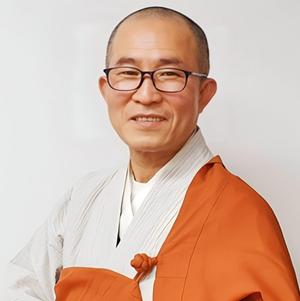
◆ Monk Euncheon
Director-General of the Jogye Order of Korean Buddhism for National Defense
First Commander of the National Defense Monk Corps

 Iranian Foreign Ministry: "Continuing Message Exchanges with the U.S. and Activities of Mediating Countries"
Esmaeil Baghaei, Spokesperson for the Iranian Ministry of Foreign Affairs [Xinhua, Yonhap News file photo]Esmaeil Baghaei, spokesperson for the Iranian Ministry of Foreign Affairs, stated on the 26th
Iranian Foreign Ministry: "Continuing Message Exchanges with the U.S. and Activities of Mediating Countries"
Esmaeil Baghaei, Spokesperson for the Iranian Ministry of Foreign Affairs [Xinhua, Yonhap News file photo]Esmaeil Baghaei, spokesperson for the Iranian Ministry of Foreign Affairs, stated on the 26th
 President Yoon: "Do You Think You Are Safe from the Special Counsel?"... Final Statement Video Released
President Yoon Suk Yeol rebuking the special prosecutor on the 24th. [Court video / @birds_justice X account subtitle GIF] A video of President Yoon Suk Yeol's closing statement at his trial rega
President Yoon: "Do You Think You Are Safe from the Special Counsel?"... Final Statement Video Released
President Yoon Suk Yeol rebuking the special prosecutor on the 24th. [Court video / @birds_justice X account subtitle GIF] A video of President Yoon Suk Yeol's closing statement at his trial rega
 President Yoon, regarding the first-instance ruling on the Public Official Election Act: “An excessive political verdict that distorts the facts… We will appeal immediately.”
The first-instance sentencing hearing for President Yoon Suk Yeol regarding violations of the Public Official Election Act is being broadcast live at Seoul Station on the 27th. [Photo=Yonhap News]Pres
President Yoon, regarding the first-instance ruling on the Public Official Election Act: “An excessive political verdict that distorts the facts… We will appeal immediately.”
The first-instance sentencing hearing for President Yoon Suk Yeol regarding violations of the Public Official Election Act is being broadcast live at Seoul Station on the 27th. [Photo=Yonhap News]Pres
 WSJ: "SK Hynix ADR Premium Is a Sign of AI Trading Overheat"
Advertisement for SK Hynix ADR listing in New York's Times Square [Reuters=Yonhap News file photo]The Wall Street Journal (WSJ) has pointed out that the price of SK Hynix’s American Depositary Recei
WSJ: "SK Hynix ADR Premium Is a Sign of AI Trading Overheat"
Advertisement for SK Hynix ADR listing in New York's Times Square [Reuters=Yonhap News file photo]The Wall Street Journal (WSJ) has pointed out that the price of SK Hynix’s American Depositary Recei
 'Godfather of Japanese Mystery Novels' Keigo Higashino Passes Away After Battle with Cancer at 68
Famous Japanese mystery novelist Keigo Higashino [AFP=Yonhap News]It has been belatedly reported that Keigo Higashino, the "godfather of Japanese mystery novels" and author of bestsellers such as "The
'Godfather of Japanese Mystery Novels' Keigo Higashino Passes Away After Battle with Cancer at 68
Famous Japanese mystery novelist Keigo Higashino [AFP=Yonhap News]It has been belatedly reported that Keigo Higashino, the "godfather of Japanese mystery novels" and author of bestsellers such as "The
 [Park Pil-kyu Security Column] To the Ignorant Trying to Clothe a Beast in Sheep's Clothing
Rep. Kim Byung-joo of the Democratic Party of Korea [Photo=Yonhap News]“The Air Force Academy doesn't teach you how to fly a plane!” “The Army, Navy, and Air Force academies are exactly the
[Park Pil-kyu Security Column] To the Ignorant Trying to Clothe a Beast in Sheep's Clothing
Rep. Kim Byung-joo of the Democratic Party of Korea [Photo=Yonhap News]“The Air Force Academy doesn't teach you how to fly a plane!” “The Army, Navy, and Air Force academies are exactly the
 [Issue Diagnosis] Two Effects of the Election Petition Review
 [Photo] Evidence of Election Fraud Flooding U.S. Media… Trump Had 2.7 Million Votes Stolen
 [Video] U.S. Semiquincentennial Air Show... 'Art in the Sky' streaks across New York
 [Editorial Cartoon] A Draconian Law That Undermines Freedom of Expression

 List
List









