US Secretary of State Marco Rubio visiting India [New Delhi AP=Yonhap News]
Peace negotiations between the United States and Iran are rapidly heading toward an agreement this weekend, the 23rd (local time).
Both sides have stated that progress is being made in the negotiations, and there have even been mentions that a peace agreement could be announced as early as later today.
Marco Rubio, the US Secretary of State, who is visiting New Delhi, India, told reporters on this day, in relation to the peace negotiations, "There is a possibility that we will announce something, whether it's late today, tomorrow, or in a few days," according to Reuters and AFP.
He added, "There is no news for you right now, but there might be some news later today, or there might not be. I hope there is news, but it is not yet certain."
Secretary Rubio also emphasized, "There has been some progress. Even as I speak now, some efforts are being made."
These remarks are drawing attention as they suggest that peace negotiations between the US and Iran are progressing, and an agreement between the two countries could be reached and announced as early as today.
Previously, up until yesterday, tensions had risen with reports that US President Donald Trump was seriously considering resuming airstrikes against Iran. However, within a day, the atmosphere appears to be shifting towards "resolution through diplomacy."
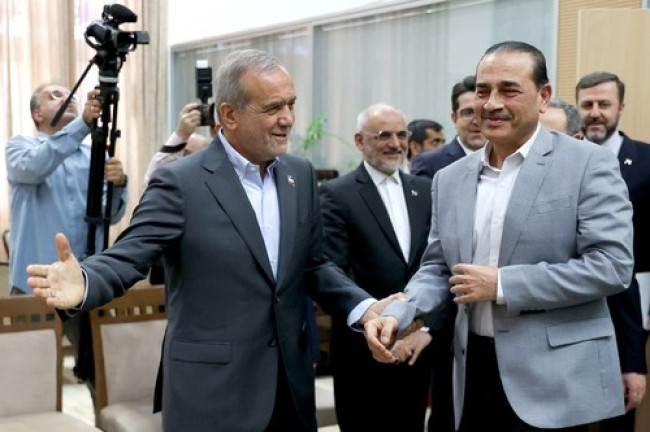 Iranian President Masoud Pezeshkian (left) and Pakistan Army Chief of Staff Asim Munir Provided by the Presidential Office of Iran. AFP=Yonhap News]
Esmaeil Baghaei, spokesperson for the Iranian Ministry of Foreign Affairs, also stated on this day, "We are very close to an agreement, but at the same time, we are very far. We are currently working to finalize a Memorandum of Understanding (MOU)," indicating that the two sides are narrowing their differences in peace talks with the US, as reported by Iran's state broadcaster IRIB.
Baghaei's remarks are a significant change compared to his statement the previous day, where he pointed out that "there are very large differences in opinion between Iran and the United States."
Baghaei explained that the purpose of the visit of Pakistan's Chief of Army Staff Asim Munir, who is playing a key mediating role between the two countries, to Tehran, the Iranian capital, for two days starting yesterday, during which he held consecutive meetings with Iranian leaders including the President, Speaker of Parliament, and Foreign Minister, was "to exchange messages between Iran and the United States," suggesting that significant progress had been made in the negotiations following Munir's visit.
Baghaei particularly introduced relatively specific details of the peace MOU.
He stated that the agenda, including nuclear issues and the unfreezing of assets, was included in Iran's 14-point demands. However, he also mentioned that if both sides agree on a peace MOU, the text of the MOU would include a provision for a grace period of 30 or 60 days before discussing nuclear matters.
This stance shows a discernible difference from the previous day's statement that "there are no discussions related to nuclear issues at this stage."
However, it remains uncertain whether US President Donald Trump, who views the prohibition of Iran's nuclear program and the handling of highly enriched uranium, which could enable rapid weaponization, as key conditions for peace, will accept this, as Iran's position is to discuss nuclear issues only after the conclusion of the peace MOU and a further grace period.
Furthermore, regarding the issue of the Strait of Hormuz, where civilian shipping has been effectively blocked since the outbreak of the war, Baghaei stated, "It has nothing to do with the United States; it is an issue between us and the coastal states. We are strengthening cooperation with Oman on the Strait of Hormuz issue," indicating uncertainty about whether this would satisfy the Trump administration.
Earlier, before departing for visits to Sweden and India on the 22nd, Secretary Rubio told reporters in the US that if Iran pursues charging tolls for passage through the Strait of Hormuz, "any such move would make a diplomatic agreement impossible," drawing a clear line.

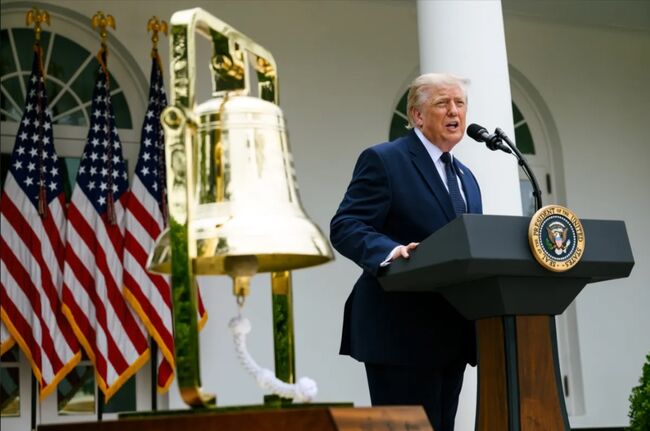 Trump pressures for rate cut again ahead of FOMC... "Should be the lowest in the world"
U.S. President Donald Trump. [Photo = The White House] U.S. President Donald Trump once again pressured the Federal Reserve, the U.S. central bank, to lower interest rates on the 27th (local time
Trump pressures for rate cut again ahead of FOMC... "Should be the lowest in the world"
U.S. President Donald Trump. [Photo = The White House] U.S. President Donald Trump once again pressured the Federal Reserve, the U.S. central bank, to lower interest rates on the 27th (local time
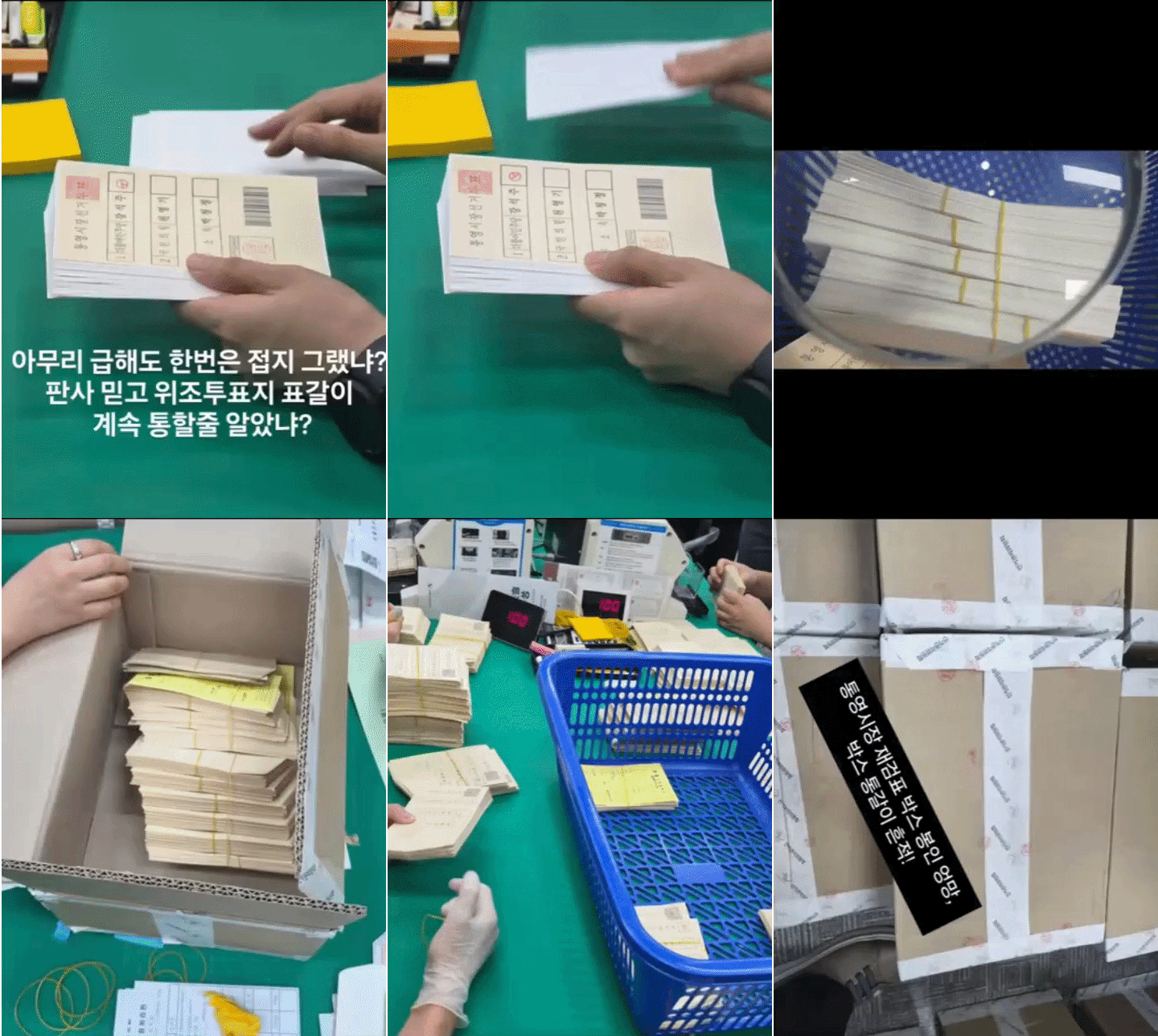 “Ignoring crisp ballots and damaged seals”… Tongyeong mayoral recount concludes with ‘no change in outcome,’ leaving suspicions and public outrage behind
Suspected counterfeit ballots discovered in Tongyeong [GIF from social media of Representative Hwang Kyo-ahn / Attorney Park Joo-hyun]During a recount of the Tongyeong mayoral election in South Gyeong
“Ignoring crisp ballots and damaged seals”… Tongyeong mayoral recount concludes with ‘no change in outcome,’ leaving suspicions and public outrage behind
Suspected counterfeit ballots discovered in Tongyeong [GIF from social media of Representative Hwang Kyo-ahn / Attorney Park Joo-hyun]During a recount of the Tongyeong mayoral election in South Gyeong
 President Yoon, regarding the first-instance ruling on the Public Official Election Act: “An excessive political verdict that distorts the facts… We will appeal immediately.”
The first-instance sentencing hearing for President Yoon Suk Yeol regarding violations of the Public Official Election Act is being broadcast live at Seoul Station on the 27th. [Photo=Yonhap News]Pres
President Yoon, regarding the first-instance ruling on the Public Official Election Act: “An excessive political verdict that distorts the facts… We will appeal immediately.”
The first-instance sentencing hearing for President Yoon Suk Yeol regarding violations of the Public Official Election Act is being broadcast live at Seoul Station on the 27th. [Photo=Yonhap News]Pres
 WSJ: "SK Hynix ADR Premium Is a Sign of AI Trading Overheat"
Advertisement for SK Hynix ADR listing in New York's Times Square [Reuters=Yonhap News file photo]The Wall Street Journal (WSJ) has pointed out that the price of SK Hynix’s American Depositary Recei
WSJ: "SK Hynix ADR Premium Is a Sign of AI Trading Overheat"
Advertisement for SK Hynix ADR listing in New York's Times Square [Reuters=Yonhap News file photo]The Wall Street Journal (WSJ) has pointed out that the price of SK Hynix’s American Depositary Recei
 'Godfather of Japanese Mystery Novels' Keigo Higashino Passes Away After Battle with Cancer at 68
Famous Japanese mystery novelist Keigo Higashino [AFP=Yonhap News]It has been belatedly reported that Keigo Higashino, the "godfather of Japanese mystery novels" and author of bestsellers such as "The
'Godfather of Japanese Mystery Novels' Keigo Higashino Passes Away After Battle with Cancer at 68
Famous Japanese mystery novelist Keigo Higashino [AFP=Yonhap News]It has been belatedly reported that Keigo Higashino, the "godfather of Japanese mystery novels" and author of bestsellers such as "The
 [Park Pil-kyu Security Column] To the Ignorant Trying to Clothe a Beast in Sheep's Clothing
Rep. Kim Byung-joo of the Democratic Party of Korea [Photo=Yonhap News]“The Air Force Academy doesn't teach you how to fly a plane!” “The Army, Navy, and Air Force academies are exactly the
[Park Pil-kyu Security Column] To the Ignorant Trying to Clothe a Beast in Sheep's Clothing
Rep. Kim Byung-joo of the Democratic Party of Korea [Photo=Yonhap News]“The Air Force Academy doesn't teach you how to fly a plane!” “The Army, Navy, and Air Force academies are exactly the
 [Issue Diagnosis] Two Effects of the Election Petition Review
 [Photo] Evidence of Election Fraud Flooding U.S. Media… Trump Had 2.7 Million Votes Stolen
 [Video] U.S. Semiquincentennial Air Show... 'Art in the Sky' streaks across New York
 [Editorial Cartoon] A Draconian Law That Undermines Freedom of Expression

 List
List