 On March 22, North Korea held the first session of the 15th Supreme People's Assembly in Pyongyang and re-elected Kim Jong Un as Chairman of the State Affairs Commission. On this day, Kim Jong Un declared "South Korea as the most hostile country" and issued a stern warning, stating, "If provoked, they will pay a ruthless price." [Photo=Korean Central News Agency]
Why are the left-wing nationalists of South Korea unable to clearly state that North Korea is the "main enemy" of South Korea? Many people understand this as mere political calculation or vote counting.
However, in reality, it is rooted in much deeper historical perception and psychological foundations. This is not a matter of a misstatement by one or two politicians, but a problem of collective thinking patterns created by modern and contemporary Korean history.
The Origin of South Korean Left-Wing Thought is Nationalism
First and foremost, the starting point of South Korean left-wing nationalism was a tendency to prioritize "nation" over "state." The conservative camp in South Korea generally views the survival and system of South Korea, a liberal democratic state, as the primary value.
In contrast, the flow of nationalist left-wing thought has understood the "Korean national community" as a higher concept than the state of South Korea. From this perspective, North Korea is perceived not as a foreign country, but as "half of the divided nation."
This difference is significant. For the conservative camp, the moment North Korea develops nuclear weapons and militarily threatens South Korea, the concept of "enemy" is immediately established. However, for nationalist left-wing individuals, while North Korea may be a dangerous adversary, it does not easily feel like a completely alienated foreign state. This is because an emotional connection of shared ethnicity still remains.
In fact, nationalist discourse in modern and contemporary Korean history has long been centered on "national victimhood." The experience of Japanese colonial rule left a strong historical memory in all of Korean society. The problem is that, in this process, the narrative that "the nation was a victim and foreign powers divided us" became deeply ingrained. From this viewpoint, the division itself was interpreted not as a choice made by the nation, but as a product of the Cold War and foreign powers.
From this perspective, the emphasis is placed on "why the division occurred" rather than on the violence and dictatorial nature of the North Korean regime. This led to a trend of attributing the cause of division to the United States, Japan, and the Cold War system. Consequently, North Korea is understood more as a "result of historical circumstances" rather than as an aggressor. Of course, they are not unaware of the problems of the North Korean regime. However, psychologically, the arrows of blame are often directed towards external conditions rather than North Korea.
The influence of the student activist culture of the 1980s was also very significant. At that time, the National Liberation (NL) faction's discourse held considerable power within the student movement. This trend involved a perspective that viewed South Korea not as a fully independent nation but as a semi-state under US influence. Conversely, North Korea was sometimes interpreted as a "system that pursued a line of national self-determination, albeit in a distorted manner."
Of course, not all left-wing individuals today maintain these exact views. However, human thought is long influenced by worldviews formed during youth. The nation-centric thinking that was established then still leaves traces in various areas of politics, education, and culture.
The Perception of Foreign Powers as the Cause of Division Also Plays a Role
What is particularly important is the issue of "moral self-image." Many left-wing nationalists perceive themselves as forces pursuing peace and reconciliation. To them, the phrase "North Korea is the main enemy" sounds like the vocabulary of Cold War anti-communism. Therefore, the moment they accept that phrase, they feel as though they are aligning themselves with militarism or Cold War logic.
This is a form of psychological rejection. It is similar to how someone might feel emotional difficulty if told, "Since you have a criminal in your family, define the entire family as an enemy." While they may criticize the North Korean regime, psychological resistance arises when the expression extends to "an enemy of the entire nation."
Another interesting point is that South Korean left-wing nationalism often exhibits a "supranational nationalist" character rather than being "anti-state." For these individuals, "historical legitimacy of the national community" is more important than the legal state of South Korea. Therefore, they often prioritize reconciliation within the nation over interstate conflict.
The problem is that this clashes with reality.
International politics operates not on emotions, but on military power and systems. North Korea has actually developed nuclear weapons, continues to pose military threats to South Korea, and has constitutionally maintained a stance that denies the South Korean system. In such a situation, it is difficult to explain the security reality solely based on the emotion of "shared ethnicity."
Therefore, the South Korean conservative camp criticizes left-wing nationalism, saying, "National sentiment has overwhelmed a sense of national reality." Conversely, the left-wing nationalist camp criticizes conservatives, stating, "They view internal national issues solely through the lens of hostility and confrontation." Ultimately, both sides clash over which is prioritized: the state or the nation.
Interestingly, this phenomenon is not unique to South Korea. Some elements of the West German left before German reunification did not view East Germany as a complete enemy state. Similar psychological dynamics appear in the relationship between China and Taiwan. This tension always arises in situations where the nation and the state do not fully align.
However, in South Korea's case, this has solidified into a stronger form due to the prolonged convergence of colonial experiences, the Cold War, division, and nationalist education. The influence of "nation" being treated as an almost moral value, particularly in education and culture, has been significant. As a result, for some individuals, "nation" itself has become a more sacred concept than South Korea, a liberal democratic state.
Ultimately, the reason why some left-wing nationalists hesitate to easily call North Korea the main enemy of South Korea is not solely due to ignorance of North Korea's reality. Rather, it stems from a long-formed, nation-centric historical perspective, emotions, and issues of self-identity. For them, North Korea remains not a simple foreign country, but a "tragic state of division within the same nation."
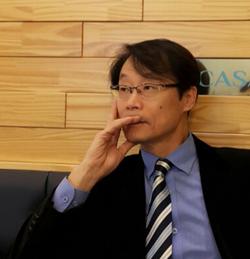
◆ Songsan (송산)
Poet and researcher of history and philosophy. Former director of the Rhee Syngman Institute. Currently serves as a research advisor for the Korean Modern and Contemporary History Research Association and as the representative of the philosophy forum Lyceum. He has published four poetry collections, co-translated "Heroes of the Goose Coast," and authored the humanities books "Joseon, the Mythified Nation," "Humanities on the Tatami," and "A Liberal's Reading of Gramsci." Songsan is a pen name.

 Iranian Foreign Ministry: "Continuing Message Exchanges with the U.S. and Activities of Mediating Countries"
Esmaeil Baghaei, Spokesperson for the Iranian Ministry of Foreign Affairs [Xinhua, Yonhap News file photo]Esmaeil Baghaei, spokesperson for the Iranian Ministry of Foreign Affairs, stated on the 26th
Iranian Foreign Ministry: "Continuing Message Exchanges with the U.S. and Activities of Mediating Countries"
Esmaeil Baghaei, Spokesperson for the Iranian Ministry of Foreign Affairs [Xinhua, Yonhap News file photo]Esmaeil Baghaei, spokesperson for the Iranian Ministry of Foreign Affairs, stated on the 26th
 President Yoon: "Do You Think You Are Safe from the Special Counsel?"... Final Statement Video Released
President Yoon Suk Yeol rebuking the special prosecutor on the 24th. [Court video / @birds_justice X account subtitle GIF] A video of President Yoon Suk Yeol's closing statement at his trial rega
President Yoon: "Do You Think You Are Safe from the Special Counsel?"... Final Statement Video Released
President Yoon Suk Yeol rebuking the special prosecutor on the 24th. [Court video / @birds_justice X account subtitle GIF] A video of President Yoon Suk Yeol's closing statement at his trial rega
 President Yoon, regarding the first-instance ruling on the Public Official Election Act: “An excessive political verdict that distorts the facts… We will appeal immediately.”
The first-instance sentencing hearing for President Yoon Suk Yeol regarding violations of the Public Official Election Act is being broadcast live at Seoul Station on the 27th. [Photo=Yonhap News]Pres
President Yoon, regarding the first-instance ruling on the Public Official Election Act: “An excessive political verdict that distorts the facts… We will appeal immediately.”
The first-instance sentencing hearing for President Yoon Suk Yeol regarding violations of the Public Official Election Act is being broadcast live at Seoul Station on the 27th. [Photo=Yonhap News]Pres
 WSJ: "SK Hynix ADR Premium Is a Sign of AI Trading Overheat"
Advertisement for SK Hynix ADR listing in New York's Times Square [Reuters=Yonhap News file photo]The Wall Street Journal (WSJ) has pointed out that the price of SK Hynix’s American Depositary Recei
WSJ: "SK Hynix ADR Premium Is a Sign of AI Trading Overheat"
Advertisement for SK Hynix ADR listing in New York's Times Square [Reuters=Yonhap News file photo]The Wall Street Journal (WSJ) has pointed out that the price of SK Hynix’s American Depositary Recei
 'Godfather of Japanese Mystery Novels' Keigo Higashino Passes Away After Battle with Cancer at 68
Famous Japanese mystery novelist Keigo Higashino [AFP=Yonhap News]It has been belatedly reported that Keigo Higashino, the "godfather of Japanese mystery novels" and author of bestsellers such as "The
'Godfather of Japanese Mystery Novels' Keigo Higashino Passes Away After Battle with Cancer at 68
Famous Japanese mystery novelist Keigo Higashino [AFP=Yonhap News]It has been belatedly reported that Keigo Higashino, the "godfather of Japanese mystery novels" and author of bestsellers such as "The
 [Park Pil-kyu Security Column] To the Ignorant Trying to Clothe a Beast in Sheep's Clothing
Rep. Kim Byung-joo of the Democratic Party of Korea [Photo=Yonhap News]“The Air Force Academy doesn't teach you how to fly a plane!” “The Army, Navy, and Air Force academies are exactly the
[Park Pil-kyu Security Column] To the Ignorant Trying to Clothe a Beast in Sheep's Clothing
Rep. Kim Byung-joo of the Democratic Party of Korea [Photo=Yonhap News]“The Air Force Academy doesn't teach you how to fly a plane!” “The Army, Navy, and Air Force academies are exactly the
 [Issue Diagnosis] Two Effects of the Election Petition Review
 [Photo] Evidence of Election Fraud Flooding U.S. Media… Trump Had 2.7 Million Votes Stolen
 [Video] U.S. Semiquincentennial Air Show... 'Art in the Sky' streaks across New York
 [Editorial Cartoon] A Draconian Law That Undermines Freedom of Expression

 List
List









