- Hormuz Reopening Push... Uncertainty Remains Until Signing
- "Price decline trend expected with improved supply-demand balance… likely after next year"
 The Strait of Hormuz, under the control of both the United States and Iran [Photo courtesy of Yonhap News/AFP]
International oil prices plummeted by more than 5% on expectations of a peace agreement between the United States and Iran.
However, uncertainty remains as U.S. President Donald Trump stated that a naval blockade on Iran would be maintained until a final agreement is reached.
According to Bloomberg and other sources, the July futures price for West Texas Intermediate (WTI) crude oil fell as much as $5.35 (5.53%) to $91.25 per barrel at one point during trading on the 24th (local time).
July Brent crude futures also fell $5.57 (5.38%) to $97.97 per barrel at one point during trading.
This reflects the expectation that the Middle East conflict, triggered by a large-scale military attack by the U.S. and Israel, could be resolved after about 80 days.
Market relief appears to have increased after U.S. President Donald Trump announced on his social media platform Truth Social the previous day that he had discussed a 'Memorandum of Understanding related to peace' for a ceasefire with Iran with leaders of Arab countries around Iran, and that "the agreement has been largely negotiated."
President Trump also posted on Truth Social on this day, stating that "(negotiations with Iran) are proceeding in an orderly and constructive manner."
The agreement, which the U.S. and Iran are reportedly close to signing, is said to include a 60-day extension of the ceasefire, the reopening of the Strait of Hormuz, and the commencement of negotiations to limit Iran's nuclear program.
However, uncertainty persists as President Trump stated, "We will not rush into an agreement" and "the negotiations are not yet completely concluded."
The Trump administration is striving to normalize navigation through the Strait of Hormuz to stabilize domestic prices ahead of the midterm elections in November this year.
It is understood that the U.S. included provisions in the draft Memorandum of Understanding (MOU) with Iran to take measures to restore traffic volume in the Strait of Hormuz to pre-war levels within 30 days of signing.
The Washington Post (WP) reported this, citing an anonymous diplomat familiar with the matter, and stated that the latest proposal for the MOU draft is awaiting approval from the Iranian side.
Even if the Strait of Hormuz is reopened, it is anticipated that it will take a considerable amount of time for oil production from suspended wells to resume and for shipping to normalize, leading to stability in international oil prices.
Hamed Huseyn, a commodities economist at Capital Economics, said, "The trend of falling prices will only emerge when the supply-demand balance in the oil market improves substantially, and this is likely to happen after 2027."
- 관련기사
-
What do you think of this article?

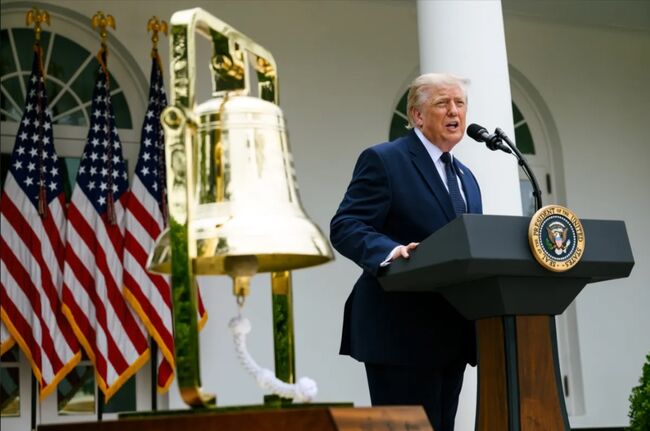 Trump pressures for rate cut again ahead of FOMC... "Should be the lowest in the world"
U.S. President Donald Trump. [Photo = The White House] U.S. President Donald Trump once again pressured the Federal Reserve, the U.S. central bank, to lower interest rates on the 27th (local time
Trump pressures for rate cut again ahead of FOMC... "Should be the lowest in the world"
U.S. President Donald Trump. [Photo = The White House] U.S. President Donald Trump once again pressured the Federal Reserve, the U.S. central bank, to lower interest rates on the 27th (local time
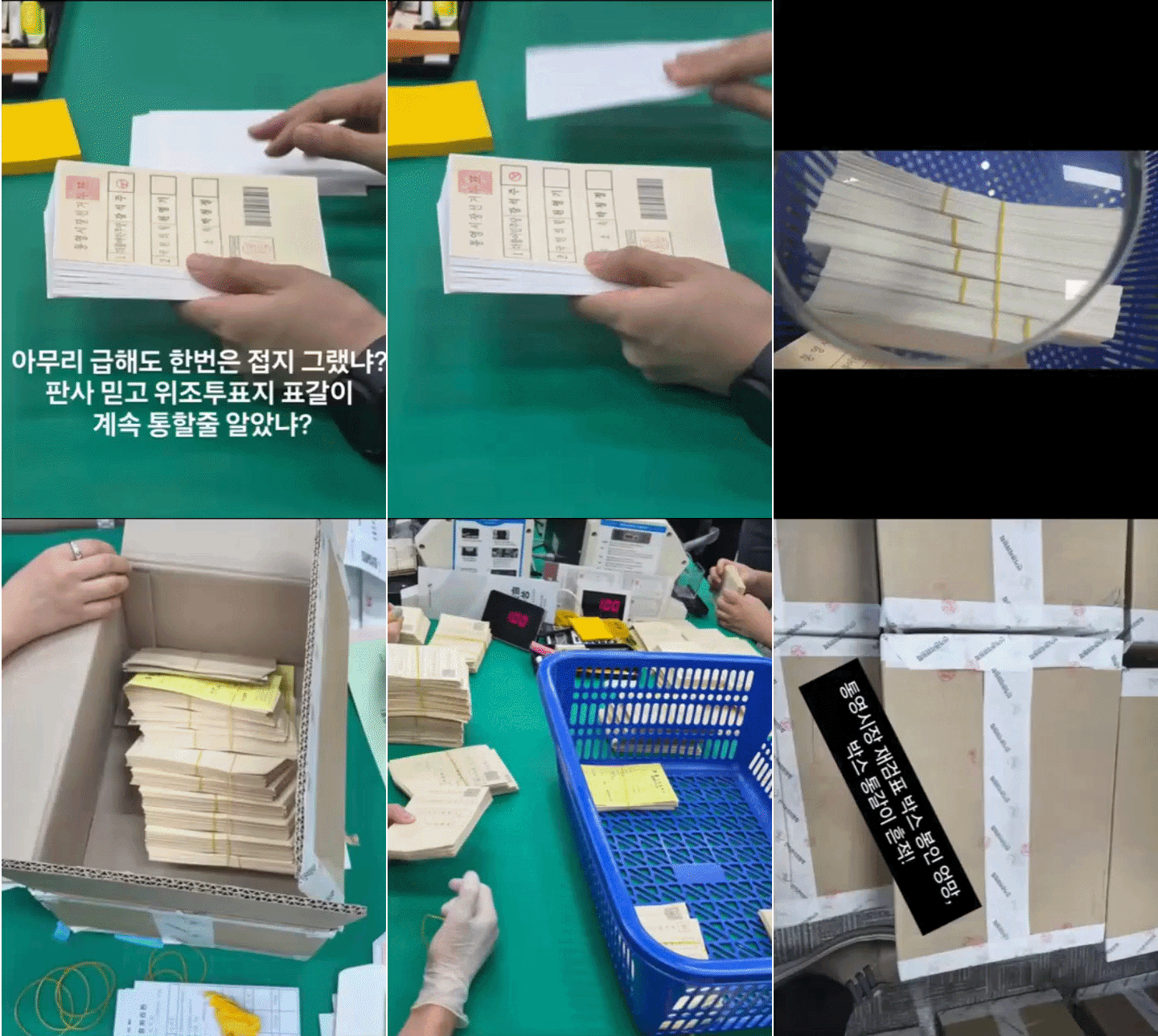 “Ignoring crisp ballots and damaged seals”… Tongyeong mayoral recount concludes with ‘no change in outcome,’ leaving suspicions and public outrage behind
Suspected counterfeit ballots discovered in Tongyeong [GIF from social media of Representative Hwang Kyo-ahn / Attorney Park Joo-hyun]During a recount of the Tongyeong mayoral election in South Gyeong
“Ignoring crisp ballots and damaged seals”… Tongyeong mayoral recount concludes with ‘no change in outcome,’ leaving suspicions and public outrage behind
Suspected counterfeit ballots discovered in Tongyeong [GIF from social media of Representative Hwang Kyo-ahn / Attorney Park Joo-hyun]During a recount of the Tongyeong mayoral election in South Gyeong
 President Yoon, regarding the first-instance ruling on the Public Official Election Act: “An excessive political verdict that distorts the facts… We will appeal immediately.”
The first-instance sentencing hearing for President Yoon Suk Yeol regarding violations of the Public Official Election Act is being broadcast live at Seoul Station on the 27th. [Photo=Yonhap News]Pres
President Yoon, regarding the first-instance ruling on the Public Official Election Act: “An excessive political verdict that distorts the facts… We will appeal immediately.”
The first-instance sentencing hearing for President Yoon Suk Yeol regarding violations of the Public Official Election Act is being broadcast live at Seoul Station on the 27th. [Photo=Yonhap News]Pres
 WSJ: "SK Hynix ADR Premium Is a Sign of AI Trading Overheat"
Advertisement for SK Hynix ADR listing in New York's Times Square [Reuters=Yonhap News file photo]The Wall Street Journal (WSJ) has pointed out that the price of SK Hynix’s American Depositary Recei
WSJ: "SK Hynix ADR Premium Is a Sign of AI Trading Overheat"
Advertisement for SK Hynix ADR listing in New York's Times Square [Reuters=Yonhap News file photo]The Wall Street Journal (WSJ) has pointed out that the price of SK Hynix’s American Depositary Recei
 'Godfather of Japanese Mystery Novels' Keigo Higashino Passes Away After Battle with Cancer at 68
Famous Japanese mystery novelist Keigo Higashino [AFP=Yonhap News]It has been belatedly reported that Keigo Higashino, the "godfather of Japanese mystery novels" and author of bestsellers such as "The
'Godfather of Japanese Mystery Novels' Keigo Higashino Passes Away After Battle with Cancer at 68
Famous Japanese mystery novelist Keigo Higashino [AFP=Yonhap News]It has been belatedly reported that Keigo Higashino, the "godfather of Japanese mystery novels" and author of bestsellers such as "The
 [Park Pil-kyu Security Column] To the Ignorant Trying to Clothe a Beast in Sheep's Clothing
Rep. Kim Byung-joo of the Democratic Party of Korea [Photo=Yonhap News]“The Air Force Academy doesn't teach you how to fly a plane!” “The Army, Navy, and Air Force academies are exactly the
[Park Pil-kyu Security Column] To the Ignorant Trying to Clothe a Beast in Sheep's Clothing
Rep. Kim Byung-joo of the Democratic Party of Korea [Photo=Yonhap News]“The Air Force Academy doesn't teach you how to fly a plane!” “The Army, Navy, and Air Force academies are exactly the
 [Issue Diagnosis] Two Effects of the Election Petition Review
 [Photo] Evidence of Election Fraud Flooding U.S. Media… Trump Had 2.7 Million Votes Stolen
 [Video] U.S. Semiquincentennial Air Show... 'Art in the Sky' streaks across New York
 [Editorial Cartoon] A Draconian Law That Undermines Freedom of Expression

 List
List









