 Former President Park Geun-hye greets citizens during her visit to the birthplace of her mother, the late Yook Young-soo, in Okcheon, North Chungcheong Province, on the 25th. [Photo=Yonhap News]
Former President Park Geun-hye, once dubbed the "Queen of Elections," has re-emerged as a variable for conservative consolidation in the final stretch of the June 3 local elections.
On the 23rd, former President Park supported Ku Bon-chul, the People Power Party's candidate for Daegu mayor, at Chilseong Market in Buk District, Daegu. On the 25th, she expanded her campaign activities to the Chungcheong region by visiting Okcheon in North Chungcheong Province, Daejeon, and Gongju in South Chungcheong Province.
If Park Geun-hye's involvement, which began in Daegu, spreads from the Chungcheong region to Gangwon and the Busan-Ulsan-Gyeongnam (Busulgyeong) areas, her current moves will shift from supporting specific candidates to mobilizing conservative voters on a regional level.
The former president's reappearance is not merely a public schedule for a former president. Daegu is a core base for conservative parties, and the Chungcheong region has historically served as a swing area in nationwide elections.
With the possibility of her visiting Gangwon and Busulgyeong being discussed, the former president's election activities are being interpreted as a "mobilization trigger" to stimulate voter turnout among conservatives in the final stages of the local elections.
The memory of the 'Queen of Elections' has been evoked again
The nickname "Queen of Elections" that was attached to former President Park Geun-hye was not mere rhetoric. Since her days as the leader of the Grand National Party, she has acted as a symbolic figure who rallied supporters during times of crisis for the conservative camp.
In particular, in the Chungcheong region, the scene of her asking "What about Daejeon?" following an attack during the 2006 local elections remains a political memory. The fact that reports of former President Park visiting Daejeon for the first time in 20 years brought this back is also noteworthy.
In Daegu, former President Park visited traditional markets with candidate Ku Bon-chul and met with citizens. In the Chungcheong region, she traveled to Daejeon and Gongju after visiting Okcheon, the hometown of her mother, Yook Young-soo.
Okcheon is a space where the political memories of Park Chung-hee, Yook Young-soo, and Park Geun-hye intersect. Daejeon is a region where the narrative of the "Queen of Elections" remains strong. Gongju is a site of everyday politics that can stimulate conservative sentiment in the South Chungcheong region.
Low voter turnout in local elections changes the meaning of her reappearance
The core of Park Geun-hye's reappearance is closer to a "mobilization trigger" than an "expansion card." Local elections tend to have lower voter turnout compared to presidential or general elections.
In this structure, the ability to mobilize existing supporters to actually go to the polls is as important as broadly expanding new voter bases.
Especially in closely contested races, a mere few percentage points difference in the turnout of core supporters can sway the outcome.
Election results are not solely determined by the opinion of the entire electorate. They are decided by the choices of voters who actually cast their ballots. This is why organizational strength, on-site campaigning by candidates, and campaign rallies by symbolic figures hold significant weight in local elections.
Former President Park's reappearance is less a card to directly move the undecided voters and more a device to send a signal to wavering or apathetic conservatives, saying, "You must vote in this election."
In elections where low turnout is expected, this difference is not insignificant. Even if only a portion of those who were planning not to vote turn out, the landscape can change in closely contested areas in the Seoul metropolitan area, Chungcheong, Gangwon, and Busulgyeong.
The 'East Wind' operates as a mobilization pressure in the Seoul Metropolitan Area
The impact of the Park Geun-hye-driven "East Wind" on elections in the Seoul metropolitan area should also be viewed from this perspective.
If her reappearance, which began in Daegu and Chungcheong, extends to Gangwon and Busulgyeong, it can send a signal to conservatives in the Seoul metropolitan area that "the election is not over yet."
This is less a direct effect of immediately overturning sentiment in the Seoul metropolitan area and more an indirect mobilization effect of pushing back conservative voters who had lost their sense of efficacy to the polls.
There are a considerable number of voters in the Seoul metropolitan area who are from the Yeongnam region or are familiar with Yeongnam sentiment and lean conservative. For them, former President Park's reappearance can be perceived not just as a local campaign stop but as a re-evocation of conservative political memories.
Specifically, the itinerary itself—"movement in Daegu, spread to Chungcheong, and then to Gangwon and Busulgyeong"—serves as a psychological signal to conservatives in the Seoul metropolitan area that the conservative camp is re-mobilizing.
Elections in the Seoul metropolitan area are different from those in the TK (Daegu and North Gyeongsang Province) region. Voters in the Seoul metropolitan area make complex judgments based on transportation, real estate, taxes, jobs, administrative services, and anti-incumbency sentiment.
However, in low-turnout elections, getting already decided voters to the polls is as important as persuading all voters.
The significance of Park Geun-hye's "East Wind" in the Seoul metropolitan area lies precisely here. It is not a wind that shakes the entire undecided voter base but a mobilization pressure that moves those who were planning not to vote and steadfast conservatives to the polling stations.
Regional Circuit Mobilization Disrupts the Political Landscape
In Daegu and North Gyeongsang Province, former President Park is directly linked to conservative identity. Her reappearance in these regions is less about creating a large number of new votes and more about enhancing the voting intention of existing conservative supporters.
The nature of the effect is different in the Chungcheong region. Chungcheong is an area where local issues, candidate competitiveness, evaluation of the administration, and the judgment of undecided voters all play a complex role. Here, former President Park's actions serve as a tension signal to the entire conservative camp that the election's final stage has begun.
The reason why her potential visits to Gangwon and Busulgyeong are noteworthy is the same. Gangwon is a region where organizational mobilization and voter turnout are sensitive in closely contested elections, and Busulgyeong is a region that the conservative camp must defend.
If former President Park's itinerary extends beyond Daegu and Chungcheong to Gangwon and Busulgyeong, her reappearance will become more clearly defined as a regional circuit mobilization card, transcending support for individual candidates.
The ripple effects can reach the Seoul metropolitan area. The Seoul metropolitan area is a region that reacts sensitively to the national political atmosphere.
If scenes of conservative consolidation are repeated in the Yeongnam and Chungcheong regions, and her itinerary expands to Gangwon and Busulgyeong, conservative voters in the Seoul metropolitan area will have less reason to remain observers.
The former president's reappearance can be a significant stimulus at the psychological boundary between giving up on the election and going to vote one more time.
The 'East Wind' Trigger is about 'Conservative Mobilization' rather than 'Conservative Expansion'
Ultimately, the essence of Park Geun-hye's reappearance is 'conservative mobilization' rather than 'conservative expansion.' In local elections where low voter turnout is expected, even simply getting supporters to the polls can shift the balance in closely contested races.
If her past nickname, "Queen of Elections," holds meaning this time, it is likely to be in her ability to convert potential conservative voters and those who were planning not to vote into actual voters, rather than creating a large volume of new votes.
The question in this election is not about former President Park's reappearance itself, but about how many voters she can mobilize to the polls in which regions through her reappearance.
In Daegu, it can be a signal to awaken conservative memories, and in Chungcheong, it can be a call for final conservative consolidation.
If her campaign extends to Gangwon and Busulgyeong, that call could also exert pressure on the voting intentions of conservatives in the Seoul metropolitan area.
Park Geun-hye's reappearance is a mobilization trigger for low-turnout local elections.
Whether this trigger, spreading from TK and Chungcheong to Gangwon and Busulgyeong, can then stimulate the voting intentions of conservatives and Yeongnam-affiliated voters in the Seoul metropolitan area is the key point to watch in the remaining election period.
The victory will depend not on Park Geun-hye's name itself, but on the footsteps of voters who respond to that name and head to the polling stations.

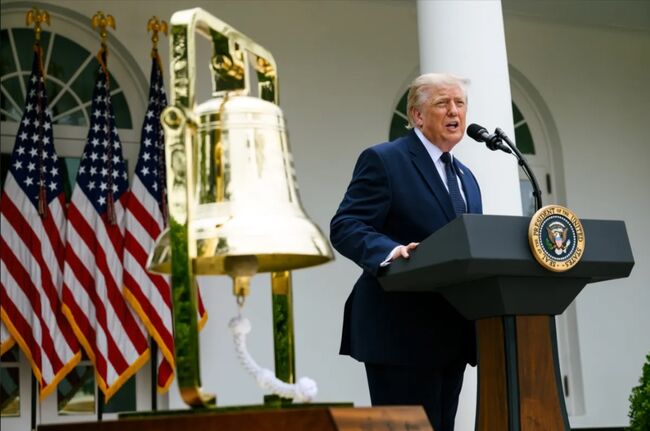 Trump pressures for rate cut again ahead of FOMC... "Should be the lowest in the world"
U.S. President Donald Trump. [Photo = The White House] U.S. President Donald Trump once again pressured the Federal Reserve, the U.S. central bank, to lower interest rates on the 27th (local time
Trump pressures for rate cut again ahead of FOMC... "Should be the lowest in the world"
U.S. President Donald Trump. [Photo = The White House] U.S. President Donald Trump once again pressured the Federal Reserve, the U.S. central bank, to lower interest rates on the 27th (local time
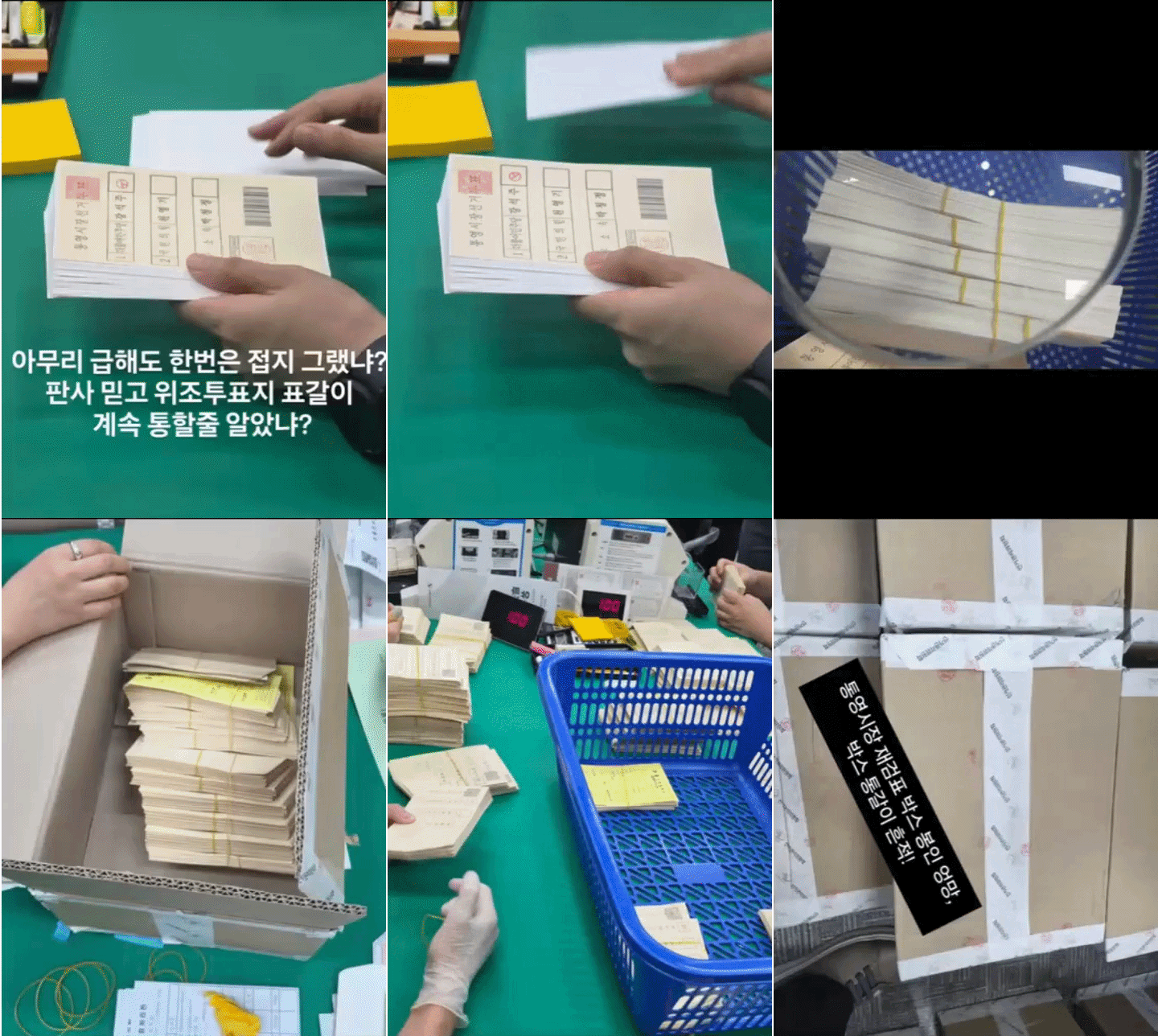 “Ignoring crisp ballots and damaged seals”… Tongyeong mayoral recount concludes with ‘no change in outcome,’ leaving suspicions and public outrage behind
Suspected counterfeit ballots discovered in Tongyeong [GIF from social media of Representative Hwang Kyo-ahn / Attorney Park Joo-hyun]During a recount of the Tongyeong mayoral election in South Gyeong
“Ignoring crisp ballots and damaged seals”… Tongyeong mayoral recount concludes with ‘no change in outcome,’ leaving suspicions and public outrage behind
Suspected counterfeit ballots discovered in Tongyeong [GIF from social media of Representative Hwang Kyo-ahn / Attorney Park Joo-hyun]During a recount of the Tongyeong mayoral election in South Gyeong
 President Yoon, regarding the first-instance ruling on the Public Official Election Act: “An excessive political verdict that distorts the facts… We will appeal immediately.”
The first-instance sentencing hearing for President Yoon Suk Yeol regarding violations of the Public Official Election Act is being broadcast live at Seoul Station on the 27th. [Photo=Yonhap News]Pres
President Yoon, regarding the first-instance ruling on the Public Official Election Act: “An excessive political verdict that distorts the facts… We will appeal immediately.”
The first-instance sentencing hearing for President Yoon Suk Yeol regarding violations of the Public Official Election Act is being broadcast live at Seoul Station on the 27th. [Photo=Yonhap News]Pres
 WSJ: "SK Hynix ADR Premium Is a Sign of AI Trading Overheat"
Advertisement for SK Hynix ADR listing in New York's Times Square [Reuters=Yonhap News file photo]The Wall Street Journal (WSJ) has pointed out that the price of SK Hynix’s American Depositary Recei
WSJ: "SK Hynix ADR Premium Is a Sign of AI Trading Overheat"
Advertisement for SK Hynix ADR listing in New York's Times Square [Reuters=Yonhap News file photo]The Wall Street Journal (WSJ) has pointed out that the price of SK Hynix’s American Depositary Recei
 'Godfather of Japanese Mystery Novels' Keigo Higashino Passes Away After Battle with Cancer at 68
Famous Japanese mystery novelist Keigo Higashino [AFP=Yonhap News]It has been belatedly reported that Keigo Higashino, the "godfather of Japanese mystery novels" and author of bestsellers such as "The
'Godfather of Japanese Mystery Novels' Keigo Higashino Passes Away After Battle with Cancer at 68
Famous Japanese mystery novelist Keigo Higashino [AFP=Yonhap News]It has been belatedly reported that Keigo Higashino, the "godfather of Japanese mystery novels" and author of bestsellers such as "The
 [Park Pil-kyu Security Column] To the Ignorant Trying to Clothe a Beast in Sheep's Clothing
Rep. Kim Byung-joo of the Democratic Party of Korea [Photo=Yonhap News]“The Air Force Academy doesn't teach you how to fly a plane!” “The Army, Navy, and Air Force academies are exactly the
[Park Pil-kyu Security Column] To the Ignorant Trying to Clothe a Beast in Sheep's Clothing
Rep. Kim Byung-joo of the Democratic Party of Korea [Photo=Yonhap News]“The Air Force Academy doesn't teach you how to fly a plane!” “The Army, Navy, and Air Force academies are exactly the
 [Issue Diagnosis] Two Effects of the Election Petition Review
 [Photo] Evidence of Election Fraud Flooding U.S. Media… Trump Had 2.7 Million Votes Stolen
 [Video] U.S. Semiquincentennial Air Show... 'Art in the Sky' streaks across New York
 [Editorial Cartoon] A Draconian Law That Undermines Freedom of Expression

 List
List










