 U.S. President Donald Trump (right) meets with NATO Secretary General Mark Rutte during a meeting on the sidelines of the World Economic Forum Annual Meeting in Davos, Switzerland. [AP=Yonhap News]
Recently, in the process of the U.S. confronting Iran, key NATO allies such as Germany, Spain, the UK, France, and Italy refused U.S. requests for defense of the Strait of Hormuz and use of bases. The U.S. disappointment over this has escalated beyond mere regret to anger and tangible retaliatory measures.
The United States has already initiated economic sanctions against some allies who refused security cooperation and has signaled a comprehensive shift in its military posture by readjusting the scale of global U.S. military deployment and defense contributions.
Indeed, the U.S. has pressured Spanish companies, such as the prominent hotel chain Meliá and financial firm Sherritt, which have invested heavily in Cuba, by imposing strong sanctions and forcing them to divest their stakes. The pressure from the U.S. State Department and Treasury Department even led to a situation where major Spanish shipping and logistics companies completely canceled bookings for vessels bound for Cuba.
Concurrently, the U.S. demonstrated its capability to complete operations solely through aerial refueling, utilizing its overwhelming aerial refueling tanker assets and bypassing European bases.
This action has proven that allies who do not provide security or logistical value, or who even align closely with adversaries, can be subject to U.S. sanctions and military exclusion at any time. This serves as a stark message not only to Europe but also to all allies worldwide, including South Korea, which is ahead of adjustments in defense cost-sharing and security commitments.
The History of NATO and the Upheaval in Defense Cost Sharing
Europe was the main theater of World War II, and the U.S., along with allies like the Soviet Union, emerged victorious against the Axis powers of Germany and Italy. However, the East-West Cold War immediately ensued, leading the U.S. to implement the Marshall Plan to revitalize Western Europe, including defeated nations, and prevent communist expansion.
Against this backdrop, NATO, founded in 1949, served as a crucial bulwark during the Cold War, deterring the threat from the Soviet communist bloc, backed by the U.S. nuclear umbrella and a large U.S. military presence.
Following the collapse of the Soviet Union, NATO, which had pursued 'intervention in out-of-area conflicts' and a policy of eastward expansion, returned to its original mission of 'defending the eastern European front' following Russia's invasion of Ukraine in 2022. With the accession of previously neutral Finland and Sweden, NATO has grown into a massive organization of 32 member states.
The existential threat from Russia, combined with strong U.S. pressure, has led to a dramatic shift in defense spending within NATO. The past commitment to spend a minimum of 2% of GDP on defense by 2024 has resulted in all member states meeting this target as of 2025.
Notably, Eastern European countries bordering Russia, such as Poland (4.3%) and Lithuania (4.0%), significantly exceed this benchmark.
Furthermore, NATO allies have agreed to new guidelines (NATO 3.0) to gradually increase defense spending to 5% of GDP by 2035.
△ Development of Core Military Capabilities (3.5%): Aimed at enhancing pure combat power and modernizing weapons systems.
△ Security-Related Areas (1.5%): Aimed at strengthening cybersecurity, protection of critical infrastructure, innovation in defense manufacturing, and civil defense capabilities.
The Spiritual Decadence and Weakening of the System in Western Europe
The problem lies in the internal decline and strategic insensitivity of traditional Western European powers. The recent fissures within NATO are not merely a dispute over contribution figures. They are a structural crisis stemming from the collapse of spiritual values that have long sustained Europe, combined with the weakening of the free market system.
Today, Western Europe has lost its spiritual anchor as Christian values and moral foundations waver. The resulting vacuum, filled by left-leaning cultural trends and the rapid influx of Islamic culture, is shaking European society from its core.
The illusion of 'cradle to grave' state provision and welfare populism have paralyzed individual initiative and responsibility.
Since the end of the Cold War, Western European countries have outsourced their security entirely to the U.S. and have focused on left-wing welfare handouts with the resources freed up by defense budget cuts.
As a result, Europe has completely lost economic efficiency and competitiveness. In particular, by becoming entangled in the grand ideological illusion of 'climate change,' they have inadvertently trapped themselves in carbon neutrality.
Seizing this opportunity, China has exploited the West's free market system to siphon global wealth and is employing 'unrestricted warfare' (超限戰) – using all means, including military, economic, cultural, and psychological, to destroy its adversaries.
Major European ports and high-tech companies have already been infiltrated by Chinese capital, and politicians and academics have been swayed by Chinese funding to voice pro-China sentiments. Furthermore, Germany's reliance on Russian gas, France's separatist tendencies, and the incompetence and excessive regulation of Brussels EU bureaucrats and some national governments have eroded Europe from within.
The Decision for Freedom and the Path to Normalization
The Trump administration in the U.S. seeks to end the era of unilateral defense benefits that the U.S. has provided for the past 80 years.
The secret discussions among U.S. State Department officials regarding the potential expulsion of Spain from NATO for acting against U.S. security interests are by no means a trivial threat.
The U.S. is implementing 'substantive status adjustments' by providing incentives to contributing countries while excluding uncooperative nations from its security umbrella or isolating them through economic sanctions. President Trump is fundamentally shaking the alliance system itself by leaving open the possibility of the U.S. withdrawing from NATO.
Only when Western Europe awakens from its deep slumber of free security and demonstrates its strength and will to defend itself can NATO be reborn as an alliance that truly shares values.
This is not just a European issue. The harsh reality of international politics, where nations that fail to prove their value as allies can be abandoned at any time, applies directly to the Republic of Korea, which faces negotiations on defense cost-sharing and security commitments.
Peace is not granted to those who lack the will to defend themselves. The normalization of NATO and the awakening of its allies are the first steps for the liberal camp to win the grand civilizational war against totalitarian forces, and it is the path we must take.
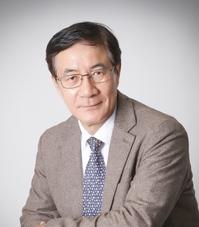
◆ Dr. Shin Dong-choon
Ph.D. in Public Administration, Representative of the National Union for Freedom and Unification. After passing the 21st Higher Civil Service Examination, he had a career in public service, followed by active engagement as a corporate CEO, university professor, media contributor, author, and chairman of the Global Aerospace Industry Association.

 Iranian Foreign Ministry: "Continuing Message Exchanges with the U.S. and Activities of Mediating Countries"
Esmaeil Baghaei, Spokesperson for the Iranian Ministry of Foreign Affairs [Xinhua, Yonhap News file photo]Esmaeil Baghaei, spokesperson for the Iranian Ministry of Foreign Affairs, stated on the 26th
Iranian Foreign Ministry: "Continuing Message Exchanges with the U.S. and Activities of Mediating Countries"
Esmaeil Baghaei, Spokesperson for the Iranian Ministry of Foreign Affairs [Xinhua, Yonhap News file photo]Esmaeil Baghaei, spokesperson for the Iranian Ministry of Foreign Affairs, stated on the 26th
 President Yoon: "Do You Think You Are Safe from the Special Counsel?"... Final Statement Video Released
President Yoon Suk Yeol rebuking the special prosecutor on the 24th. [Court video / @birds_justice X account subtitle GIF] A video of President Yoon Suk Yeol's closing statement at his trial rega
President Yoon: "Do You Think You Are Safe from the Special Counsel?"... Final Statement Video Released
President Yoon Suk Yeol rebuking the special prosecutor on the 24th. [Court video / @birds_justice X account subtitle GIF] A video of President Yoon Suk Yeol's closing statement at his trial rega
 President Yoon, regarding the first-instance ruling on the Public Official Election Act: “An excessive political verdict that distorts the facts… We will appeal immediately.”
The first-instance sentencing hearing for President Yoon Suk Yeol regarding violations of the Public Official Election Act is being broadcast live at Seoul Station on the 27th. [Photo=Yonhap News]Pres
President Yoon, regarding the first-instance ruling on the Public Official Election Act: “An excessive political verdict that distorts the facts… We will appeal immediately.”
The first-instance sentencing hearing for President Yoon Suk Yeol regarding violations of the Public Official Election Act is being broadcast live at Seoul Station on the 27th. [Photo=Yonhap News]Pres
 WSJ: "SK Hynix ADR Premium Is a Sign of AI Trading Overheat"
Advertisement for SK Hynix ADR listing in New York's Times Square [Reuters=Yonhap News file photo]The Wall Street Journal (WSJ) has pointed out that the price of SK Hynix’s American Depositary Recei
WSJ: "SK Hynix ADR Premium Is a Sign of AI Trading Overheat"
Advertisement for SK Hynix ADR listing in New York's Times Square [Reuters=Yonhap News file photo]The Wall Street Journal (WSJ) has pointed out that the price of SK Hynix’s American Depositary Recei
 'Godfather of Japanese Mystery Novels' Keigo Higashino Passes Away After Battle with Cancer at 68
Famous Japanese mystery novelist Keigo Higashino [AFP=Yonhap News]It has been belatedly reported that Keigo Higashino, the "godfather of Japanese mystery novels" and author of bestsellers such as "The
'Godfather of Japanese Mystery Novels' Keigo Higashino Passes Away After Battle with Cancer at 68
Famous Japanese mystery novelist Keigo Higashino [AFP=Yonhap News]It has been belatedly reported that Keigo Higashino, the "godfather of Japanese mystery novels" and author of bestsellers such as "The
 [Park Pil-kyu Security Column] To the Ignorant Trying to Clothe a Beast in Sheep's Clothing
Rep. Kim Byung-joo of the Democratic Party of Korea [Photo=Yonhap News]“The Air Force Academy doesn't teach you how to fly a plane!” “The Army, Navy, and Air Force academies are exactly the
[Park Pil-kyu Security Column] To the Ignorant Trying to Clothe a Beast in Sheep's Clothing
Rep. Kim Byung-joo of the Democratic Party of Korea [Photo=Yonhap News]“The Air Force Academy doesn't teach you how to fly a plane!” “The Army, Navy, and Air Force academies are exactly the
 [Issue Diagnosis] Two Effects of the Election Petition Review
 [Photo] Evidence of Election Fraud Flooding U.S. Media… Trump Had 2.7 Million Votes Stolen
 [Video] U.S. Semiquincentennial Air Show... 'Art in the Sky' streaks across New York
 [Editorial Cartoon] A Draconian Law That Undermines Freedom of Expression

 List
List









