 A cargo ship passing through the Strait of Hormuz [AP=Yonhap News]
Up until the 19th century, the Middle East was merely an infertile desert. However, the discovery of oil, referred to as 'God's gift,' in the early 20th century began to shake the world order. Middle Eastern countries weaponized their resources, shaking the global political and economic landscape through two oil shocks in the 1970s and 1980s.
As human civilization progresses, it requires ever more energy. Today, having moved beyond heavy and chemical industries into the era of semiconductors, AI, and quantum computing, energy has become an absolute determinant of national competitiveness, surpassing mere resource status. In essence, we have entered an era where the nation that secures and controls energy dominates the world order.
Changes in the Global Energy Landscape and the U.S.'s Reclaimed Hegemony
For a long time, Middle Eastern oil has dominated the global market, and the United States has deployed its navy to ensure the safety of navigation in key "choke points" such as the Strait of Hormuz, the Suez Canal, and the Strait of Malacca. It is undeniable that numerous countries, including South Korea, Japan, and Europe, have benefited from this security umbrella without contributing. Given that 70% of our crude oil imports pass through the Strait of Hormuz, it is only right that our nation contributes in some way to transportation security.
Amidst the recent crisis of a potential war with Iran, when Iran threatened to block the Strait of Hormuz, as it has done in the past, and impose transit fees (the so-called Fortress Strategy), the United States responded with a powerful counter-blockade. By blocking oil tankers entering and leaving Iran, the U.S. blockade not only choked off Iran's economy but also critically impacted China's energy supply chain, which imports 90% of its Iranian oil.
If the U.S. blockade continues, Iran's crude oil storage capacity, including at Kharg Island, will reach its limit, forcing a halt in production. Once a well is shut down, restarting it becomes difficult, making it hard for Iran to sustain its position.
India had been importing crude oil through strategic investments in Iran's southern Chabahar port, bordering Pakistan. However, the U.S. ended existing sanctions waivers on April 26, signaling that it will no longer tolerate oil trade between India and Iran.
China is now in a situation where it must import crude oil via inland pipelines, and it has even reached a point of desperation, having to procure oil from the U.S. mainland due to energy shortages. Similarly, our nation faces a situation where we must significantly increase imports of U.S. crude oil, despite the longer transportation distance.
The U.S. has now regained control of the Panama Canal and is fully controlling Venezuela's oil, which possesses the world's largest oil reserves. By cutting off oil supplies to Cuba, it is pressuring adversarial regimes to change their systems.
The Unrealistic Discourse on Climate Change and the U.S.'s Reclaimed Energy Hegemony
We need a sober perspective on the discourse surrounding climate change, which we have come to accept as "common sense." To be blunt, the current climate change framework has strong elements of a "grand scam" driven more by political intentions than scientific truth.
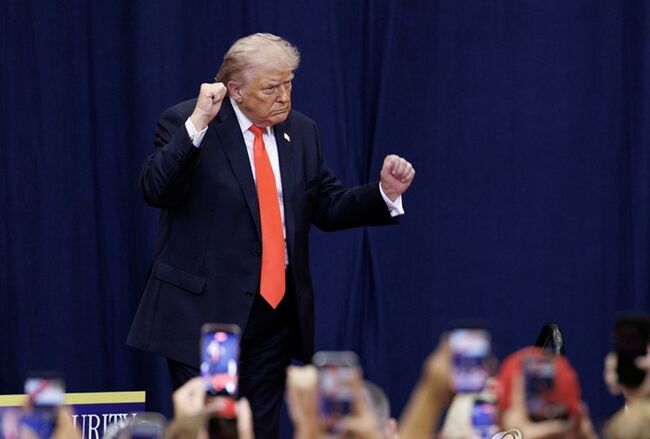 U.S. President Donald Trump [EPA=Yonhap News]
Scientific arguments are gaining momentum, positing that global temperatures are determined by solar activity and consequent water vapor levels rather than carbon dioxide concentration. Many, including numerous Nobel laureates in physics, support this claim.
Carbon neutrality and emissions trading schemes are constructs that do not align with scientific reality. These policies compel developed nations to incur massive financial expenditures to curb carbon emissions while China continues its own emissions, leading to a slowdown in growth rates.
※ Annual investment for decarbonization in the European Union (EU) from 2021 to 2030: Approximately 34 billion Euros
Expected slowdown in growth rate: Approximately 0.9% to 1.5% of annual GDP
Although numerous United Nations (UN) agencies are promoting climate change policies, the Trump administration's U.S. has rejected these policies by withdrawing from the Paris Agreement and suspending financial support to related international organizations.
Instead, the U.S. has returned to being the world's largest energy producer through the shale gas revolution and oil development in Alaska. The U.S. no longer needs to be dependent on Middle Eastern oil. Moreover, by securing control over mineral agreements with Ukraine, energy security in Greenland, and strengthening control over the Strait of Malacca through security agreements with Indonesia, it has managed to gain control over the entire supply chain.
The Global Energy Status Quo in Numbers
The direction of global hegemony becomes even clearer when examining energy self-sufficiency and import/export trends.
Table 1: Summary of Key Energy Indicators by Country
Category | Top Countries and Rankings | Notable Points |
Self-sufficiency | 1st Canada, 2nd U.S., 3rd Norway | The U.S. has entered a phase of complete self-sufficiency following the shale revolution. |
Export Value | 1st Russia, 2nd Saudi Arabia, 3rd U.S. | The U.S. shows overwhelming growth in natural gas (LNG) exports. |
Import Value | 1st China, 2nd India, 3rd Japan/South Korea | Importing countries' survival depends on control over choke points. |
By settling for less with oil sanctioned by the West and paying in yuan, China has crossed the red line set by the U.S., facing a level where challenging U.S. hegemony is impossible due to severe energy repercussions.
The United Arab Emirates (UAE), having suffered massive missile attacks from Iran during the recent conflict, concluded that cooperation with Iran, an OPEC member, was impossible. They declared their withdrawal from OPEC and can now export oil using the Fujairah port, located outside the Strait, via an inland pipeline.
With increased oil production, the UAE is expected to play a significant role in shaping the global energy market alongside the U.S., potentially leading to the collapse of existing producer cartels and stabilizing energy prices. Following the UAE's decision to leave OPEC, Israel has agreed to install its Iron Dome system in the UAE.
Russia has maintained oil prices through production control within OPEC. However, with increased production, Russia's economy, which relies on energy exports, will be severely impacted. India, which had been a major importer of Russian energy, has ceased these imports under U.S. pressure.
South Korea's Survival Strategy: Nuclear Power and Energy Alliances
Our nation relies heavily on imports for most of its energy needs, and without addressing this situation, a sustainable future cannot be secured. In other words, abandoning energy sovereignty is tantamount to neglecting the nation's future, and a policy shift in this regard is a natural demand from the public.
First, a comprehensive expansion of nuclear power, the cornerstone of energy security, is essential. Renewable energy, due to its low efficiency and unstable supply capabilities, is insufficient to support national competitiveness. Nuclear power is the only viable alternative to meet the immense electricity demand required for the development of the semiconductor and AI industries. The government's recent shift from a phase-out of nuclear power to continued operation is a welcome development.
The history of South Korea's nuclear power development is a monumental achievement born from the nation's long-term vision and technological dedication. In the 1950s, President Syngman Rhee's foresight led to numerous talented individuals being sent to the U.S. for study, sowing the seeds of nuclear technology. By the 1970s, the foundation for energy self-sufficiency was laid with the commencement of full-scale nuclear power plant construction. In the 1980s, through bold investments and significant construction expansion, unique technological know-how was accumulated, and decades of continuous technological innovation have since proven world-class safety and economic efficiency.
As a result, South Korea has risen from humble beginnings to become a nuclear power, exporting reactors to the UAE, and is now positioning itself as a key player leading the global energy market.
Second, active participation in the U.S.-led Energy Alliance (FORGE) and Peace Committee is crucial. The era of free-riding on security is over. We must contribute to the safety of navigation in the Strait of Malacca and the Taiwan Strait and engage with the supply chain for rare earth elements and critical minerals being built by the U.S.
Our world-class nuclear power plant construction and operation technology, beyond mere industrial competitiveness, is a key asset that will elevate us to an indispensable "security partner" in the rapidly changing global energy order. Within the new U.S.-led energy security framework (FORGE), South Korea's nuclear technology will serve as a tangible driving force for energy alliances connecting the Middle East, Eastern Europe, and Asia.
A "U.S.-Korea Nuclear Alliance," combining U.S. design and financial capabilities with South Korea's construction and supply chain expertise, will be the strongest shield against the weaponization of resources by China and Russia, heralding an era of "energy mutual defense."
We no longer have the luxury of wasting national energy within the framework of climate change. Fully restoring the nuclear power ecosystem and accelerating technology exports is not an option but a matter of survival. Abundant and affordable energy is the lifeblood supporting the semiconductor and AI industries and will be a massive economic foundation supporting the era of free unification we will face in the future.
When the government and the public unite to establish energy sovereignty and solidify our status as a nuclear power, South Korea will be able to leap forward as a nation leading the world order, extending beyond Northeast Asia.
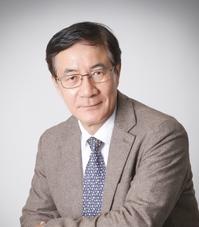
◆ Dr. Shin Dong-chun
Ph.D. in Public Administration, Representative of the National Alliance for Unification. After passing the 21st Higher Civil Service Examination, he had a career in public service, followed by activities as a CEO, university professor, media contributor, author, and chairman of the Global Aerospace Industry Association.

 Iranian Foreign Ministry: "Continuing Message Exchanges with the U.S. and Activities of Mediating Countries"
Esmaeil Baghaei, Spokesperson for the Iranian Ministry of Foreign Affairs [Xinhua, Yonhap News file photo]Esmaeil Baghaei, spokesperson for the Iranian Ministry of Foreign Affairs, stated on the 26th
Iranian Foreign Ministry: "Continuing Message Exchanges with the U.S. and Activities of Mediating Countries"
Esmaeil Baghaei, Spokesperson for the Iranian Ministry of Foreign Affairs [Xinhua, Yonhap News file photo]Esmaeil Baghaei, spokesperson for the Iranian Ministry of Foreign Affairs, stated on the 26th
 President Yoon: "Do You Think You Are Safe from the Special Counsel?"... Final Statement Video Released
President Yoon Suk Yeol rebuking the special prosecutor on the 24th. [Court video / @birds_justice X account subtitle GIF] A video of President Yoon Suk Yeol's closing statement at his trial rega
President Yoon: "Do You Think You Are Safe from the Special Counsel?"... Final Statement Video Released
President Yoon Suk Yeol rebuking the special prosecutor on the 24th. [Court video / @birds_justice X account subtitle GIF] A video of President Yoon Suk Yeol's closing statement at his trial rega
 President Yoon, regarding the first-instance ruling on the Public Official Election Act: “An excessive political verdict that distorts the facts… We will appeal immediately.”
The first-instance sentencing hearing for President Yoon Suk Yeol regarding violations of the Public Official Election Act is being broadcast live at Seoul Station on the 27th. [Photo=Yonhap News]Pres
President Yoon, regarding the first-instance ruling on the Public Official Election Act: “An excessive political verdict that distorts the facts… We will appeal immediately.”
The first-instance sentencing hearing for President Yoon Suk Yeol regarding violations of the Public Official Election Act is being broadcast live at Seoul Station on the 27th. [Photo=Yonhap News]Pres
 WSJ: "SK Hynix ADR Premium Is a Sign of AI Trading Overheat"
Advertisement for SK Hynix ADR listing in New York's Times Square [Reuters=Yonhap News file photo]The Wall Street Journal (WSJ) has pointed out that the price of SK Hynix’s American Depositary Recei
WSJ: "SK Hynix ADR Premium Is a Sign of AI Trading Overheat"
Advertisement for SK Hynix ADR listing in New York's Times Square [Reuters=Yonhap News file photo]The Wall Street Journal (WSJ) has pointed out that the price of SK Hynix’s American Depositary Recei
 'Godfather of Japanese Mystery Novels' Keigo Higashino Passes Away After Battle with Cancer at 68
Famous Japanese mystery novelist Keigo Higashino [AFP=Yonhap News]It has been belatedly reported that Keigo Higashino, the "godfather of Japanese mystery novels" and author of bestsellers such as "The
'Godfather of Japanese Mystery Novels' Keigo Higashino Passes Away After Battle with Cancer at 68
Famous Japanese mystery novelist Keigo Higashino [AFP=Yonhap News]It has been belatedly reported that Keigo Higashino, the "godfather of Japanese mystery novels" and author of bestsellers such as "The
 [Park Pil-kyu Security Column] To the Ignorant Trying to Clothe a Beast in Sheep's Clothing
Rep. Kim Byung-joo of the Democratic Party of Korea [Photo=Yonhap News]“The Air Force Academy doesn't teach you how to fly a plane!” “The Army, Navy, and Air Force academies are exactly the
[Park Pil-kyu Security Column] To the Ignorant Trying to Clothe a Beast in Sheep's Clothing
Rep. Kim Byung-joo of the Democratic Party of Korea [Photo=Yonhap News]“The Air Force Academy doesn't teach you how to fly a plane!” “The Army, Navy, and Air Force academies are exactly the
 [Issue Diagnosis] Two Effects of the Election Petition Review
 [Photo] Evidence of Election Fraud Flooding U.S. Media… Trump Had 2.7 Million Votes Stolen
 [Video] U.S. Semiquincentennial Air Show... 'Art in the Sky' streaks across New York
 [Editorial Cartoon] A Draconian Law That Undermines Freedom of Expression

 List
List









