판단은 사람이, 어시스트는 AI가. ALO지식발전소의 모든 콘텐츠는 인간의 결정 아래 제작되며 저작권은 창작자에게 귀속된다. 이번 글은 제임스웹 우주망원경 관측이 던진 초기 은하의 이상현상을 통해, 과학 지식이 어떻게 수정되고 축적되는지를 살펴본다. <편집자 주>

“Science or an Algorithm Interpreting Human Anxiety?”
Saju-palja (Korean fortune-telling based on birth year, month, day, and hour) carries an age-old question: Can a person's birth year, month, day, and hour explain their personality, destiny, career, relationships, and life's twists and turns?
Even in the age of science, this question has not disappeared. In fact, with the advent of artificial intelligence (AI), Saju-palja is being revived in new ways.
Now, people don't need to visit a fortune teller; they can simply input their birthdate and time into their smartphones and receive a Saju interpretation in seconds.
On the surface, Saju-palja appears to be a data system. There are inputs, rules, and outputs.
There are four pillars: the year, month, day, and hour of birth. Each pillar is accompanied by a celestial stem and an earthly branch, forming eight characters. This is why it's called 'Saju-palja' (four pillars and eight characters).
Chinese Bazi (eight characters) or Saju systems are also fundamentally explained as a method of interpreting human tendencies and life's flow based on the four pillars at the time of birth.
The problem begins here. Having inputs and rules does not automatically make something science.
To be science, it requires observation, hypothesis, repeated verification, and falsifiability.
It needs to be verified whether similar results repeatedly occur for people born at the same birth date and time, whether the same conclusions are reached regardless of the interpreter, and whether the theory can be revised when incorrect.
At this point, Saju-palja is closer to a system of symbolic interpretation than to science.
AI Does Not Make Saju Scientific
Just because AI interprets Saju does not make Saju scientific.
AI can quickly combine existing Ming-li (Chinese destiny analysis) terms, interpretive sentences, and consultation patterns. It can explain complex terms in simple language and structure answers in formats like career luck, financial luck, and relationship luck based on user queries.
However, this is automation of interpretation, not verification of predictive power.
AI can be a tool to enhance the authority of Saju-palja, or conversely, a tool to dissect how Saju works.
When AI analyzes a Ming-shih (birth chart) and says, "You are strong in responsibility but feel lonely inside," the listener might accept it as their own story.
However, whether that sentence is a unique analysis truly applicable only to the individual or a general statement applicable to many people is a separate issue.
This is where the Barnum effect in psychology comes into play. The Barnum effect, or Forer effect, refers to the tendency for people to accept vague and general personality descriptions as being specifically tailored to them.
One reason why Saju feels accurate is related to this psychological structure.
People desire descriptions of themselves. They are more likely to accept them if the statements are not entirely negative, contain some positivity and comfort, and are presented in an authoritative format.
Statements like, "You appear strong on the outside, but have inner anxieties," "You have talent but need to meet the right timing," or "You trust people but hold onto hurts for a long time," can apply to many people.
However, the listener perceives them as statements directly applicable to their own life.
Saju is Closer to Interpretation Than Prediction
Discussions surrounding Saju-palja often narrow down to "Is it right or wrong?" However, a more important question is "Why do people feel it is right?"
Saju is not a simple prophecy but a language for explaining life's uncertainties. Faced with unpredictable issues like finding a job, getting married, illness, starting a business, or interpersonal relationships, people are not reassured by numbers alone, as numbers provide probabilities but not explanations of meaning.
Science asks, "What is the probability of that event occurring?" Saju asks, "Why is this happening to me?"
These are different questions. Science values accuracy of prediction and verifiability. Saju places events within a narrative.
Therefore, Saju does not easily crumble even when proven wrong. Interpretations are adjusted with phrases like "The time has not yet come," "The circumstances have changed," or "The flow of the great cycles is shifting."
Scientific verification attempts have been made for Western astrological birth charts.
A double-blind study by Shawn Carlson published in Nature in 1985 examined the claim that birth charts can accurately describe personality traits.
While this study did not verify Saju-palja itself, it demonstrates the verification standards science requires for similar propositions that predict personality and life based on birth time information.
The U.S. National Aeronautics and Space Administration (NASA) also distinguishes between astrology and astronomy.
NASA explains that astronomy is a science that follows evidence and data, whereas astrology is based on the belief that the positions of stars and planets can explain the future or personality. It also clarifies that while astrology may hold meaning as a cultural tradition, its claims are not based on scientific evidence.
The Reason Saju is Consumed Again in the AI Era
Interestingly, as scientific technology advances, fortune-telling does not disappear. In the AI era, Saju, Tarot, horoscopes, personality tests, and psychological quizzes are spreading even faster.
The reason is simple: while technology has increased information, it has not eliminated anxiety.
AI is used as a predictive model in fields such as healthcare, finance, education, recruitment, transportation, and industry.
However, human life remains uncertain. Questions about which job to choose, whom to marry, whether to start a business, or whether current failure is an end or a process are not easily resolved by data alone.
People want to know the future, but at the same time, they want explanations that their choices have meaning.
In this regard, Saju is an old algorithm. It is not a scientific algorithm in the modern sense, but a cultural calculation created by humans to deal with uncertainty. It takes the input of birth date and time, processes it through the rules of Yin-Yang and the Five Elements, and celestial stems and earthly branches, and outputs a narrative of personality and destiny.
When AI meets Saju, this structure becomes clearer. AI does not prove Saju as science. It merely shows how Saju gains persuasiveness for humans.
AI Saju also has particularly dangerous aspects.
When a person consults a fortune teller, they at least know that the other party is human. However, when AI explains Saju with eloquent language and personalized tone, users may mistake it for a more precise analysis.
Technological packaging can mask the limitations of symbolic interpretation. The phrase "AI saw it" can be misunderstood as meaning "it has been verified."
The Conclusion: The Desire for Interpretation, Not Superstition
It is difficult to call Saju-palja science. Science demands repeated verification and falsifiability. Saju-palja is closer to a system of interpretation that explains human life through symbols and narratives, rather than a predictive model that passes these criteria.
However, dismissing Saju as mere superstition is also insufficient. Within it lies the answer to why humans want to know the future, why they cannot tolerate mere chance, and why they are more easily persuaded by stories than by numbers.
Saju-palja in the AI era thus poses more important questions.
Do we truly want to know the future, or do we want an explanation to endure our current anxieties?
No matter how sophisticated AI becomes, humans do not live by probabilities alone. People seek understanding over calculation, meaning over prediction, and interpretation over information.
The essence of Saju-palja is not science that predicts the future.
It is an old language of interpretation created by humans to endure uncertainty. AI can make that language faster and more plausible.
However, the final judgment still rests with the individual. Whether to believe Saju, to consider it as a reference, or to accept it as a cultural narrative. That choice cannot be replaced by AI or Saju.
※ This article was published in Weekly Hankook-Ilbo Issue 11 (4th week of May).

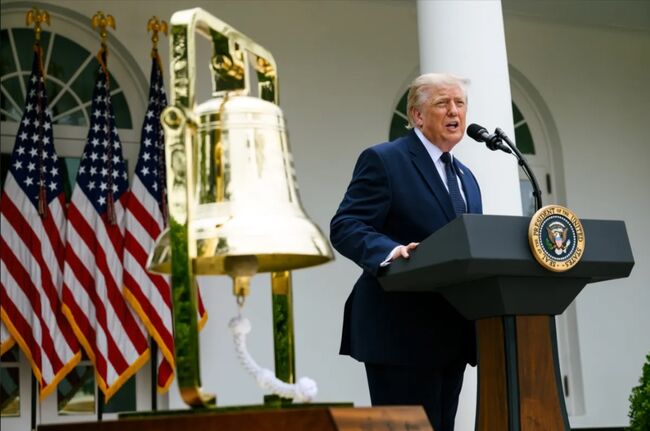 Trump pressures for rate cut again ahead of FOMC... "Should be the lowest in the world"
U.S. President Donald Trump. [Photo = The White House] U.S. President Donald Trump once again pressured the Federal Reserve, the U.S. central bank, to lower interest rates on the 27th (local time
Trump pressures for rate cut again ahead of FOMC... "Should be the lowest in the world"
U.S. President Donald Trump. [Photo = The White House] U.S. President Donald Trump once again pressured the Federal Reserve, the U.S. central bank, to lower interest rates on the 27th (local time
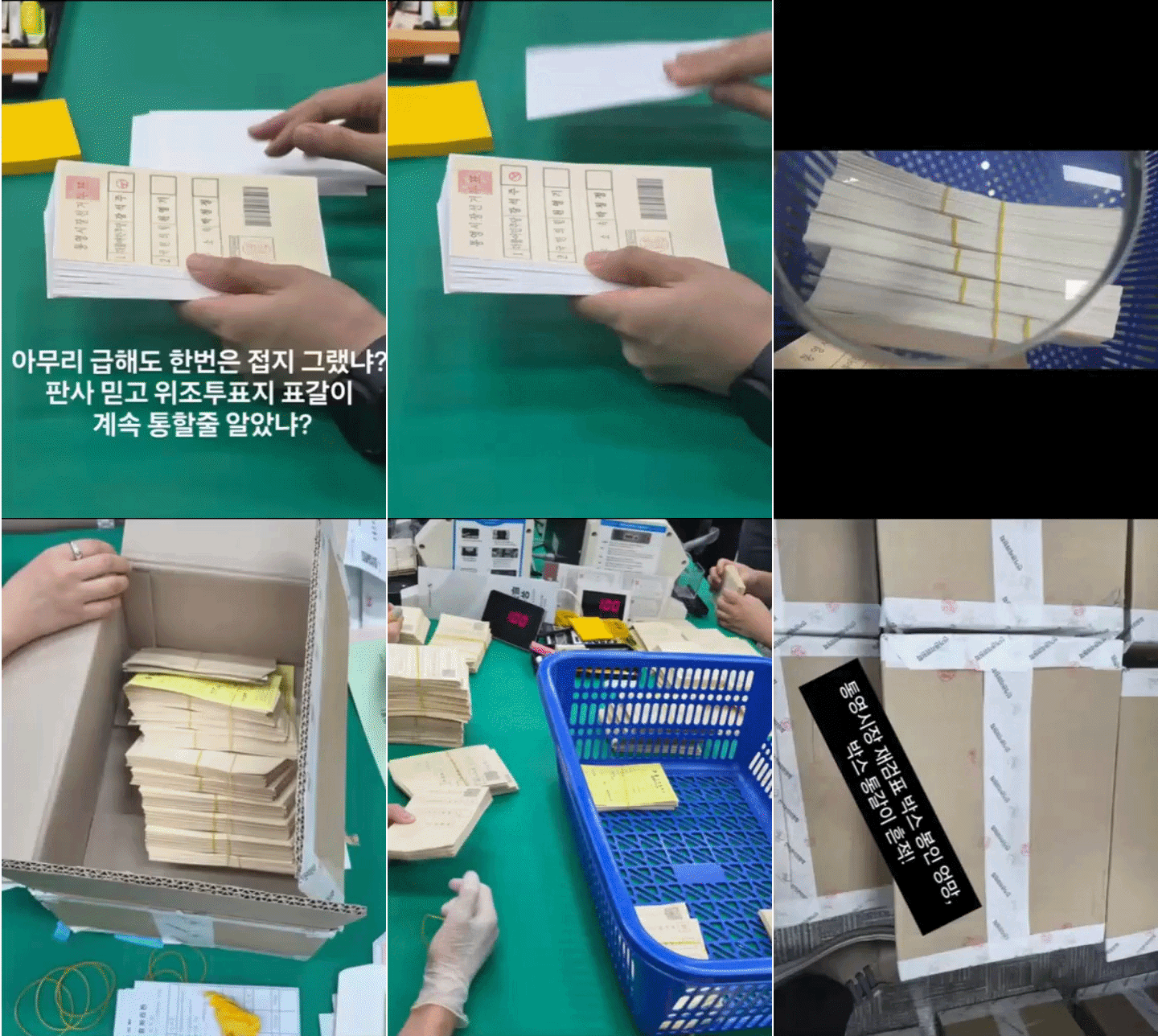 “Ignoring crisp ballots and damaged seals”… Tongyeong mayoral recount concludes with ‘no change in outcome,’ leaving suspicions and public outrage behind
Suspected counterfeit ballots discovered in Tongyeong [GIF from social media of Representative Hwang Kyo-ahn / Attorney Park Joo-hyun]During a recount of the Tongyeong mayoral election in South Gyeong
“Ignoring crisp ballots and damaged seals”… Tongyeong mayoral recount concludes with ‘no change in outcome,’ leaving suspicions and public outrage behind
Suspected counterfeit ballots discovered in Tongyeong [GIF from social media of Representative Hwang Kyo-ahn / Attorney Park Joo-hyun]During a recount of the Tongyeong mayoral election in South Gyeong
 President Yoon, regarding the first-instance ruling on the Public Official Election Act: “An excessive political verdict that distorts the facts… We will appeal immediately.”
The first-instance sentencing hearing for President Yoon Suk Yeol regarding violations of the Public Official Election Act is being broadcast live at Seoul Station on the 27th. [Photo=Yonhap News]Pres
President Yoon, regarding the first-instance ruling on the Public Official Election Act: “An excessive political verdict that distorts the facts… We will appeal immediately.”
The first-instance sentencing hearing for President Yoon Suk Yeol regarding violations of the Public Official Election Act is being broadcast live at Seoul Station on the 27th. [Photo=Yonhap News]Pres
 WSJ: "SK Hynix ADR Premium Is a Sign of AI Trading Overheat"
Advertisement for SK Hynix ADR listing in New York's Times Square [Reuters=Yonhap News file photo]The Wall Street Journal (WSJ) has pointed out that the price of SK Hynix’s American Depositary Recei
WSJ: "SK Hynix ADR Premium Is a Sign of AI Trading Overheat"
Advertisement for SK Hynix ADR listing in New York's Times Square [Reuters=Yonhap News file photo]The Wall Street Journal (WSJ) has pointed out that the price of SK Hynix’s American Depositary Recei
 'Godfather of Japanese Mystery Novels' Keigo Higashino Passes Away After Battle with Cancer at 68
Famous Japanese mystery novelist Keigo Higashino [AFP=Yonhap News]It has been belatedly reported that Keigo Higashino, the "godfather of Japanese mystery novels" and author of bestsellers such as "The
'Godfather of Japanese Mystery Novels' Keigo Higashino Passes Away After Battle with Cancer at 68
Famous Japanese mystery novelist Keigo Higashino [AFP=Yonhap News]It has been belatedly reported that Keigo Higashino, the "godfather of Japanese mystery novels" and author of bestsellers such as "The
 [Park Pil-kyu Security Column] To the Ignorant Trying to Clothe a Beast in Sheep's Clothing
Rep. Kim Byung-joo of the Democratic Party of Korea [Photo=Yonhap News]“The Air Force Academy doesn't teach you how to fly a plane!” “The Army, Navy, and Air Force academies are exactly the
[Park Pil-kyu Security Column] To the Ignorant Trying to Clothe a Beast in Sheep's Clothing
Rep. Kim Byung-joo of the Democratic Party of Korea [Photo=Yonhap News]“The Air Force Academy doesn't teach you how to fly a plane!” “The Army, Navy, and Air Force academies are exactly the
 [Issue Diagnosis] Two Effects of the Election Petition Review
 [Photo] Evidence of Election Fraud Flooding U.S. Media… Trump Had 2.7 Million Votes Stolen
 [Video] U.S. Semiquincentennial Air Show... 'Art in the Sky' streaks across New York
 [Editorial Cartoon] A Draconian Law That Undermines Freedom of Expression

 List
List