 Young people protesting at Olympic Park, calling for 're-election' and 'dissolution of the National Election Commission'. [YouTube capture]
In a democracy, the most important thing is not the vote itself. It is whether the public can trust the election results. Elections are a process of confirming trust in the nation before they are a procedure to determine victory or defeat. No matter how fairly an election is claimed to have been conducted, if a significant portion of the public cannot trust the process, democracy is already wounded.
The current ballot shortage incident has exposed precisely this issue of trust. A ballot is not just a piece of paper. It is a document printed with the sovereignty of the people. Yet, citizens who visited polling stations at the designated time encountered a shortage of ballots. This occurred during the election management process, which is one of the most basic duties of the state. This is on a different level than running out of documents at a community center. How on earth could such a thing happen?
The issue is not whether this incident actually affected the election results. What is serious is the fact that the election management body has come to be suspected by the public in the first place. Democracy does not require only fair outcomes. The process must also be comprehensible to everyone. The moment suspicion arises, trust crumbles, and when trust crumbles, institutions themselves falter.
A more significant problem is the attitude of the National Election Commission (NEC). The NEC has long existed under the name of an independent body. However, in a liberal state, independence is predicated on accountability. Independence without accountability is merely a privilege. An institution that manages the exercise of the people's sovereignty should be subject to stricter scrutiny and verification than anyone else. Yet, despite repeated controversies and mistakes, the NEC has, to some extent, used its independence as a shield rather than self-examining.
Liberalism does not trust power. The president, the legislature, and the judiciary are all subject to checks and balances. If only the body that manages elections remains virtually a sanctuary, it conflicts with the principles of liberalism. Power must be dispersed, oversight must be mutual, and accountability must be clear. The NEC is no exception.
Therefore, the calls for the dissolution of the NEC that are being raised today are not simply expressions of anger. They are not arguments that weigh the advantage or disadvantage of a particular political party. They are demands to fundamentally redesign an organization that has lost the public's trust. The argument is not to maintain the NEC to protect the election system, but to consider a new framework to restore trust in elections.
The public does not demand perfect institutions. However, they want institutions that at least acknowledge their mistakes, disclose them transparently, and take responsibility. If even basic problems like ballot shortages are not adequately explained in terms of their causes and responsibilities, public suspicion is bound to grow.
The enemy of democracy is not defeat. It is distrust. And the crisis the NEC faces today is not a problem of election results but a problem of trust. An institution that the public can no longer trust loses its reason for existence. Preserving the NEC should not be the goal. The goal should be to restore public trust.
If the current NEC cannot fulfill its role, there is no reason to taboo fundamental reforms, including dissolution and restructuring. Democracy exists not for the NEC but for the people. Ultimately, the justification for dissolving the NEC does not stem from hostility towards the organization, but from the demand to re-establish popular sovereignty and electoral trust. This is the starting point of responsible politics, as advocated by liberalism.
◆ Songsan
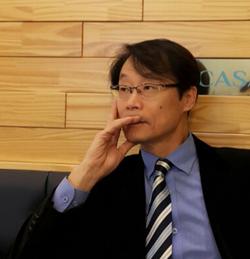
Poet and researcher of history and philosophy. Former director of the Rhee Syngman Academy. Currently serves as senior advisor to the Korean Modern and Contemporary History Research Association and head of the philosophy forum Lyceum. He has published four poetry collections, co-translated 'Heroes of Hukogji,' and authored the humanities books 'Joseon Turned Myth,' 'Humanities on the Tatami,' and 'A Liberal's Reading of Gramsci.' Songsan is a pen name.

 Iranian Foreign Ministry: "Continuing Message Exchanges with the U.S. and Activities of Mediating Countries"
Esmaeil Baghaei, Spokesperson for the Iranian Ministry of Foreign Affairs [Xinhua, Yonhap News file photo]Esmaeil Baghaei, spokesperson for the Iranian Ministry of Foreign Affairs, stated on the 26th
Iranian Foreign Ministry: "Continuing Message Exchanges with the U.S. and Activities of Mediating Countries"
Esmaeil Baghaei, Spokesperson for the Iranian Ministry of Foreign Affairs [Xinhua, Yonhap News file photo]Esmaeil Baghaei, spokesperson for the Iranian Ministry of Foreign Affairs, stated on the 26th
 President Yoon: "Do You Think You Are Safe from the Special Counsel?"... Final Statement Video Released
President Yoon Suk Yeol rebuking the special prosecutor on the 24th. [Court video / @birds_justice X account subtitle GIF] A video of President Yoon Suk Yeol's closing statement at his trial rega
President Yoon: "Do You Think You Are Safe from the Special Counsel?"... Final Statement Video Released
President Yoon Suk Yeol rebuking the special prosecutor on the 24th. [Court video / @birds_justice X account subtitle GIF] A video of President Yoon Suk Yeol's closing statement at his trial rega
 President Yoon, regarding the first-instance ruling on the Public Official Election Act: “An excessive political verdict that distorts the facts… We will appeal immediately.”
The first-instance sentencing hearing for President Yoon Suk Yeol regarding violations of the Public Official Election Act is being broadcast live at Seoul Station on the 27th. [Photo=Yonhap News]Pres
President Yoon, regarding the first-instance ruling on the Public Official Election Act: “An excessive political verdict that distorts the facts… We will appeal immediately.”
The first-instance sentencing hearing for President Yoon Suk Yeol regarding violations of the Public Official Election Act is being broadcast live at Seoul Station on the 27th. [Photo=Yonhap News]Pres
 WSJ: "SK Hynix ADR Premium Is a Sign of AI Trading Overheat"
Advertisement for SK Hynix ADR listing in New York's Times Square [Reuters=Yonhap News file photo]The Wall Street Journal (WSJ) has pointed out that the price of SK Hynix’s American Depositary Recei
WSJ: "SK Hynix ADR Premium Is a Sign of AI Trading Overheat"
Advertisement for SK Hynix ADR listing in New York's Times Square [Reuters=Yonhap News file photo]The Wall Street Journal (WSJ) has pointed out that the price of SK Hynix’s American Depositary Recei
 'Godfather of Japanese Mystery Novels' Keigo Higashino Passes Away After Battle with Cancer at 68
Famous Japanese mystery novelist Keigo Higashino [AFP=Yonhap News]It has been belatedly reported that Keigo Higashino, the "godfather of Japanese mystery novels" and author of bestsellers such as "The
'Godfather of Japanese Mystery Novels' Keigo Higashino Passes Away After Battle with Cancer at 68
Famous Japanese mystery novelist Keigo Higashino [AFP=Yonhap News]It has been belatedly reported that Keigo Higashino, the "godfather of Japanese mystery novels" and author of bestsellers such as "The
 [Park Pil-kyu Security Column] To the Ignorant Trying to Clothe a Beast in Sheep's Clothing
Rep. Kim Byung-joo of the Democratic Party of Korea [Photo=Yonhap News]“The Air Force Academy doesn't teach you how to fly a plane!” “The Army, Navy, and Air Force academies are exactly the
[Park Pil-kyu Security Column] To the Ignorant Trying to Clothe a Beast in Sheep's Clothing
Rep. Kim Byung-joo of the Democratic Party of Korea [Photo=Yonhap News]“The Air Force Academy doesn't teach you how to fly a plane!” “The Army, Navy, and Air Force academies are exactly the
 [Issue Diagnosis] Two Effects of the Election Petition Review
 [Photo] Evidence of Election Fraud Flooding U.S. Media… Trump Had 2.7 Million Votes Stolen
 [Video] U.S. Semiquincentennial Air Show... 'Art in the Sky' streaks across New York
 [Editorial Cartoon] A Draconian Law That Undermines Freedom of Expression

 List
List









