1997년 외환위기는 기업과 금융권의 과도한 차입경영이 주원인이었으나, 이번 2025년 예상 외환위기는 정부 주도의 포퓰리즘 정책과 반시장 법제 개정에서 비롯됐다는 점에서 근본이 다르다는 분석이 제기된다. 반기업·친노조 입법, 무리한 최저임금 인상, 해외생산 이전 가속화 등 구조적 문제가 산업공동화와 외환보유액 취약으로 이어지고 있다는 경고다. 여기에 북한·중국 친화 외교노선과 미·중 갈등 속 지정학적 리스크까지 겹치면서, 과거보다 회복이 훨씬 더딜 수 있다는 우려가 크다. 필자는 이재명 정부의 정책기조가 지속될 경우 베네수엘라의 전철을 밟을 수 있다며, 국민저항권까지 거론하고 있다. <편집자 주>
 Former Professor at Gangnam University, Current Co-representative of the Organization for School ProtectionThe foreign exchange crisis that occurred at the end of the Kim Young-sam administration in 1997 was fundamentally caused by reckless management in the private sector. Despite massive current account deficits, companies engaged in unreasonable and competitive facility investments in heavy and chemical industries such as automobiles, steel, and petrochemicals by securing relatively low-interest, short-term overseas funds. The financial sector, following the trend of financial liberalization, also engaged in reckless short-term foreign borrowing and long-term corporate lending, which ultimately led to the economic crisis.
Internationally, the collapse of economic fundamentals—such as the deterioration of the current account that began in developing countries—combined with aggressive foreign exchange market intervention by speculative capital, spread from the 1994 Mexican currency crisis to the 1997 Southeast Asian financial crisis, starting with South Korea, and further extended to the 1998 Russian moratorium and the 2002 South American currency crisis.
The foreign exchange crisis expected for South Korea in 2025 differs significantly from the past in terms of its causes and ripple effects. While the 1997 crisis was a situation where the government failed to defend against a crisis that started in the private sector, the current potential crisis is rooted in populist economic policies that have been consistently and incorrectly pursued by the left-wing government.
In other words, the government's gratuitous monetary expansion and the resulting persistent tax increase policies, unreasonable minimum wage guidelines labeled as "income-led growth," and commercial law amendments unilaterally biased toward labor unions (shareholder responsibility systems for directors, independent outside director systems, 3% voting rights limits for major shareholders when electing auditors, and the introduction of electronic shareholder meetings), as well as the future expected introduction of cumulative voting systems (mandated voting rights for minority shareholders), mandatory treasury stock retirement, and the "Yellow Envelope Law," which effectively prohibits damages claims against unions for industrial action, are essentially dismantling the fundamental framework of the market economy. This accelerates the exodus of large corporations abroad, causing industrial hollowing, and consequently increasing the possibility of a foreign exchange crisis due to insufficient foreign exchange reserves ($410 billion as of the end of June 2025).
These socialistic economic policies of past left-wing governments (Kim Dae-jung, Roh Moo-hyun, Moon Jae-in, and Lee Jae-myung) have suppressed creativity and productivity in workers while fostering a loss of work ethic and expanding expectations for government-dependent rent-seeking behavior. For entrepreneurs, these policies not only frustrated bold investments in new growth sectors but also pushed them to seek offshoring instead of reshoring domestic production. Furthermore, the government sector has seen a surge in government debt due to the expansion of gratuitous fiscal spending and faulty budget planning, and is now facing the rapid rise of future estimated debt due to the depletion of public pension funds—the government's future payment obligations—as well as the widening deficit in health insurance finances and the insolvency of public enterprises, including government-invested institutions.
However, the possibility of a foreign exchange crisis after 2025 is not only different in its causes but also differs significantly from the 1997 crisis in terms of its ripple effects, and thus requires different prescriptions. First, the previous foreign exchange crisis occurred across entire regions due to differences in the degree of industrial advancement and capital concentration between developed and developing countries, and it showed strong resilience that could be restored to normalcy depending on the activation level of free trade organizations. Conversely, because this potential crisis results from the destruction of the market economy based on artificial government policies, the restoration of normalcy could be extremely slow, potentially taking decades if handled incorrectly.
For instance, in the past, while painful and harsh structural adjustments were implemented in the process of receiving an IMF bailout, once the restructuring of companies and financial institutions was completed, they were able to rapidly adapt to the free trade system and recover to normalcy.
On the other hand, if a crisis occurs recently, it will be difficult to establish restructuring policies to heal Korea's unique crisis situation, given the lack of transition in the labor force's consciousness, the difficulty of rebuilding production facilities due to the destruction of the corporate ecosystem, and obstacles in the policy adjustment process due to the influx of overseas populations such as from China.
Moreover, unlike the past, this situation involves the confrontation between the continental totalitarian state systems (North Korea, China, Russia) and the maritime liberal systems (U.S., Japan, EU). Political interests can be pointed to as a direct cause, meaning that without the resolution of these political interests, the crisis cannot be fundamentally cured.
In this context, political interests refer to the pro-North Korea and China-dependent policy lines that the left-wing government has consistently pursued. In other words, once the primary line of the market economy is abandoned and shifted to a socialist path, even if one sticks to the so-called "security with the U.S., economy with China" strategy, most of the manufacturing base becomes subordinated to China, while high-tech manufacturing sectors like semiconductors, secondary batteries, and AI-based autonomous vehicles are relocated overseas, such as to the U.S. This not only causes domestic industrial hollowing but, with population aging and increased immigration from China, the domestic economy risks being reduced to a vassal state of China.
It appears that a recent Korea-U.S. tariff agreement will be concluded based on a 15% tariff rate on U.S. exports, $350 billion in tangible investments, and $100 billion in energy imports. Since most of these tangible investments in the U.S. are expected to be led by major domestic manufacturers in shipbuilding, semiconductors, secondary batteries, and nuclear power, if the current Lee Jae-myung administration persists with anti-business policies—such as the recent commercial law amendments, corporate tax hikes, the Yellow Envelope Law, mandatory treasury stock retirement, and the cumulative voting system—the legal exodus of these large corporations will be inevitable.
Furthermore, if the current government continues its anti-American political behavior, such as the recovery of wartime operational control and departure from policies containing China (China decoupling), there is a grave risk that the foundation of major manufacturing sectors where Korea still has international competitiveness—such as defense, small modular reactors, and shipbuilding—will also collapse.
Since the 1990s, China has established itself as a powerful manufacturing center within the free trade system with the cooperation of the U.S. Democratic Party. However, while funding large-scale overseas capital investments dubbed the "Belt and Road Initiative" (BRI) during a period of high growth of 7–8% per year, they sought to realize a "Chinese hegemony" by deviating from the normal free trade system through abnormal and immoral acts such as unauthorized theft of industrial technology, illegal dispatch of labor to invested countries, bribery of political and judicial figures in host countries based on Chinese Communist Party ideology, and the smuggling of fraudulent election systems.
However, as a result of the implementation of anti-China policies in the U.S., EU, and elsewhere, it is now expected that the Xi Jinping regime will collapse and transition to a collective leadership system within the Communist Party. This is due to expanding internal dissatisfaction among the ruling class and the high-income bracket, triggered by economic reasons such as the widening income gap between urban and rural areas caused by the Xi system, the failure of market-distorting centralized infrastructure/construction investments, and the deterioration of the external trade balance and depletion of foreign exchange reserves due to developed countries' containment policies toward China.
Furthermore, with the recent destruction of Iranian oil storage facilities by Israeli airstrikes, China's energy imports and the export of Chinese-made weapons to conflict-ridden Middle Eastern regions have been halted, further exacerbating China's economic crisis.
Additionally, the recent U.S. Trump administration has been consistently pursuing a policy of encircling China by implementing powerful security policies that go beyond economic containment to practically block China at sea, thereby frustrating China's potential armed invasion of Taiwan and promoting the liberalization of North Korea.
In that scenario, it will be difficult for the Lee Jae-myung administration's unilateral, China-dependent, and disastrous socialist policies to continue, and even if they do, they are likely to face public resistance. However, our citizens must clearly recognize the reality of the economic policies of the Lee Jae-myung administration that could trigger a second foreign exchange crisis.
Like all economic crises, it emerges suddenly, making it difficult to see what lies ahead. In most cases, asset prices might actually rise before they crash in a large-scale crisis. While the Lee Jae-myung administration claims it will open an era of a 5,000-point stock market, the various anti-business regulations it is implementing are actually shrinking the stock market while causing real estate prices to fluctuate.
The regulation on mortgage loans, capped at 600 million won per person—which even contradicts the Constitution—is instead driving up house prices in Seoul, fueling the consciousness that "it is better to have one 'smart' house" and encouraging discriminatory buying by Chinese nationals. Of course, as experienced in Japan along with population aging, there is a possibility that house prices in urban areas might not experience a severe decline compared to rural areas. However, considering that Japan's household savings are much higher than ours and they never faced a foreign exchange crisis, our reality is different from that of Japan.
Our household debt, even excluding the *jeonse* deposits (which are not counted in advanced countries), puts us 4th in the OECD in terms of the household debt-to-GDP ratio (93.5% as of 2023, following Switzerland, Australia, and Canada), and most of it consists of mortgages. If a default situation on government debt occurs, the private sector is highly likely to collapse completely.
The same applies to corporate debt. The bankruptcy of marginal companies is continuing, and if the illegal North Korean remittance scandal involving Lee Jae-myung faces international sanctions, a credit crash in the financial sector will be inevitable. Moreover, if the exodus of large corporations to overseas production bases becomes visible, the crisis in the private sector could amplify uncontrollably.
Nevertheless, the possibility of our foreign exchange crisis might not be that high. This is because, internationally, if our economy collapses, the progress of China's vassalization of Korea would accelerate, which could weaken the effectiveness of the China-containment policies pushed by the U.S.
However, this does not mean that a foreign exchange crisis will not occur, as it assumes a certain degree of direct interference in Korea's internal affairs by the U.S. through strong human rights advocacy and forced containment of China, leveraging the weaknesses of the Lee Jae-myung administration.
In other words, it means that it is difficult to rule out the possibility that the Lee Jae-myung administration could at any time engage in a "chicken game" that ignores the public and the potential collapse of national sovereignty. In that case, a foreign exchange crisis could become a reality, and our economy could fall into a moribund state from which it is difficult to recover. The fact that the Venezuelan left-wing regime, continuing from Chavez to Maduro, ruined their country serves as a cautionary tale.
It is a fact that all national powers—the government, the legislature, the judiciary, institutional media, and oversight agencies—are currently steeped in left-wing ideology and have absolutely no capacity to properly cope with a national crisis. It is time for our citizens to exercise the right of resistance, the final resort that exists in a concept superior to the Constitution. Considering that heaven helps those who help themselves and that the entire international situation around us is maintaining a stance favorable to our free citizens, the execution of the right of resistance itself is not that difficult.
※ Columns by outside contributors may differ from the editorial direction of this publication.
#ForeignExchangeCrisis #1997IMF #PopulistEconomics #AntiBusinessPolicy #YellowEnvelopeLaw #IndustrialHollowing #LeeJaeMyungAdministration #ForeignExchangeReserves #RightOfResistance #VenezuelanCase

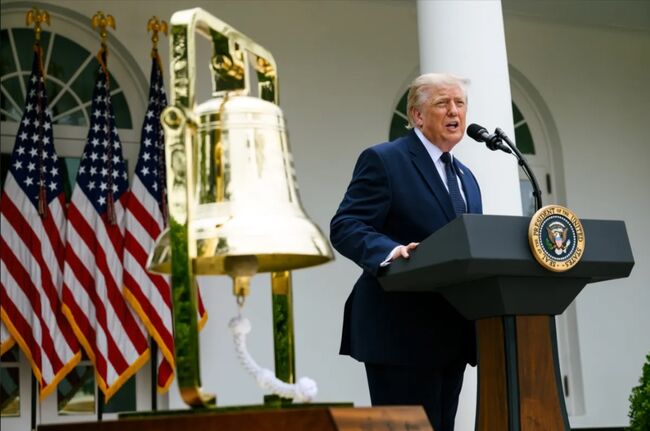 Trump pressures for rate cut again ahead of FOMC... "Should be the lowest in the world"
U.S. President Donald Trump. [Photo = The White House] U.S. President Donald Trump once again pressured the Federal Reserve, the U.S. central bank, to lower interest rates on the 27th (local time
Trump pressures for rate cut again ahead of FOMC... "Should be the lowest in the world"
U.S. President Donald Trump. [Photo = The White House] U.S. President Donald Trump once again pressured the Federal Reserve, the U.S. central bank, to lower interest rates on the 27th (local time
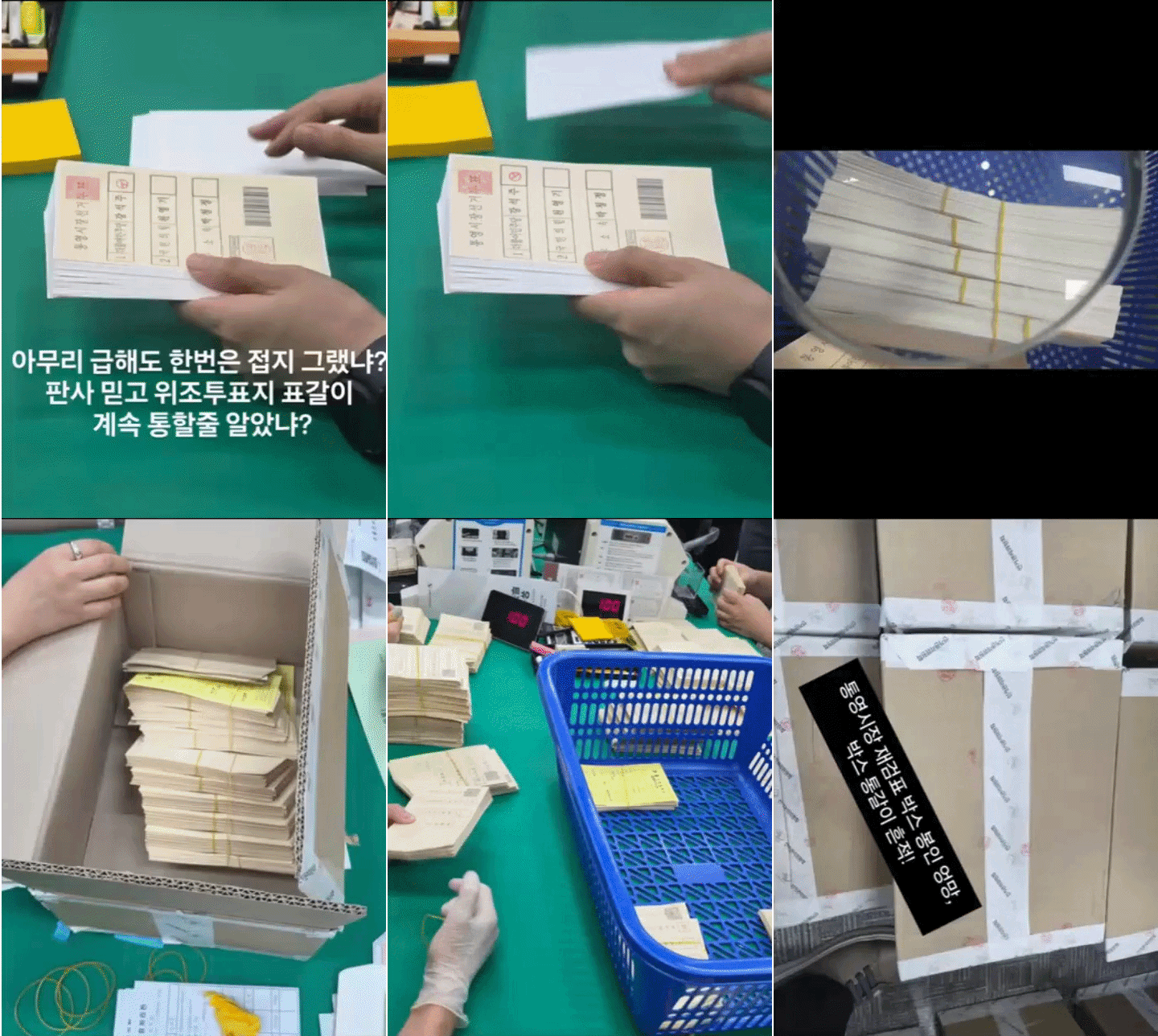 “Ignoring crisp ballots and damaged seals”… Tongyeong mayoral recount concludes with ‘no change in outcome,’ leaving suspicions and public outrage behind
Suspected counterfeit ballots discovered in Tongyeong [GIF from social media of Representative Hwang Kyo-ahn / Attorney Park Joo-hyun]During a recount of the Tongyeong mayoral election in South Gyeong
“Ignoring crisp ballots and damaged seals”… Tongyeong mayoral recount concludes with ‘no change in outcome,’ leaving suspicions and public outrage behind
Suspected counterfeit ballots discovered in Tongyeong [GIF from social media of Representative Hwang Kyo-ahn / Attorney Park Joo-hyun]During a recount of the Tongyeong mayoral election in South Gyeong
 President Yoon, regarding the first-instance ruling on the Public Official Election Act: “An excessive political verdict that distorts the facts… We will appeal immediately.”
The first-instance sentencing hearing for President Yoon Suk Yeol regarding violations of the Public Official Election Act is being broadcast live at Seoul Station on the 27th. [Photo=Yonhap News]Pres
President Yoon, regarding the first-instance ruling on the Public Official Election Act: “An excessive political verdict that distorts the facts… We will appeal immediately.”
The first-instance sentencing hearing for President Yoon Suk Yeol regarding violations of the Public Official Election Act is being broadcast live at Seoul Station on the 27th. [Photo=Yonhap News]Pres
 WSJ: "SK Hynix ADR Premium Is a Sign of AI Trading Overheat"
Advertisement for SK Hynix ADR listing in New York's Times Square [Reuters=Yonhap News file photo]The Wall Street Journal (WSJ) has pointed out that the price of SK Hynix’s American Depositary Recei
WSJ: "SK Hynix ADR Premium Is a Sign of AI Trading Overheat"
Advertisement for SK Hynix ADR listing in New York's Times Square [Reuters=Yonhap News file photo]The Wall Street Journal (WSJ) has pointed out that the price of SK Hynix’s American Depositary Recei
 'Godfather of Japanese Mystery Novels' Keigo Higashino Passes Away After Battle with Cancer at 68
Famous Japanese mystery novelist Keigo Higashino [AFP=Yonhap News]It has been belatedly reported that Keigo Higashino, the "godfather of Japanese mystery novels" and author of bestsellers such as "The
'Godfather of Japanese Mystery Novels' Keigo Higashino Passes Away After Battle with Cancer at 68
Famous Japanese mystery novelist Keigo Higashino [AFP=Yonhap News]It has been belatedly reported that Keigo Higashino, the "godfather of Japanese mystery novels" and author of bestsellers such as "The
 [Park Pil-kyu Security Column] To the Ignorant Trying to Clothe a Beast in Sheep's Clothing
Rep. Kim Byung-joo of the Democratic Party of Korea [Photo=Yonhap News]“The Air Force Academy doesn't teach you how to fly a plane!” “The Army, Navy, and Air Force academies are exactly the
[Park Pil-kyu Security Column] To the Ignorant Trying to Clothe a Beast in Sheep's Clothing
Rep. Kim Byung-joo of the Democratic Party of Korea [Photo=Yonhap News]“The Air Force Academy doesn't teach you how to fly a plane!” “The Army, Navy, and Air Force academies are exactly the
 [Issue Diagnosis] Two Effects of the Election Petition Review
 [Photo] Evidence of Election Fraud Flooding U.S. Media… Trump Had 2.7 Million Votes Stolen
 [Video] U.S. Semiquincentennial Air Show... 'Art in the Sky' streaks across New York
 [Editorial Cartoon] A Draconian Law That Undermines Freedom of Expression

 List
List









