High-rise building in Dubai damaged by Iranian airstrikes [EPA Yonhap News File Photo]
The U.S. Treasury Department is considering using "Iranian assets" to fund damage recovery and reconstruction efforts in Gulf countries, Reuters and the British daily Financial Times (FT) reported on the 6th (local time).
This proposal was revealed shortly after Mohsen Rezaei, a military advisor to Iran's Supreme Leader, stated in a CNN interview on the 5th that lifting sanctions on at least $24 billion (approximately 37.4 trillion Korean won) of Iran's frozen assets, totaling $100 billion (approximately 156 trillion Korean won) due to U.S. sanctions, is a key condition for Iran's desired peace agreement.
According to the reports, U.S. Treasury Secretary Scott Bessant has instructed his team to assess the damages inflicted by Iran on U.S. allies in the Persian Gulf region during the current conflict.
Since the United States and Israel launched a surprise attack on Iran on February 28th, Iran and its proxy forces have carried out missile and drone attacks on oil infrastructure, industrial complexes, and U.S. military facilities in the Middle East. Exchanges of fire have continued even after the ceasefire was signed on April 8th.
Among the U.S. allies in the Persian Gulf region that have suffered damage from Iranian attacks are Saudi Arabia, the United Arab Emirates (UAE), Kuwait, and Bahrain.
In particular, in the past week, Iran has launched missiles at U.S. military bases in Kuwait and Bahrain. Six of these missiles were intercepted, and one failed to reach its target.
A senior Trump administration official explained to the FT that "the Treasury Department will explore all means to enable the use of Iranian assets to support the reconstruction and recovery from damages caused by Iran in the future."
The official added, "The Treasury Department will also review whether Iranian assets can be used to support the recovery from past damages."
However, it is currently unclear whether the "Iranian assets" mentioned by the U.S. refer to the $100 billion in Iranian assets frozen by U.S. sanctions, a portion of it, or something else entirely.
Reuters cautioned that sources did not specify what "Iranian assets" the U.S. Treasury Department is reviewing, suggesting that based on the language used by the sources, it cannot be definitively concluded that it refers to assets frozen by U.S. sanctions.
The FT also reported that inquiries to the White House and the Treasury Department yielded no response, and there was no specific information provided regarding the exact Iranian assets the U.S. intends to use for damage recovery in Persian Gulf countries.
The fact that a Trump administration official deliberately distinguished between "damages caused by Iran in the future" and "past damages already caused by Iran" in their remarks to the FT is another factor making it difficult to definitively interpret the nature of the "Iranian assets" mentioned by the U.S.
However, regardless of the specific nature of the "Iranian assets" mentioned by the U.S., the threat of using "Iranian assets" in such a manner itself could act as a destabilizing factor.
This is because the addition of new conflicts could further destabilize the precarious ceasefire between the U.S. and Iran and make the ongoing negotiations between the two sides more challenging.
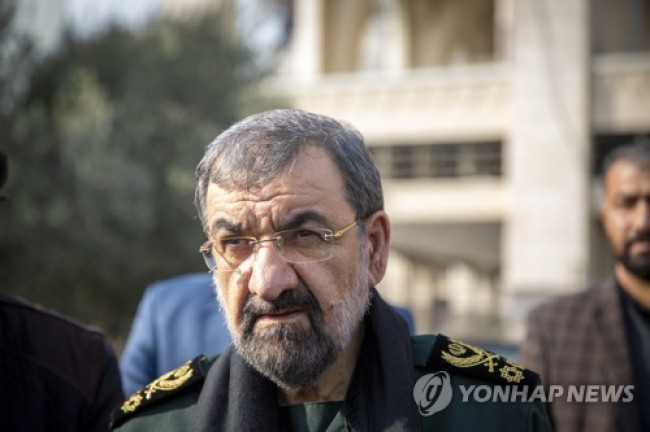 Mohsen Rezaei in 2020 [UPI Yonhap News]
In his CNN interview on the 5th, Advisor Rezaei stated, "If President Trump wants to reach an agreement with Iran, $24 billion is a test of trust. This is a test the U.S. must pass, and then the path will open."
He publicly demanded the release of $24 billion in frozen assets as a confidence-building measure.
He also emphasized, "This money is not American money; it is our money."
The demand for the release of $24 billion in frozen assets is one of Iran's key demands in the stalled negotiations between the U.S. and Iran, but the U.S. reportedly maintains its position of non-acceptance.
The U.S. is concerned that releasing frozen assets without securing sufficient progress on Iran's nuclear program could lead to a loss of bargaining power.
For President Trump, who has vehemently criticized the Obama administration for allowing Iran to access $1.7 billion (approximately 2.65 trillion Korean won) in cash in 2016 during the implementation of the 2015 Iran nuclear deal (Joint Comprehensive Plan of Action, JCPOA), the release of over ten times that amount in frozen funds is a burdensome prospect.
Amidst the stalemate in peace talks, both countries exchanged limited military actions over the weekend.
U.S. forces shot down a drone launched by Iran and subsequently struck coastal radar bases near the Strait of Hormuz, while Iran's Islamic Revolutionary Guard Corps (IRGC) claimed to have launched ballistic missile attacks targeting U.S. military bases in Kuwait and Bahrain.

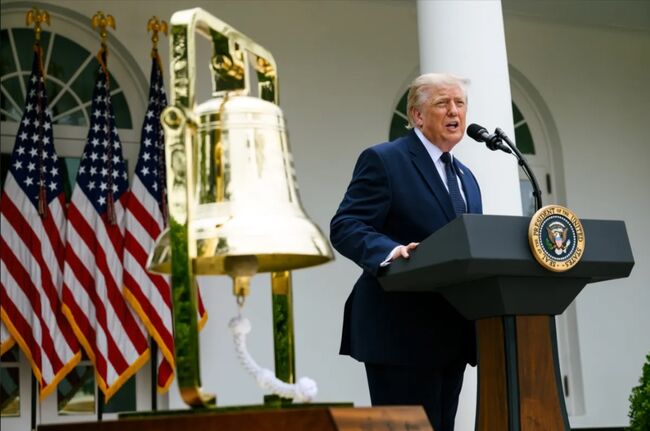 Trump pressures for rate cut again ahead of FOMC... "Should be the lowest in the world"
U.S. President Donald Trump. [Photo = The White House] U.S. President Donald Trump once again pressured the Federal Reserve, the U.S. central bank, to lower interest rates on the 27th (local time
Trump pressures for rate cut again ahead of FOMC... "Should be the lowest in the world"
U.S. President Donald Trump. [Photo = The White House] U.S. President Donald Trump once again pressured the Federal Reserve, the U.S. central bank, to lower interest rates on the 27th (local time
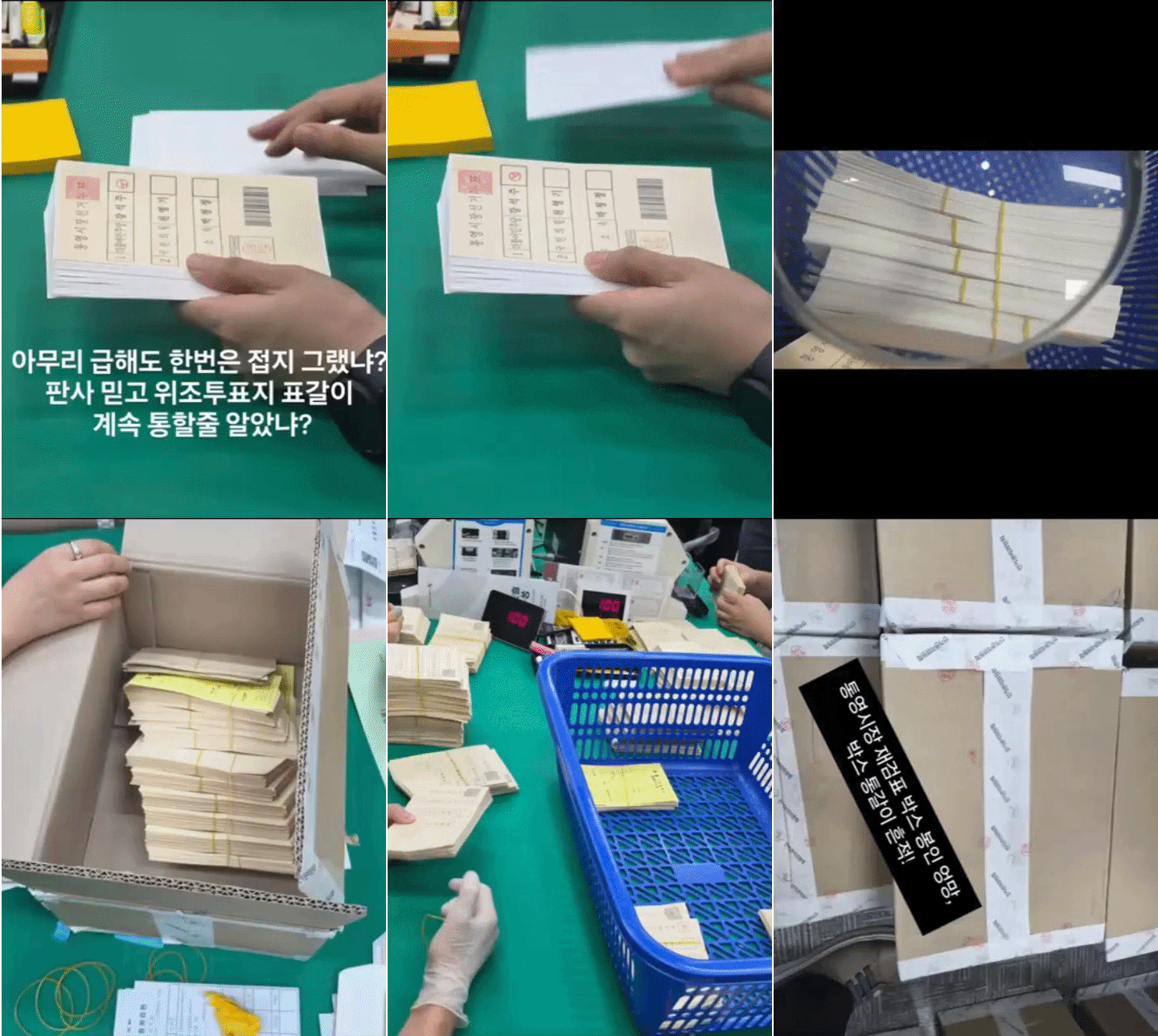 “Ignoring crisp ballots and damaged seals”… Tongyeong mayoral recount concludes with ‘no change in outcome,’ leaving suspicions and public outrage behind
Suspected counterfeit ballots discovered in Tongyeong [GIF from social media of Representative Hwang Kyo-ahn / Attorney Park Joo-hyun]During a recount of the Tongyeong mayoral election in South Gyeong
“Ignoring crisp ballots and damaged seals”… Tongyeong mayoral recount concludes with ‘no change in outcome,’ leaving suspicions and public outrage behind
Suspected counterfeit ballots discovered in Tongyeong [GIF from social media of Representative Hwang Kyo-ahn / Attorney Park Joo-hyun]During a recount of the Tongyeong mayoral election in South Gyeong
 President Yoon, regarding the first-instance ruling on the Public Official Election Act: “An excessive political verdict that distorts the facts… We will appeal immediately.”
The first-instance sentencing hearing for President Yoon Suk Yeol regarding violations of the Public Official Election Act is being broadcast live at Seoul Station on the 27th. [Photo=Yonhap News]Pres
President Yoon, regarding the first-instance ruling on the Public Official Election Act: “An excessive political verdict that distorts the facts… We will appeal immediately.”
The first-instance sentencing hearing for President Yoon Suk Yeol regarding violations of the Public Official Election Act is being broadcast live at Seoul Station on the 27th. [Photo=Yonhap News]Pres
 WSJ: "SK Hynix ADR Premium Is a Sign of AI Trading Overheat"
Advertisement for SK Hynix ADR listing in New York's Times Square [Reuters=Yonhap News file photo]The Wall Street Journal (WSJ) has pointed out that the price of SK Hynix’s American Depositary Recei
WSJ: "SK Hynix ADR Premium Is a Sign of AI Trading Overheat"
Advertisement for SK Hynix ADR listing in New York's Times Square [Reuters=Yonhap News file photo]The Wall Street Journal (WSJ) has pointed out that the price of SK Hynix’s American Depositary Recei
 'Godfather of Japanese Mystery Novels' Keigo Higashino Passes Away After Battle with Cancer at 68
Famous Japanese mystery novelist Keigo Higashino [AFP=Yonhap News]It has been belatedly reported that Keigo Higashino, the "godfather of Japanese mystery novels" and author of bestsellers such as "The
'Godfather of Japanese Mystery Novels' Keigo Higashino Passes Away After Battle with Cancer at 68
Famous Japanese mystery novelist Keigo Higashino [AFP=Yonhap News]It has been belatedly reported that Keigo Higashino, the "godfather of Japanese mystery novels" and author of bestsellers such as "The
 [Park Pil-kyu Security Column] To the Ignorant Trying to Clothe a Beast in Sheep's Clothing
Rep. Kim Byung-joo of the Democratic Party of Korea [Photo=Yonhap News]“The Air Force Academy doesn't teach you how to fly a plane!” “The Army, Navy, and Air Force academies are exactly the
[Park Pil-kyu Security Column] To the Ignorant Trying to Clothe a Beast in Sheep's Clothing
Rep. Kim Byung-joo of the Democratic Party of Korea [Photo=Yonhap News]“The Air Force Academy doesn't teach you how to fly a plane!” “The Army, Navy, and Air Force academies are exactly the
 [Issue Diagnosis] Two Effects of the Election Petition Review
 [Photo] Evidence of Election Fraud Flooding U.S. Media… Trump Had 2.7 Million Votes Stolen
 [Video] U.S. Semiquincentennial Air Show... 'Art in the Sky' streaks across New York
 [Editorial Cartoon] A Draconian Law That Undermines Freedom of Expression

 List
List