 People at Jamsil shouting 'Fraudulent Election Re-election'. ⒸHankook Ilbo
Politics is not everything in a nation. Politics is a product of society. What people learn, what they read, and what they accept as common sense comes first. The political sphere merely reflects those outcomes.
However, contemporary civic movements tend to go in the opposite direction. They believe that by shaking up the political sphere alone, the world will change. They think that problems will be solved by supporting one politician and ousting another.
Without a change in common sense, thoughts will not change.
But history has not moved that way. Presidents have changed and regimes have been replaced, yet people's thoughts have not easily changed. This is because common sense has not changed.
It is precisely at this point that Gramsci's insight becomes important. Gramsci did not locate the center of power in parliament. He looked at schools, he looked at universities, he looked at the realms of publishing and culture. He saw that what people consider self-evident is more important than election results.
Indeed, modern society operates that way. A single textbook can have influence for decades. A single university lecture influences the worldview of hundreds of students. Movies, dramas, publishing, and education leave their mark on the mindset of an entire generation. In contrast, political news fades from people's memories within days.
Yet, civic movements in South Korea pour almost all their energy solely into politics. The squares are overflowing with people, but the research institutes are empty. There are endless speeches, but few reading groups. Political broadcasts are abundant, but educational programs for future generations are hard to find.
Rallies are repeated, but no new books are published, cultural production is meager, and avenues for connecting with the younger generation are insufficient. This is a very dangerous phenomenon. Politics is a consequence of culture, yet we are trying to change only the outcome while neglecting the cause.
Citizens are ultimately the movers of politicians.
If citizens truly worry about the future of South Korea, they must stop imitating politicians. The same goes for civic leadership. One should not be proud of acting like a political broker.
Knowing a lot about internal political affairs does not equate to understanding the nation. Being close to a member of the National Assembly does not grant insight. Knowing many political behind-the-scenes stories does not automatically lead to expertise in history, philosophy, education, or culture. In fact, the more one remains at that level, the narrower one's perspective can become.
The power of citizens lies not in replacing politicians, but in moving them. And a more significant power lies in creating new common sense in the realms of culture, education, publishing, and research. Rallies are necessary, but they are not enough.
The roar of the square can shake a day, but a book shakes a generation. A single speech may receive applause, but education changes the future. The real battle is not waged around the political sphere, but in the space surrounding what people consider self-evident.
Civic movements that are intoxicated with stories from the political back alleys do not reach that point. However, civic movements that strive to create new common sense through culture, education, research, and publishing create a completely different future.
The square is a starting point, not a destination. If the South Korean right truly desires long-term victory, it must become a producer of culture, not a consumer of politics. The war of position, as Gramsci called it, begins there. People who prepare for the future not through political news, but through books, schools, research, and publishing. Ultimately, it is these people who have moved history.
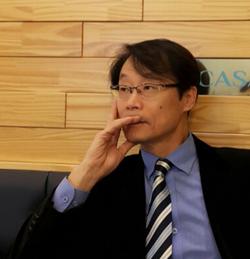
◆ Songsan
A poet and researcher of history and philosophy. Former director of the Rhee Syngman Academy. Currently serves as a research advisor for the Korean Modern and Contemporary History Research Association and as the representative of the philosophy forum Lyceum. He has published four poetry collections, co-translated 'Heroes of Cape Chosin,' and authored the humanities books 'Joseon, a Myth,' 'Humanities on the Tatami,' and 'Gramsci Through the Eyes of a Liberal.' Songsan is a pen name.

 Iranian Foreign Ministry: "Continuing Message Exchanges with the U.S. and Activities of Mediating Countries"
Esmaeil Baghaei, Spokesperson for the Iranian Ministry of Foreign Affairs [Xinhua, Yonhap News file photo]Esmaeil Baghaei, spokesperson for the Iranian Ministry of Foreign Affairs, stated on the 26th
Iranian Foreign Ministry: "Continuing Message Exchanges with the U.S. and Activities of Mediating Countries"
Esmaeil Baghaei, Spokesperson for the Iranian Ministry of Foreign Affairs [Xinhua, Yonhap News file photo]Esmaeil Baghaei, spokesperson for the Iranian Ministry of Foreign Affairs, stated on the 26th
 President Yoon: "Do You Think You Are Safe from the Special Counsel?"... Final Statement Video Released
President Yoon Suk Yeol rebuking the special prosecutor on the 24th. [Court video / @birds_justice X account subtitle GIF] A video of President Yoon Suk Yeol's closing statement at his trial rega
President Yoon: "Do You Think You Are Safe from the Special Counsel?"... Final Statement Video Released
President Yoon Suk Yeol rebuking the special prosecutor on the 24th. [Court video / @birds_justice X account subtitle GIF] A video of President Yoon Suk Yeol's closing statement at his trial rega
 President Yoon, regarding the first-instance ruling on the Public Official Election Act: “An excessive political verdict that distorts the facts… We will appeal immediately.”
The first-instance sentencing hearing for President Yoon Suk Yeol regarding violations of the Public Official Election Act is being broadcast live at Seoul Station on the 27th. [Photo=Yonhap News]Pres
President Yoon, regarding the first-instance ruling on the Public Official Election Act: “An excessive political verdict that distorts the facts… We will appeal immediately.”
The first-instance sentencing hearing for President Yoon Suk Yeol regarding violations of the Public Official Election Act is being broadcast live at Seoul Station on the 27th. [Photo=Yonhap News]Pres
 WSJ: "SK Hynix ADR Premium Is a Sign of AI Trading Overheat"
Advertisement for SK Hynix ADR listing in New York's Times Square [Reuters=Yonhap News file photo]The Wall Street Journal (WSJ) has pointed out that the price of SK Hynix’s American Depositary Recei
WSJ: "SK Hynix ADR Premium Is a Sign of AI Trading Overheat"
Advertisement for SK Hynix ADR listing in New York's Times Square [Reuters=Yonhap News file photo]The Wall Street Journal (WSJ) has pointed out that the price of SK Hynix’s American Depositary Recei
 'Godfather of Japanese Mystery Novels' Keigo Higashino Passes Away After Battle with Cancer at 68
Famous Japanese mystery novelist Keigo Higashino [AFP=Yonhap News]It has been belatedly reported that Keigo Higashino, the "godfather of Japanese mystery novels" and author of bestsellers such as "The
'Godfather of Japanese Mystery Novels' Keigo Higashino Passes Away After Battle with Cancer at 68
Famous Japanese mystery novelist Keigo Higashino [AFP=Yonhap News]It has been belatedly reported that Keigo Higashino, the "godfather of Japanese mystery novels" and author of bestsellers such as "The
 [Park Pil-kyu Security Column] To the Ignorant Trying to Clothe a Beast in Sheep's Clothing
Rep. Kim Byung-joo of the Democratic Party of Korea [Photo=Yonhap News]“The Air Force Academy doesn't teach you how to fly a plane!” “The Army, Navy, and Air Force academies are exactly the
[Park Pil-kyu Security Column] To the Ignorant Trying to Clothe a Beast in Sheep's Clothing
Rep. Kim Byung-joo of the Democratic Party of Korea [Photo=Yonhap News]“The Air Force Academy doesn't teach you how to fly a plane!” “The Army, Navy, and Air Force academies are exactly the
 [Issue Diagnosis] Two Effects of the Election Petition Review
 [Photo] Evidence of Election Fraud Flooding U.S. Media… Trump Had 2.7 Million Votes Stolen
 [Video] U.S. Semiquincentennial Air Show... 'Art in the Sky' streaks across New York
 [Editorial Cartoon] A Draconian Law That Undermines Freedom of Expression

 List
List









