A humanoid robot from China's Unitree [File Photo, AFP/Yonhap]The U.S. Department of Defense (War Department) announced on the 8th (local time) that it has added Chinese tech giants Alibaba, Baidu, and electric vehicle manufacturer BYD to its list of 'Companies Supporting the Chinese Military (People's Liberation Army)'.
With a significant number of companies excelling in advanced industries such as humanoid robotics, autonomous driving, and biotechnology, including China's two largest memory manufacturers, the responses from these companies as well as the Chinese government are drawing attention.
In a press release that day, the U.S. Department of Defense stated, "In accordance with the statutory requirements of Section 1260H of the National Defense Authorization Act (NDAA), we have published in the Federal Register an updated list of Chinese military companies that operate directly or indirectly within the United States."
Section 1260H is a provision that allows for the creation of a list of Chinese military companies deemed to be supporting the Chinese military, which is compiled and managed by the U.S. Department of Defense. Following an investigation by the Department of Defense, 188 entities have been selected for the 1260H list this time.
The list published in the Federal Register includes China's leading e-commerce company Alibaba, China's largest internet search portal Baidu, BYD, a competitor to U.S. electric vehicle manufacturer Tesla, and AI tech giant Tencent.
The Department of Defense cited that these companies operate directly or indirectly in connection with the State-owned Assets Supervision and Administration Commission (SASAC) under the Chinese government or the Ministry of Industry and Information Technology (MIIT) as the reasons for their designation.
Regarding Alibaba and Baidu, the Department stated they are "civil-military complex contributors to China's defense industrial base, linked to MIIT," and for BYD, "a civil-military complex contributor directly or indirectly linked to SASAC and indirectly to MIIT."
Yangtze Memory Technologies Co. (YMTC), China's largest NAND flash manufacturer, and Changxin Memory Technologies (CXMT), a DRAM manufacturer, which were already on the 1260H list, remain listed.
The reasons cited for these two companies are their indirect ownership by SASAC and indirect links to MIIT and the China National Space Administration (SASTIND). These two companies were not included in a list briefly released in February, drawing criticism from hardliners in the U.S. towards China.
Unitree, a leader in China's humanoid robot industry, RoboSense, which provides AI-based autonomous driving technology to automotive companies, and WuXi AppTec, which supports the pharmaceutical and biotechnology industries, were also included in the list.
In the case of China National Offshore Oil Corporation (CNOOC) Group, a Chinese state-owned company, two of its previously listed subsidiaries were removed, while another subsidiary, China Blue Chemical, was added. The Department of Defense specified that CNOOC is under the direct control of the Chinese government.
The Department of Defense stated, "The U.S. government reserves the right to take further action against these entities based on authorities other than Section 1260H."
Being included on this list does not immediately result in sanctions or export controls. However, it significantly increases the likelihood of these companies being excluded from future contracts or procurement projects by the Department of Defense.
In particular, it is perceived as a warning message to suppliers to the Department of Defense and other U.S. government agencies regarding the U.S. military's assessment of these companies.
Reuters reported, "The Department of Defense will be prohibited from directly contracting with companies on the list starting at the end of this month, and from purchasing products and services from these companies through third parties starting next year."
Bloomberg News focused on the inclusion of "three champions leading China's AI," namely Alibaba, Baidu, and Tencent, interpreting it as the U.S. move to counter China's rise in AI.
The 1260H list, which includes these companies, was initially published in the Federal Register on February 13th but was withdrawn as unpublished at the request of the Department of Defense only a few minutes later, sparking speculation about whether it was in consideration of the U.S.-China summit.
At that time, the summit between U.S. President Donald Trump and Chinese President Xi Jinping was scheduled for early April. Later, due to the aftermath of the Iran war, President Trump requested a postponement, and the summit was actually held in Beijing on April 15-16, about a month later.
When the addition of companies like Alibaba and Baidu to the list became known in February, they had previously threatened legal action, arguing that they only provide civilian products and services and lack any basis for being classified as military-related companies.
With the definitive announcement of the list this time, backlash is expected not only from these companies but also from the Chinese government. Given that disadvantages are practically foreshadowed, there is also a possibility of legal action.
A spokesperson for WuXi AppTec, newly added to the list, told Reuters that the designation was a "clear mistake" and that "immediate steps will be taken to correct this erroneous designation." (Yonhap News)
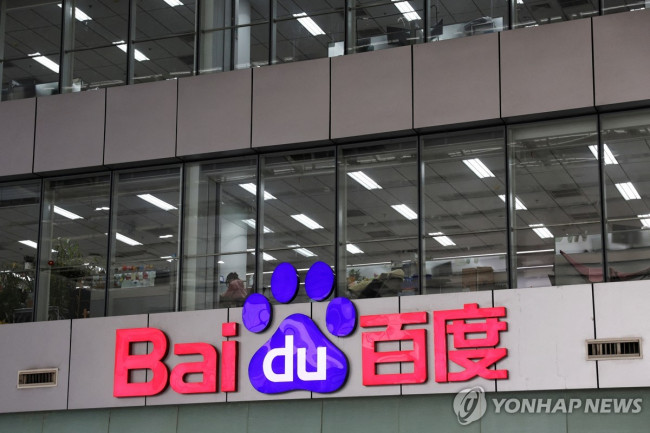 China's leading search engine Baidu [File Photo, Reuters/Yonhap]

 Trump pressures for rate cut again ahead of FOMC... "Should be the lowest in the world"
U.S. President Donald Trump. [Photo = The White House] U.S. President Donald Trump once again pressured the Federal Reserve, the U.S. central bank, to lower interest rates on the 27th (local time
Trump pressures for rate cut again ahead of FOMC... "Should be the lowest in the world"
U.S. President Donald Trump. [Photo = The White House] U.S. President Donald Trump once again pressured the Federal Reserve, the U.S. central bank, to lower interest rates on the 27th (local time
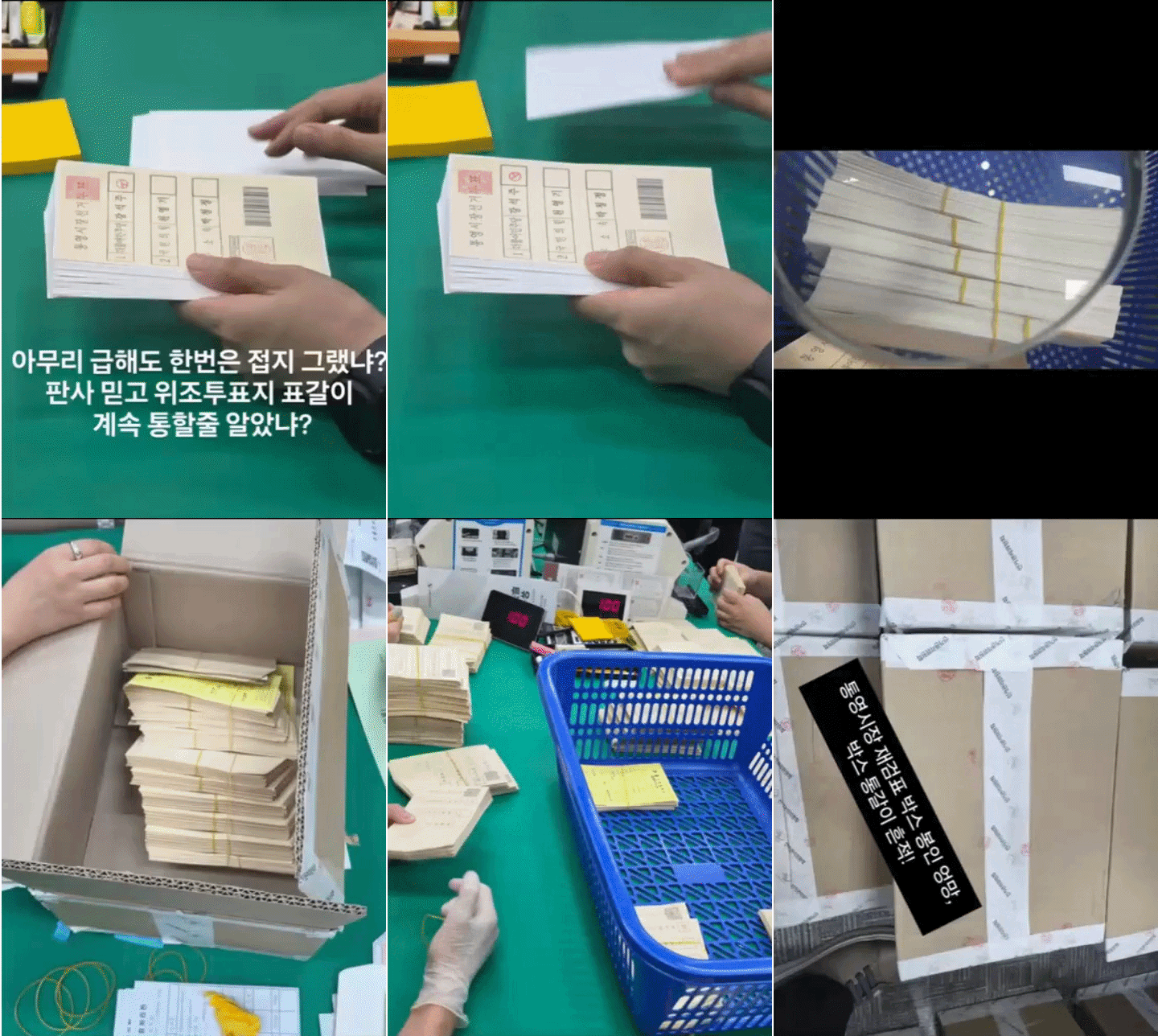 “Ignoring crisp ballots and damaged seals”… Tongyeong mayoral recount concludes with ‘no change in outcome,’ leaving suspicions and public outrage behind
Suspected counterfeit ballots discovered in Tongyeong [GIF from social media of Representative Hwang Kyo-ahn / Attorney Park Joo-hyun]During a recount of the Tongyeong mayoral election in South Gyeong
“Ignoring crisp ballots and damaged seals”… Tongyeong mayoral recount concludes with ‘no change in outcome,’ leaving suspicions and public outrage behind
Suspected counterfeit ballots discovered in Tongyeong [GIF from social media of Representative Hwang Kyo-ahn / Attorney Park Joo-hyun]During a recount of the Tongyeong mayoral election in South Gyeong
 President Yoon, regarding the first-instance ruling on the Public Official Election Act: “An excessive political verdict that distorts the facts… We will appeal immediately.”
The first-instance sentencing hearing for President Yoon Suk Yeol regarding violations of the Public Official Election Act is being broadcast live at Seoul Station on the 27th. [Photo=Yonhap News]Pres
President Yoon, regarding the first-instance ruling on the Public Official Election Act: “An excessive political verdict that distorts the facts… We will appeal immediately.”
The first-instance sentencing hearing for President Yoon Suk Yeol regarding violations of the Public Official Election Act is being broadcast live at Seoul Station on the 27th. [Photo=Yonhap News]Pres
 WSJ: "SK Hynix ADR Premium Is a Sign of AI Trading Overheat"
Advertisement for SK Hynix ADR listing in New York's Times Square [Reuters=Yonhap News file photo]The Wall Street Journal (WSJ) has pointed out that the price of SK Hynix’s American Depositary Recei
WSJ: "SK Hynix ADR Premium Is a Sign of AI Trading Overheat"
Advertisement for SK Hynix ADR listing in New York's Times Square [Reuters=Yonhap News file photo]The Wall Street Journal (WSJ) has pointed out that the price of SK Hynix’s American Depositary Recei
 'Godfather of Japanese Mystery Novels' Keigo Higashino Passes Away After Battle with Cancer at 68
Famous Japanese mystery novelist Keigo Higashino [AFP=Yonhap News]It has been belatedly reported that Keigo Higashino, the "godfather of Japanese mystery novels" and author of bestsellers such as "The
'Godfather of Japanese Mystery Novels' Keigo Higashino Passes Away After Battle with Cancer at 68
Famous Japanese mystery novelist Keigo Higashino [AFP=Yonhap News]It has been belatedly reported that Keigo Higashino, the "godfather of Japanese mystery novels" and author of bestsellers such as "The
 [Park Pil-kyu Security Column] To the Ignorant Trying to Clothe a Beast in Sheep's Clothing
Rep. Kim Byung-joo of the Democratic Party of Korea [Photo=Yonhap News]“The Air Force Academy doesn't teach you how to fly a plane!” “The Army, Navy, and Air Force academies are exactly the
[Park Pil-kyu Security Column] To the Ignorant Trying to Clothe a Beast in Sheep's Clothing
Rep. Kim Byung-joo of the Democratic Party of Korea [Photo=Yonhap News]“The Air Force Academy doesn't teach you how to fly a plane!” “The Army, Navy, and Air Force academies are exactly the
 [Issue Diagnosis] Two Effects of the Election Petition Review
 [Photo] Evidence of Election Fraud Flooding U.S. Media… Trump Had 2.7 Million Votes Stolen
 [Video] U.S. Semiquincentennial Air Show... 'Art in the Sky' streaks across New York
 [Editorial Cartoon] A Draconian Law That Undermines Freedom of Expression

 List
List