 Sánchez and Fujimori candidates meet in the Peruvian presidential runoff election. [AFP=Yonhap News]
The 'Blue Tide' (conservative political wave) underway since the Trump administration's second term is hitting the Latin American region.
Following the rise of conservative governments in Bolivia, Costa Rica, and Chile over the past seven to eight months, the possibility of conservative parties winning in the recent presidential elections in Peru and Colombia is increasing.
Especially since Peru and Colombia are countries where left-wing governments won in the previous presidential elections, the outcomes of these elections are expected to be a significant turning point in the 'rightward shift' trend in Central and South America.
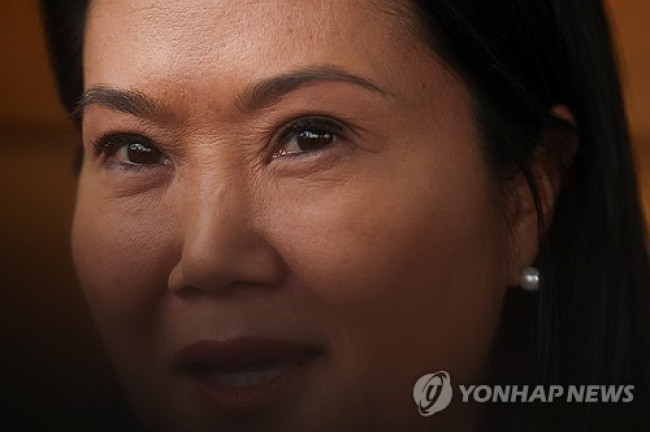 Candidate Fujimori. [Reuters=Yonhap News]
According to Peru's National Electoral Commission (ONPE) on the 14th (local time), conservative candidate Keiko Fujimori (51) of 'Popular Force' is maintaining a narrow lead of 50.052% in the runoff presidential election held on the 7th, slightly ahead of Roberto Sánchez (57) of 'Together for Peru' (49.948%). With 98.5% of the votes counted, the difference is 18,832 votes.
However, as overseas votes are tallied, the gap between the two candidates is widening, leading some media outlets to analyze that it will be difficult for Sánchez to overturn the results. The financial market is also leaning towards Fujimori's victory.
Following Fujimori's recent comeback in the runoff election, the Peruvian stock market index rose by as much as 2% during trading hours on the 12th, and the value of the Peruvian Sol also rebounded from its weakness.
Thierry Larose, an emerging markets portfolio manager at Bontonvel Asset Management, analyzed in an interview with Bloomberg News that "the market has stabilized as expectations grow that votes from overseas voters, traditionally more conservative, will lead to Fujimori's victory."
Peruvian election authorities are currently undertaking a re-count of up to 400,000 ballots due to issues such as illegible handwriting, missing signatures, and smudges. Election authorities anticipate announcing the official election results around mid-July.
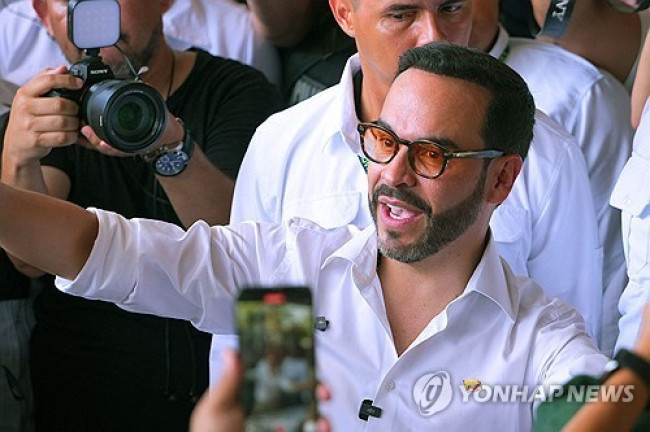 Candidate Esparza. [AFP=Yonhap News]
In the runoff presidential election in Colombia, scheduled for the 21st, far-right candidate Abelardo de la Espriella (48) is in a favorable position against far-left candidate Iván Cepeda (64).
According to opinion polls released on the 10th, Espriella of 'Defenders of the Homeland' leads Cepeda (44.8%) by an insurmountable margin with 52.6% support.
Espriella is creating a significant stir in the election with his strong security measures, including building a large-scale prison similar to the 'El Salvadoran model,' along with reduced public spending and pro-business, pro-market policies. He had already secured first place in the first round of the presidential election, surpassing expectations with 43.7% of the vote to Cepeda's 40.9%.
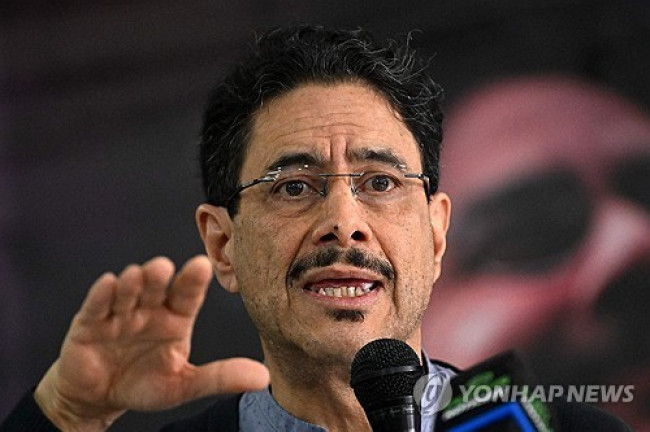 Candidate Iván Cepeda. [AFP=Yonhap News]
Lagging behind in opinion polls after the first round, ruling party candidate Cepeda has become busier. He announced that he would "completely review and make necessary revisions" to the peace process with cartels, in which he was directly involved under the Petro administration. Under the left-wing government, the Colombian military also bombed the drug cartel 'Gulf Clan' operating in Colombia on the 12th, killing nine members.
The increasing strength of right-wing parties in presidential elections across Latin America is interpreted as a complex result of deteriorating security due to chronic cartel crime, fiscal deficits caused by populist policies, and subtle pressure from the United States.
In particular, the US's 'Western Hemisphere Strategy,' which was finalized under the Trump administration's second term, is analyzed to have a certain influence on the trend of returning to conservatism in Latin America. The Trump administration's top priorities have recently been to block China's deeply embedded diplomatic and economic influence in Latin American markets and to preemptively contain chronic illegal immigration issues outside its borders.
In fact, the US administration has been wielding strong tariff pressure against left-wing governments in Latin America, while offering full support to pro-US, strong conservative leaders such as Milei in Argentina, Kast in Chile, and Espriella in Colombia, appearing to encourage bloc formation.
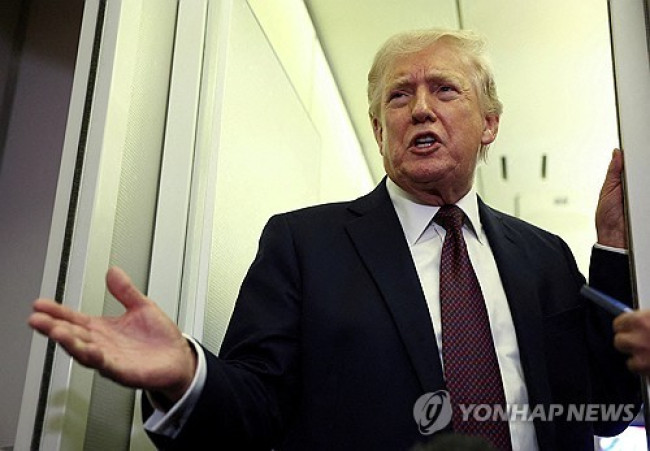 U.S. President Donald Trump. [Reuters=Yonhap News]

 Iranian Foreign Ministry: "Continuing Message Exchanges with the U.S. and Activities of Mediating Countries"
Esmaeil Baghaei, Spokesperson for the Iranian Ministry of Foreign Affairs [Xinhua, Yonhap News file photo]Esmaeil Baghaei, spokesperson for the Iranian Ministry of Foreign Affairs, stated on the 26th
Iranian Foreign Ministry: "Continuing Message Exchanges with the U.S. and Activities of Mediating Countries"
Esmaeil Baghaei, Spokesperson for the Iranian Ministry of Foreign Affairs [Xinhua, Yonhap News file photo]Esmaeil Baghaei, spokesperson for the Iranian Ministry of Foreign Affairs, stated on the 26th
 President Yoon: "Do You Think You Are Safe from the Special Counsel?"... Final Statement Video Released
President Yoon Suk Yeol rebuking the special prosecutor on the 24th. [Court video / @birds_justice X account subtitle GIF] A video of President Yoon Suk Yeol's closing statement at his trial rega
President Yoon: "Do You Think You Are Safe from the Special Counsel?"... Final Statement Video Released
President Yoon Suk Yeol rebuking the special prosecutor on the 24th. [Court video / @birds_justice X account subtitle GIF] A video of President Yoon Suk Yeol's closing statement at his trial rega
 President Yoon, regarding the first-instance ruling on the Public Official Election Act: “An excessive political verdict that distorts the facts… We will appeal immediately.”
The first-instance sentencing hearing for President Yoon Suk Yeol regarding violations of the Public Official Election Act is being broadcast live at Seoul Station on the 27th. [Photo=Yonhap News]Pres
President Yoon, regarding the first-instance ruling on the Public Official Election Act: “An excessive political verdict that distorts the facts… We will appeal immediately.”
The first-instance sentencing hearing for President Yoon Suk Yeol regarding violations of the Public Official Election Act is being broadcast live at Seoul Station on the 27th. [Photo=Yonhap News]Pres
 WSJ: "SK Hynix ADR Premium Is a Sign of AI Trading Overheat"
Advertisement for SK Hynix ADR listing in New York's Times Square [Reuters=Yonhap News file photo]The Wall Street Journal (WSJ) has pointed out that the price of SK Hynix’s American Depositary Recei
WSJ: "SK Hynix ADR Premium Is a Sign of AI Trading Overheat"
Advertisement for SK Hynix ADR listing in New York's Times Square [Reuters=Yonhap News file photo]The Wall Street Journal (WSJ) has pointed out that the price of SK Hynix’s American Depositary Recei
 'Godfather of Japanese Mystery Novels' Keigo Higashino Passes Away After Battle with Cancer at 68
Famous Japanese mystery novelist Keigo Higashino [AFP=Yonhap News]It has been belatedly reported that Keigo Higashino, the "godfather of Japanese mystery novels" and author of bestsellers such as "The
'Godfather of Japanese Mystery Novels' Keigo Higashino Passes Away After Battle with Cancer at 68
Famous Japanese mystery novelist Keigo Higashino [AFP=Yonhap News]It has been belatedly reported that Keigo Higashino, the "godfather of Japanese mystery novels" and author of bestsellers such as "The
 [Park Pil-kyu Security Column] To the Ignorant Trying to Clothe a Beast in Sheep's Clothing
Rep. Kim Byung-joo of the Democratic Party of Korea [Photo=Yonhap News]“The Air Force Academy doesn't teach you how to fly a plane!” “The Army, Navy, and Air Force academies are exactly the
[Park Pil-kyu Security Column] To the Ignorant Trying to Clothe a Beast in Sheep's Clothing
Rep. Kim Byung-joo of the Democratic Party of Korea [Photo=Yonhap News]“The Air Force Academy doesn't teach you how to fly a plane!” “The Army, Navy, and Air Force academies are exactly the
 [Issue Diagnosis] Two Effects of the Election Petition Review
 [Photo] Evidence of Election Fraud Flooding U.S. Media… Trump Had 2.7 Million Votes Stolen
 [Video] U.S. Semiquincentennial Air Show... 'Art in the Sky' streaks across New York
 [Editorial Cartoon] A Draconian Law That Undermines Freedom of Expression

 List
List









