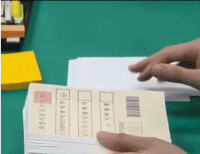
A rally demanding a rerun of the election, sparked by a shortage of ballots in the June 3 local elections. [Photo=Hankyoreh]
A rally demanding a rerun of the election, which began in front of the Handball Stadium at Olympic Park in Songpa-gu, Seoul, is receiving focused attention from American, Japanese, and Hong Kong media.
American media outlets chose different frames for the same scene. While some interpreted it as a grassroots citizen movement demanding the restoration of election integrity, others evaluated it as the political anger of the conservative camp that lost power.
Japanese media focused on how to provide relief to voters who were unable to cast their ballots, and Hong Kong media directly linked the inability to vote with the fairness of election results.
The starting point for foreign media reports was the same: the fact that some voters were unable to vote due to a shortage of ballots, and even the National Election Commission could not ascertain the exact number of voters who gave up and left without voting.
American Media Offer Four Different Perspectives on the Same Rally
Just the News, an investigative media outlet that has been closely following election integrity issues in the U.S., reported on the ballot shortage in Korea and the demands for a rerun election on two occasions, June 6 and 11.
The first article covered the fact that thousands of people gathered at Olympic Park to demand a rerun and discussed the participation of people in their 20s and 30s, and the controversy over the transfer of ballot boxes from the second polling station in Jamsil 7-dong. The follow-up article reported on the spread of the rallies nationwide and the actions taken by university campuses.
Just the News also directly received and published the statement from Jang Dong-hyuk, the leader of the People Power Party. Jang described the Olympic Park rally as "not a temporary protest, but a spontaneous grassroots awakening" and called for a rerun vote, a parliamentary inquiry, and an independent special prosecutor.
The American news agency UPI focused on the temporal progression of the rally. It continuously reported on the process of citizens blocking the removal of ballot boxes from the Jamsil polling station, their subsequent forced dispersal by police, and their movement to the Olympic Park vote counting center, as well as the rallies continuing for four and five days.
UPI initially focused on the shortage of ballots, the infringement of suffrage, and the demand for a new election. As the rallies prolonged, it also conveyed the aspect of ballot box blockade combined with claims of election rigging. It reported separately on the citizens' demand for a rerun election and the subsequent spread of claims of election manipulation.
The Epoch Times most directly highlighted the scale of the rallies and the demand for a nationwide rerun election. The headline of its June 8 article read, "20,000 Gather Outside Vote Counting Center to Demand Nationwide New Election."
The Epoch Times reported that the shortage of ballots, voting delays, and the cases of voters unable to vote and returning home were the direct causes of the citizen rallies. The on-site photos were also taken by Korean journalists, indicating independent reporting rather than simply relaying news agency content.
In contrast, The Washington Times interpreted the rallies as a political structure of "the anger of the ousted South Korean conservatives." While introducing the ballot shortage and the calls for a special investigation, it prioritized the political orientation of the rally participants.
The report prioritized the backlash from the conservative camp, which lost the election, over the rights of voters who were unable to cast their ballots. This is a distinctly different frame from that of Just the News or The Epoch Times.
Reuters Highlights First Rally Participants, Families, and Young People
Reports from the international news agency Reuters were also widely circulated through American portals and media outlets.
In its initial article, Reuters reported that between 6,000 and 10,000 citizens gathered at Olympic Park to demand a rerun of the election. It also reported on participants waving the Taegeukgi (South Korean flag) and some citizens blocking election commission officials from entering.
A more in-depth article on June 12 presented a more multifaceted view of the rallies.
It reported that up to 40,000 people participated at different times, and that the scene included not only regular political rally attendees but also young couples with strollers, university students, platform laborers, and citizens attending their first political rally.
Rally participants stated that their goal was not political revenge but to restore trust in democracy through fair and transparent elections.
Reuters also reported on claims of fraudulent elections and the participation of conservative YouTubers, but it did not characterize the entire rally as simply the mobilization of a specific political force or a conspiracy theory.
Even from the reports conveyed to American readers, there was not one single perspective on the Olympic Park rallies.
Different evaluations coexisted: a movement to restore election integrity, demands for a large-scale nationwide rerun, prolonged protests at the vote counting center, and political backlash from the conservative camp.
Mainichi Connects 'Voter Relief' with Rerun Election
In Japan, reports from the Mainichi Shimbun were the most prominent.
Mainichi explicitly stated in its headline on April 4, the day after the election, that voters were unable to cast their ballots and returned home due to a shortage of ballots. It also cited the example of Berlin, Germany, where a rerun election was held due to election management failure.
In a follow-up article on April 10, it was confirmed that ballots were insufficient in at least 91 polling stations, and the headline used the phrase "Demand for a Rerun Election for Relief."
Mainichi did not definitively state that a nationwide rerun election should be immediately held in Korea. However, it did not treat the situation as a mere administrative error or a political dispute, but rather approached it as a legal and institutional issue of how to provide relief to voters who had already lost their right to vote.
An investigation into the facts and punishment of those responsible are measures to prevent the recurrence of similar incidents. However, they are not relief measures that restore a vote that has already been lost. Mainichi's report pointed out this gap.
Hong Kong Media: "Infringement of Voting Rights Undermines Election Fairness"
The reaction from Hong Kong media was broader and more immediate than that of Japan.
Hong Kong 01 described the incident as a "ballot shortage scandal." It reported that some voters were unable to vote and that thousands gathered at Olympic Park to demand a rerun election.
In particular, it quoted statements from participants in their 20s and 30s, expressing difficulty in accepting the explanation from the National Election Commission and asserting that the incident infringed upon citizens' voting rights.
Now News reported that due to the shortage of ballots, some voters were unable to vote, leading citizens to doubt the fairness of the election results. It prioritized the issue of inability to vote and the credibility of the results over the political orientation of the participants.
TVB, Hong Kong's largest broadcaster, also reported that eligible voters were unable to vote at some polling stations and that citizens were demanding the "nullification of the election" and the "dissolution of the National Election Commission."
The public broadcaster RTHK focused on the government's order for a full investigation, while also explaining the background of voting suspension and demands for a rerun as major issues.
In contrast, Ming Pao described the rally participants as "right-wing citizens" and prioritized claims of fraudulent elections and the political nature of the event. This indicates that within Hong Kong media, there were also divided reports, with some focusing on the infringement of suffrage and others emphasizing political factional divisions.
The Question Posed by Foreign Media: "How to Provide Relief to Voters?"
Foreign media outlets did not accept all claims of fraudulent elections raised by Korean civil society as facts. However, they distinguished between the claims of citizens and politicians and the explanation from the National Election Commission, and some reports gave significant coverage to the blockade of the vote counting center and the participation of conservative YouTubers.
However, there was no disagreement on the fact that there was a shortage of ballots and that some voters were unable to vote. The fact that the National Election Commission failed to record the exact number of voters who gave up voting was also collectively pointed out as a problem.
American media interpreted this differently, ranging from movements to restore election integrity to political backlash from the conservative camp. Japan's Mainichi approached it as an issue of voter relief, and Hong Kong media reported that the infringement of voting rights undermined the fairness of the election results.
While some domestic media outlets narrowed their coverage of the Olympic Park rallies to the anger of the conservative camp or the controversy over fraudulent elections, foreign media raised a more fundamental question.
"How will the nation provide relief to citizens who were unable to vote due to the nation itself?"
Unless an answer to that question is found, the demand for a rerun election, which began at Olympic Park, is unlikely to end.

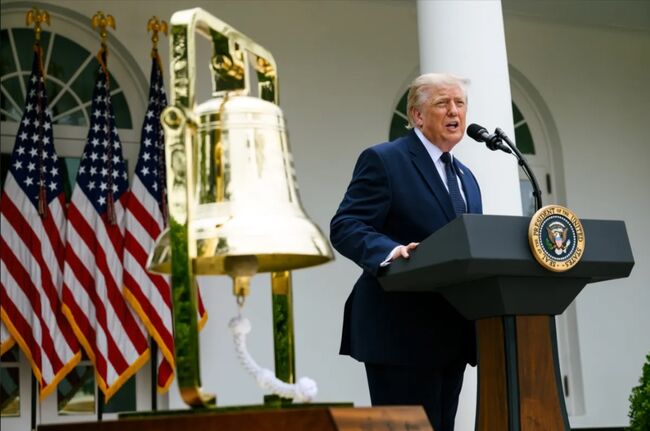 Trump pressures for rate cut again ahead of FOMC... "Should be the lowest in the world"
U.S. President Donald Trump. [Photo = The White House] U.S. President Donald Trump once again pressured the Federal Reserve, the U.S. central bank, to lower interest rates on the 27th (local time
Trump pressures for rate cut again ahead of FOMC... "Should be the lowest in the world"
U.S. President Donald Trump. [Photo = The White House] U.S. President Donald Trump once again pressured the Federal Reserve, the U.S. central bank, to lower interest rates on the 27th (local time
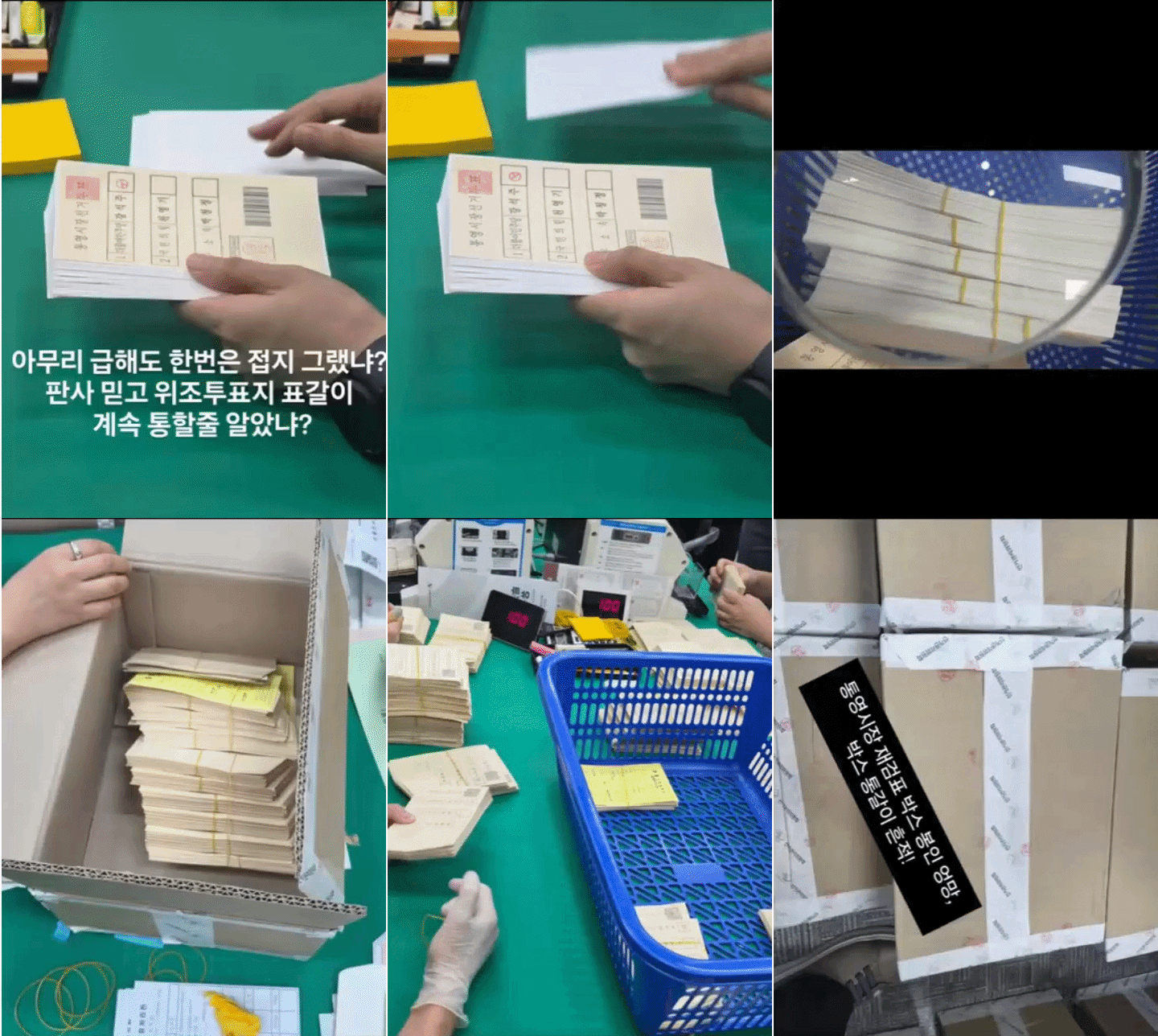 “Ignoring crisp ballots and damaged seals”… Tongyeong mayoral recount concludes with ‘no change in outcome,’ leaving suspicions and public outrage behind
Suspected counterfeit ballots discovered in Tongyeong [GIF from social media of Representative Hwang Kyo-ahn / Attorney Park Joo-hyun]During a recount of the Tongyeong mayoral election in South Gyeong
“Ignoring crisp ballots and damaged seals”… Tongyeong mayoral recount concludes with ‘no change in outcome,’ leaving suspicions and public outrage behind
Suspected counterfeit ballots discovered in Tongyeong [GIF from social media of Representative Hwang Kyo-ahn / Attorney Park Joo-hyun]During a recount of the Tongyeong mayoral election in South Gyeong
 President Yoon, regarding the first-instance ruling on the Public Official Election Act: “An excessive political verdict that distorts the facts… We will appeal immediately.”
The first-instance sentencing hearing for President Yoon Suk Yeol regarding violations of the Public Official Election Act is being broadcast live at Seoul Station on the 27th. [Photo=Yonhap News]Pres
President Yoon, regarding the first-instance ruling on the Public Official Election Act: “An excessive political verdict that distorts the facts… We will appeal immediately.”
The first-instance sentencing hearing for President Yoon Suk Yeol regarding violations of the Public Official Election Act is being broadcast live at Seoul Station on the 27th. [Photo=Yonhap News]Pres
 WSJ: "SK Hynix ADR Premium Is a Sign of AI Trading Overheat"
Advertisement for SK Hynix ADR listing in New York's Times Square [Reuters=Yonhap News file photo]The Wall Street Journal (WSJ) has pointed out that the price of SK Hynix’s American Depositary Recei
WSJ: "SK Hynix ADR Premium Is a Sign of AI Trading Overheat"
Advertisement for SK Hynix ADR listing in New York's Times Square [Reuters=Yonhap News file photo]The Wall Street Journal (WSJ) has pointed out that the price of SK Hynix’s American Depositary Recei
 'Godfather of Japanese Mystery Novels' Keigo Higashino Passes Away After Battle with Cancer at 68
Famous Japanese mystery novelist Keigo Higashino [AFP=Yonhap News]It has been belatedly reported that Keigo Higashino, the "godfather of Japanese mystery novels" and author of bestsellers such as "The
'Godfather of Japanese Mystery Novels' Keigo Higashino Passes Away After Battle with Cancer at 68
Famous Japanese mystery novelist Keigo Higashino [AFP=Yonhap News]It has been belatedly reported that Keigo Higashino, the "godfather of Japanese mystery novels" and author of bestsellers such as "The
 [Park Pil-kyu Security Column] To the Ignorant Trying to Clothe a Beast in Sheep's Clothing
Rep. Kim Byung-joo of the Democratic Party of Korea [Photo=Yonhap News]“The Air Force Academy doesn't teach you how to fly a plane!” “The Army, Navy, and Air Force academies are exactly the
[Park Pil-kyu Security Column] To the Ignorant Trying to Clothe a Beast in Sheep's Clothing
Rep. Kim Byung-joo of the Democratic Party of Korea [Photo=Yonhap News]“The Air Force Academy doesn't teach you how to fly a plane!” “The Army, Navy, and Air Force academies are exactly the
 [Issue Diagnosis] Two Effects of the Election Petition Review
 [Photo] Evidence of Election Fraud Flooding U.S. Media… Trump Had 2.7 Million Votes Stolen
 [Video] U.S. Semiquincentennial Air Show... 'Art in the Sky' streaks across New York
 [Editorial Cartoon] A Draconian Law That Undermines Freedom of Expression

 List
List