Chairman Chung Yong-jin of Shinsegae Group [Photo: Yonhap News]The controversy over Starbucks’ ‘Tank Day,’ involving Lee Jae-myung, has ultimately led to the absurd outcome of "historical education for all employees."
Due to an incident involving Starbucks Korea's marketing department and management, employees responsible for making coffee and serving customers at stores nationwide are now receiving education on historical awareness and social sensitivity. Employees of other affiliates, including E-Mart, were also included in the training.
Starbucks stores nationwide will close simultaneously at 3 PM for the training. This is reportedly the first time this has happened since its domestic operations began in 1999.
What exactly went wrong?
Was it the planning and approval process of the event in question? Or was it the historical perspective of all Starbucks employees and Shinsegae affiliate employees nationwide?
Shinsegae Group's internal investigation has already provided the answer. The event in question was proposed by the Commerce Team and finalized after a four-step reporting process involving the team leader, the responsible executive, the head of the division, and the CEO.
No one raised any issues during that process. Some approvers habitually approved without even opening the attached files containing the design drafts. Legal review procedures were also omitted, citing the need for immediate marketing action.
The cause identified by Shinsegae Group itself was clear.
It was not a lack of historical awareness among all employees, but a collapse of the approval, verification, and risk management systems. It was an incident for which those who approved without verification, those who omitted legal review, and the management that made the final decision should be held responsible.
However, the situation took a strange turn.
Lee Jae-myung criticized Starbucks' marketing as "inhumane, bottom-of-the-barrel behavior by low-quality merchants." He also questioned, "How can someone with a human form act like that?" He went beyond seeking moral responsibility for a private company's marketing mishap to discussing administrative, legal, and political accountability.
The moment a state power figure publicly attacks a specific private company and its executives in this manner, it ceases to be mere consumer criticism or political commentary.
It signals a political directive for the executive branch, public institutions, the ruling party, and local governments to take action. Indeed, there were calls within the ruling party to refrain from using Starbucks, and a trend of boycotts and the cessation of business spread from local governments and the public sector.
For the company, it would have been difficult to respond merely by explaining the facts and holding internal responsible parties accountable. They found themselves in a situation where they had to prove themselves according to the political and moral standards demanded by power.
As a result, Shinsegae Group Chairman Chung Yong-jin apologized, stating, "All responsibility lies with me."
He asked for a warm gaze towards Starbucks employees working at stores nationwide, calling them "simply diligent workers." He conveyed that the responsibility rests with him and the management, and that on-site employees are individuals who need to be protected.
However, the subsequent actions went in the opposite direction.
Not only Chairman Chung and the management, but also Starbucks headquarters staff, store partners nationwide, and employees of Shinsegae Group's affiliates including E-Mart, received education on historical awareness and social sensitivity.
The apology, "All responsibility lies with me," transformed into a collective self-reflection of "insufficient historical awareness across the entire group."
Although the chairman stated he would take all responsibility, the education was given to all employees. The illness originated in the approval line, but the medicine was administered to the entire staff.
This is not responsible management.
It is the dispersal of responsibility by expanding management's mistakes into a lack of awareness within the entire organization. It is no different from classifying employees, unrelated to the incident, as lacking historical awareness and mobilizing them into a massive collective self-reflection session.
The more serious problem is that a private company has taken it upon itself to establish employees' "correct historical awareness."
It is necessary to educate companies on verifying facts when using historical events or anniversaries in marketing. It is also normal risk management to pre-screen elements that could cause controversy, such as politics, military events, disasters, gender issues, and hate speech, and to have them reviewed by legal and public relations departments.
However, workplace education to verify historical facts and education to correct employees' historical awareness are entirely different matters.
In modern and contemporary history, there are diverse evaluations surrounding the meaning and responsibility of events. If a private company selects a specific lecturer to enhance the historical awareness of all employees, it must first clarify what historical perspective has been deemed correct.
Companies can demand work skills and professional ethics from their employees. However, they are not educational or governmental institutions authorized to correct employees' individual historical perspectives and values.
Furthermore, this education differs in nature from typical job training that a company voluntarily identifies as necessary and initiates.
This measure was taken after a state power figure publicly berated a specific company with language bordering on insult and discussed administrative, legal, and political responsibility. In such circumstances, it is difficult to view the company-wide training as a purely autonomous internal choice.
Power publicly pressured the company, and the company gathered all its employees into a training venue to demonstrate its adherence to the required political correctness.
This is not a characteristic of a healthy society.
A power figure can criticize the mistakes of a private company. However, using language such as "low-quality merchant" and "in human form" towards a specific company and its executives, and discussing administrative, legal, and political responsibility, while in a position to lead the executive branch, is a separate issue.
Legal responsibility is determined by investigative agencies and courts. Administrative responsibility must be imposed according to clear laws and procedures. When the term "political responsibility" is directed at a private company, it can be perceived as implying the possibility of retaliation by power.
Companies, in turn, should not attribute the cause of an incident to the historical awareness issues of all their employees simply because they have been criticized.
If Chairman Chung Yong-jin truly intends to bear all responsibility, he must identify the individuals who approved without opening the attachments and those who omitted the legal review. He should disclose the decision-making process of the final approver and reform the approval, verification, and recording systems to prevent similar incidents from occurring again.
Closing stores nationwide early and showing employees historical lectures is not responsible management. It carries a greater risk of appearing as the company's excessive loyalty to political pressure.
This incident is the result of the combination of two mistakes.
One is that the highest power directly intervened in a private company's marketing incident, demanding moral condemnation and administrative, legal, and political accountability all at once.
The other is that Shinsegae's management, under that pressure, shifted the blame for their approval and verification failures to the entire organization's historical awareness, thus distributing responsibility to the employees.
The political pressure initiated by Lee Jae-myung's involvement and Chung Yong-jin's dispersal of responsibility have met, leading to employees, who are entirely blameless, receiving historical education.
Chairman Chung stated, "All responsibility lies with me."
If so, he and the management should take responsibility, rather than making all employees sit through training.
What Shinsegae Group needs to rectify is not its employees' historical perspectives. It is the management culture that allows approval without reading documents and the approval system that proceeds with events even when verification is omitted.
And there is something for Lee Jae-myung to reconsider as well.
Criticizing a company's mistakes is one thing, but essentially dictating what historical perspective a company should hold is another matter.
If a single word from a person in power has driven an entire company into a collective training session, that is precisely the kind of power that our society must guard against.

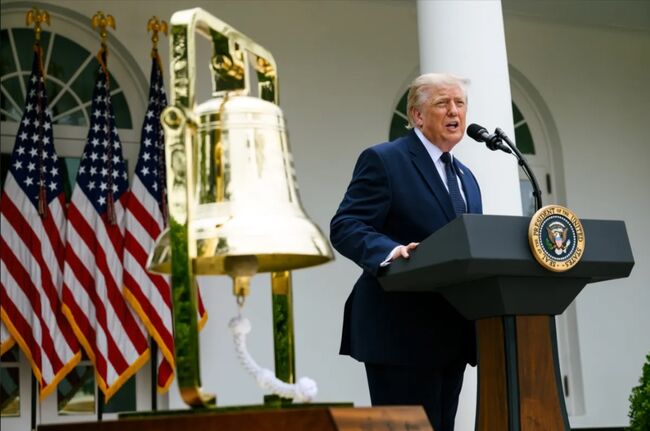 Trump pressures for rate cut again ahead of FOMC... "Should be the lowest in the world"
U.S. President Donald Trump. [Photo = The White House] U.S. President Donald Trump once again pressured the Federal Reserve, the U.S. central bank, to lower interest rates on the 27th (local time
Trump pressures for rate cut again ahead of FOMC... "Should be the lowest in the world"
U.S. President Donald Trump. [Photo = The White House] U.S. President Donald Trump once again pressured the Federal Reserve, the U.S. central bank, to lower interest rates on the 27th (local time
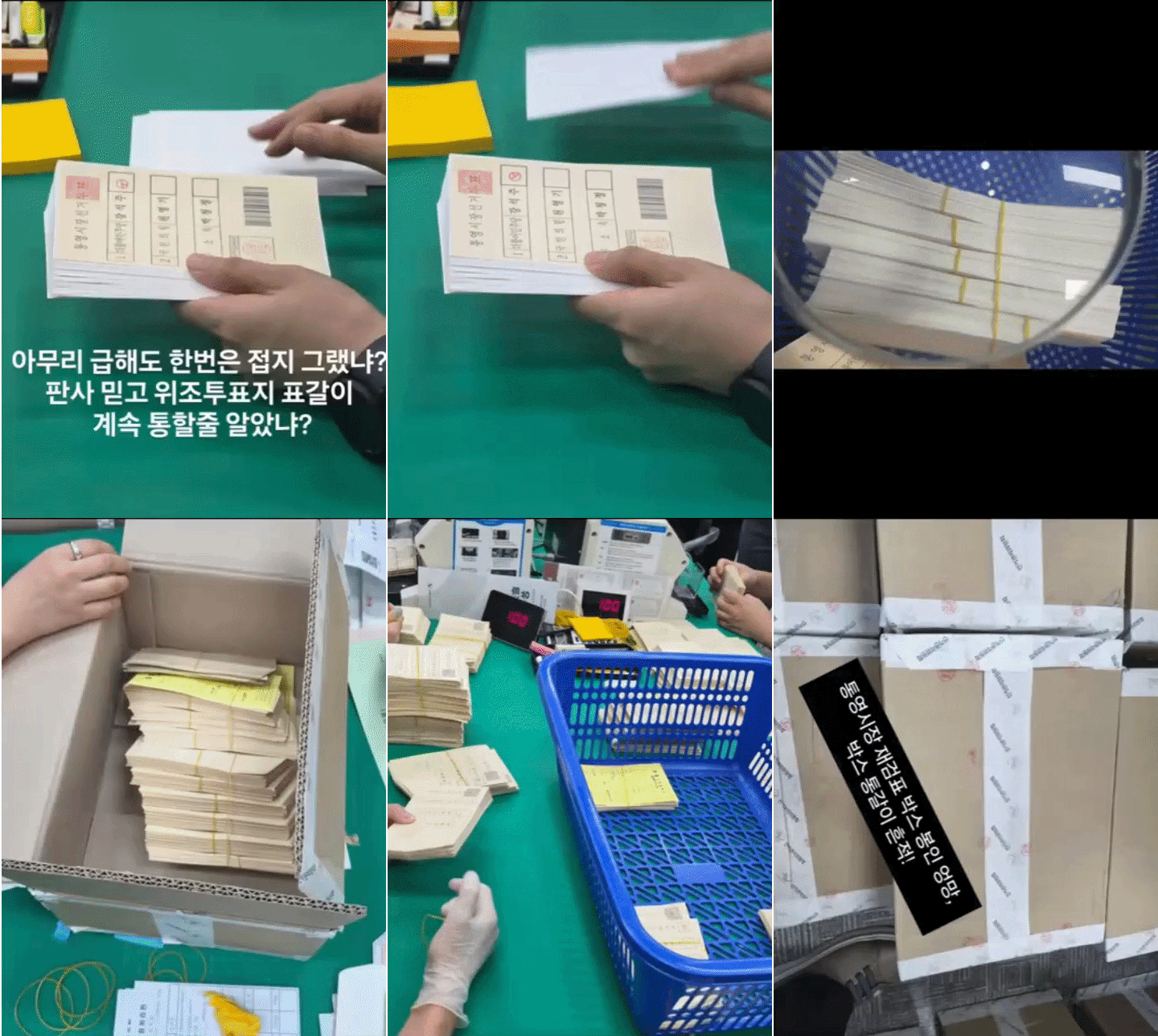 “Ignoring crisp ballots and damaged seals”… Tongyeong mayoral recount concludes with ‘no change in outcome,’ leaving suspicions and public outrage behind
Suspected counterfeit ballots discovered in Tongyeong [GIF from social media of Representative Hwang Kyo-ahn / Attorney Park Joo-hyun]During a recount of the Tongyeong mayoral election in South Gyeong
“Ignoring crisp ballots and damaged seals”… Tongyeong mayoral recount concludes with ‘no change in outcome,’ leaving suspicions and public outrage behind
Suspected counterfeit ballots discovered in Tongyeong [GIF from social media of Representative Hwang Kyo-ahn / Attorney Park Joo-hyun]During a recount of the Tongyeong mayoral election in South Gyeong
 President Yoon, regarding the first-instance ruling on the Public Official Election Act: “An excessive political verdict that distorts the facts… We will appeal immediately.”
The first-instance sentencing hearing for President Yoon Suk Yeol regarding violations of the Public Official Election Act is being broadcast live at Seoul Station on the 27th. [Photo=Yonhap News]Pres
President Yoon, regarding the first-instance ruling on the Public Official Election Act: “An excessive political verdict that distorts the facts… We will appeal immediately.”
The first-instance sentencing hearing for President Yoon Suk Yeol regarding violations of the Public Official Election Act is being broadcast live at Seoul Station on the 27th. [Photo=Yonhap News]Pres
 WSJ: "SK Hynix ADR Premium Is a Sign of AI Trading Overheat"
Advertisement for SK Hynix ADR listing in New York's Times Square [Reuters=Yonhap News file photo]The Wall Street Journal (WSJ) has pointed out that the price of SK Hynix’s American Depositary Recei
WSJ: "SK Hynix ADR Premium Is a Sign of AI Trading Overheat"
Advertisement for SK Hynix ADR listing in New York's Times Square [Reuters=Yonhap News file photo]The Wall Street Journal (WSJ) has pointed out that the price of SK Hynix’s American Depositary Recei
 'Godfather of Japanese Mystery Novels' Keigo Higashino Passes Away After Battle with Cancer at 68
Famous Japanese mystery novelist Keigo Higashino [AFP=Yonhap News]It has been belatedly reported that Keigo Higashino, the "godfather of Japanese mystery novels" and author of bestsellers such as "The
'Godfather of Japanese Mystery Novels' Keigo Higashino Passes Away After Battle with Cancer at 68
Famous Japanese mystery novelist Keigo Higashino [AFP=Yonhap News]It has been belatedly reported that Keigo Higashino, the "godfather of Japanese mystery novels" and author of bestsellers such as "The
 [Park Pil-kyu Security Column] To the Ignorant Trying to Clothe a Beast in Sheep's Clothing
Rep. Kim Byung-joo of the Democratic Party of Korea [Photo=Yonhap News]“The Air Force Academy doesn't teach you how to fly a plane!” “The Army, Navy, and Air Force academies are exactly the
[Park Pil-kyu Security Column] To the Ignorant Trying to Clothe a Beast in Sheep's Clothing
Rep. Kim Byung-joo of the Democratic Party of Korea [Photo=Yonhap News]“The Air Force Academy doesn't teach you how to fly a plane!” “The Army, Navy, and Air Force academies are exactly the
 [Issue Diagnosis] Two Effects of the Election Petition Review
 [Photo] Evidence of Election Fraud Flooding U.S. Media… Trump Had 2.7 Million Votes Stolen
 [Video] U.S. Semiquincentennial Air Show... 'Art in the Sky' streaks across New York
 [Editorial Cartoon] A Draconian Law That Undermines Freedom of Expression

 List
List