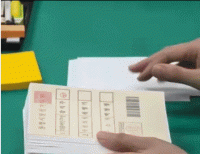
President Trump and Vice President Vance [AP=Yonhap News]
U.S. President Donald Trump and Vice President JD Vance, along with Iranian Parliament Speaker Mohammad Bagher Ghalibaf, have reportedly already signed a memorandum of understanding (MOU) for a ceasefire.
The electronic signatures were completed in advance of a signing ceremony to be held in Geneva, Switzerland. The U.S. side also acknowledged that the issue of passage fees in the Strait of Hormuz remains unresolved.
According to a media interview with Vice President JD Vance, the chief U.S. negotiator with Iran, and briefings from senior U.S. government officials on the 15th (local time), electronic signatures were exchanged on the 14th, the day the U.S. and Iran announced the conclusion of the ceasefire MOU.
President Trump and Vice President Vance participated from the U.S. side, and Parliament Speaker Ghalibaf, who was the chief negotiator with the U.S., participated from the Iranian side.
Separately, a signing ceremony is scheduled to take place in Geneva on the 19th, with the attendance of Vice President Vance and Parliament Speaker Ghalibaf.
A senior U.S. official stated that it was not unusual for Iran's Supreme Leader Ayatollah Seyyed Mojtaba Khamenei not to have signed, pointing out that the Supreme Leader also did not sign the Iran nuclear deal during the Barack Obama administration.
Amidst suspicions that the agreement text has not been released despite the announcement of the MOU conclusion in the U.S., a senior U.S. official stated that the agreement text is expected to be released within 24 to 48 hours. President Trump indicated it would be released after the signing ceremony on the 19th.
The U.S. also acknowledged that the issue of passage fees in the Strait of Hormuz remains unresolved, despite the signing of the MOU.
A senior U.S. official stated that ship passage in the Strait of Hormuz is expected to increase significantly and that the MOU specifies that the Strait of Hormuz will be open without passage fees for 60 days.
Vice President Vance said, "We hope the Strait of Hormuz will be open without passage fees in the long term. This will be addressed in future technical negotiations."
Ultimately, contrary to U.S. President Donald Trump's assertion that passage fees in the Strait of Hormuz would be permanently waived, Iran plans to collect fees for maritime services after negotiations over the next 60 days.
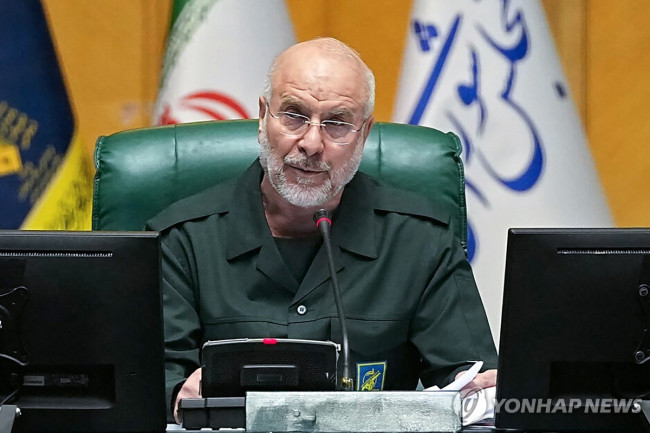 Speaker Ghalibaf [AFP=Yonhap News]
The U.S. made it clear that there would be no release of frozen assets or sanctions relief in exchange for the MOU signing, while also stating its readiness to provide economic compensation and demanding "small gestures" from Iran.
Vice President Vance stated, "No money has been paid, and this will not change," adding that sanctions relief could be considered if Iran takes measures such as eliminating enriched uranium or allowing verification regimes.
A senior U.S. official also said that the U.S. and Iran are in the initial stages of confidence-building and that "the United States is prepared to release frozen assets and sanctions."
He added, "If they take a few small gestures to show their willingness to fulfill their commitments, we will also take a few small gestures early on."
While Iran insists that it cannot proceed with the 60-day nuclear negotiations without the release of some frozen funds, the U.S. has shown its willingness to respond with conciliatory measures, thereby preventing a widening of the gap in their positions.
In addition, a U.S. official stated that Israel's withdrawal from Lebanon is not part of the MOU agreement.
This appears to be an effort to appease Israel, which is reportedly displeased with the agreement between the U.S. and Iran. The issues of passage fees in the Strait of Hormuz, the release of frozen funds, and Israel's withdrawal from Lebanon could all pose threats to the implementation of the MOU, depending on the circumstances.
It is understood that the U.S. plans to maintain its forces in the Middle East while conducting nuclear negotiations with Iran following the MOU signing, and to reduce its forces once a final agreement is reached.

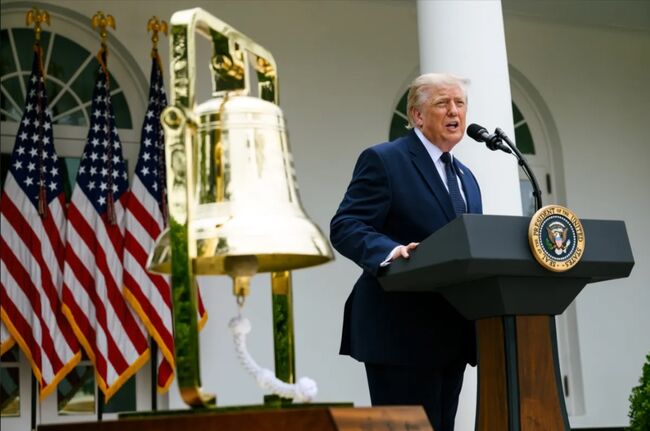 Trump pressures for rate cut again ahead of FOMC... "Should be the lowest in the world"
U.S. President Donald Trump. [Photo = The White House] U.S. President Donald Trump once again pressured the Federal Reserve, the U.S. central bank, to lower interest rates on the 27th (local time
Trump pressures for rate cut again ahead of FOMC... "Should be the lowest in the world"
U.S. President Donald Trump. [Photo = The White House] U.S. President Donald Trump once again pressured the Federal Reserve, the U.S. central bank, to lower interest rates on the 27th (local time
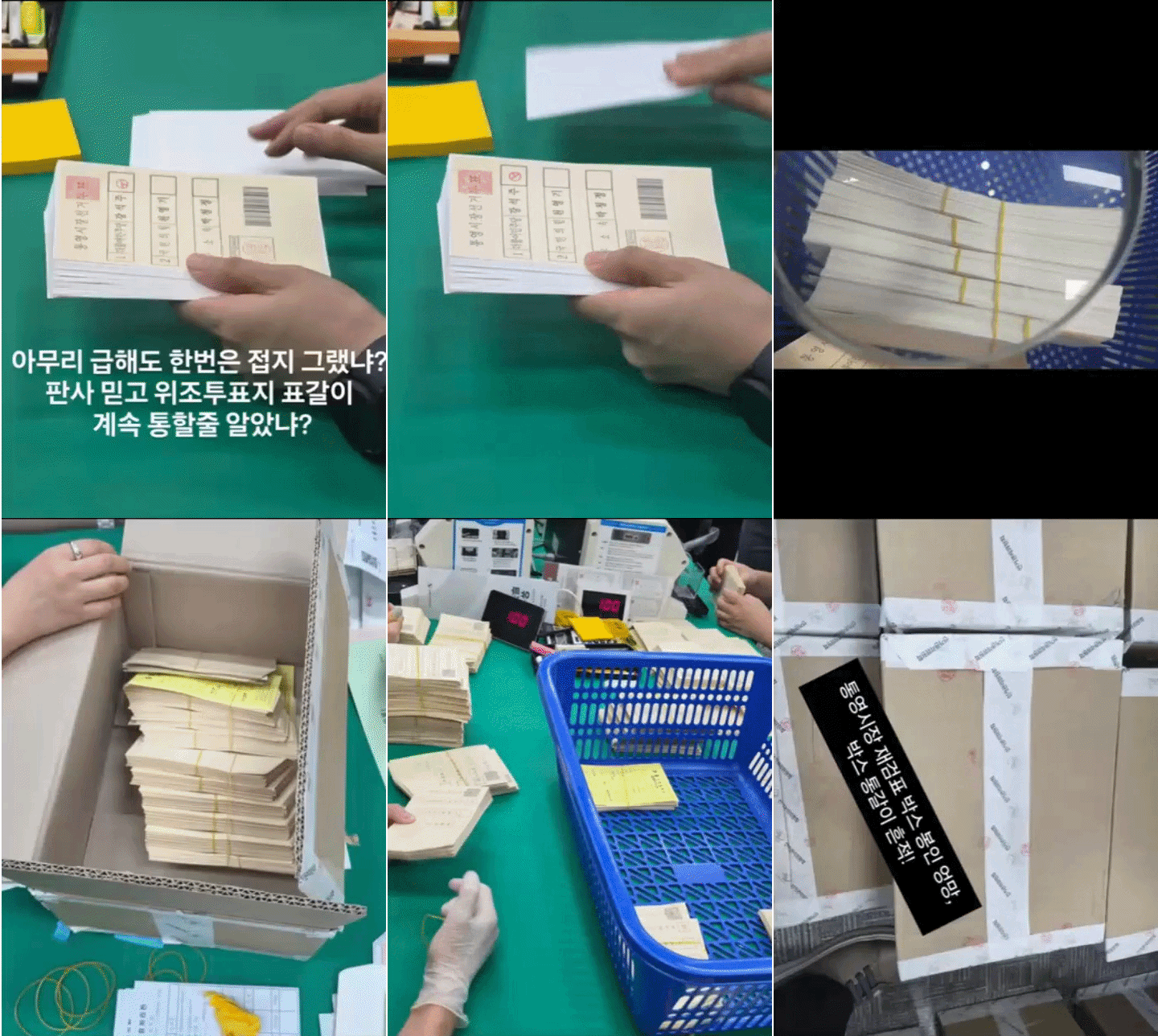 “Ignoring crisp ballots and damaged seals”… Tongyeong mayoral recount concludes with ‘no change in outcome,’ leaving suspicions and public outrage behind
Suspected counterfeit ballots discovered in Tongyeong [GIF from social media of Representative Hwang Kyo-ahn / Attorney Park Joo-hyun]During a recount of the Tongyeong mayoral election in South Gyeong
“Ignoring crisp ballots and damaged seals”… Tongyeong mayoral recount concludes with ‘no change in outcome,’ leaving suspicions and public outrage behind
Suspected counterfeit ballots discovered in Tongyeong [GIF from social media of Representative Hwang Kyo-ahn / Attorney Park Joo-hyun]During a recount of the Tongyeong mayoral election in South Gyeong
 President Yoon, regarding the first-instance ruling on the Public Official Election Act: “An excessive political verdict that distorts the facts… We will appeal immediately.”
The first-instance sentencing hearing for President Yoon Suk Yeol regarding violations of the Public Official Election Act is being broadcast live at Seoul Station on the 27th. [Photo=Yonhap News]Pres
President Yoon, regarding the first-instance ruling on the Public Official Election Act: “An excessive political verdict that distorts the facts… We will appeal immediately.”
The first-instance sentencing hearing for President Yoon Suk Yeol regarding violations of the Public Official Election Act is being broadcast live at Seoul Station on the 27th. [Photo=Yonhap News]Pres
 WSJ: "SK Hynix ADR Premium Is a Sign of AI Trading Overheat"
Advertisement for SK Hynix ADR listing in New York's Times Square [Reuters=Yonhap News file photo]The Wall Street Journal (WSJ) has pointed out that the price of SK Hynix’s American Depositary Recei
WSJ: "SK Hynix ADR Premium Is a Sign of AI Trading Overheat"
Advertisement for SK Hynix ADR listing in New York's Times Square [Reuters=Yonhap News file photo]The Wall Street Journal (WSJ) has pointed out that the price of SK Hynix’s American Depositary Recei
 'Godfather of Japanese Mystery Novels' Keigo Higashino Passes Away After Battle with Cancer at 68
Famous Japanese mystery novelist Keigo Higashino [AFP=Yonhap News]It has been belatedly reported that Keigo Higashino, the "godfather of Japanese mystery novels" and author of bestsellers such as "The
'Godfather of Japanese Mystery Novels' Keigo Higashino Passes Away After Battle with Cancer at 68
Famous Japanese mystery novelist Keigo Higashino [AFP=Yonhap News]It has been belatedly reported that Keigo Higashino, the "godfather of Japanese mystery novels" and author of bestsellers such as "The
 [Park Pil-kyu Security Column] To the Ignorant Trying to Clothe a Beast in Sheep's Clothing
Rep. Kim Byung-joo of the Democratic Party of Korea [Photo=Yonhap News]“The Air Force Academy doesn't teach you how to fly a plane!” “The Army, Navy, and Air Force academies are exactly the
[Park Pil-kyu Security Column] To the Ignorant Trying to Clothe a Beast in Sheep's Clothing
Rep. Kim Byung-joo of the Democratic Party of Korea [Photo=Yonhap News]“The Air Force Academy doesn't teach you how to fly a plane!” “The Army, Navy, and Air Force academies are exactly the
 [Issue Diagnosis] Two Effects of the Election Petition Review
 [Photo] Evidence of Election Fraud Flooding U.S. Media… Trump Had 2.7 Million Votes Stolen
 [Video] U.S. Semiquincentennial Air Show... 'Art in the Sky' streaks across New York
 [Editorial Cartoon] A Draconian Law That Undermines Freedom of Expression

 List
List