Students participating in a protest held at Yonsei University in Seodaemun-gu, Seoul, on June 10, hold placards reading, “We condemn the state’s infringement on the right to vote.” [Photo = Yonhap News]
Due to the ballot paper shortage that emerged during the June 3 local elections, public distrust and anger toward the National Election Commission (NEC)—the body overseeing elections, which are described as the flower of democracy—have reached a fever pitch. Some view this issue as mere administrative incompetence, but is that truly the case?
The political establishment and the media seem to be framing this as an infringement on suffrage while steering the narrative toward mismanagement by the NEC. Seeing as even the President, at the pinnacle of political power, remarked that while there was indeed incompetence, it was not necessarily fraudulent, one cannot help but suspect an implicit directive to shape the response.
However, a cursory look at the progression of this situation reveals that labeling it as mere “incompetence” is an unfounded conjecture.
A shortage of ballots is an act of disenfranchisement
First, even considering the everyday definitions of “incompetence” and “fraud,” the diagnosis of incompetence is inappropriate. Incompetence implies a lack of sufficient substance, whereas fraud refers to something that is “wrong” or “unjust.”
If the agency responsible for planning, preparing, and executing every aspect of an election causes a ballot shortage that prevents citizens from voting on time, this constitutes a grave breach of duty.
In essence, this act is indistinguishable from disenfranchisement by omission (in that it is unjust), no different from using coercive methods to prevent people from voting. Therefore, viewing this incident as an infringement of suffrage caused by a ballot shortage does not mean its essence is limited to simple incompetence.
Furthermore, from the perspective of common sense, the discourse on “management failure” is inappropriate. For instance, questions like, “How could this happen? Why did this occur suddenly when it never had before? And why in over 140 locations, not just one or two? How could this happen in a country that prides itself on being a democracy?” are highly natural and rational lines of inquiry for a sovereign citizen.
Taking it a step further, when one considers the scale and status of the NEC, the label of “incompetence” becomes difficult to accept.
Who could possibly believe that a constitutional institution—with an annual budget exceeding 700 billion KRW (as of 2020), a massive organizational structure, and enough unchecked power to remain free from external interference or regulation—brought about such an absurd situation through simple administrative error? It is laughable, to say the least.
If there had been such interest back then
If the political sphere intended to take issue with the NEC’s administrative failures, they should have shown the same level of interest and response when unprecedented problems and suspicions surrounding the NEC (such as security vulnerabilities like hacking and widespread hiring irregularities) were raised prior to the December 3, 2024, emergency martial law. They should have embarked on full-scale efforts for institutional reform at that time.
Regrettably, however, no public institution or media outlet spoke out at the time; they remained silent, as if their mouths had been sealed.
Furthermore, regarding the June 3 election, there are matters beyond the ballot shortage that deserve attention. Namely, that several circumstances and cases suggestive of electoral fraud have emerged. The emergency shredding of 7,460 kg of election materials, including ballot papers, despite a court order to preserve them, is a prime example. One cannot help but strongly suspect why there was such an urgent need to erase the evidence.
In addition, there are many suspicious cases that defy common sense. These include: △Signing private contracts with small, distant printing companies, △Printing twice the number of actual voters for early voting ballots while printing only half that amount for election day, △The use of ballots without serial numbers, △Discrepancies in the number of remaining ballots, △The persistent appearance of “brick-like” ballot stacks (concentrated in favor of specific candidates), △Instances of “twin votes” where rival candidates receive identical vote counts, and △The emergence of a staggering 1.09 million invalid votes in the superintendent of education election.
Notably, regarding the “twin votes,” a full investigation of early voting since 2014, announced by Incheon Mayor Yoo Jeong-bok a few days ago, revealed that after three cases found in 2014 in polling stations with fewer than 600 voters, not a single case had been discovered since.
Could all these phenomena occur suddenly, coincidentally, and all at once due to mere mismanagement? In any advanced democracy, the emergence of even one or two of these issues would lead to the total invalidation of the election.
If, despite the many forms of suspicious cases and allegations of fraud based on rational deduction, the focus remains on “management failure,” one must ask if there is any genuine intention to uphold democracy.
Even if we grant the argument that it was incompetence, it is more in line with logic and common sense to view it as “willful negligence”—an incompetence that has been long abandoned and encouraged. To categorize this as a one-time failure and attempt to resolve it with patchwork measures would be nothing short of another fraudulent farce, akin to trying to cover the sky with one’s palm.
The core of democracy is procedural justice and the guarantee of legitimacy
In short, while acknowledging that the ballot shortage is an infringement on suffrage, labeling it as simple incompetence or an accidental, one-off incident is a clear distortion and minimization of the nature and gravity of the situation.
Therefore, the government, the political establishment, and the media must immediately stop their attempts to frame allegations of election fraud as mere conspiracy theories and faithfully respond to the aspirations of the many citizens who are desperately demanding a thorough investigation. I believe the answer lies in electoral reform that fully respects and reflects the popular will (the abolition of early voting, the implementation of election-day voting and manual counting, and an investigation into election fraud).
Furthermore, this is an opportunity for responsible public institutions to coolly reflect on their tendency to respond to allegations of election fraud with a result-oriented mindset.
The core and essence of democracy lie not in result-oriented thinking, but in procedural justice and the guarantee of legitimacy. Yet, judicial institutions have consistently followed a result-oriented approach rather than being faithful to procedural justice in past election disputes.
The attitude has been that issues not significant enough to affect the election outcome are beyond the scope of discussion. It is questionable whether upholding such logic is appropriate for those who claim to believe in democracy.

◆ Professor Byun Jong-pil
Professor at Dongguk University College of Law, former member of the National Examination Committee, former President of the Korean Association of Comparative Criminal Law, current Central Executive Committee member of the Association for Fair Elections (Jagymo)

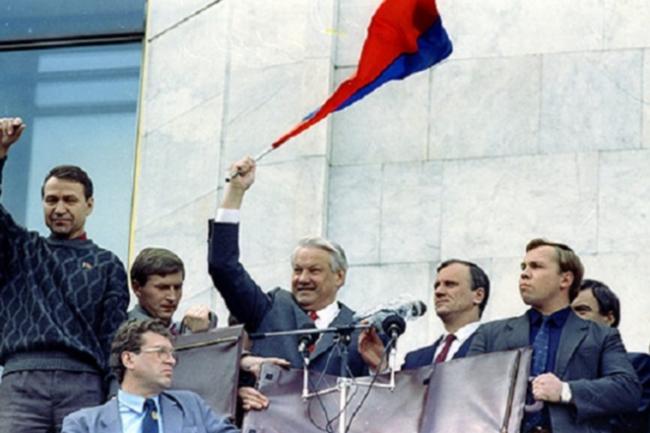 [Songsan Column | 80-Year History of the Pro-North Korean Left] ㉛ 1991: The Dissolution of the Soviet Union
On August 22, 1991, Russian President Boris Yeltsin waves the Russian tricolor flag, calling for resistance against the coup forces. On December 26, 1991, the Soviet Union (USSR), once the world’s m
[Songsan Column | 80-Year History of the Pro-North Korean Left] ㉛ 1991: The Dissolution of the Soviet Union
On August 22, 1991, Russian President Boris Yeltsin waves the Russian tricolor flag, calling for resistance against the coup forces. On December 26, 1991, the Soviet Union (USSR), once the world’s m
 U.S. Military: "Iran maritime blockade remains in effect… 2 vessels neutralized, 12 forced to change course"
Gulf of Oman [AFP=Yonhap News]The U.S. military announced on the 25th (local time) that it is maintaining a full maritime blockade against Iran.U.S. Central Command (CENTCOM), which oversees the Middl
U.S. Military: "Iran maritime blockade remains in effect… 2 vessels neutralized, 12 forced to change course"
Gulf of Oman [AFP=Yonhap News]The U.S. military announced on the 25th (local time) that it is maintaining a full maritime blockade against Iran.U.S. Central Command (CENTCOM), which oversees the Middl
 Jang Dong-hyeok suggests unifying slogans, asking, "Is there anyone left who still denies these were rigged or flawed elections?"
People Power Party Representative Jang Dong-hyeok speaks in Daegu on the 25th. [Maeil Shinmun YouTube Video GIF]As the sweat and tears shed by patriotic citizens on the asphalt over the past decade ha
Jang Dong-hyeok suggests unifying slogans, asking, "Is there anyone left who still denies these were rigged or flawed elections?"
People Power Party Representative Jang Dong-hyeok speaks in Daegu on the 25th. [Maeil Shinmun YouTube Video GIF]As the sweat and tears shed by patriotic citizens on the asphalt over the past decade ha
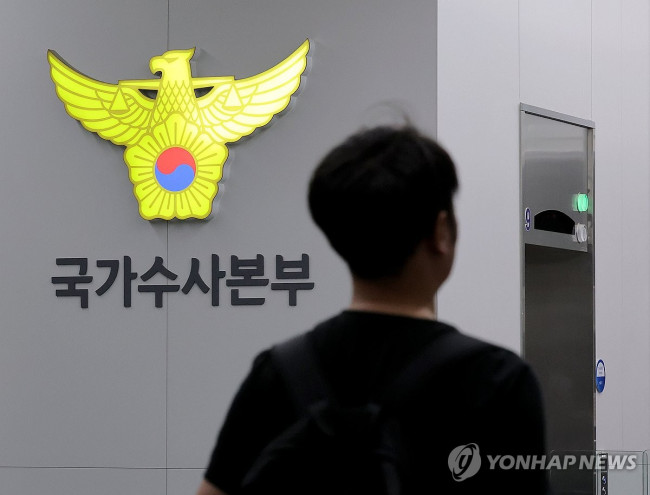 "Cannot Trust Police Investigations": Objections Double in 4 Years… 34,000 Cases in First Half of This Year
Police officials walk past the lobby of the National Office of Investigation (NOI) as the special investigation team looking into the Jang Yoon-gi case conducts a raid at the National Police Agency he
"Cannot Trust Police Investigations": Objections Double in 4 Years… 34,000 Cases in First Half of This Year
Police officials walk past the lobby of the National Office of Investigation (NOI) as the special investigation team looking into the Jang Yoon-gi case conducts a raid at the National Police Agency he
 Starbucks' 'Aero-cano', first launched in Korea, sells 5.5 million cups in 5 months
Starbucks Aerocano [Courtesy of Starbucks Korea. Yonhap News file photo] Starbucks Korea announced that its "Aerocano," which debuted in South Korea—a world first—on February 26, has surpasse
Starbucks' 'Aero-cano', first launched in Korea, sells 5.5 million cups in 5 months
Starbucks Aerocano [Courtesy of Starbucks Korea. Yonhap News file photo] Starbucks Korea announced that its "Aerocano," which debuted in South Korea—a world first—on February 26, has surpasse
 [New Book] Approaching the Truth of Gwangju… ‘The Memory of Two Gunshots, The Tears of Two Gwangjus’
For a long time, the memory of the May 18 Gwangju Democratization Movement has remained fragmented, never converging into a singular meaning. The new book, Memories of Two Gunshots, Tears of Two Gwang
[New Book] Approaching the Truth of Gwangju… ‘The Memory of Two Gunshots, The Tears of Two Gwangjus’
For a long time, the memory of the May 18 Gwangju Democratization Movement has remained fragmented, never converging into a singular meaning. The new book, Memories of Two Gunshots, Tears of Two Gwang
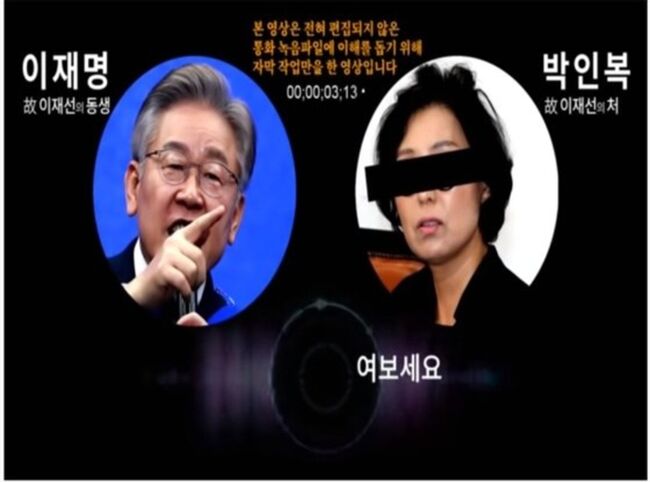 [Writer Park Joo-hyun’s Column] The ‘Controversy Over Recommended Summer Reading Lists’ Caused by Blind Idolatry
The cover of the full audio recording file of the so-called "sister-in-law profanity" call, released in 2021 by the pro-Moon Jae-in group "Awakened Citizens' Solidarity Party." [Source: Awakened Citiz
[Writer Park Joo-hyun’s Column] The ‘Controversy Over Recommended Summer Reading Lists’ Caused by Blind Idolatry
The cover of the full audio recording file of the so-called "sister-in-law profanity" call, released in 2021 by the pro-Moon Jae-in group "Awakened Citizens' Solidarity Party." [Source: Awakened Citiz
 [Photo] Evidence of Election Fraud Flooding U.S. Media… Trump Had 2.7 Million Votes Stolen
 [Video] U.S. Semiquincentennial Air Show... 'Art in the Sky' streaks across New York
 [Editorial Cartoon] A Draconian Law That Undermines Freedom of Expression

 List
List