- ‘CIA Confidential Report’ and the investigative report by the Lee Gwang-ro team in a single volume
- By Lee Kwang-ro and the Central Intelligence Agency, Toonamis, 20,000 won
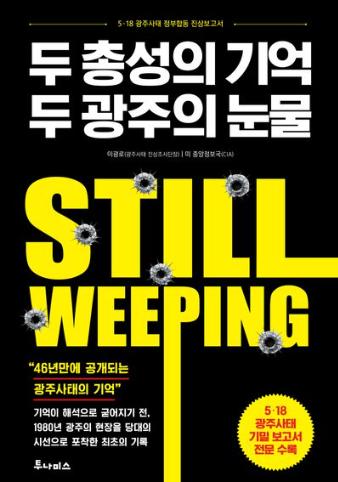
Memories of the 5·18 Democratization Movement have long remained scattered, failing to converge into a single, unified meaning. The new book, "Memories of Two Gunshots, Tears of Two Gwangjus," brings together two documents at the heart of these complex memories in a single volume.
Part 1 contains the full original text of the "Report on the Truth of the Gwangju Incident," produced by the Joint Government Investigation Team led by Major General Lee Gwang-ro.
In 1980, President Choi Kyu-hah ordered General Lee Gwang-ro to investigate the full account of the Gwangju Incident. General Lee organized an investigation team and surveyed 18 regions, including Gwangju, Mokpo, and Naju, over seven days from June 5 to June 11, 1980.
“The list of officials to be held accountable identified by General Lee Gwang-ro was clear: Yoon Heung-jung, Commander of the Combat Training Command; Jeong Woong, Commander of the 31st Infantry Division; and Ahn Byeong-ha, Director of the South Jeolla Provincial Police Agency. From the report’s perspective, they were at the center of issues involving command responsibility, faulty operational directives, failure of initial police response, and command voids. In addition, certain police commanders were held accountable for desertion, the theft of weapons, the abandonment of equipment, and the concealment of arms. However, the recommendations were not implemented. Although the responsibilities were laid out on paper, they never crossed the threshold of reality.” - From the Preface
What would have happened if President Choi Kyu-hah had punished those individuals according to the Joint Government Investigation Team's recommendations? Perhaps Gwangju would not have remained a subject of such intense controversy.
Part 2 translates and includes declassified CIA documents, including: the CIA Situation Reports from May 24 and 27, 1980; the NIC Warning Memorandum agenda from June 1980; the 1983 analysis of anti-Chun Doo-hwan factions; the 1985 report on the rise of anti-American incidents; the 1987 analysis of the radicalization of the anti-establishment movement in Korea; and the 1988 document on the prospects for South Korea post-Olympics.
These documents demonstrate that U.S. intelligence agencies did not view Gwangju as a mere local disturbance, but rather connected it to the legitimacy of the Chun Doo-hwan regime, the political role of the South Korean military, the spread of anti-American sentiment, the potential for North Korean propaganda and provocations, and the long-term burden on U.S.-Korea relations.
The CIA documents provide a perspective different from domestic reports surrounding Gwangju. While the Lee Gwang-ro investigation report focused on on-site surveys and the issue of responsibility within public authorities, the CIA documents analyze how South Korean politics would sway after Gwangju, how the narrative of U.S. responsibility and anti-Americanism would spread, and how North Korea might attempt to exploit the chaos in the South, all within a long-term security framework.
"Memories of Two Gunshots, Tears of Two Gwangjus" does not simply repeat one side of the story. By presenting the original documents, translations, victim statistics, details on the theft of weapons, lists of those held accountable, and CIA intelligence assessments together, it awaits the reader's judgment. If the debate surrounding the memory of Gwangju is still ongoing, this book serves as a record that presents both the primary source material that should be the starting point of that debate and the perspective of an external intelligence agency.
What do you think of this article?

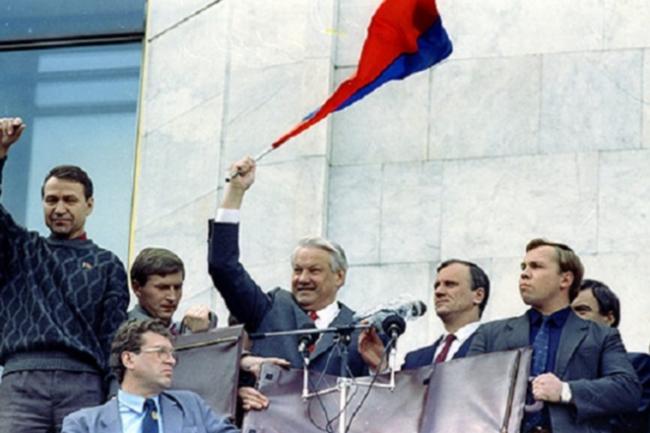 [Songsan Column | 80-Year History of the Pro-North Korean Left] ㉛ 1991: The Dissolution of the Soviet Union
On August 22, 1991, Russian President Boris Yeltsin waves the Russian tricolor flag, calling for resistance against the coup forces. On December 26, 1991, the Soviet Union (USSR), the world’s m
[Songsan Column | 80-Year History of the Pro-North Korean Left] ㉛ 1991: The Dissolution of the Soviet Union
On August 22, 1991, Russian President Boris Yeltsin waves the Russian tricolor flag, calling for resistance against the coup forces. On December 26, 1991, the Soviet Union (USSR), the world’s m
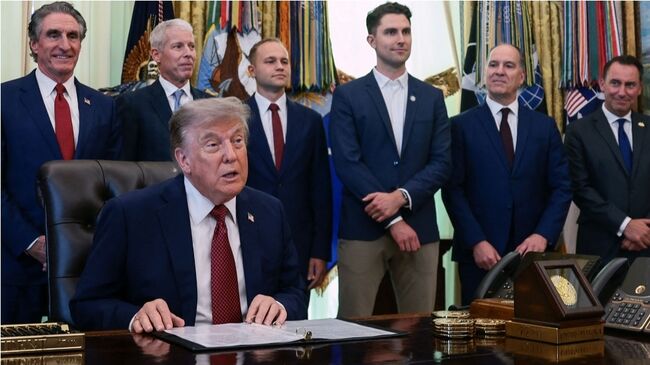 Trump: "Talks with Iran are underway... preparations for airstrikes are also complete"
President Donald Trump delivers remarks on U.S. nuclear innovation in the Oval Office at the White House in Washington, D.C., on July 24, 2026. (Reuters/Evelyn Hockstein)U.S. President Donald Trump st
Trump: "Talks with Iran are underway... preparations for airstrikes are also complete"
President Donald Trump delivers remarks on U.S. nuclear innovation in the Oval Office at the White House in Washington, D.C., on July 24, 2026. (Reuters/Evelyn Hockstein)U.S. President Donald Trump st
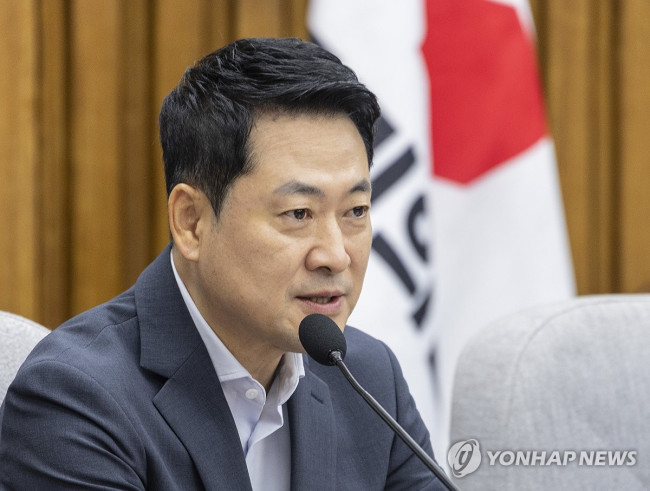 Jang Dong-hyeok to visit Gimhae and Daegu today… to attend a rally condemning the infringement of voting rights
People Power Party leader Jang Dong-hyeok speaks out against government real estate policy at the party's Real Estate Policy Normalization Forum held at the National Assembly on the 24th. [Yonhap News
Jang Dong-hyeok to visit Gimhae and Daegu today… to attend a rally condemning the infringement of voting rights
People Power Party leader Jang Dong-hyeok speaks out against government real estate policy at the party's Real Estate Policy Normalization Forum held at the National Assembly on the 24th. [Yonhap News
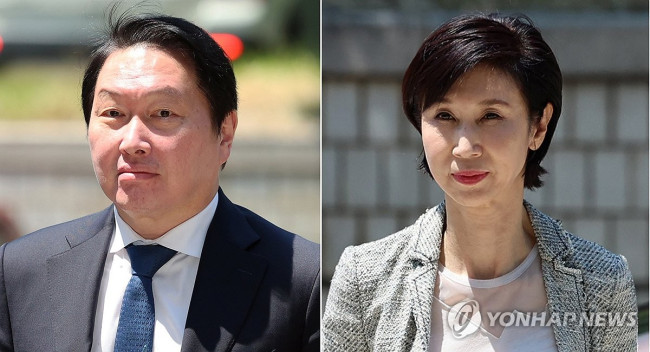 Court Rules: "Chey Tae-won to Pay Roh Soh-yeong 944 Billion Won"... Daily Interest of 130 Million Won
On the 24th, during the remand trial for the property division lawsuit between SK Group Chairman Chey Tae-won and Art Center Nabi Director Roh Soh-yeong held at the Seoul High Court in Seocho-gu, the
Court Rules: "Chey Tae-won to Pay Roh Soh-yeong 944 Billion Won"... Daily Interest of 130 Million Won
On the 24th, during the remand trial for the property division lawsuit between SK Group Chairman Chey Tae-won and Art Center Nabi Director Roh Soh-yeong held at the Seoul High Court in Seocho-gu, the
 FT "South Korean companies flush with cash from 'AI boom' eye U.S. M&A"
Samsung Electronics logo [Reuters=Yonhap News File Photo]South Korean companies, flush with cash from the artificial intelligence (AI) boom, are acquiring U.S. firms to circumvent tariffs expected und
FT "South Korean companies flush with cash from 'AI boom' eye U.S. M&A"
Samsung Electronics logo [Reuters=Yonhap News File Photo]South Korean companies, flush with cash from the artificial intelligence (AI) boom, are acquiring U.S. firms to circumvent tariffs expected und
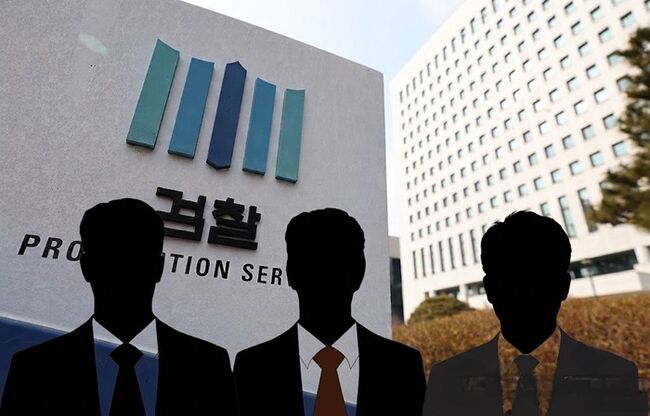 [Byun Jong-pil Column] Investigative Authority for Supplementary Inquiries: For Whom Are We Abolishing It?
"Is it truly reasonable from the perspective of the public to abolish prosecutors' supplementary investigation powers based on the simple catchphrase of 'reforming the politically motivated prosecutio
[Byun Jong-pil Column] Investigative Authority for Supplementary Inquiries: For Whom Are We Abolishing It?
"Is it truly reasonable from the perspective of the public to abolish prosecutors' supplementary investigation powers based on the simple catchphrase of 'reforming the politically motivated prosecutio
 [Photo] Evidence of Election Fraud Flooding U.S. Media… Trump Had 2.7 Million Votes Stolen
 [Video] U.S. Semiquincentennial Air Show... 'Art in the Sky' streaks across New York
 [Editorial Cartoon] A Draconian Law That Undermines Freedom of Expression

 List
List