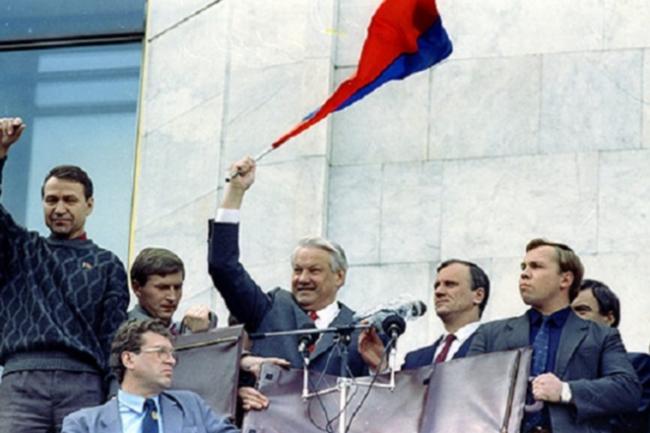
 On August 22, 1991, Russian President Boris Yeltsin waves the Russian tricolor flag, calling for resistance against the coup forces.
On December 26, 1991, the Soviet Union (USSR), the world’s most powerful communist state, was officially dissolved. This came 69 years after the Union of Soviet Socialist Republics was established on December 30, 1922.
A superpower that had dominated 20th-century world history vanished from the stage of history of its own accord during peacetime. This was not merely the disappearance of a single nation, but an event that shook the very foundations of the entire international communist system.
The Soviet Union was once a massive state covering about one-sixth of the world's land area. Its territory spanned approximately 22.4 million square kilometers, and its population was about 290 million just before its dissolution.
The Collapse of the Suzerain of Communism
The Union consisted of 15 republics in total, including Russia, Ukraine, Belarus, Kazakhstan, Uzbekistan, Georgia, Armenia, and Azerbaijan. Alongside the United States, it served as one of the two pillars of the Cold War and maintained world-class capabilities in both nuclear and conventional military power.
However, apart from its formidable military might, the economy gradually lost its vitality. While the planned economy—where the central government controlled all production, prices, investment, and distribution—achieved certain successes during the early stages of industrialization, it revealed structural problems such as declining productivity and slowing technological innovation as time went on.
Shortages of consumer goods became chronic, and people waiting in long lines to purchase daily necessities became a daily reality of Soviet society. The burden of defense spending also heavily strained the national budget.
Mikhail Gorbachev, who took office as General Secretary of the Communist Party on March 11, 1985, launched reforms to overcome this crisis. He promoted "Perestroika" (restructuring) for economic reform and "Glasnost," which meant openness in information and political liberalization.
Although these reforms were an attempt to revive a stagnant system, they instead brought long-suppressed social discontent and ethnic issues to the surface all at once.
When the communist bloc in Eastern Europe collapsed in succession in 1989, the pace of change within the Soviet Union accelerated. Demands for independence grew stronger in the three Baltic states—Lithuania, Latvia, and Estonia—and nationalist movements spread across the Caucasus and Central Asia. The central government’s control over the union grew increasingly weaker.
The decisive turning point came in August 1991. On August 19, communist hardliners and officials from the military and intelligence agencies staged a coup to halt Gorbachev's reforms. At the time, Gorbachev was effectively placed under house arrest at his villa on the Crimean Peninsula along the Black Sea. Contrary to expectations, however, the coup failed due to citizens' resistance and defections within the military.
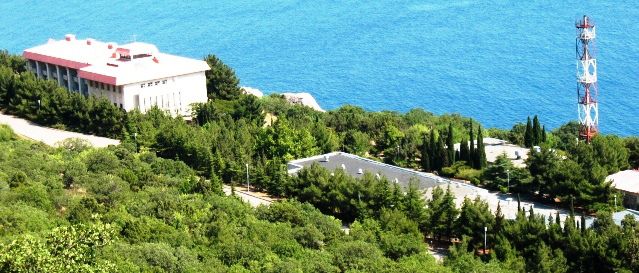 The Foros villa where President Gorbachev was detained.
During this process, Russian Republic President Boris Yeltsin climbed onto a tank stationed in front of the Russian parliament building in Moscow and appealed to citizens to resist the coup. This scene, broadcast live by the world media, remains one of the iconic images marking the end of the Cold War. After the failed coup, the authority of the Communist Party collapsed decisively, and each republic hurried to declare independence.
On December 8, 1991, Russia's Boris Yeltsin, Ukraine's Leonid Kravchuk, and Belarus's Stanislav Shushkevich signed an agreement in the Belovezh Forest, declaring that the Soviet Union no longer existed under international law and agreeing to create the Commonwealth of Independent States (CIS).
Following this, as most of the republics joined the pact in Alma-Ata, Kazakhstan, on December 21, the dissolution of the Union reached a point of no return.
On the evening of December 25, 1991, Mikhail Gorbachev announced his resignation from the presidency in a televised address. On the same day, the red Soviet flag flying over the Kremlin was lowered, and the Russian tricolor flag was raised. The following day, December 26, the Supreme Soviet of the USSR officially declared the dissolution of the Union. Thus, the communist superpower that symbolized the 20th century vanished into history.
It is difficult to explain the cause of the Soviet Union's dissolution with a single reason. The explanation widely discussed in modern history and political science is that various factors worked in combination: economic stagnation, the inefficiency of the planned economy, ethnic issues, the side effects of political reforms, the long-term burden of military spending, and international competition. However, a clear fact remains: even the suzerain state that first established communism as a national system could not maintain its existing structure.
The dissolution of the Soviet Union in 1991 was not merely a change in the country's name or a regime transition. It was an event of world-historical significance that posed fundamental questions to the entire 20th-century international communist movement. And that question was directed straight at the activist circles in South Korea as well. How did the pro-North Korean activist circles in South Korea accept this reality after the cradle of communism disappeared?
Refusing to Admit the Failure of Socialism
As the Soviet Union dissolved in December 1991, the world entered a new era. The Cold War order that had defined international politics since 1945 effectively came to an end, and the bipolar system of the United States and the Soviet Union faded into history.
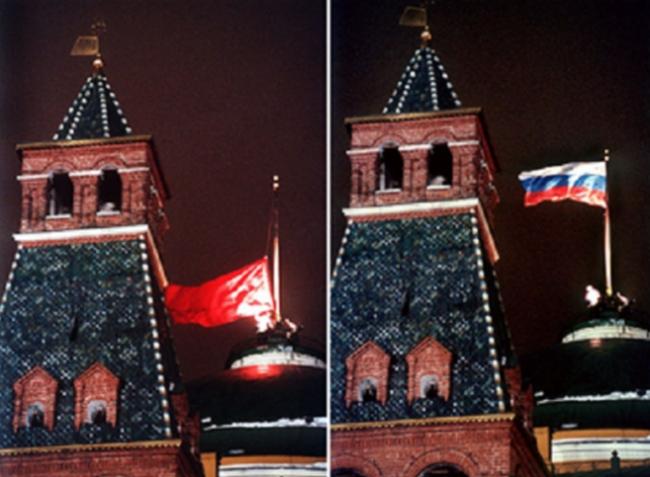 The Soviet flag that hung over the Kremlin in Moscow is lowered (left), and the Russian tricolor is raised.
If the fall of the Berlin Wall in 1989 symbolized the collapse of the communist bloc in Eastern Europe, the dissolution of the Soviet Union was an event where the central axis of the international communist system collapsed.
This shock resonated deeply in South Korea as well. Domestic media covered the Soviet collapse in their headlines day after day, and universities and research institutions held continuous debates and academic conferences analyzing the limitations of the socialist system.
Many political scientists and economists analyzed the inefficiency of the planned economy and the structural problems of the one-party dictatorship as the main causes. The collapse of the Soviet Union became an opportunity to re-evaluate the socialist system as a whole, rather than it being just a problem for a specific country.
However, the activist circles in Korea at the time did not speak with a single voice. Some used the collapse of Eastern Europe and the Soviet Union as an opportunity to re-examine existing socialist theories or explore new directions such as democratic socialism or social democracy.
On the other hand, some pro-North Korean factions sought to interpret the collapse not as the failure of socialism itself, but as a result of policy changes by the Soviet Communist leadership, failed reforms, or pressure from the United States and the West. These reactions sparked various debates even within the activist circles at the time.
During this period, North Korea did not acknowledge the collapse of the Soviet Union as a failure of socialism. Instead, it presented the argument that the state collapsed because the Soviet leadership abandoned revolutionary principles, thereby maintaining the stance that their own system remained legitimate. Since then, North Korea has moved in a direction of strengthening internal cohesion by further emphasizing "socialism of our own style."
What is important in historical research is not one's preference for a particular ideology, but how one interprets repeating historical facts. If East Germany, Poland, Hungary, Czechoslovakia, Romania, and finally the Soviet Union all collapsed, a researcher would first look at the commonalities between these nations.
Inefficiency of the planned economy, restrictions on political freedom, concentration of power, censorship, and economic stagnation were phenomena that appeared repeatedly in many countries. From the perspective of comparative studies, examining these common factors is a natural research procedure.
Conversely, it is difficult to understand the common structure if one explains each case only as an exceptional event. If every failure is attributed solely to external pressure or the personal mistakes of a specific leader, the examination of the system itself is pushed aside.
While this method of explanation may be an attempt to interpret historical facts within a single framework, it has also faced criticism for failing to sufficiently analyze the structural problems of the system.
1991 was an important turning point for the South Korean activist movement as well. Afterward, route changes and organizational restructuring followed within the student movement, and some chose to participate in real-world politics or pursue different ideological directions. Others continued to maintain their existing worldview, keeping their thinking centered on the North Korean system. Completely different conclusions were reached despite the same historical event.
Anti-communism does not mean hostility toward a specific country. From a liberal perspective, it is closer to an attitude of learning from history what happens when state power excessively restricts individual freedom and political power does not allow competition and criticism. The dissolution of the Soviet Union was the largest such historical example.
The dissolution of the Soviet Union in 1991 was not merely an event where one country disappeared. It was a world-historical turning point that forced a re-evaluation of the entire 20th-century communist experiment. Nevertheless, for those who place ideology above reality, the temptation to find the causes of failure outside the system rather than within it persisted. The Cold War ended, but the Cold War mentality did not end so easily.
◆ Songsan Jeong Gwang-je
A poet and a researcher of history and philosophy. Former board member of the Syngman Rhee Institute. Currently serves as a research advisor for the Korea Association of Modern and Contemporary History and is the representative of the philosophy forum "Lyceum." He has published four collections of poetry, co-translated *Heroes of Hook Ridge*, and authored humanities books including *Joseon, Now a Myth*, *Humanities on the Tatami*, and *A Liberal’s Reading of Gramsci*.

 Trump: "Talks with Iran are underway... preparations for airstrikes are also complete"
President Donald Trump delivers remarks on U.S. nuclear innovation in the Oval Office at the White House in Washington, D.C., on July 24, 2026. (Reuters/Evelyn Hockstein)U.S. President Donald Trump st
Trump: "Talks with Iran are underway... preparations for airstrikes are also complete"
President Donald Trump delivers remarks on U.S. nuclear innovation in the Oval Office at the White House in Washington, D.C., on July 24, 2026. (Reuters/Evelyn Hockstein)U.S. President Donald Trump st
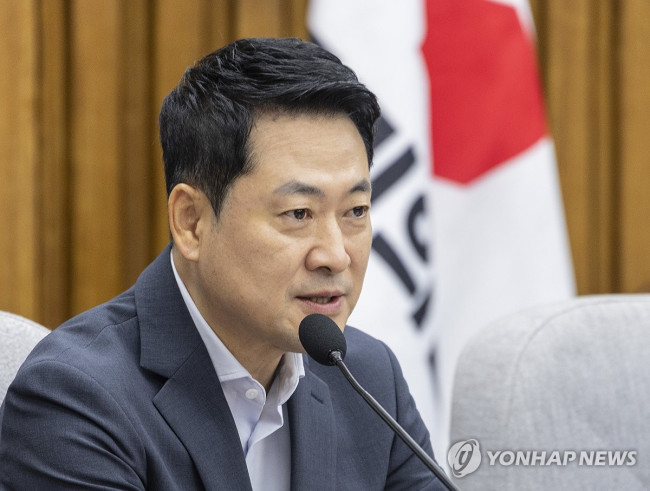 Jang Dong-hyeok to visit Gimhae and Daegu today… to attend a rally condemning the infringement of voting rights
People Power Party leader Jang Dong-hyeok speaks out against government real estate policy at the party's Real Estate Policy Normalization Forum held at the National Assembly on the 24th. [Yonhap News
Jang Dong-hyeok to visit Gimhae and Daegu today… to attend a rally condemning the infringement of voting rights
People Power Party leader Jang Dong-hyeok speaks out against government real estate policy at the party's Real Estate Policy Normalization Forum held at the National Assembly on the 24th. [Yonhap News
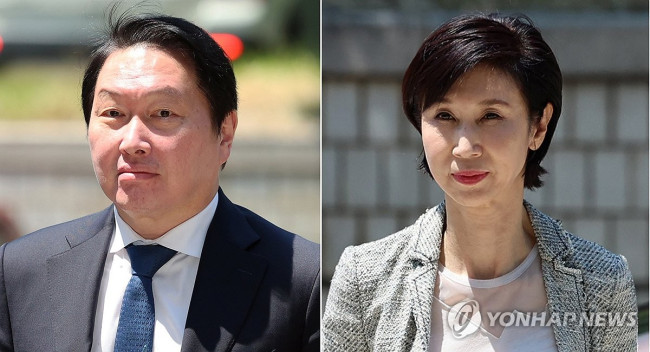 Court Rules: "Chey Tae-won to Pay Roh Soh-yeong 944 Billion Won"... Daily Interest of 130 Million Won
On the 24th, during the remand trial for the property division lawsuit between SK Group Chairman Chey Tae-won and Art Center Nabi Director Roh Soh-yeong held at the Seoul High Court in Seocho-gu, the
Court Rules: "Chey Tae-won to Pay Roh Soh-yeong 944 Billion Won"... Daily Interest of 130 Million Won
On the 24th, during the remand trial for the property division lawsuit between SK Group Chairman Chey Tae-won and Art Center Nabi Director Roh Soh-yeong held at the Seoul High Court in Seocho-gu, the
 FT "South Korean companies flush with cash from 'AI boom' eye U.S. M&A"
Samsung Electronics logo [Reuters=Yonhap News File Photo]South Korean companies, flush with cash from the artificial intelligence (AI) boom, are acquiring U.S. firms to circumvent tariffs expected und
FT "South Korean companies flush with cash from 'AI boom' eye U.S. M&A"
Samsung Electronics logo [Reuters=Yonhap News File Photo]South Korean companies, flush with cash from the artificial intelligence (AI) boom, are acquiring U.S. firms to circumvent tariffs expected und
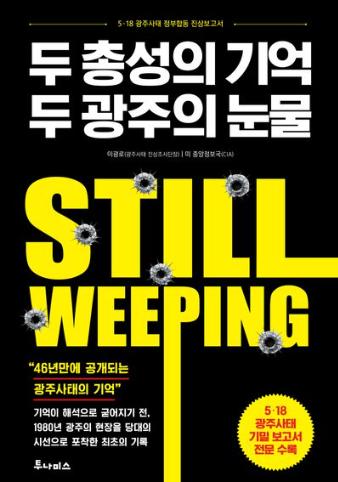 [New Book] Approaching the Truth of Gwangju… ‘The Memory of Two Gunshots, the Tears of Two Gwangjus’
Memories of the 5·18 Democratization Movement have long remained scattered, failing to converge into a single, unified meaning. The new book, "Memories of Two Gunshots, Tears of Two Gwangjus," brings
[New Book] Approaching the Truth of Gwangju… ‘The Memory of Two Gunshots, the Tears of Two Gwangjus’
Memories of the 5·18 Democratization Movement have long remained scattered, failing to converge into a single, unified meaning. The new book, "Memories of Two Gunshots, Tears of Two Gwangjus," brings
 [Byun Jong-pil Column] Investigative Authority for Supplementary Inquiries: For Whom Are We Abolishing It?
"Is it truly reasonable from the perspective of the public to abolish prosecutors' supplementary investigation powers based on the simple catchphrase of 'reforming the politically motivated prosecutio
[Byun Jong-pil Column] Investigative Authority for Supplementary Inquiries: For Whom Are We Abolishing It?
"Is it truly reasonable from the perspective of the public to abolish prosecutors' supplementary investigation powers based on the simple catchphrase of 'reforming the politically motivated prosecutio
 [Photo] Evidence of Election Fraud Flooding U.S. Media… Trump Had 2.7 Million Votes Stolen
 [Video] U.S. Semiquincentennial Air Show... 'Art in the Sky' streaks across New York
 [Editorial Cartoon] A Draconian Law That Undermines Freedom of Expression

 List
List