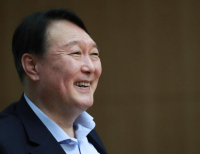
The Chosun Ilbo building [Photo=Yonhap News]
Last Saturday, Chosun Ilbo Chief Editorial Writer Kang Cheon-seok wrote a column titled "Pathological Obsession, Ignorant Obsession, Pitiful Obsession." In it, he pointed to "obsessions" with different connotations while evaluating Jeong Chung-rae’s insistence on abolishing the right to supplementary investigation, Lee Jae-myung’s issue with withdrawing indictments, and Jang Dong-hyeok’s political moves.
However, reading that piece, I had a different thought. Perhaps those three expressions are questions the Chosun Ilbo of today should be asking itself.
I am not someone who has been critical of the Chosun Ilbo from the start. On the contrary, it was a newspaper I trusted for a long time—a paper that did not easily back down in the face of power, one that shed light on the dark corners of society, and one that regarded reader trust as its most important value. That is the Chosun Ilbo I remember.
I believe this is also the reason why, at one time, the Chosun Ilbo could stand at the center of the South Korean media landscape. Of course, no media outlet is perfect. Yet, many citizens read the Chosun Ilbo not simply because of a specific political orientation, but because of the belief that it would hold power to account and speak the truth, even if it were uncomfortable.
Where does the power of the press come from? Is it circulation? History? Influence? No. The true power of the press comes from the trust of its readers. No matter how venerable an institution, the moment it loses that trust, its authority slowly collapses.
Watching the Chosun Ilbo recently, many readers are asking: Where has the media that once checked power gone? Instead of criticizing power, has the media begun to prioritize calculating the moves of those in power?
Of course, as times change, the media changes, too. But there are things that should never change: the essence of journalism. The media should not aim to get close to power; it should be an entity that makes power uncomfortable. However, starting with the tax investigation incidents, the line between left-wing power and the press has become blurred.
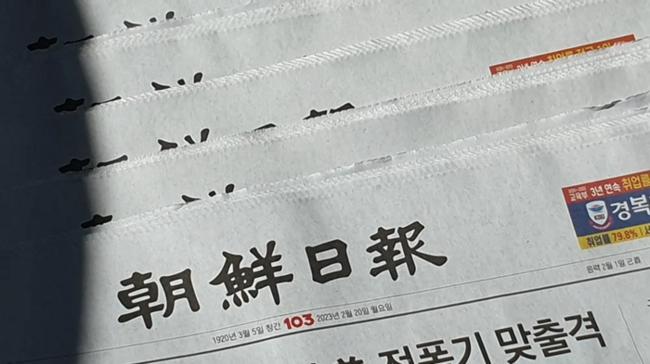 Watching the Chosun Ilbo recently, many readers are asking: Where has the media that once checked power gone?
Beginning with the so-called "dress lobbying scandal" spearheaded by the media in 1999, the year 2001 saw the sudden arrests of Chosun Ilbo President Bang Sang-hoon, Dong-A Ilbo Chairman Kim Byung-kwan, and Kookmin Ilbo Chairman Cho Hee-jun. It is rare in modern South Korean history for the owners of major newspapers to be arrested simultaneously, and it is recorded as one of the most significant events surrounding the relationship between the press and power.
Although the dress lobbying scandal, led by the media, was later proven to be false, Minister of Justice Kim Tae-jung was forced to resign. That, along with the tax investigations into media companies conducted by National Tax Service Commissioner Ahn Jung-nam, served as an opportunity to re-examine the responsibilities of the press and its relationship with power.
Following his resignation, Minister Kim Tae-jung’s health deteriorated, and Commissioner Ahn Jung-nam faced intense criticism from the media, including an exhaustive, drama-like investigative report by the Chosun Ilbo into his wealth formation process. He suffered greatly and passed away shortly after at the age of 68.
The change originated from the imprisoned media owners. It was a short period of three months, but it felt long to them. With the heads of media companies arrested on charges including tax evasion and illegal gifting, society was divided between those who argued that the principle of tax equity should not exclude the media, and those who saw it as an oppression of the press. This was also an issue the leadership of the National Intelligence Service could not overlook.
To find a solution, a meeting was held among three people: a former official known for a legendary reputation for contributing to state affairs by maintaining close cooperation with media owners, a current official of equivalent status, and myself.
The former official, who had enjoyed such deep trust with Chairman Kim Byung-kwan that he accompanied him on overseas trips, said:
"Chairman Kim Byung-kwan is a cunning, malicious person. Since Chuseok is approaching, he thinks the government will be unable to withstand media pressure and will release them before the holiday. They must not be released. After Chuseok is fine. Then, they won't dare to obstruct the government with false information."
He was putting national interest above personal relationships.
The former official was right. After Chuseok, the media companies were cautious. When Cho Gab-je of Monthly Chosun attempted to publish the inside story of the Jin Seung-hyun Gate incident involving the private life of President Kim Dae-jung, the government requested that it be stopped. Bang Sang-hoon personally asked for restraint, but Cho Gab-je adamantly refused, claiming the article was already written. Eventually, Bang Sang-hoon fired Cho Gab-je, whom he had once valued.
According to those involved in the investigation, President Bang Sang-hoon admitted to the charges presented by the prosecution and received treatment commensurate with that admission. It was a high-end party of sorts, funded by the individuals involved, after a rapport was formed with the prosecution. A "salmon party" hosted by the prosecution to encourage a confession does not exist in the prosecutor's dictionary.
In prison, inmates with great social influence are called "beom-teol" (high-status prisoners). They are provided with a one-pyeong (approx. 3.3 sqm) solitary cell. It is said that no inmate can handle this, so the recidivism rate is low. Once you experience it, you are afraid to stand against power. For them, prison, which they had never encountered before, was a shivering hell. This is the reason why, while they always did as they pleased with conservative power, they became cautious toward left-wing power.
I am someone who once trusted the Chosun Ilbo. Therefore, my perspective on today's Chosun Ilbo is not born of simple criticism or hostility. It is closer to regret. If there had been no expectations, there would have been no disappointment.
Why did the Chosun Ilbo gain the trust of many readers in the past? It was not simply because of its conservative tone. It was because of the belief that it would not easily back down in the face of power.
The press should not side with any regime. Whether conservative or progressive, power is always an object of scrutiny. One must be able to voice criticism even toward forces aligned with one's own. That is the reason for the existence of the press. This is why public distrust in the media is growing recently.
Most people do not believe it is because of one specific article. The problem is the perceived standard. When the media is strict with one person and lenient with another regarding the same issue, readers ask:
"What is the standard of the press?"
A media outlet that cannot answer that question will struggle to maintain trust, no matter how long its history or how great its influence.
What the press must guard against most is not just external pressure. It is the self-certainty that arises the moment one believes one is right. The moment a media outlet believes only its judgment is correct, it puts its own perspective ahead of the voices of the people.
Chief Editorial Writer Kang Cheon-seok used the expressions "pathological obsession," "ignorant obsession," and "pitiful obsession." It was a critique directed at politicians. However, the media must also stand before that same question.
Are you perhaps obsessed with past influence? Are you ignoring the uncomfortable reality and seeing only what you want to see? Are you prioritizing political calculations over the voices of readers? The media must have the courage to look at itself before evaluating others. That is the last vestige of the pride a journalist should possess.
I am not someone who wishes for the Chosun Ilbo to disappear. On the contrary, I hope it returns to being a trusted media outlet. A newspaper that fears the people more than power. A newspaper that puts facts before factions. A newspaper that does not turn away from uncomfortable truths. That is the image the Chosun Ilbo once showed the public.
The press is not an eternal power. The power the press holds is something temporarily entrusted to it by the people. And that power is maintained only on the foundation of trust. Therefore, I want to ask one last thing: Who is truly the one with the pathological obsession? Perhaps the one who should answer that question first is the Chosun Ilbo itself.
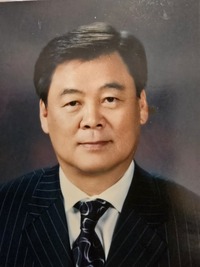
◆ Jung Seong-hong
Chairman of Han-Mi Ilbo
Former Executive of the National Intelligence Service

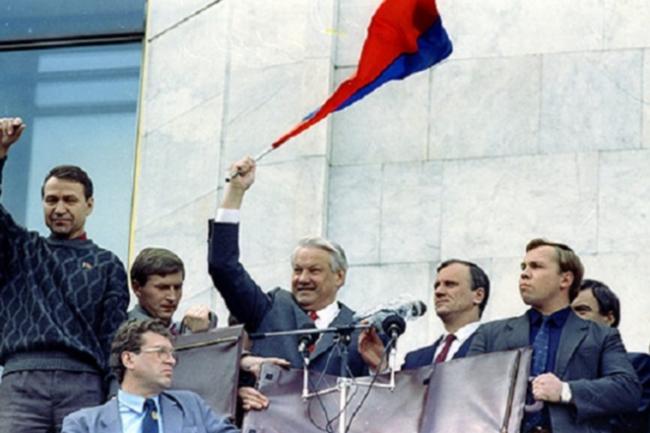 [Songsan Column | 80-Year History of the Pro-North Korean Left] ㉛ 1991: The Dissolution of the Soviet Union
On August 22, 1991, Russian President Boris Yeltsin waves the Russian tricolor flag, calling for resistance against the coup forces. On December 26, 1991, the Soviet Union (USSR), once the world’s m
[Songsan Column | 80-Year History of the Pro-North Korean Left] ㉛ 1991: The Dissolution of the Soviet Union
On August 22, 1991, Russian President Boris Yeltsin waves the Russian tricolor flag, calling for resistance against the coup forces. On December 26, 1991, the Soviet Union (USSR), once the world’s m
 U.S. Military: "Iran maritime blockade remains in effect… 2 vessels neutralized, 12 forced to change course"
Gulf of Oman [AFP=Yonhap News]The U.S. military announced on the 25th (local time) that it is maintaining a full maritime blockade against Iran.U.S. Central Command (CENTCOM), which oversees the Middl
U.S. Military: "Iran maritime blockade remains in effect… 2 vessels neutralized, 12 forced to change course"
Gulf of Oman [AFP=Yonhap News]The U.S. military announced on the 25th (local time) that it is maintaining a full maritime blockade against Iran.U.S. Central Command (CENTCOM), which oversees the Middl
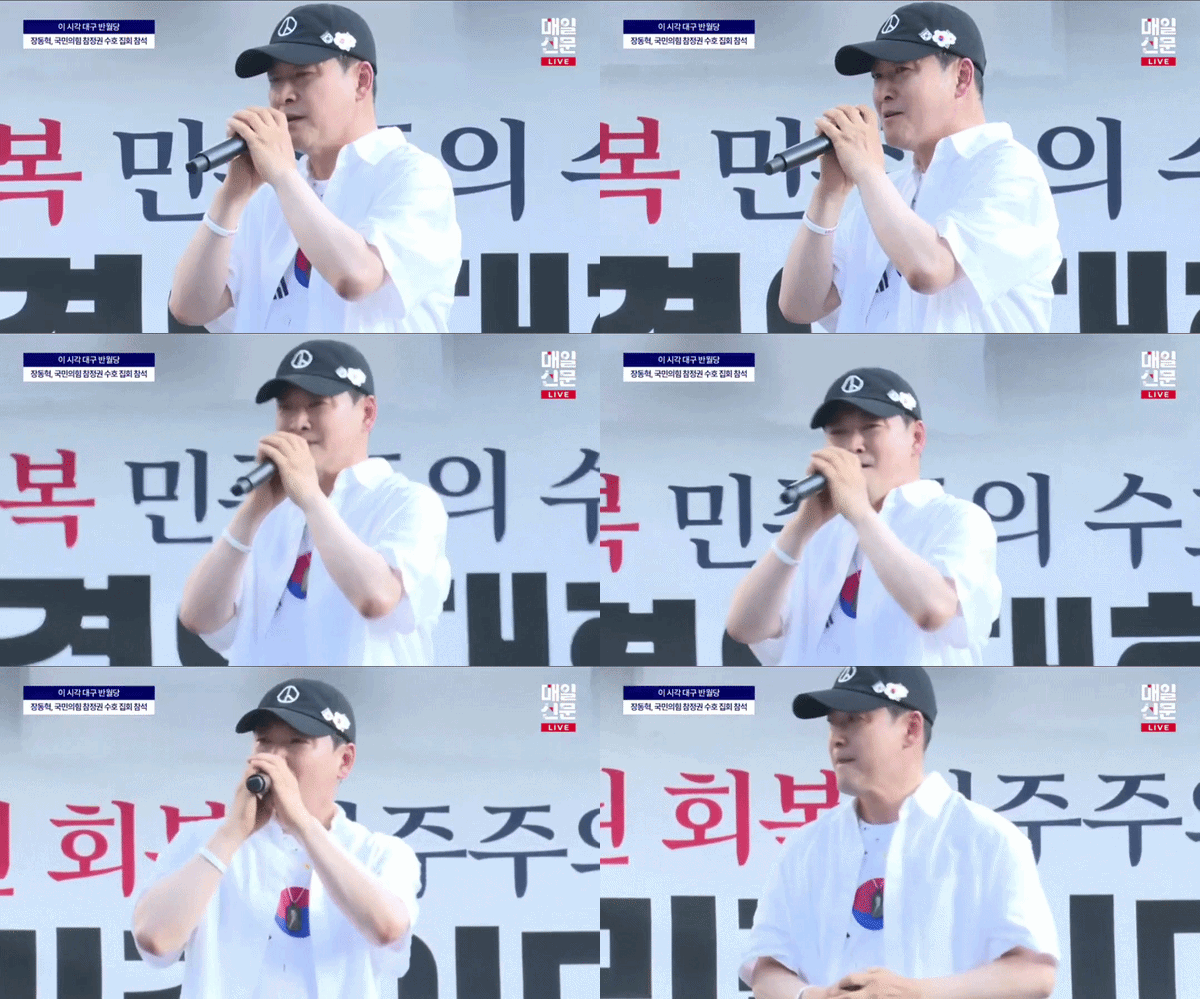 Jang Dong-hyeok suggests unifying slogans, asking, "Is there anyone left who still denies these were rigged or flawed elections?"
People Power Party Representative Jang Dong-hyeok speaks in Daegu on the 25th. [Maeil Shinmun YouTube Video GIF]As the sweat and tears shed by patriotic citizens on the asphalt over the past decade ha
Jang Dong-hyeok suggests unifying slogans, asking, "Is there anyone left who still denies these were rigged or flawed elections?"
People Power Party Representative Jang Dong-hyeok speaks in Daegu on the 25th. [Maeil Shinmun YouTube Video GIF]As the sweat and tears shed by patriotic citizens on the asphalt over the past decade ha
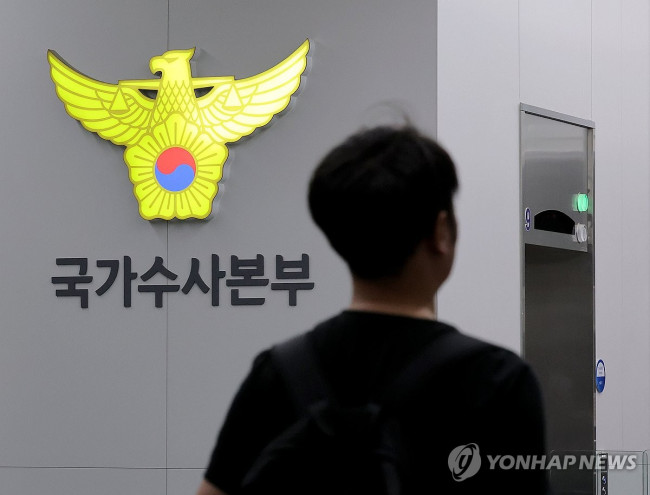 "Cannot Trust Police Investigations": Objections Double in 4 Years… 34,000 Cases in First Half of This Year
Police officials walk past the lobby of the National Office of Investigation (NOI) as the special investigation team looking into the Jang Yoon-gi case conducts a raid at the National Police Agency he
"Cannot Trust Police Investigations": Objections Double in 4 Years… 34,000 Cases in First Half of This Year
Police officials walk past the lobby of the National Office of Investigation (NOI) as the special investigation team looking into the Jang Yoon-gi case conducts a raid at the National Police Agency he
 Starbucks' 'Aero-cano', first launched in Korea, sells 5.5 million cups in 5 months
Starbucks Aerocano [Courtesy of Starbucks Korea. Yonhap News file photo] Starbucks Korea announced that its "Aerocano," which debuted in South Korea—a world first—on February 26, has surpasse
Starbucks' 'Aero-cano', first launched in Korea, sells 5.5 million cups in 5 months
Starbucks Aerocano [Courtesy of Starbucks Korea. Yonhap News file photo] Starbucks Korea announced that its "Aerocano," which debuted in South Korea—a world first—on February 26, has surpasse
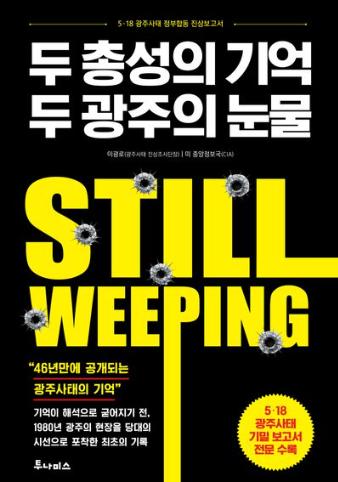 [New Book] Approaching the Truth of Gwangju… ‘The Memory of Two Gunshots, The Tears of Two Gwangjus’
For a long time, the memory of the May 18 Gwangju Democratization Movement has remained fragmented, never converging into a singular meaning. The new book, Memories of Two Gunshots, Tears of Two Gwang
[New Book] Approaching the Truth of Gwangju… ‘The Memory of Two Gunshots, The Tears of Two Gwangjus’
For a long time, the memory of the May 18 Gwangju Democratization Movement has remained fragmented, never converging into a singular meaning. The new book, Memories of Two Gunshots, Tears of Two Gwang
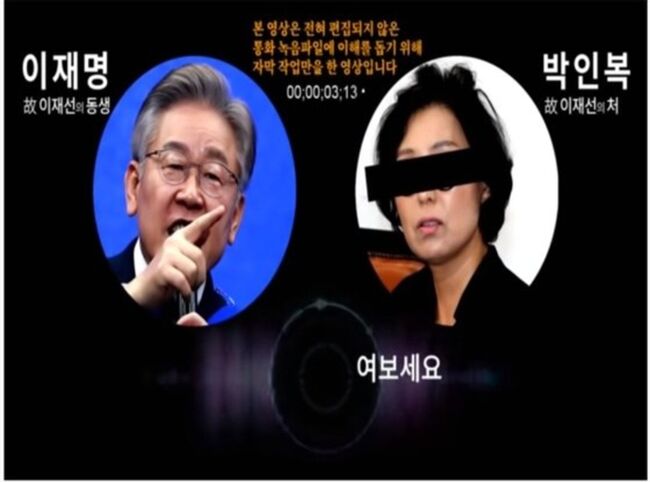 [Writer Park Joo-hyun’s Column] The ‘Controversy Over Recommended Summer Reading Lists’ Caused by Blind Idolatry
The cover of the full audio recording file of the so-called "sister-in-law profanity" call, released in 2021 by the pro-Moon Jae-in group "Awakened Citizens' Solidarity Party." [Source: Awakened Citiz
[Writer Park Joo-hyun’s Column] The ‘Controversy Over Recommended Summer Reading Lists’ Caused by Blind Idolatry
The cover of the full audio recording file of the so-called "sister-in-law profanity" call, released in 2021 by the pro-Moon Jae-in group "Awakened Citizens' Solidarity Party." [Source: Awakened Citiz
 [Photo] Evidence of Election Fraud Flooding U.S. Media… Trump Had 2.7 Million Votes Stolen
 [Video] U.S. Semiquincentennial Air Show... 'Art in the Sky' streaks across New York
 [Editorial Cartoon] A Draconian Law That Undermines Freedom of Expression

 List
List