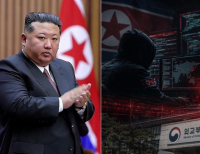
U.S. political columnist Gene Cummings has publicly questioned the South Korean government, asking, "North Korea is declaring that it will increase its number of spies, so what is the South Korean government doing?"
On the 28th, via Facebook, Cummings held the Lee Jae-myung administration accountable, stating, "While Kim Jong-un is publicly declaring that he will expand North Korea's overseas espionage networks and significantly strengthen its intelligence operations against South Korea and the United States, the Republic of Korea has suffered a massive leak of personal information belonging to the intelligence agents responsible for national security."
Citing a report by The Wall Street Journal, he noted that "there are signs that Kim Jong-un is receiving technical and intelligence support from Russia and China and attempting to secure new overseas bases, such as in Belarus." He analyzed that North Korea is currently expanding its state-level intelligence warfare to gain deeper insight into the military plans, foreign policy, advanced technology, and movements of key figures in South Korea and the United States.
However, he pointed out that in South Korea, "the online education system of the Korea National Diplomatic Academy under the Ministry of Foreign Affairs was hacked for a long period, yet the Ministry concealed this for five months," adding that this must be viewed as the work of hacking organizations linked to North Korea.
Furthermore, Cummings expressed his dismay, stating, "This incident alone should be grounds for those responsible for national security to step down, yet on top of that, it has been revealed that even the military’s medical information system has been breached."
He highlighted the fact that the hacking of the Armed Forces Medical Command's Picture Archiving and Communication System (PACS) in November and December of last year resulted in the theft of medical imaging data for as many as 1.15 million people, including military personnel and civilians, and criticized the fact that this was only made known to the public after the National Assembly demanded data and media reports surfaced.
He analyzed, "The successive exposure of personal information of diplomats and intelligence agents, as well as the medical records of soldiers, means that the security defense line protecting South Korea’s diplomatic, intelligence, and military institutions has collapsed."
He continued, "Despite this, North Korea has openly stepped forward to declare that it will strengthen its overseas intelligence networks and reconnaissance capabilities against South Korea and the United States. Under these circumstances, the South Korean government kept the leak of diplomats' and intelligence agents' information hidden for months, and even regarding the exposure of sensitive medical information of military personnel, they have failed to clearly disclose who the intruder was or what data was viewed or downloaded," he criticized.
Cummings sharply attacked the situation, stating, "Since the Lee Jae-myung administration took control of the Republic of Korea, the government has been opening everything up to North Korea and handing over national security secrets without defense. This is a grave security crisis in which the state is neglecting its internal defense network, allowing the enemy to strengthen its preparations for an attack."
The following is the full text of Gene Cummings' Facebook post.
North Korea has declared that it will increase its number of spies and significantly strengthen its intelligence operation capabilities
Kim Jong-un has publicly declared that he will increase his overseas spy networks and significantly strengthen intelligence operation capabilities against South Korea and the United States.
The Wall Street Journal reported that Kim Jong-un is massively strengthening North Korea’s overseas intelligence networks and military reconnaissance capabilities.
Earlier this month, Kim Jong-un presided over a meeting on intelligence and reconnaissance, ordering a "fundamental" upgrade to North Korea's military reconnaissance and intelligence-gathering capabilities. North Korea is even changing the names of its reconnaissance agencies and attempting to expand its overseas operation networks and reconnaissance satellite capabilities.
There are also signs of movements to secure technical and intelligence support from Russia and China, as well as new overseas bases in countries like Belarus. North Korea is currently expanding its state-level intelligence war to gain deeper insight into the military plans, foreign policy, advanced technologies, and movements of key figures in South Korea and the United States.
But what is the South Korean government doing?
In the Republic of Korea, large-scale personal information of intelligence agents responsible for national security has been leaked. The Ministry of Foreign Affairs kept the long-term hacking of the online education system at the Korea National Diplomatic Academy hidden for five months, and this must be seen as the work of a hacking organization linked to North Korea.
This incident alone is enough to warrant the resignation of those responsible for national security, and in addition to this, it was revealed that the Armed Forces medical information system had also been breached.
Between November and December of last year, unauthorized intruders penetrated the Picture Archiving and Communication System of the Armed Forces Medical Command, which is used by six military hospitals in Goyang, Yangju, Pocheon, Gangneung, Guri, and Daegu.
Investigations revealed that the intruders accessed approximately 8GB of medical data, including names, genders, ages, dates of treatment, and medical images such as X-rays, CT scans, and MRIs. At the time, the system held medical image data for a staggering 1.15 million people, including military personnel and civilians.
Although the Ministry of National Defense confirmed the intrusion during a security audit in April, the incident was only made known to the public after the National Assembly demanded the data and media reports were released.
The successive exposure of personal information of diplomats and intelligence agents, as well as the medical records of soldiers, means that the security defense line protecting the Republic of Korea's diplomatic, intelligence, and military institutions has collapsed.
Yet, North Korea has openly declared that it will strengthen its overseas intelligence networks and reconnaissance capabilities against South Korea and the U.S.
In such a situation, the South Korean government kept the leak of information regarding diplomats and intelligence agents hidden for months, and even in the case of the exposure of soldiers' sensitive medical information, it has failed to clearly disclose who the intruder was or what information was accessed or downloaded.
To steal more information, the enemy is openly declaring that it will increase its spies and strengthen its intelligence operations, as if mocking South Korea.
Since the Lee Jae-myung administration took power, the South Korean government has been opening everything up to North Korea and providing national security secrets without any defense. This is a severe security crisis where the state is leaving its internal defense networks vulnerable, allowing the enemy to bolster its preparations for an attack.

◆ Gene Cummings
A U.S. political columnist. He worked at Baltimore’s Channel 13, served as Editor-in-Chief of ‘The Sunday Times’ (1994–1996) and Business Director of ‘The Korean Weekly’ (1996–2000), and later founded ‘The Asia Post.’ He currently serves as co-editor of ‘The Korea Signal,’ a media outlet specializing in analysis of U.S.-Korea policy and security.

 [Statement by the Seobeokka KMA Patriots Association] ㉛ Recount the ballots openly, as the previous recount covered up election fraud
Recount of the Tongyeong mayoral election [Photo=Yonhap News]South Korea's liberal democracy is dying. The National Election Commission (NEC), which has degraded into a criminal organization through t
[Statement by the Seobeokka KMA Patriots Association] ㉛ Recount the ballots openly, as the previous recount covered up election fraud
Recount of the Tongyeong mayoral election [Photo=Yonhap News]South Korea's liberal democracy is dying. The National Election Commission (NEC), which has degraded into a criminal organization through t
 What is the significance of the "Trump 2028" red hat that keeps reappearing?
It is noteworthy that while it is "highly likely" that President Donald Trump is "seriously considering" a run for the presidency in 2028, he is also "deliberately" fueling speculation regarding wheth
What is the significance of the "Trump 2028" red hat that keeps reappearing?
It is noteworthy that while it is "highly likely" that President Donald Trump is "seriously considering" a run for the presidency in 2028, he is also "deliberately" fueling speculation regarding wheth
 First U.S. Ambassador of Trump's Second Term to Arrive This Week… Will It Provide Momentum to Resolve Pending Issues?
U.S. Ambassador to South Korea Michelle Steel speaks at the opening ceremony of the Korea-U.S. Shipbuilding Cooperation Center held at the Mayflower Hotel in Washington, D.C., on the 23rd (local time)
First U.S. Ambassador of Trump's Second Term to Arrive This Week… Will It Provide Momentum to Resolve Pending Issues?
U.S. Ambassador to South Korea Michelle Steel speaks at the opening ceremony of the Korea-U.S. Shipbuilding Cooperation Center held at the Mayflower Hotel in Washington, D.C., on the 23rd (local time)
 The Korean Peninsula wrapped in a thick blanket of scorching high pressure… Will the 1994 record be broken?
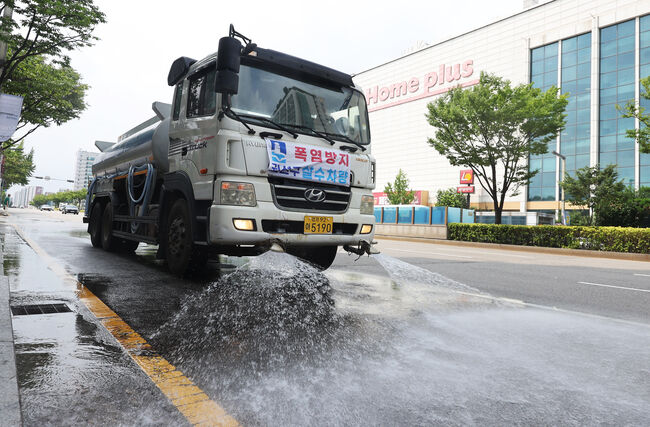
On the 28th, as the heatwave continues, a water sprinkler truck sprays water on Hyowon-ro, Gwonseon-gu, Suwon, Gyeonggi Province. [Photo = Yonhap News]The hottest years on record are considered to be
The Korean Peninsula wrapped in a thick blanket of scorching high pressure… Will the 1994 record be broken?
On the 28th, as the heatwave continues, a water sprinkler truck sprays water on Hyowon-ro, Gwonseon-gu, Suwon, Gyeonggi Province. [Photo = Yonhap News]The hottest years on record are considered to be
 Stock Market Crash 'Black Tuesday'… KOSPI down 10.8%, KOSDAQ down 7.7%
The KOSPI fell by more than 5% in early trading on the 28th, triggering a sell-side sidecar.On the 28th, the KOSPI plunged by more than 10%.Due to the sharp decline, a sell-side sidecar—a temporary
Stock Market Crash 'Black Tuesday'… KOSPI down 10.8%, KOSDAQ down 7.7%
The KOSPI fell by more than 5% in early trading on the 28th, triggering a sell-side sidecar.On the 28th, the KOSPI plunged by more than 10%.Due to the sharp decline, a sell-side sidecar—a temporary
 [World Heritage Committee] 25 New World Heritage Sites Inscribed in Busan… South Korea Successfully Expands 'Getbol' Listing
The Chairperson of the World Heritage Committee speaks at the plenary session of the 48th session of the World Heritage Committee, held at BEXCO in Busan on the 20th. [Photo: Yonhap News]A total of 25
[World Heritage Committee] 25 New World Heritage Sites Inscribed in Busan… South Korea Successfully Expands 'Getbol' Listing
The Chairperson of the World Heritage Committee speaks at the plenary session of the 48th session of the World Heritage Committee, held at BEXCO in Busan on the 20th. [Photo: Yonhap News]A total of 25
 [Cho Yang-geon Column] The NEC: Facing a Fate of "Discarding the Dog After the Hunt"
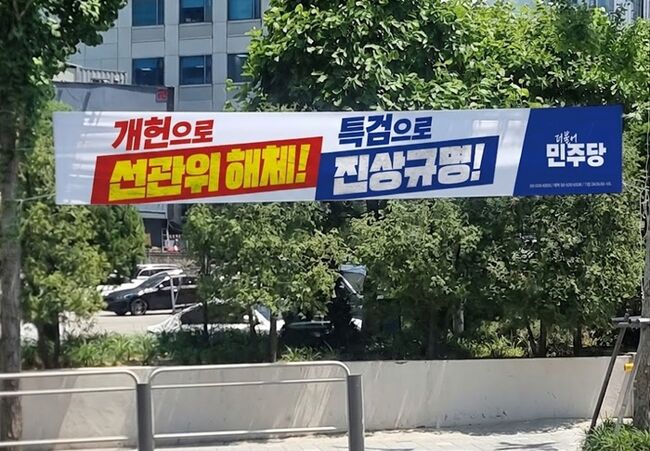
Banner calling for the "dissolution of the NEC" posted by the Democratic Party. [AI-generated image]Banners calling for the "dissolution of the National Election Commission (NEC)" posted by the Democr
[Cho Yang-geon Column] The NEC: Facing a Fate of "Discarding the Dog After the Hunt"
Banner calling for the "dissolution of the NEC" posted by the Democratic Party. [AI-generated image]Banners calling for the "dissolution of the National Election Commission (NEC)" posted by the Democr
 [Photo] Evidence of Election Fraud Flooding U.S. Media… Trump Had 2.7 Million Votes Stolen
 [Video] U.S. Semiquincentennial Air Show... 'Art in the Sky' streaks across New York
 [Editorial Cartoon] A Draconian Law That Undermines Freedom of Expression

 List
List