Judiciary Committee refers Criminal Procedure Act amendment to Bill Mediation Committee [Seoul=Yonhap News]
As the National Assembly nears the passage of an amendment to the Criminal Procedure Act that would completely abolish the prosecution's authority for supplementary investigations, the legal community is voicing significant concerns over potential gaps in investigative capabilities.
Despite concerns from civil society, the amendment, which is being pushed forcefully by the Democratic Party of Korea, passed the plenary session of the Legislation and Judiciary Committee on the 29th and is expected to be presented to the National Assembly plenary session on the 30th. With the People Power Party announcing a filibuster (a legal obstruction of proceedings through unlimited debate) in opposition, the bill is expected to pass the National Assembly around the 31st.
According to the legal community, the most contentious aspect of this amendment is the provision expanding the scope for dismissing indictments.
Article 327 of the current Criminal Procedure Act mandates that a court must dismiss an indictment under the following conditions: ▲ when the court lacks jurisdiction over the defendant; ▲ when the indictment procedure violates legal regulations and is invalid; ▲ when a new indictment is filed for a case already under indictment; or ▲ when a complaint is withdrawn in a case that requires a formal complaint for indictment.
However, the new amendment adds "when an indictment is filed based on a severely illegal investigation" and "when an indictment is filed in significant deviation from prosecutorial discretion" as grounds for dismissal. This significantly broadens the scope for courts to issue dismissal rulings.
It is reported that these provisions, which were not in the original draft, were included in the amendment passed by the Legislation and Judiciary Committee's No. 1 Bill Review Subcommittee late the previous night.
The legal community responded that the criteria for "severely illegal investigation" are unclear, and that it is impossible to distinguish "abuse of prosecutorial discretion" from "abuse of the right to prosecute."
The Supreme Prosecutors' Office also stated, "Dismissal of an indictment is an exceptional mechanism that terminates criminal proceedings without determining the merits of the case," adding that "there is a high probability that whether to dismiss an indictment will depend on the interpretation of the court, which risks undermining predictability and legal stability."
Some in political circles have raised suspicions that this move is aimed at the trial of President Lee Jae-myung.
Independent lawmaker Han Dong-hoon claimed on Facebook, "Since an acquittal in the North Korea money transfer bribery case is unlikely and withdrawing the indictment is not feasible, the Democratic Party is unilaterally creating a new 'indictment dismissal law' to pressure the court and force a dismissal ruling." He argued, "To avoid prison after his term, President Lee's Plan A is to withdraw the indictment, Plan B is a constitutional amendment for consecutive terms, and Plan C is indictment dismissal."
People Power Party lawmaker Joo Jin-woo also wrote on Facebook, "The Democratic Party has simply codified its claims of 'manipulated investigation and manipulated indictment' regarding President Lee Jae-myung's case," adding, "Realizing that a special counsel for indictment withdrawal is difficult, they have created a detour for the court to dismiss the indictment."
The amendment also establishes a new "factual verification" clause that allows prosecutors, in lieu of conducting supplementary investigations, to hear opinions from suspects or related parties or receive documents such as opinion statements.
However, it stipulates that any statements or materials obtained during this factual verification process cannot be used as evidence in court.
The Democratic Party plans to amend individual laws regarding seven major crimes—child abuse, domestic violence, sex crimes, child sex crimes, stalking, disability abuse, and elderly abuse—to allow for the mandatory transfer of all such cases to the prosecution.
This "total case transfer" system requires that all cases investigated by primary investigative agencies like the police be sent to the prosecution without exception for one final judicial review by a prosecutor.
Legal experts argue that the amendment creates a structure that relies on the good intentions of the police, noting that even if implemented, it would remain difficult to uncover the truth in cases like the Jang Yoon-ki incident, where the primary investigative agency intentionally suppressed evidence.
Most importantly, they anticipate that starting in October, the surge in requests for supplementary investigations will significantly increase the workload of primary investigative agencies and lead to delays in case processing.
Park Chan-woon, a professor at Hanyang University Law School who served as the advisory committee chair for the Prosecution Reform Promotion Group under the Prime Minister's Office, wrote on Facebook, "The aftereffects will begin to emerge in the field one by one starting this autumn or thereafter," mentioning "problems in case processing where decisions on indictment must be based solely on records, delays in investigation and difficulties in uncovering the truth caused by relying only on requests for supplementary investigations, and the plight of victims who have nowhere to voice their grievances to the prosecution."
Attorney Yang Hong-seok, who also served as an advisory member, predicted, "Prosecution business will be effectively paralyzed from October to the end of the year, excluding detention and warrant cases. A significant number of current cases will have to be returned via requests for supplementary investigation," adding, "The police will be horrified by the tsunami of cases (requests for supplementary investigation) due to a lack of systems."
 [Yonhap News File Photo]
Furthermore, he expressed concern that the Serious Crimes Investigation Agency would likely remain in a state of paralysis due to political conflict during the appointment process of its head.
Attorney Yang said, "A hallmark of the Lee Jae-myung administration was the active use of joint investigation teams between the prosecution and police. Now, joint investigations are impossible, and while they may try to rely on cooperation, it is unlikely to work better than before," adding, "The void created by the ambiguity of authority and responsibility will lead to diminished investigative capacity, and chaos is inevitable until the end of the year."
The Supreme Prosecutors' Office also released an explanatory document in Q&A format that day, stating that there are limits to discovering substantive truth if prosecutors are prohibited from conducting direct supplementary investigations.
"In particular, the credibility of statements can only be clearly verified when a prosecutor directly interviews those involved in the case," the Supreme Prosecutors' Office stated. "While the primary investigative agency, the police, and the final adjudicator, the court, can verify the truth of statements face-to-face, it creates an irrational result where only the prosecutor, who decides whether to indict, must rely on written records."
Regarding the factual verification system, it added, "Even if a prosecutor listens to the accuser's statement, it cannot be used as evidence, so the accuser must return to the police to provide the same statement again," noting "concerns about delays in case processing and human rights violations."
Within the prosecution, there is also concern that making prosecutors responsible for managing whether supplementary investigations are implemented will act as a burden.
The concern is that even after requesting a supplementary investigation from the police, the prosecutor must maintain the case number in the system and continue to manage it, yet they have no authority to verify the case and are only left with responsibility for unresolved cases.
 [Yonhap News File Photo]
There is also criticism that limiting the "total case transfer" to the seven major crimes is excessively restrictive.
Kim Han-kyun, Vice President of the Korean Institute of Criminology and Justice, asked at an emergency discussion on the abolition of supplementary investigation authority held at the National Assembly that day, "Are common crimes affecting the public and vulnerable groups not things like assault and fraud?" He added, "Even if seven major crimes are sent to the prosecutor, the prosecutor has no authority to supplement the investigation. Can they really examine these cases and protect the victims?"
He further criticized, "Because they are so obsessed with abolishing supplementary investigation authority, they are stubbornly claiming it is a reform for the people, even though it offers no help to the public from their perspective."
Previously, attorney Kim Ye-won, head of the Disability Rights Law Center, also criticized the move, saying, "Creating new investigative agencies and specialized organizations, amending various individual laws, connecting specialized judicial police computer systems, and restructuring case transfer protocols between agencies require enormous time, budget, and personnel." She added, "There is no explanation of how they will prevent the resulting investigative gaps, case delays, and infringement on citizens' rights."
The legal community believes that if the prosecutor's supplementary investigation authority is to be abolished, "total case transfer" for all crimes should at least be introduced as an alternative.
The Supreme Prosecutors' Office stated, "If supplementary investigation authority is abolished, the only way to check police investigations is to strengthen a 'permanent oversight system at the case-closing stage'." They concluded, "For the vast majority of cases closed through voluntary investigation without a warrant, the only means to filter out shoddy investigations is the prosecutor's ex-post review of records."

 [Statement by the Seo-beo-kka Korea Military Academy Save-the-Nation Comrades Association] ㉛ Recount the Votes Publicly, as the Previous Recount Concealed Election Fraud
Tongyeong Mayoral Election Recount [Photo=Yonhap News]South Korea's liberal democracy is dying. The National Election Commission (NEC) and the judiciary, which have plummeted into criminal syndicates
[Statement by the Seo-beo-kka Korea Military Academy Save-the-Nation Comrades Association] ㉛ Recount the Votes Publicly, as the Previous Recount Concealed Election Fraud
Tongyeong Mayoral Election Recount [Photo=Yonhap News]South Korea's liberal democracy is dying. The National Election Commission (NEC) and the judiciary, which have plummeted into criminal syndicates
 [Full Translation] President Trump’s Commemorative Address on the Anniversary of the Korean War Armistice
Presidential Message on National Korean War Veterans Armistice DayToday, our nation marks the 82nd anniversary of the liberation of Guam by U.S. forces. This day commemorates when the United States br
[Full Translation] President Trump’s Commemorative Address on the Anniversary of the Korean War Armistice
Presidential Message on National Korean War Veterans Armistice DayToday, our nation marks the 82nd anniversary of the liberation of Guam by U.S. forces. This day commemorates when the United States br
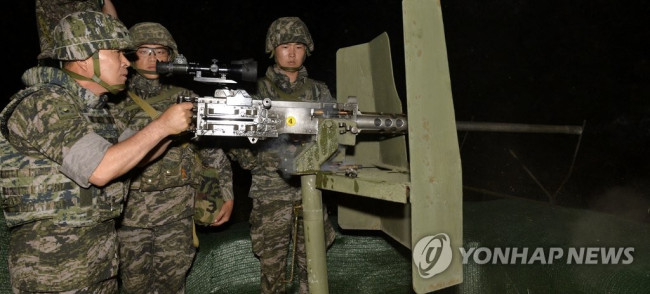 1st Corps conducted GP guard operations without live ammunition for heavy machine guns… JCS says it "was unaware"
K-6 Heavy Machine Gun [Yonhap News file photo]The Army's 1st Corps, which oversees the western front, has been conducting guard operations at General Outposts (GOP) and front-line Guard Posts (GP) wit
1st Corps conducted GP guard operations without live ammunition for heavy machine guns… JCS says it "was unaware"
K-6 Heavy Machine Gun [Yonhap News file photo]The Army's 1st Corps, which oversees the western front, has been conducting guard operations at General Outposts (GOP) and front-line Guard Posts (GP) wit
 Joint Investigation Headquarters Secures NEC Data for 2025 Presidential Election and 2024 General Election
It has been determined that the search and seizure warrant executed by the joint investigation headquarters on the 23rd—covering the National Election Commission (NEC), local election commissions in
Joint Investigation Headquarters Secures NEC Data for 2025 Presidential Election and 2024 General Election
It has been determined that the search and seizure warrant executed by the joint investigation headquarters on the 23rd—covering the National Election Commission (NEC), local election commissions in
 No 'surprise rate hike' from the US Fed, but a 'hawkish hold'… 3 members in favor of a hike
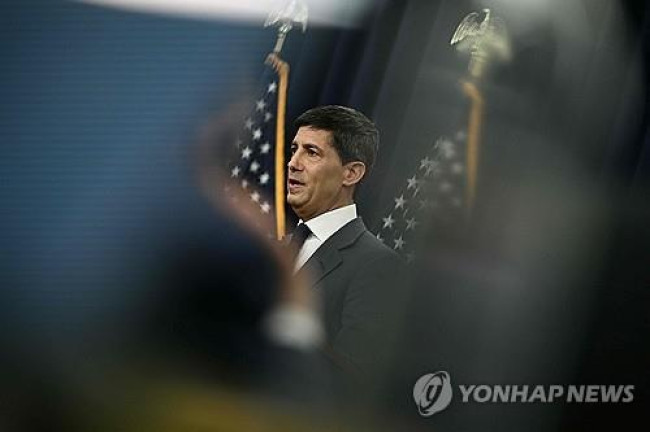
U.S. Federal Reserve Chair Kevin Warsh during a press conference [AFP=Yonhap News]The U.S. Federal Reserve (Fed) maintained its benchmark interest rate at 3.50–3.75% on the 29th (local time). Howeve
No 'surprise rate hike' from the US Fed, but a 'hawkish hold'… 3 members in favor of a hike
U.S. Federal Reserve Chair Kevin Warsh during a press conference [AFP=Yonhap News]The U.S. Federal Reserve (Fed) maintained its benchmark interest rate at 3.50–3.75% on the 29th (local time). Howeve
 Jogye Order faces internal turmoil ahead of the administrative chief election over allegations regarding Venerable Jinwoo's academic credentials and monastic registration.
Ven. Jinwoo, the current President of the Jogye Order. The Order is experiencing turmoil following recent allegations regarding his educational background and monastic credentials. [Photo=Yonhap News]
Jogye Order faces internal turmoil ahead of the administrative chief election over allegations regarding Venerable Jinwoo's academic credentials and monastic registration.
Ven. Jinwoo, the current President of the Jogye Order. The Order is experiencing turmoil following recent allegations regarding his educational background and monastic credentials. [Photo=Yonhap News]
 [Column by Writer Park Joo-hyun] “It’s All Because of Roh Moo-hyun”
Roh Moo-hyun (left) bowing his head, saying, "I am ashamed before the people. I am sorry for disappointing you." (April 2009). The first party to directly file a complaint with the Supreme Prosecutors
[Column by Writer Park Joo-hyun] “It’s All Because of Roh Moo-hyun”
Roh Moo-hyun (left) bowing his head, saying, "I am ashamed before the people. I am sorry for disappointing you." (April 2009). The first party to directly file a complaint with the Supreme Prosecutors
 [Photo] Evidence of Election Fraud Flooding U.S. Media… Trump Had 2.7 Million Votes Stolen
 [Video] U.S. Semiquincentennial Air Show... 'Art in the Sky' streaks across New York
 [Editorial Cartoon] A Draconian Law That Undermines Freedom of Expression

 List
List