Real estate gap investment [Yonhap News file photo]
A businessman who swindled approximately 67 billion won from 349 victims through a "no-capital" gap investment scheme has been handed a heavy sentence by the appellate court.
According to legal circles on the 30th, the Seoul Central District Court’s Criminal Appeals Division 9-3 (Presiding Judges Jung Hye-won, Choi Bo-won, and Hwangbo Seung-hyeok) sentenced Kim, the CEO of Company A, to 15 years in prison, upholding the original sentence from the first trial, on charges including organizing a criminal organization and fraud.
Two team-leader-level employees, who were indicted alongside him, were sentenced to 7 years and 4 months and 7 years in prison, respectively. In the first trial, both had been sentenced to 10 years in prison each.
Between March 2016 and January 2022, Kim and his associates were brought to trial for swindling 69.9 billion won in jeonse deposits from 349 people. They employed a "no-capital" gap investment strategy, in which they would purchase newly built villas at prices lower than the market value while simultaneously signing jeonse (lump-sum deposit) contracts at higher prices, using the deposit money to cover the purchase price.
Kim denied the charges, claiming, "I was engaged in a legitimate rental business, and the business only failed due to declining real estate prices and changes in government policy; I did not deceive the tenants."
The other two defendants also pleaded not guilty, arguing that they did not conspire with Kim for illegal purposes.
The first trial court pointed out, "In the 'simultaneous transaction' business structure chosen by Kim and his associates, the inability to return deposits is structurally inevitable once the influx of new tenants is cut off."
Furthermore, the court determined that when signing the jeonse contracts, Kim failed to provide proper information to tenants, instead misleading them by saying things such as, "As a businessman who owns multiple properties, there will be no issues with returning your deposit."
In reality, Kim refused to return deposits, telling tenants, "It is impossible unless a follow-up tenant comes in," "Pay more money and purchase the property yourself," or "Get your deposit back through an auction."
Based on this, the first trial recognized the charges as guilty, ruling that Kim had, at the very least, dolus eventualis (willful negligence) regarding the defrauding of deposits.
The court also found them guilty of organizing and participating in a criminal organization, ruling that Company A was established for the purpose of fraud and possessed a system capable of repeatedly carrying out such crimes.
On appeal, Kim again pleaded for innocence, arguing that "returning the deposits only became difficult due to subsequent changes in circumstances," but this was not accepted.
The appellate court stated, "The fact that deposit returns become impossible once the influx of new tenants is severed is an inherent risk that was already present at the business design stage," adding, "Strengthened tax regulations on multi-homeowners and fluctuations in the real estate market fall within the scope of foreseeable risks."
Considering the motive and scale of the crimes, the appellate court upheld the 15-year prison sentence for Kim.
However, the sentences for the other two defendants were reduced, taking into account that they had reached settlements with some of the victims during the appeal process.

 [Statement by the Seo-beo-kka Korea Military Academy Save-the-Nation Comrades Association] ㉛ Recount the Votes Publicly, as the Previous Recount Concealed Election Fraud
Tongyeong Mayoral Election Recount [Photo=Yonhap News]South Korea's liberal democracy is dying. The National Election Commission (NEC) and the judiciary, which have plummeted into criminal syndicates
[Statement by the Seo-beo-kka Korea Military Academy Save-the-Nation Comrades Association] ㉛ Recount the Votes Publicly, as the Previous Recount Concealed Election Fraud
Tongyeong Mayoral Election Recount [Photo=Yonhap News]South Korea's liberal democracy is dying. The National Election Commission (NEC) and the judiciary, which have plummeted into criminal syndicates
 [Full Translation] President Trump’s Commemorative Address on the Anniversary of the Korean War Armistice
Presidential Message on National Korean War Veterans Armistice DayToday, our nation marks the 82nd anniversary of the liberation of Guam by U.S. forces. This day commemorates when the United States br
[Full Translation] President Trump’s Commemorative Address on the Anniversary of the Korean War Armistice
Presidential Message on National Korean War Veterans Armistice DayToday, our nation marks the 82nd anniversary of the liberation of Guam by U.S. forces. This day commemorates when the United States br
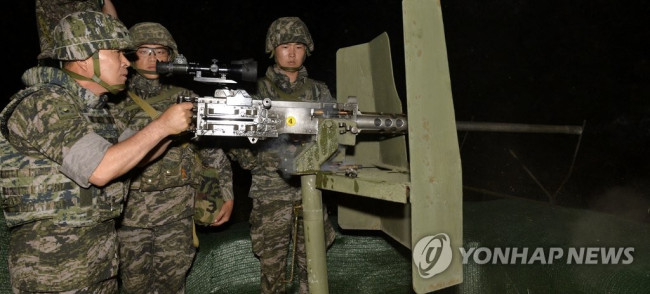 1st Corps conducted GP guard operations without live ammunition for heavy machine guns… JCS says it "was unaware"
K-6 Heavy Machine Gun [Yonhap News file photo]The Army's 1st Corps, which oversees the western front, has been conducting guard operations at General Outposts (GOP) and front-line Guard Posts (GP) wit
1st Corps conducted GP guard operations without live ammunition for heavy machine guns… JCS says it "was unaware"
K-6 Heavy Machine Gun [Yonhap News file photo]The Army's 1st Corps, which oversees the western front, has been conducting guard operations at General Outposts (GOP) and front-line Guard Posts (GP) wit
 Joint Investigation Headquarters Secures NEC Data for 2025 Presidential Election and 2024 General Election
It has been determined that the search and seizure warrant executed by the joint investigation headquarters on the 23rd—covering the National Election Commission (NEC), local election commissions in
Joint Investigation Headquarters Secures NEC Data for 2025 Presidential Election and 2024 General Election
It has been determined that the search and seizure warrant executed by the joint investigation headquarters on the 23rd—covering the National Election Commission (NEC), local election commissions in
 No 'surprise rate hike' from the US Fed, but a 'hawkish hold'… 3 members in favor of a hike
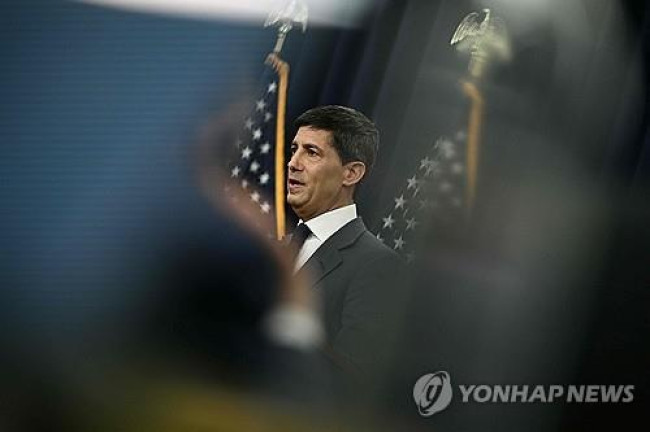
U.S. Federal Reserve Chair Kevin Warsh during a press conference [AFP=Yonhap News]The U.S. Federal Reserve (Fed) maintained its benchmark interest rate at 3.50–3.75% on the 29th (local time). Howeve
No 'surprise rate hike' from the US Fed, but a 'hawkish hold'… 3 members in favor of a hike
U.S. Federal Reserve Chair Kevin Warsh during a press conference [AFP=Yonhap News]The U.S. Federal Reserve (Fed) maintained its benchmark interest rate at 3.50–3.75% on the 29th (local time). Howeve
 Jogye Order faces internal turmoil ahead of the administrative chief election over allegations regarding Venerable Jinwoo's academic credentials and monastic registration.
Ven. Jinwoo, the current President of the Jogye Order. The Order is experiencing turmoil following recent allegations regarding his educational background and monastic credentials. [Photo=Yonhap News]
Jogye Order faces internal turmoil ahead of the administrative chief election over allegations regarding Venerable Jinwoo's academic credentials and monastic registration.
Ven. Jinwoo, the current President of the Jogye Order. The Order is experiencing turmoil following recent allegations regarding his educational background and monastic credentials. [Photo=Yonhap News]
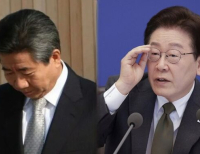
 [Column by Writer Park Joo-hyun] “It’s All Because of Roh Moo-hyun”
Roh Moo-hyun (left) bowing his head, saying, "I am ashamed before the people. I am sorry for disappointing you." (April 2009). The first party to directly file a complaint with the Supreme Prosecutors
[Column by Writer Park Joo-hyun] “It’s All Because of Roh Moo-hyun”
Roh Moo-hyun (left) bowing his head, saying, "I am ashamed before the people. I am sorry for disappointing you." (April 2009). The first party to directly file a complaint with the Supreme Prosecutors
 [Photo] Evidence of Election Fraud Flooding U.S. Media… Trump Had 2.7 Million Votes Stolen
 [Video] U.S. Semiquincentennial Air Show... 'Art in the Sky' streaks across New York
 [Editorial Cartoon] A Draconian Law That Undermines Freedom of Expression

 List
List