- "One of the most important events... If we don't win, America will become poor again."
- The federal Supreme Court's decision on whether to abolish reciprocal tariffs seems to be a strategic move to apply pressure.
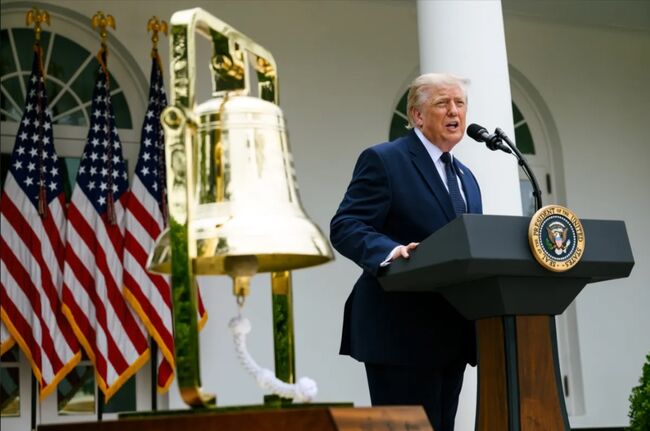
 President Donald Trump. EPA=Yonhap News.
U.S. President Donald Trump warned on the 3rd (local time) that if the administration loses a reciprocal tariff lawsuit, trade agreements the U.S. has made with countries like South Korea could be nullified.
Speaking at a meeting with the President of Poland at the White House on the same day, President Trump said, "I think this is one of the most important Supreme Court cases the U.S. has ever seen."
He added, "Our country has an opportunity to become incredibly wealthy again, but if we don't win that case, we could become incredibly poor again. However, I think we're going to win big," he stated.
Earlier, on the 29th of last month, the appellate court ruled that the International Emergency Economic Powers Act (IEEPA), which President Trump used as a basis for imposing reciprocal tariffs, grants the President the authority to regulate imports but does not include the authority to impose tariffs through executive order.
The court suspended the ruling's effect until October 14th to allow the administration to appeal to the Supreme Court, and the Trump administration plans to appeal to the Supreme Court.
President Trump had emphasized that other countries had taken advantage of the U.S. in trade, but tariffs allowed them to respond, making it important to win the case in the Supreme Court.
He said, "We've now made deals where the European Union is giving us almost a trillion dollars. All these deals are done. I suspect we're going to have to unwind them (if we lose the case). We've made deals with Japan, Korea, many countries, and we're going to make deals with others."
In a statement filed with the court on the 29th of last month, the Trump administration also argued that failure to impose reciprocal tariffs would disrupt trade negotiations with other countries and make it difficult to prevent delays in negotiations or retaliatory tariffs from those countries.
President Trump's remarks on this day are interpreted as emphasizing that trade agreements with various countries are based on the imposition of reciprocal tariffs. President Trump has been applying differentiated tariff rates by country under the name of "reciprocal tariffs," citing reasons such as resolving the U.S. trade deficit.
The argument is that if the reciprocal tariffs, which are the basis for the agreements, are invalidated by a court decision, the trade agreements with each country could also be invalidated, which would be detrimental to U.S. national interests, as these agreements were reached in exchange for reducing reciprocal tariff rates set for each country.
Ultimately, this can be seen as an attempt to pressure the Supreme Court, which holds the final decision-making authority on whether reciprocal tariffs will be abolished.
Earlier, on July 30th, South Korea reached an agreement with the U.S. to reduce the reciprocal tariff rate imposed by the U.S. on South Korea from the existing 25% to 15%, in exchange for South Korea's commitment to invest $350 billion (approximately 486 trillion won) in the U.S. and purchase $100 billion worth of U.S. energy.
Yonhap News
What do you think of this article?

 Trump pressures for rate cut again ahead of FOMC... "Should be the lowest in the world"
U.S. President Donald Trump. [Photo = The White House] U.S. President Donald Trump once again pressured the Federal Reserve, the U.S. central bank, to lower interest rates on the 27th (local time
Trump pressures for rate cut again ahead of FOMC... "Should be the lowest in the world"
U.S. President Donald Trump. [Photo = The White House] U.S. President Donald Trump once again pressured the Federal Reserve, the U.S. central bank, to lower interest rates on the 27th (local time
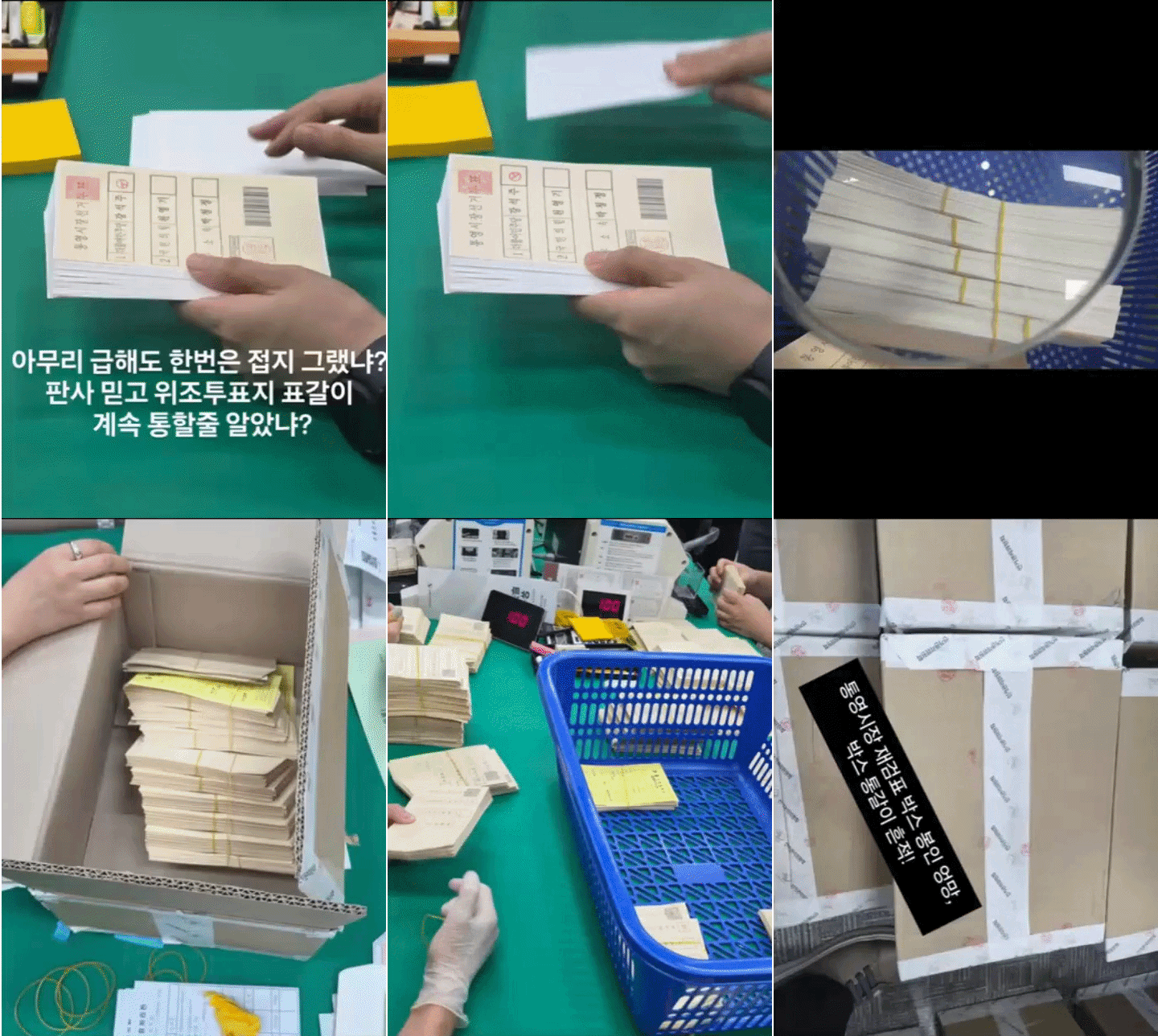 “Ignoring crisp ballots and damaged seals”… Tongyeong mayoral recount concludes with ‘no change in outcome,’ leaving suspicions and public outrage behind
Suspected counterfeit ballots discovered in Tongyeong [GIF from social media of Representative Hwang Kyo-ahn / Attorney Park Joo-hyun]During a recount of the Tongyeong mayoral election in South Gyeong
“Ignoring crisp ballots and damaged seals”… Tongyeong mayoral recount concludes with ‘no change in outcome,’ leaving suspicions and public outrage behind
Suspected counterfeit ballots discovered in Tongyeong [GIF from social media of Representative Hwang Kyo-ahn / Attorney Park Joo-hyun]During a recount of the Tongyeong mayoral election in South Gyeong
 President Yoon, regarding the first-instance ruling on the Public Official Election Act: “An excessive political verdict that distorts the facts… We will appeal immediately.”
The first-instance sentencing hearing for President Yoon Suk Yeol regarding violations of the Public Official Election Act is being broadcast live at Seoul Station on the 27th. [Photo=Yonhap News]Pres
President Yoon, regarding the first-instance ruling on the Public Official Election Act: “An excessive political verdict that distorts the facts… We will appeal immediately.”
The first-instance sentencing hearing for President Yoon Suk Yeol regarding violations of the Public Official Election Act is being broadcast live at Seoul Station on the 27th. [Photo=Yonhap News]Pres
 WSJ: "SK Hynix ADR Premium Is a Sign of AI Trading Overheat"
Advertisement for SK Hynix ADR listing in New York's Times Square [Reuters=Yonhap News file photo]The Wall Street Journal (WSJ) has pointed out that the price of SK Hynix’s American Depositary Recei
WSJ: "SK Hynix ADR Premium Is a Sign of AI Trading Overheat"
Advertisement for SK Hynix ADR listing in New York's Times Square [Reuters=Yonhap News file photo]The Wall Street Journal (WSJ) has pointed out that the price of SK Hynix’s American Depositary Recei
 'Godfather of Japanese Mystery Novels' Keigo Higashino Passes Away After Battle with Cancer at 68
Famous Japanese mystery novelist Keigo Higashino [AFP=Yonhap News]It has been belatedly reported that Keigo Higashino, the "godfather of Japanese mystery novels" and author of bestsellers such as "The
'Godfather of Japanese Mystery Novels' Keigo Higashino Passes Away After Battle with Cancer at 68
Famous Japanese mystery novelist Keigo Higashino [AFP=Yonhap News]It has been belatedly reported that Keigo Higashino, the "godfather of Japanese mystery novels" and author of bestsellers such as "The
 [Park Pil-kyu Security Column] To the Ignorant Trying to Clothe a Beast in Sheep's Clothing
Rep. Kim Byung-joo of the Democratic Party of Korea [Photo=Yonhap News]“The Air Force Academy doesn't teach you how to fly a plane!” “The Army, Navy, and Air Force academies are exactly the
[Park Pil-kyu Security Column] To the Ignorant Trying to Clothe a Beast in Sheep's Clothing
Rep. Kim Byung-joo of the Democratic Party of Korea [Photo=Yonhap News]“The Air Force Academy doesn't teach you how to fly a plane!” “The Army, Navy, and Air Force academies are exactly the
 [Issue Diagnosis] Two Effects of the Election Petition Review
 [Photo] Evidence of Election Fraud Flooding U.S. Media… Trump Had 2.7 Million Votes Stolen
 [Video] U.S. Semiquincentennial Air Show... 'Art in the Sky' streaks across New York
 [Editorial Cartoon] A Draconian Law That Undermines Freedom of Expression

 List
List