EU flag. Reuters Yonhap News.
The European Union (EU) is facing deep deliberation as U.S. President Donald Trump has demanded that Europe strengthen its sanctions as a prerequisite for the United States to impose its own sanctions on Russia.
At a regular briefing on the 15th (local time), Paula Pinho, a lead spokesperson for the European Commission, responded to a question regarding the demand by stating in principle, "Phasing out imports of Russian fossil fuels is something we have been doing under a very clear plan for years, ever since the start of the war in Ukraine."
When asked by a reporter whether President Trump was demanding secondary tariffs rather than a phased-out approach, deputy spokesperson Olof Gill, who was present at the briefing, sidestepped the question, stating, "I will only explain the work we are currently conducting, not the social media posts of the U.S. President."
He added, "We will soon prepare the 19th sanctions package," and noted that they would coordinate with partner countries, including the United States.
The previous day, President Trump stated regarding Russia, "I am willing to impose sanctions," but added, "While I am ready to impose sanctions, Europe must also strengthen its own sanctions to correspond with the measures I take."
He also pointed out that the U.S. should not be expected to impose strong sanctions as long as Europe continues to purchase Russian crude oil.
A day earlier, on the 13th, he claimed on the social media platform Truth Social: "When all NATO member states agree to sanctions on Russia, begin them, and stop purchasing Russian crude oil, the United States will be ready to implement powerful sanctions against Russia."
Furthermore, he also mentioned the need for all NATO member states to impose tariffs of 50–100% on China.
Taken at face value, there is room to interpret President Trump's stance on Russia as having become more hardline.
While there is hope that this may pressure pro-Russian countries like Hungary and Slovakia—which have opposed the EU's plan to phase out Russian fossil fuels and have resisted sanctions against Russia—there is also a palpable sense of unease.
In particular, some counter that the conditions set by Trump—requiring "all NATO member states" to stop importing Russian oil and impose secondary tariffs on China—are near-impossible, given that some NATO members are not part of the EU.
Turkey, a NATO member, is not an EU member and is a major purchaser of Russian oil. This means the EU cannot force it to stop imports.
The European media outlet EUobserver noted, "Europe has the experience of President Trump making 'conditional threats' without actually following through."
The outlet analyzed, "President Trump may be tying U.S. sanctions to near-impossible conditions to delay stronger action," adding, "If the NATO alliance wastes months debating oil imports and tariffs on China instead of sanctions on Russia, Russia will ultimately gain time and continue to receive revenue."
The EU remains cautious about imposing secondary sanctions on China and other nations.
In June 2023, as part of the 11th sanctions package against Russia, the EU created an "Anti-Circumvention Tool" that could prohibit the export, supply, or transfer of certain European goods to third countries deemed to be aiding Russia in evading sanctions, but it has never been used.
When asked why the anti-circumvention tool has not been used against China, spokesperson Pinho said, "We have judged that it is not yet an appropriate instrument because there are other means that can be utilized effectively," adding, "When we judge that the time is appropriate, it will be used accordingly."
Yonhap News

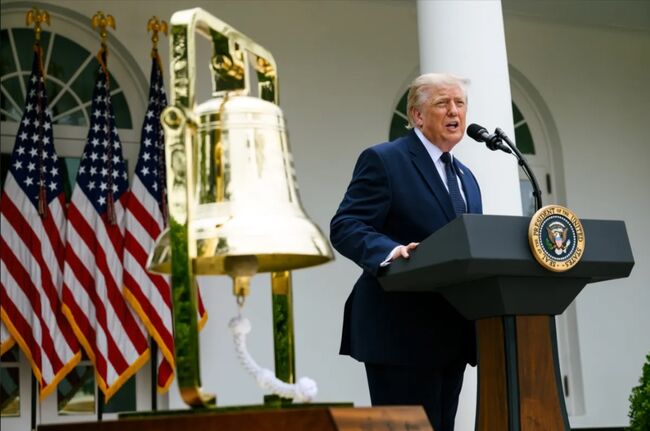 Trump pressures for rate cut again ahead of FOMC... "Should be the lowest in the world"
U.S. President Donald Trump. [Photo = The White House] U.S. President Donald Trump once again pressured the Federal Reserve, the U.S. central bank, to lower interest rates on the 27th (local time
Trump pressures for rate cut again ahead of FOMC... "Should be the lowest in the world"
U.S. President Donald Trump. [Photo = The White House] U.S. President Donald Trump once again pressured the Federal Reserve, the U.S. central bank, to lower interest rates on the 27th (local time
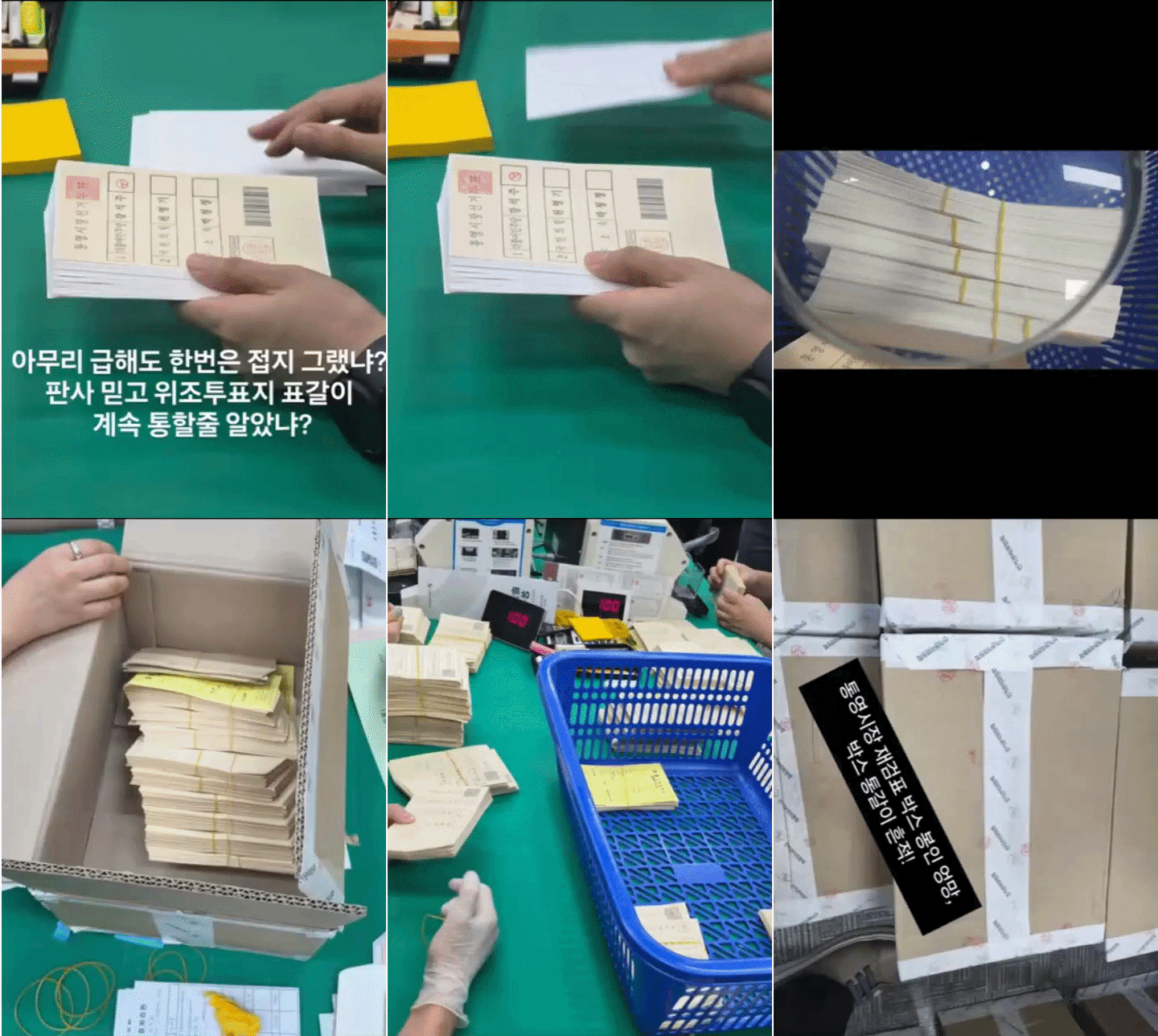 “Ignoring crisp ballots and damaged seals”… Tongyeong mayoral recount concludes with ‘no change in outcome,’ leaving suspicions and public outrage behind
Suspected counterfeit ballots discovered in Tongyeong [GIF from social media of Representative Hwang Kyo-ahn / Attorney Park Joo-hyun]During a recount of the Tongyeong mayoral election in South Gyeong
“Ignoring crisp ballots and damaged seals”… Tongyeong mayoral recount concludes with ‘no change in outcome,’ leaving suspicions and public outrage behind
Suspected counterfeit ballots discovered in Tongyeong [GIF from social media of Representative Hwang Kyo-ahn / Attorney Park Joo-hyun]During a recount of the Tongyeong mayoral election in South Gyeong
 President Yoon, regarding the first-instance ruling on the Public Official Election Act: “An excessive political verdict that distorts the facts… We will appeal immediately.”
The first-instance sentencing hearing for President Yoon Suk Yeol regarding violations of the Public Official Election Act is being broadcast live at Seoul Station on the 27th. [Photo=Yonhap News]Pres
President Yoon, regarding the first-instance ruling on the Public Official Election Act: “An excessive political verdict that distorts the facts… We will appeal immediately.”
The first-instance sentencing hearing for President Yoon Suk Yeol regarding violations of the Public Official Election Act is being broadcast live at Seoul Station on the 27th. [Photo=Yonhap News]Pres
 WSJ: "SK Hynix ADR Premium Is a Sign of AI Trading Overheat"
Advertisement for SK Hynix ADR listing in New York's Times Square [Reuters=Yonhap News file photo]The Wall Street Journal (WSJ) has pointed out that the price of SK Hynix’s American Depositary Recei
WSJ: "SK Hynix ADR Premium Is a Sign of AI Trading Overheat"
Advertisement for SK Hynix ADR listing in New York's Times Square [Reuters=Yonhap News file photo]The Wall Street Journal (WSJ) has pointed out that the price of SK Hynix’s American Depositary Recei
 'Godfather of Japanese Mystery Novels' Keigo Higashino Passes Away After Battle with Cancer at 68
Famous Japanese mystery novelist Keigo Higashino [AFP=Yonhap News]It has been belatedly reported that Keigo Higashino, the "godfather of Japanese mystery novels" and author of bestsellers such as "The
'Godfather of Japanese Mystery Novels' Keigo Higashino Passes Away After Battle with Cancer at 68
Famous Japanese mystery novelist Keigo Higashino [AFP=Yonhap News]It has been belatedly reported that Keigo Higashino, the "godfather of Japanese mystery novels" and author of bestsellers such as "The
 [Park Pil-kyu Security Column] To the Ignorant Trying to Clothe a Beast in Sheep's Clothing
Rep. Kim Byung-joo of the Democratic Party of Korea [Photo=Yonhap News]“The Air Force Academy doesn't teach you how to fly a plane!” “The Army, Navy, and Air Force academies are exactly the
[Park Pil-kyu Security Column] To the Ignorant Trying to Clothe a Beast in Sheep's Clothing
Rep. Kim Byung-joo of the Democratic Party of Korea [Photo=Yonhap News]“The Air Force Academy doesn't teach you how to fly a plane!” “The Army, Navy, and Air Force academies are exactly the
 [Issue Diagnosis] Two Effects of the Election Petition Review
 [Photo] Evidence of Election Fraud Flooding U.S. Media… Trump Had 2.7 Million Votes Stolen
 [Video] U.S. Semiquincentennial Air Show... 'Art in the Sky' streaks across New York
 [Editorial Cartoon] A Draconian Law That Undermines Freedom of Expression

 List
List