 Oh Jeong-geun, Director of the Free Market Research Institute & Chairman of the Korea Financial ICT Convergence Association As South Korea-U.S. tariff negotiations have reached an impasse, reports indicate that South Korea has requested a perpetual, unlimited currency swap agreement from the U.S., similar to the one with Japan. However, the U.S. has reportedly rejected this request for now, making its veracity a point of attention. If these reports are true, it is necessary for our readers to broaden their understanding of currency swaps between South Korea and the U.S. As of the end of the first quarter of this year, South Korea's foreign exchange reserves stood at $411 billion. In this context, it is practically impossible for South Korea to deposit $350 billion (85% of its foreign exchange reserves) as demanded by the U.S. into an account designated by the U.S., in the Japanese style. Japan has agreed to invest $550 billion in the U.S. As of the end of July this year, Japan's foreign exchange reserves were $1.3 trillion. The agreed-upon investment of $550 billion represents 42% of its foreign exchange reserves.
To make matters worse, South Korea is a country with substantial foreign debt. As of the end of the second quarter of this year, its foreign debt amounted to $735.6 billion. Of this, $167.1 billion is short-term foreign debt that must be repaid within one year. Even among the long-term foreign debt of $568.5 billion, a portion matures within a year, making the total short-term and maturing debt, referred to as liquid foreign debt, estimated at around $300 billion. This amount needs to be constantly prepared for. In addition, South Korea imports all of its annual crude oil needs, approximately $100 billion, and its total annual imports are projected to be around $638 billion by 2025, according to the Bank of Korea. The IMF requires countries to hold foreign exchange equivalent to 25% of their current account imports to ensure smooth current account transactions. In this situation, if South Korea pays the $350 billion demanded by the U.S. from its foreign exchange reserves of only $411 billion as of the end of the first quarter, it will immediately face a foreign exchange crisis due to insufficient reserves.
The memorandum of understanding signed by Japan and the U.S. on the 4th, outlining a "method of investing $550 billion (approximately 765 trillion won) in the U.S.," is truly astonishing. According to reports, the period for executing Japan's financial investment is set to end on January 19, 2029, the day President Trump's term expires. A future investment committee will recommend investment projects, and Trump will make the final decision. The U.S. Secretary of Commerce will chair the committee, which will consist solely of U.S. personnel. Representatives for each project will also be individuals appointed by the U.S. Once President Trump selects a project, Japan must deposit the dollars into the designated account.
The memorandum of understanding does not mention the method of Japan's fundraising. Nikkei reported that "it is likely to involve the Japan Bank for International Cooperation (JBIC) or Nippon Export and Investment Insurance (NEXI) providing equity investment or loans, or offering loan guarantees to private companies," and that "the U.S. project investment funds will be structured to be repaid with principal plus interest." Profit distribution from investments occurs in two phases. Until Japan recovers its principal investment, both the U.S. and Japan will receive 50% each. Afterward, the U.S. will receive 90%. Even if a project is highly successful, Japan's profits will be limited.
Nikkei stated that "if Japan refuses to provide financial investment, the U.S. could again raise reciprocal tariffs or automobile tariffs." However, a clause was added stating that "the U.S. does not intend to raise tariffs as long as Japan faithfully fulfills the memorandum and does not delay in providing the investment amount." This is an unprecedented memorandum of understanding between nations that is difficult to imagine among capitalist allies.
There are significant concerns that a similar arrangement might be applied to South Korea, which has also promised to invest $350 billion (approximately 487 trillion won) in the U.S. However, given South Korea's limited foreign exchange reserves and substantial foreign debt, with approximately $300 billion in repayments due annually, such an arrangement is unmanageable. It is incomprehensible how such terms were agreed upon as negotiations. It is indeed puzzling whether the South Korean negotiating team considered South Korea's dire foreign exchange situation. Perhaps the South Korean delegation promised $350 billion, taking into account the investment scale of companies already investing or planning to invest in the U.S. However, it is increasingly becoming clear that beyond corporate investments, the U.S. is demanding that South Korea deposit $350 billion into an account designated by the U.S., a demand that is virtually impossible for South Korea to accept due to its foreign exchange situation. It is so dire that even American scholars are arguing that it would be better to support companies affected by tariffs than to agree to this.
In this context, the concept of a perpetual, unlimited currency swap between South Korea and the U.S. has emerged. Currency swap agreements between countries involve the two nations exchanging their respective currencies. The most prominent example is the currency swap agreement between the U.S. Federal Reserve (FRB) and various central banks. The U.S. uses the foreign currency obtained this way to intervene in the foreign exchange market and stabilize the dollar's exchange rate, while the partner country also uses these dollars to stabilize its own exchange rate.
The U.S. has established perpetual, unlimited currency swap agreements with five major global reserve currency countries: the Eurozone, the United Kingdom, Switzerland, Canada, and Japan. Therefore, these countries can receive U.S. dollars whenever needed, in exchange for supplying their own currencies, allowing them to manage their economies without fear of foreign exchange crises. In essence, they are the currency allies most trusted by the U.S.
While South Korea has entered into currency swap agreements with the U.S. twice, it has not yet reached that level. On October 30, 2008, amid financial market instability due to the impact of the global financial crisis, South Korea signed a $30 billion currency swap agreement with the U.S. This agreement provided the Bank of Korea with a line of credit to receive up to $30 billion in U.S. dollars from the Federal Reserve in exchange for Korean won. The contract was valid until April 30, 2009. However, since the dollar is a reserve currency and the won is a developing currency, they are not exchanged at a 1:1 ratio. More precisely, it is a loan of dollars obtained by providing won as collateral and paying a certain interest rate (determined at the time of the transaction). Upon the announcement of the $30 billion currency swap agreement, the won's value against the dollar rose by 177 won (12.4%) in a single day, and the KOSPI surged by 115 points (11.9%), demonstrating its impact. The 2008 currency swap, initially for six months, was extended twice and concluded after 15 months in February 2010. Thanks to this, South Korea successfully navigated the 2008 global financial crisis.
The second currency swap was signed in March 2020, as the global crisis intensified due to the spread of COVID-19. This currency swap agreement was for $60 billion and also had an immediate market stabilization effect. Although this swap was initially for six months, it was extended three times and expired in December 2021.
Amid reports that the government's request for the establishment of an 'unlimited currency swap' as a safeguard against foreign exchange market shocks is facing difficulties, South Korea has agreed to invest $350 billion, equivalent to 85% of its foreign exchange reserves, in the U.S. This difficulty arises because the U.S. holds a negative stance on establishing unlimited currency swap agreements with non-reserve currency countries. However, from South Korea's perspective, without such an arrangement, it is impossible to proceed with an investment that involves depositing $350 billion into an account designated by the U.S., where the success is uncertain and the U.S. has sole discretion over selection and operation. It is crucial to make the U.S. understand this situation.
Negotiations sometimes require a resolute stance. While always keeping the importance of the ROK-U.S. alliance in mind and emphasizing the blood alliance between the two nations, it is necessary to persistently argue that the revival of U.S. manufacturing is the core of MAGA, Trump's catchphrase, and that the investment of manufacturing powerhouse South Korea is essential for this. Therefore, South Korea should seize this opportunity to be included in the currency alliance. This could potentially be an occasion for the South Korean won to be upgraded to a quasi-reserve currency.

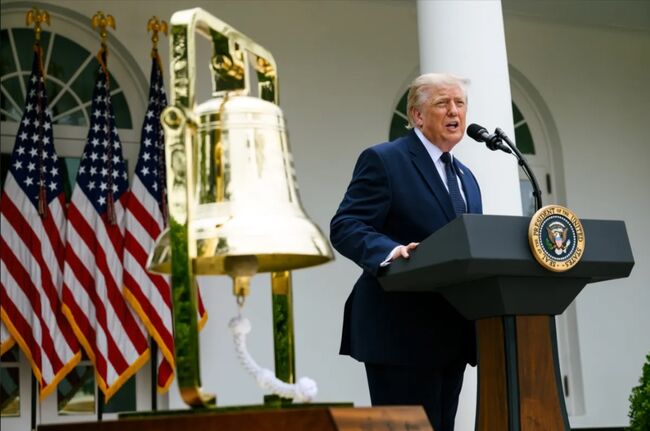 Trump pressures for rate cut again ahead of FOMC... "Should be the lowest in the world"
U.S. President Donald Trump. [Photo = The White House] U.S. President Donald Trump once again pressured the Federal Reserve, the U.S. central bank, to lower interest rates on the 27th (local time
Trump pressures for rate cut again ahead of FOMC... "Should be the lowest in the world"
U.S. President Donald Trump. [Photo = The White House] U.S. President Donald Trump once again pressured the Federal Reserve, the U.S. central bank, to lower interest rates on the 27th (local time
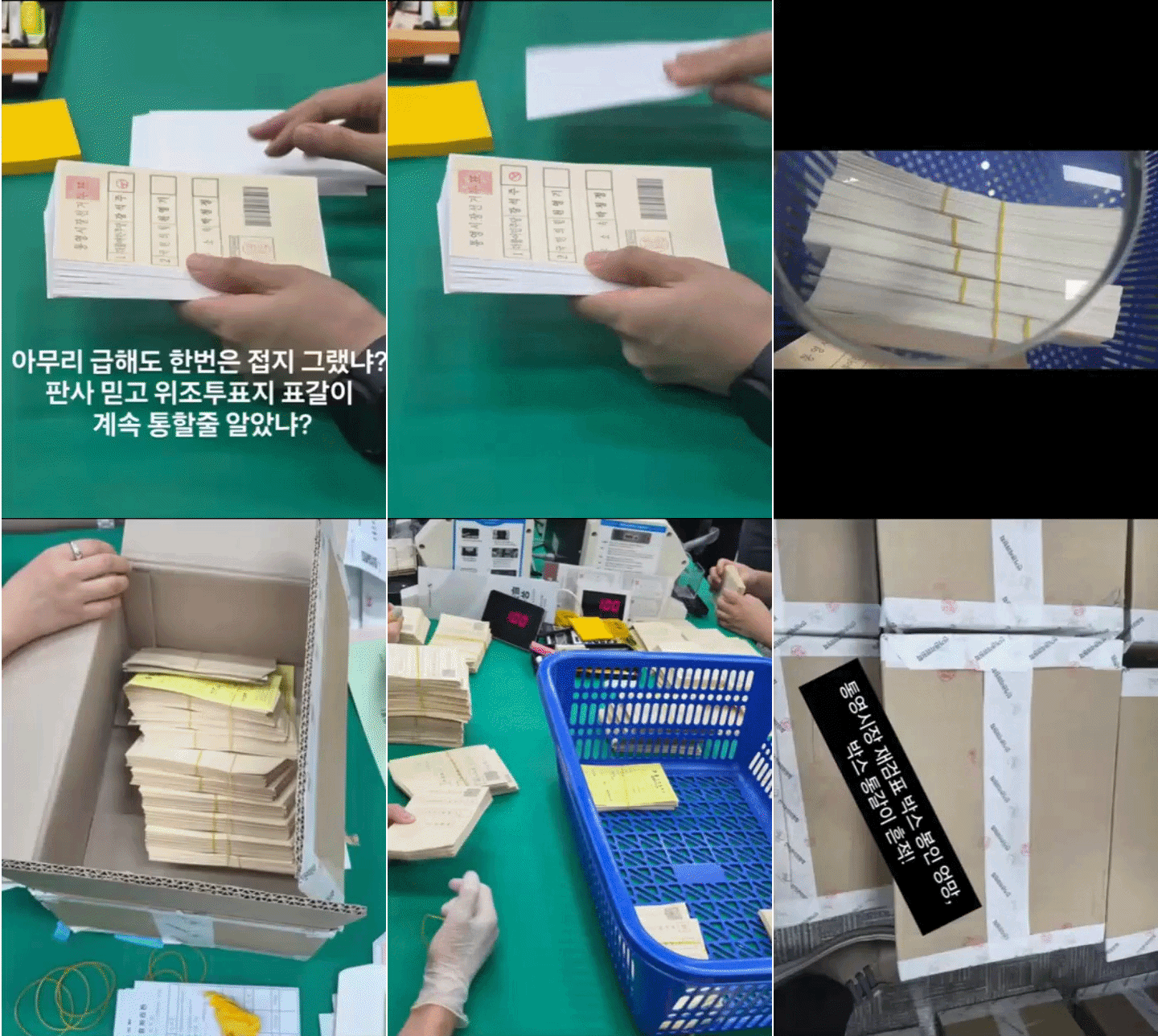 “Ignoring crisp ballots and damaged seals”… Tongyeong mayoral recount concludes with ‘no change in outcome,’ leaving suspicions and public outrage behind
Suspected counterfeit ballots discovered in Tongyeong [GIF from social media of Representative Hwang Kyo-ahn / Attorney Park Joo-hyun]During a recount of the Tongyeong mayoral election in South Gyeong
“Ignoring crisp ballots and damaged seals”… Tongyeong mayoral recount concludes with ‘no change in outcome,’ leaving suspicions and public outrage behind
Suspected counterfeit ballots discovered in Tongyeong [GIF from social media of Representative Hwang Kyo-ahn / Attorney Park Joo-hyun]During a recount of the Tongyeong mayoral election in South Gyeong
 President Yoon, regarding the first-instance ruling on the Public Official Election Act: “An excessive political verdict that distorts the facts… We will appeal immediately.”
The first-instance sentencing hearing for President Yoon Suk Yeol regarding violations of the Public Official Election Act is being broadcast live at Seoul Station on the 27th. [Photo=Yonhap News]Pres
President Yoon, regarding the first-instance ruling on the Public Official Election Act: “An excessive political verdict that distorts the facts… We will appeal immediately.”
The first-instance sentencing hearing for President Yoon Suk Yeol regarding violations of the Public Official Election Act is being broadcast live at Seoul Station on the 27th. [Photo=Yonhap News]Pres
 WSJ: "SK Hynix ADR Premium Is a Sign of AI Trading Overheat"
Advertisement for SK Hynix ADR listing in New York's Times Square [Reuters=Yonhap News file photo]The Wall Street Journal (WSJ) has pointed out that the price of SK Hynix’s American Depositary Recei
WSJ: "SK Hynix ADR Premium Is a Sign of AI Trading Overheat"
Advertisement for SK Hynix ADR listing in New York's Times Square [Reuters=Yonhap News file photo]The Wall Street Journal (WSJ) has pointed out that the price of SK Hynix’s American Depositary Recei
 'Godfather of Japanese Mystery Novels' Keigo Higashino Passes Away After Battle with Cancer at 68
Famous Japanese mystery novelist Keigo Higashino [AFP=Yonhap News]It has been belatedly reported that Keigo Higashino, the "godfather of Japanese mystery novels" and author of bestsellers such as "The
'Godfather of Japanese Mystery Novels' Keigo Higashino Passes Away After Battle with Cancer at 68
Famous Japanese mystery novelist Keigo Higashino [AFP=Yonhap News]It has been belatedly reported that Keigo Higashino, the "godfather of Japanese mystery novels" and author of bestsellers such as "The
 [Park Pil-kyu Security Column] To the Ignorant Trying to Clothe a Beast in Sheep's Clothing
Rep. Kim Byung-joo of the Democratic Party of Korea [Photo=Yonhap News]“The Air Force Academy doesn't teach you how to fly a plane!” “The Army, Navy, and Air Force academies are exactly the
[Park Pil-kyu Security Column] To the Ignorant Trying to Clothe a Beast in Sheep's Clothing
Rep. Kim Byung-joo of the Democratic Party of Korea [Photo=Yonhap News]“The Air Force Academy doesn't teach you how to fly a plane!” “The Army, Navy, and Air Force academies are exactly the
 [Issue Diagnosis] Two Effects of the Election Petition Review
 [Photo] Evidence of Election Fraud Flooding U.S. Media… Trump Had 2.7 Million Votes Stolen
 [Video] U.S. Semiquincentennial Air Show... 'Art in the Sky' streaks across New York
 [Editorial Cartoon] A Draconian Law That Undermines Freedom of Expression

 List
List









