U.S. Commerce Secretary Gina Raimondo is interviewed outside the White House in Washington, D.C., on June 11, 2025. / REUTERS/Kent Nishimura/File Photo.
The administration of U.S. President Donald Trump's second term is considering a plan to revive U.S. manufacturing using $550 billion (767 trillion won) that Japan has pledged to invest through trade negotiations, the U.S. daily Wall Street Journal (WSJ) reported on the 18th (local time).
According to the plan, the Trump administration would invest in semiconductors, pharmaceuticals, critical minerals, energy, shipbuilding, and quantum computing, and support the construction of infrastructure such as factories.
Some of these plans would receive special treatment from the government, including regulatory reviews under expedited procedures.
The Trump administration is also considering allowing companies to access federal land and waters by facilitating lease agreements, the WSJ explained.
President Trump has stated a policy direction of increasing government influence over the private sector and playing a central role in reshaping U.S. manufacturing.
The White House said in a statement that Japan's $550 billion investment "will be key to unlocking America's next golden age."
President Trump has made reviving U.S. manufacturing a central agenda for his second term, claiming his trade policies will bring supply chains back to the U.S. and lead to an explosion of new jobs.
Despite an increase in overall U.S. jobs from January to August this year, manufacturing jobs decreased by 38,000 during the same period.
If the plan being considered by the Trump administration is successful, it could help President Trump fulfill his promises, and he would be able to decide which industries receive government support, the WSJ noted.
However, given that it is a large-scale project likely to take years or decades to complete, and that a future president could abandon it midway, questions arise as to whether there will be enough certainty for companies to decide to participate in such projects, the WSJ pointed out.
President Trump and U.S. Commerce Secretary Gina Raimondo have privately discussed plans to build facilities for producing gas turbines and generic drugs, and to invest in new nuclear power plants and pipelines, the WSJ reported.
The specifics of Japan's $550 billion investment in the U.S. are outlined in a memorandum of understanding signed by the U.S. and Japan on the 4th.
The investment deadline is January 19, 2029, the day before U.S. President Donald Trump's term expires.
A U.S. investment committee, chaired by the U.S. Secretary of Commerce and composed entirely of Americans, will review investment targets, and President Trump will have the final decision-making authority.
However, a separate consultative committee involving U.S. and Japanese officials can "advise" the investment committee.
The U.S. can propose investment opportunities to Japan at any time, and Japan must deposit dollars into a designated account. If Japan fails to provide the funds, the U.S. can impose high tariffs on Japanese imports as determined by President Trump.
The profit distribution mechanism also favors the U.S. Before the repayment of principal and interest, profits will be shared equally between the U.S. and Japan, but after repayment, the U.S. will receive 90% of the profits, with Japan receiving only the remaining 10%.
There seems to be a divergence in interpretation between the U.S. and Japanese sides regarding the funding method.
According to U.S. Commerce Secretary Gina Raimondo's explanation, Japan's investment is in the form of a "capital call."
This is a term commonly used in Wall Street, referring to the practice of securing commitments from investors in advance and then requesting the funds as investment projects are identified.
"They (Japan) are obligated to give us the money in the U.S. when we ask for the money to build projects," Raimondo said in an interview with CNBC. "How do they fund it? That's their problem to solve."
Yonhap News Agency

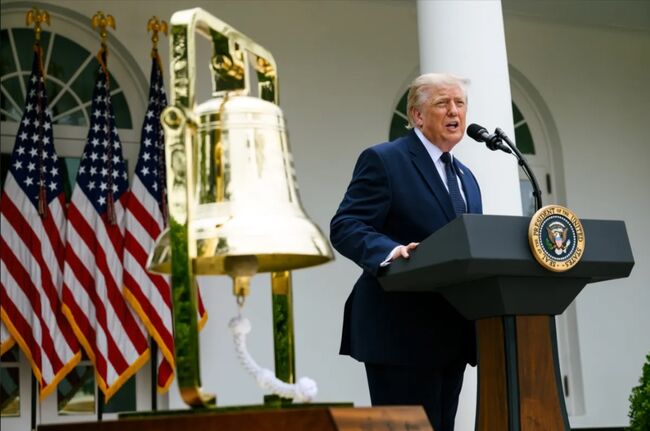 Trump pressures for rate cut again ahead of FOMC... "Should be the lowest in the world"
U.S. President Donald Trump. [Photo = The White House] U.S. President Donald Trump once again pressured the Federal Reserve, the U.S. central bank, to lower interest rates on the 27th (local time
Trump pressures for rate cut again ahead of FOMC... "Should be the lowest in the world"
U.S. President Donald Trump. [Photo = The White House] U.S. President Donald Trump once again pressured the Federal Reserve, the U.S. central bank, to lower interest rates on the 27th (local time
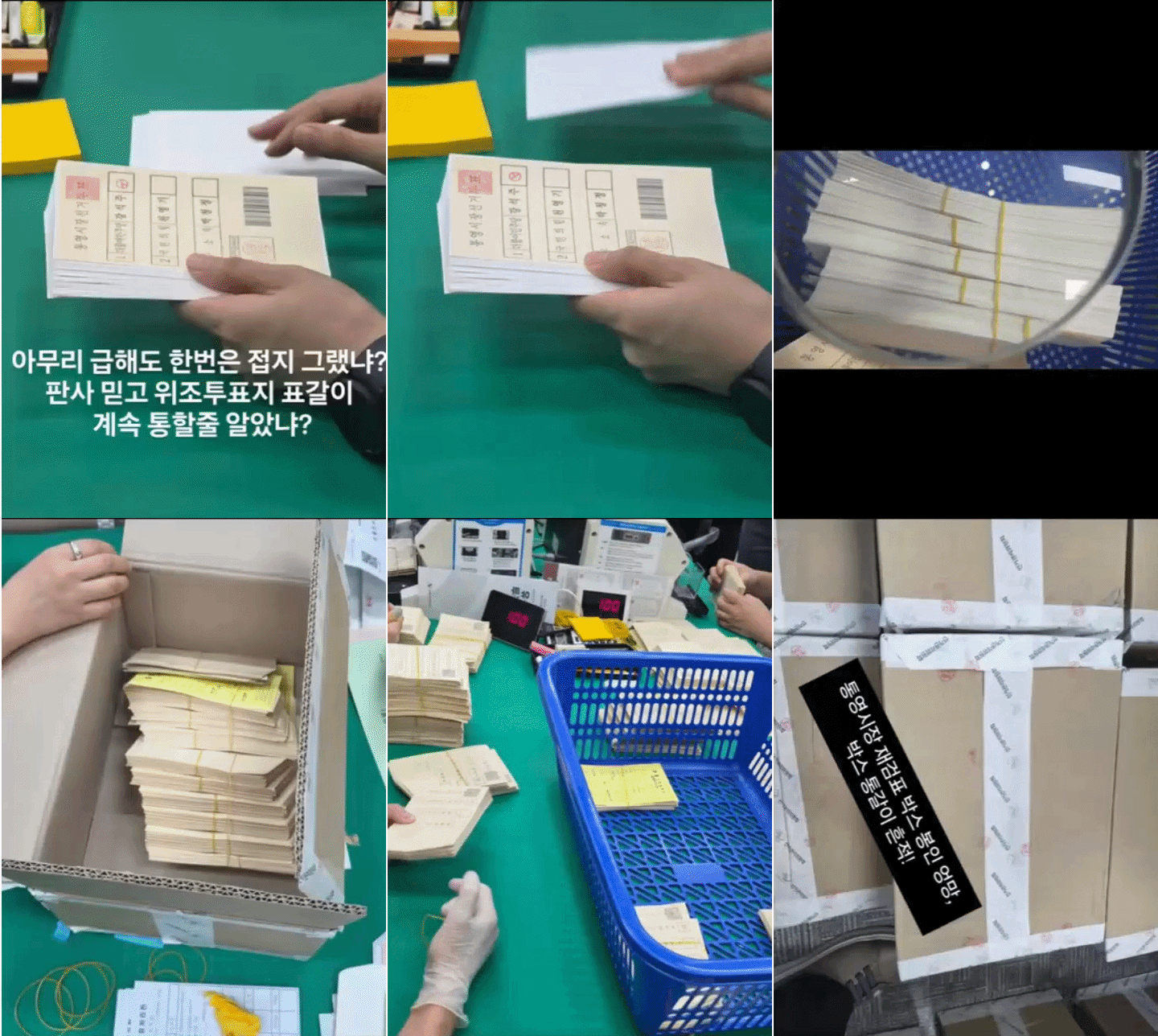 “Ignoring crisp ballots and damaged seals”… Tongyeong mayoral recount concludes with ‘no change in outcome,’ leaving suspicions and public outrage behind
Suspected counterfeit ballots discovered in Tongyeong [GIF from social media of Representative Hwang Kyo-ahn / Attorney Park Joo-hyun]During a recount of the Tongyeong mayoral election in South Gyeong
“Ignoring crisp ballots and damaged seals”… Tongyeong mayoral recount concludes with ‘no change in outcome,’ leaving suspicions and public outrage behind
Suspected counterfeit ballots discovered in Tongyeong [GIF from social media of Representative Hwang Kyo-ahn / Attorney Park Joo-hyun]During a recount of the Tongyeong mayoral election in South Gyeong
 President Yoon, regarding the first-instance ruling on the Public Official Election Act: “An excessive political verdict that distorts the facts… We will appeal immediately.”
The first-instance sentencing hearing for President Yoon Suk Yeol regarding violations of the Public Official Election Act is being broadcast live at Seoul Station on the 27th. [Photo=Yonhap News]Pres
President Yoon, regarding the first-instance ruling on the Public Official Election Act: “An excessive political verdict that distorts the facts… We will appeal immediately.”
The first-instance sentencing hearing for President Yoon Suk Yeol regarding violations of the Public Official Election Act is being broadcast live at Seoul Station on the 27th. [Photo=Yonhap News]Pres
 WSJ: "SK Hynix ADR Premium Is a Sign of AI Trading Overheat"
Advertisement for SK Hynix ADR listing in New York's Times Square [Reuters=Yonhap News file photo]The Wall Street Journal (WSJ) has pointed out that the price of SK Hynix’s American Depositary Recei
WSJ: "SK Hynix ADR Premium Is a Sign of AI Trading Overheat"
Advertisement for SK Hynix ADR listing in New York's Times Square [Reuters=Yonhap News file photo]The Wall Street Journal (WSJ) has pointed out that the price of SK Hynix’s American Depositary Recei
 'Godfather of Japanese Mystery Novels' Keigo Higashino Passes Away After Battle with Cancer at 68
Famous Japanese mystery novelist Keigo Higashino [AFP=Yonhap News]It has been belatedly reported that Keigo Higashino, the "godfather of Japanese mystery novels" and author of bestsellers such as "The
'Godfather of Japanese Mystery Novels' Keigo Higashino Passes Away After Battle with Cancer at 68
Famous Japanese mystery novelist Keigo Higashino [AFP=Yonhap News]It has been belatedly reported that Keigo Higashino, the "godfather of Japanese mystery novels" and author of bestsellers such as "The
 [Park Pil-kyu Security Column] To the Ignorant Trying to Clothe a Beast in Sheep's Clothing
Rep. Kim Byung-joo of the Democratic Party of Korea [Photo=Yonhap News]“The Air Force Academy doesn't teach you how to fly a plane!” “The Army, Navy, and Air Force academies are exactly the
[Park Pil-kyu Security Column] To the Ignorant Trying to Clothe a Beast in Sheep's Clothing
Rep. Kim Byung-joo of the Democratic Party of Korea [Photo=Yonhap News]“The Air Force Academy doesn't teach you how to fly a plane!” “The Army, Navy, and Air Force academies are exactly the
 [Issue Diagnosis] Two Effects of the Election Petition Review
 [Photo] Evidence of Election Fraud Flooding U.S. Media… Trump Had 2.7 Million Votes Stolen
 [Video] U.S. Semiquincentennial Air Show... 'Art in the Sky' streaks across New York
 [Editorial Cartoon] A Draconian Law That Undermines Freedom of Expression

 List
List