이재명 대통령이 언급한 “MSCI와 블랙록의 실체”는 단순한 수사가 아니다. 지수를 산출하는 기업과 그 지수를 추종하는 자산운용사가 결합할 때 발생하는 구조적 종속 문제를 짚고, 한국 증시의 취약한 자율성을 분석한다. <편집자 주>
 The grip of immense capital. Korea's stock market, a puppet manipulated with the Earth on a pile of dollars, symbolizing its risk of dependency. Graphic by Hankyoreh
Table of Contents
① The Invisible Hand Shaking the Stock Market
② The Industrial Dependency Structure Designed by BlackRock
③ Lee Jae-myung's Choice of Comprador Capitalism
The "reality of MSCI and BlackRock" mentioned by President Lee Jae-myung is not political rhetoric. When a company that creates an index combines with a giant asset manager that follows it, a specific country's stock market can be shaken in an instant. The reality of Korea, where foreign capital worth trillions of won repeatedly flows in and out depending on MSCI index inclusion, starkly illustrates how fragile our financial market's autonomy is.
MSCI (Morgan Stanley Capital International) was originally a subsidiary of Morgan Stanley but is now an independent company listed on the New York Stock Exchange. Its role is clear: to classify global stock markets, calculate indices, and provide them as benchmarks for global investors. Representative indices include MSCI World, MSCI Emerging Markets (EM), and MSCI ACWI (All Country World Index). Investors allocate funds based on these indices.
The problem becomes clear when looking at MSCI's shareholder composition, which reveals complexity of interests. BlackRock is MSCI's largest shareholder, and Vanguard is the second largest. The world's largest asset management companies simultaneously hold stakes in the index-calculating firm. In essence, the company that creates the index and the company that manages funds by tracking that index are effectively intertwined through a single connection.
President Lee Jae-myung's proposal to "attract foreign capital through MSCI index inclusion" might appear attractive on the surface. However, the reality is the opposite. Following a single MSCI index adjustment announcement, foreign capital can leave or flood in on a massive scale in a short period. A significant portion of this capital comes from ETFs and index funds managed by BlackRock. BlackRock is both the referee who makes the rules and the player who most extensively utilizes them.
There have been several actual cases. The stock market has significantly fluctuated merely on announcements that MSCI was considering whether to keep Korea in the emerging market index or upgrade it to a developed market index. While stock prices appeared to rise due to increased foreign buying in the short term, in the long term, rapid inflows and outflows of capital have repeatedly occurred during the rebalancing process following index changes. This reveals a structural problem where the rotation of foreign capital, rather than Korea's stock market fundamentals, dictates the market.
The reason past governments did not rush for developed market index inclusion was not solely due to being "below standard." There were significant concerns about dependency on foreign capital. It was reasoned that inclusion in an index does not immediately grant developed market status, and instead, the risk of the capital market being swayed by global giant asset managers increases.
These capital flows move strictly around the United States. After the Trump administration took office, BlackRock adjusted its ESG (Environmental, Social, Governance) evaluations to reduce the proportion of green energy. Changes in US politics were immediately reflected in global investment standards, which in turn shook corporate investment and capital flows worldwide. BlackRock possesses a powerful characteristic, moving in line with policy and hegemony beyond financial capital.
Within this structure, it is difficult for the Korean stock market to move autonomously. BlackRock and Vanguard manage assets worth trillions of won based on global fund capital. Companies like Samsung Electronics and Hyundai Motor, in which they hold stakes of 5-8%, maintain outwardly independent management, but they are inevitably influenced by the movements of these asset managers in terms of stock prices and capital raising.
The "expanded MSCI inclusion + foreign capital attraction" strategy promoted by the Lee Jae-myung administration might be a card that can package investment performance in the short term. However, its reality could be the incorporation of the Korean market into the periphery of the global capital order. Understanding the relationship between MSCI and BlackRock makes it impossible to continue ignoring the dependency risks lurking behind stock price increases.
▶ Major Korean Companies' Shareholdings by Global Asset Management Firms
Samsung Electronics: BlackRock approx. 5.07%, Vanguard approx. 3-4%
Hyundai Motor: BlackRock approx. 8%, Vanguard approx. 3%
SK Hynix: BlackRock approx. 5%, Vanguard approx. 3%
Naver, Kakao, Four Major Financial Holdings: BlackRock over 5%, Vanguard around 2%
#MSCI #BlackRock #Vanguard #ForeignCapital #KoreanStockMarket #EconomicSovereignty #LeeJaeMyung #SamsungElectronics #HyundaiMotor #InvestmentAttraction

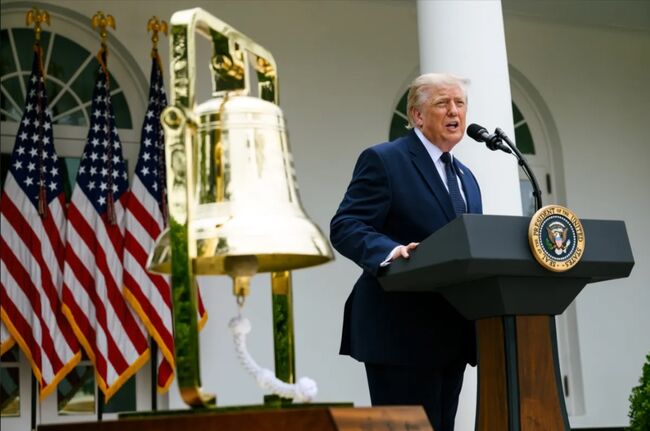 Trump pressures for rate cut again ahead of FOMC... "Should be the lowest in the world"
U.S. President Donald Trump. [Photo = The White House] U.S. President Donald Trump once again pressured the Federal Reserve, the U.S. central bank, to lower interest rates on the 27th (local time
Trump pressures for rate cut again ahead of FOMC... "Should be the lowest in the world"
U.S. President Donald Trump. [Photo = The White House] U.S. President Donald Trump once again pressured the Federal Reserve, the U.S. central bank, to lower interest rates on the 27th (local time
 “Ignoring crisp ballots and damaged seals”… Tongyeong mayoral recount concludes with ‘no change in outcome,’ leaving suspicions and public outrage behind
Suspected counterfeit ballots discovered in Tongyeong [GIF from social media of Representative Hwang Kyo-ahn / Attorney Park Joo-hyun]During a recount of the Tongyeong mayoral election in South Gyeong
“Ignoring crisp ballots and damaged seals”… Tongyeong mayoral recount concludes with ‘no change in outcome,’ leaving suspicions and public outrage behind
Suspected counterfeit ballots discovered in Tongyeong [GIF from social media of Representative Hwang Kyo-ahn / Attorney Park Joo-hyun]During a recount of the Tongyeong mayoral election in South Gyeong
 President Yoon, regarding the first-instance ruling on the Public Official Election Act: “An excessive political verdict that distorts the facts… We will appeal immediately.”
The first-instance sentencing hearing for President Yoon Suk Yeol regarding violations of the Public Official Election Act is being broadcast live at Seoul Station on the 27th. [Photo=Yonhap News]Pres
President Yoon, regarding the first-instance ruling on the Public Official Election Act: “An excessive political verdict that distorts the facts… We will appeal immediately.”
The first-instance sentencing hearing for President Yoon Suk Yeol regarding violations of the Public Official Election Act is being broadcast live at Seoul Station on the 27th. [Photo=Yonhap News]Pres
 WSJ: "SK Hynix ADR Premium Is a Sign of AI Trading Overheat"
Advertisement for SK Hynix ADR listing in New York's Times Square [Reuters=Yonhap News file photo]The Wall Street Journal (WSJ) has pointed out that the price of SK Hynix’s American Depositary Recei
WSJ: "SK Hynix ADR Premium Is a Sign of AI Trading Overheat"
Advertisement for SK Hynix ADR listing in New York's Times Square [Reuters=Yonhap News file photo]The Wall Street Journal (WSJ) has pointed out that the price of SK Hynix’s American Depositary Recei
 'Godfather of Japanese Mystery Novels' Keigo Higashino Passes Away After Battle with Cancer at 68
Famous Japanese mystery novelist Keigo Higashino [AFP=Yonhap News]It has been belatedly reported that Keigo Higashino, the "godfather of Japanese mystery novels" and author of bestsellers such as "The
'Godfather of Japanese Mystery Novels' Keigo Higashino Passes Away After Battle with Cancer at 68
Famous Japanese mystery novelist Keigo Higashino [AFP=Yonhap News]It has been belatedly reported that Keigo Higashino, the "godfather of Japanese mystery novels" and author of bestsellers such as "The
 [Park Pil-kyu Security Column] To the Ignorant Trying to Clothe a Beast in Sheep's Clothing
Rep. Kim Byung-joo of the Democratic Party of Korea [Photo=Yonhap News]“The Air Force Academy doesn't teach you how to fly a plane!” “The Army, Navy, and Air Force academies are exactly the
[Park Pil-kyu Security Column] To the Ignorant Trying to Clothe a Beast in Sheep's Clothing
Rep. Kim Byung-joo of the Democratic Party of Korea [Photo=Yonhap News]“The Air Force Academy doesn't teach you how to fly a plane!” “The Army, Navy, and Air Force academies are exactly the
 [Issue Diagnosis] Two Effects of the Election Petition Review
 [Photo] Evidence of Election Fraud Flooding U.S. Media… Trump Had 2.7 Million Votes Stolen
 [Video] U.S. Semiquincentennial Air Show... 'Art in the Sky' streaks across New York
 [Editorial Cartoon] A Draconian Law That Undermines Freedom of Expression

 List
List