- Trump fought, and Lee Jae-myung embraced capital.
- Hyundai Motor $2 billion vs. China's BYD $9.7 billion
- Korean Manufacturing Faces Risk of Becoming a Dependent Variable
본 기사는 ‘이재명의 선택, 블랙록과 MSCI’ 시리즈의 마지막으로, 트럼프 대통령의 산업 주권 전략과 대비되는 이재명 정권의 선택을 분석한다. 글로벌 자본의 중국 편향 투자, 현대차와 BYD 투자 규모 비교를 통해 한국 제조업이 매판자본주의 구조에 편입되는 위험을 짚는다. <편집자 주>
 Trump's path to industrial sovereignty, Lee Jae-myung's embrace of global capital. Korea at an industrial crossroads. Hanmiilbo Graphics
Table of Contents
① The Invisible Hand Shaking the Stock Market
② The Industrial Dependence Structure Designed by BlackRock
③ Lee Jae-myung's Choice of Comprador Capitalism
Criticism has arisen that the economy has been ruined within 100 days of taking office. Now, it seems to be heading beyond "ruin" to an unrecoverable "total collapse."
The path chosen by the Lee Jae-myung administration is not a Trump-style industrial sovereignty strategy, but a path of entrusting economic sovereignty to global capital such as BlackRock and MSCI. This is a revival of comprador capitalism and a choice to trap Korean manufacturing in a dependence structure centered on China.
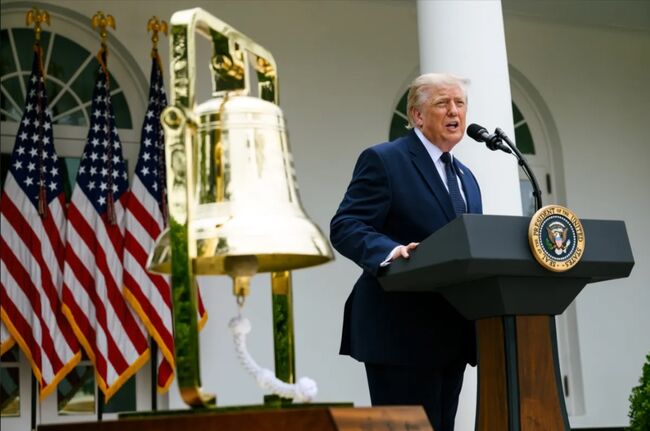
President Trump constantly confronted global capital. He used tariffs to shake up multinational corporations' low-cost outsourcing models and sought to restore national industrial autonomy through energy independence, including nuclear power.
He dismissed ESG investment, focused on wind and solar power, as "garbage" and pressured American manufacturing to return to the mainland with policies that promoted both fossil fuels and nuclear power. This was not mere rhetoric but a course of action that combined investment strategy with national strategy.
In contrast, the Lee Jae-myung administration rejected the path of industrial sovereignty, similar to Trump's. Instead, they joined hands with global capital such as BlackRock and MSCI. While this might be packaged as an achievement of "attracting foreign capital" on the surface, the actual structure is no different from pushing the Korean economy down the path of comprador capitalism.
Let's look at the actual investment amounts. For Hyundai Motor, BlackRock and Vanguard combined hold approximately $2 billion (about 2.8 trillion won). However, a completely different picture unfolds for leading Chinese electric vehicle and battery companies. BYD: approximately $9.7 billion (about 13 trillion won), NIO: approximately $2 billion (about 2.7 trillion won), XPeng: approximately $700 million (about 900 billion won). The total for these three companies is about $12.4 billion, or 16 trillion won.
In other words, the amount invested by global capital in the three Chinese electric vehicle companies is about six times the investment in Hyundai Motor. This investment bias reveals the order that global capital desires.
It is not about fostering Korea as an independent competitor, but about integrating it as a dependent variable in the Chinese manufacturing-centric supply chain. Within this order designed by capital, Korean manufacturing risks being relegated to a subcontracting structure for China, rather than developing independent competitiveness.
The recent incident where the MOU for simplifying the supply of Korean-US shipbuilding equipment was abruptly postponed just before signing is particularly significant.
The timing coincided with the Lee Jae-myung administration's major announcement of investment MOUs with BlackRock for AI and renewable energy. While the explanation on the surface was "need for further discussion," it is interpreted in reality as a signal of explicit discomfort from the Trump administration.
Trump's core strategy is to promote the revival of manufacturing and shipbuilding industries within the United States. He appears uncomfortable with Korea joining hands with global capital, which he sees as an adversary.
The path chosen by the Lee Jae-myung administration is not simply about attracting foreign capital. It is a choice to integrate Korean manufacturing into a subordinate structure within the global capital order centered on China. Trump fought against global capital, while Lee Jae-myung embraced it. The outcome is predictable: Korea's economy may lose its sovereignty and fall into an unrecoverable abyss.
#LeeJaeMyung #MSCI #BlackRock #Vanguard #CompradorCapitalism #HyundaiMotor #BYD #NIO #XPeng #EconomicSovereignty
- 관련기사
-
What do you think of this article?

 Trump pressures for rate cut again ahead of FOMC... "Should be the lowest in the world"
U.S. President Donald Trump. [Photo = The White House] U.S. President Donald Trump once again pressured the Federal Reserve, the U.S. central bank, to lower interest rates on the 27th (local time
Trump pressures for rate cut again ahead of FOMC... "Should be the lowest in the world"
U.S. President Donald Trump. [Photo = The White House] U.S. President Donald Trump once again pressured the Federal Reserve, the U.S. central bank, to lower interest rates on the 27th (local time
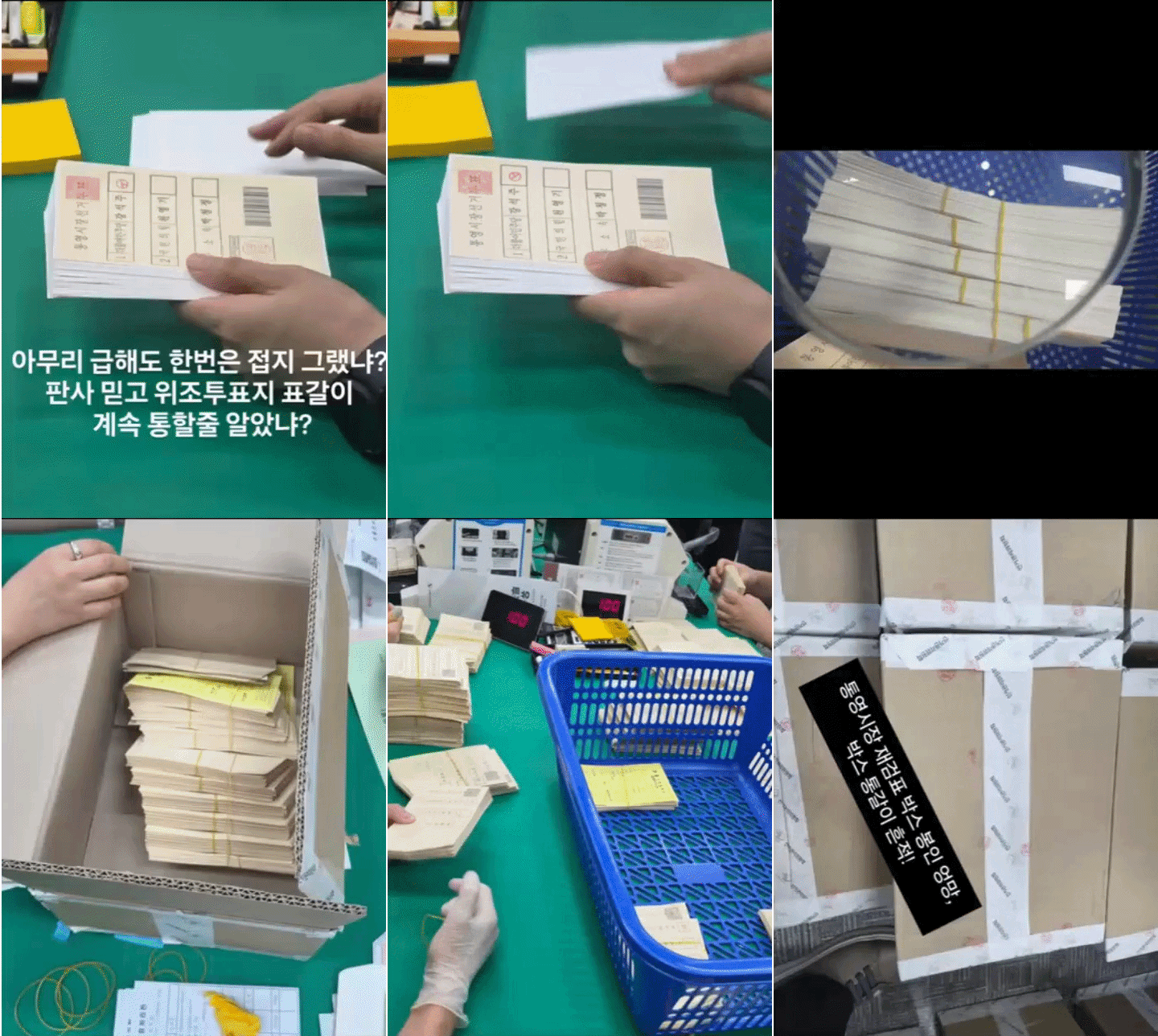 “Ignoring crisp ballots and damaged seals”… Tongyeong mayoral recount concludes with ‘no change in outcome,’ leaving suspicions and public outrage behind
Suspected counterfeit ballots discovered in Tongyeong [GIF from social media of Representative Hwang Kyo-ahn / Attorney Park Joo-hyun]During a recount of the Tongyeong mayoral election in South Gyeong
“Ignoring crisp ballots and damaged seals”… Tongyeong mayoral recount concludes with ‘no change in outcome,’ leaving suspicions and public outrage behind
Suspected counterfeit ballots discovered in Tongyeong [GIF from social media of Representative Hwang Kyo-ahn / Attorney Park Joo-hyun]During a recount of the Tongyeong mayoral election in South Gyeong
 President Yoon, regarding the first-instance ruling on the Public Official Election Act: “An excessive political verdict that distorts the facts… We will appeal immediately.”
The first-instance sentencing hearing for President Yoon Suk Yeol regarding violations of the Public Official Election Act is being broadcast live at Seoul Station on the 27th. [Photo=Yonhap News]Pres
President Yoon, regarding the first-instance ruling on the Public Official Election Act: “An excessive political verdict that distorts the facts… We will appeal immediately.”
The first-instance sentencing hearing for President Yoon Suk Yeol regarding violations of the Public Official Election Act is being broadcast live at Seoul Station on the 27th. [Photo=Yonhap News]Pres
 WSJ: "SK Hynix ADR Premium Is a Sign of AI Trading Overheat"
Advertisement for SK Hynix ADR listing in New York's Times Square [Reuters=Yonhap News file photo]The Wall Street Journal (WSJ) has pointed out that the price of SK Hynix’s American Depositary Recei
WSJ: "SK Hynix ADR Premium Is a Sign of AI Trading Overheat"
Advertisement for SK Hynix ADR listing in New York's Times Square [Reuters=Yonhap News file photo]The Wall Street Journal (WSJ) has pointed out that the price of SK Hynix’s American Depositary Recei
 'Godfather of Japanese Mystery Novels' Keigo Higashino Passes Away After Battle with Cancer at 68
Famous Japanese mystery novelist Keigo Higashino [AFP=Yonhap News]It has been belatedly reported that Keigo Higashino, the "godfather of Japanese mystery novels" and author of bestsellers such as "The
'Godfather of Japanese Mystery Novels' Keigo Higashino Passes Away After Battle with Cancer at 68
Famous Japanese mystery novelist Keigo Higashino [AFP=Yonhap News]It has been belatedly reported that Keigo Higashino, the "godfather of Japanese mystery novels" and author of bestsellers such as "The
 [Park Pil-kyu Security Column] To the Ignorant Trying to Clothe a Beast in Sheep's Clothing
Rep. Kim Byung-joo of the Democratic Party of Korea [Photo=Yonhap News]“The Air Force Academy doesn't teach you how to fly a plane!” “The Army, Navy, and Air Force academies are exactly the
[Park Pil-kyu Security Column] To the Ignorant Trying to Clothe a Beast in Sheep's Clothing
Rep. Kim Byung-joo of the Democratic Party of Korea [Photo=Yonhap News]“The Air Force Academy doesn't teach you how to fly a plane!” “The Army, Navy, and Air Force academies are exactly the
 [Issue Diagnosis] Two Effects of the Election Petition Review
 [Photo] Evidence of Election Fraud Flooding U.S. Media… Trump Had 2.7 Million Votes Stolen
 [Video] U.S. Semiquincentennial Air Show... 'Art in the Sky' streaks across New York
 [Editorial Cartoon] A Draconian Law That Undermines Freedom of Expression

 List
List