Oh Jeong-geun, Director of the Free Market Research Institute and President of the Korea Financial ICT Convergence Society The tariff negotiations between South Korea and the United States are at an impasse. It appears that a solution has not been found regarding the US demand for a $350 billion cash deposit. South Korea's foreign exchange reserves are only $422 billion (as of the end of the third quarter), meaning that if $350 billion were deposited, only $72 billion would remain. On the other hand, foreign debt stood at $735.6 billion as of the end of the second quarter. Of this, $167.1 billion is short-term foreign debt due within one year. There are also parts of long-term foreign debt that mature within a year, which, when added to short-term foreign debt, are estimated to be around $300 billion in liquid foreign debt. It is an international norm to always be prepared for this amount.
Imports amount to $631.8 billion (based on South Korean customs clearance in 2024). The International Monetary Fund (IMF) recommends maintaining foreign exchange reserves equivalent to 25% of imports for smooth current transactions. Foreign investors have also invested $743.2 billion in the South Korean stock market (as of October 10th). This amount is susceptible to significant outflow at any time of crisis concerns. In other words, current foreign exchange reserves are insufficient, even without the $350 billion demand.
Under these circumstances, if South Korea were to pay the $350 billion demanded by the US, it would immediately face a foreign exchange shortage and directly enter a currency crisis. This was precisely the reason for the foreign exchange crisis that occurred at the end of 1997. The subsequent calamities, such as massive unemployment, and the distressed sale of valuable South Korean assets at bargain prices, are all well-known to every Korean.
To prevent this, the US needs to provide South Korea with a permanent, unlimited currency swap, similar to what it has with Japan. Reports indicate that the US understands these circumstances to some extent through various negotiations.
The only countries with which the US has established permanent unlimited currency swaps are the European Union, the UK, Switzerland, Canada, and Japan. This is essentially a currency alliance where these countries can access unlimited US dollars whenever needed. Therefore, the US does not readily include nations in such currency alliances unless they are highly trusted.
However, South Korea is now requesting to be included in the US's currency alliance in exchange for providing $350 billion. If so, South Korea must naturally demonstrate itself as a reliable ally that the US can trust under any circumstances.
The problem is that the Trump administration does not appear to have that level of trust in the Lee Jae-myung administration. The lackluster airport reception during President Lee's visit to the US, the lack of a State Guesthouse assignment, and the absence of any joint statement or press conference with President Trump afterward, let alone Trump's farewell, hinted at the state of the South Korea-US presidential relationship.
The subsequent failure of a South Korea-US presidential summit during President Lee's attendance at the UN General Assembly, and his absence from President Trump's dinner, further fueled concerns that diplomacy between the two countries, especially at the presidential level, would be difficult if things continued in this manner.
Amidst the heightened US-China rivalry, the nomination of former Minister Kang, who advocated for the "3 No's" policy during the Moon administration, as the ambassador to the US has likely caused the White House to once again question the South Korea-US relationship. The "3 No's" policy declared a prohibition on the additional deployment of the Terminal High Altitude Area Defense (THAAD) system, refusal to join the US missile defense system, and a ban on a South Korea-US-Japan military alliance. These policies contain significant elements that conflict with the US's China policy.
China has been pressuring the South Korean government with demands for the implementation of the "3 No's" policy. However, the Yoon Suk-yeol administration, which has stated its intention to normalize THAAD deployment, has firmly maintained its principle that THAAD deployment is a matter of military sovereignty and not subject to Chinese interference, thereby confronting China.
This strained relationship between South Korea and the US has led to uncertainty regarding a South Korea-US presidential summit, with the Asia-Pacific Economic Cooperation (APEC) summit scheduled for October 31st to November 1st in Gyeongju, about twenty days away. President Lee Jae-myung's "pragmatic diplomacy" is now facing a critical test.
Although South Korea is hosting APEC for the first time in 20 years since the 2005 Busan APEC, the uncertainty surrounding the South Korea-US presidential summit, despite urgent issues like the South Korea-US tariff negotiations, is leading to criticisms that a rare diplomatic opportunity is being missed, revealing the limitations of "Lee Jae-myung's diplomacy."
Before attending the APEC summit opening on the 31st, US President Donald Trump will visit Japan first. He has confirmed a three-day visit to Japan starting on the 27th, even before the successor to Prime Minister Abe Shigeru, who has decided to step down, is finalized. He sent a message of trust to Japan by stating he would hold summit talks with whoever becomes the next prime minister, including Sanae Takaichi, who was elected as the Liberal Democratic Party leader. Takaichi is known as "Abenomics' female successor." The anecdote of former Prime Minister Abe visiting then-President-elect Trump's residence with golf clubs to congratulate him and playing a round at Camp David is well-known.
Based on this trust between the US and Japan, Abe's "Three Arrows Policy" was an attempt to revive the Japanese economy from its long-term slump through Japan's version of quantitative easing and significant yen depreciation, "with the understanding of the US." It is understandable why Trump would show trust in Takaichi, who is called "Abenomics' female successor" even though she has not yet become Prime Minister.
In contrast, his schedule for visiting South Korea remains uncertain. Currently, he is known to arrive in Seoul on the morning of the 29th and depart that evening. It is reported that he will only make a brief appearance at a business networking event associated with APEC, and will not attend the main summit. The "short one-night, two-day stay" may remain a hope of the South Korean government.
This could be a pressure tactic by Trump on South Korea. Some express concern that if South Korea's $350 billion investment plan in the US is not concretized, the summit may be a mere perfunctory meeting, or in the worst-case scenario, the meeting between the leaders itself may be canceled.
President Trump's interest seems to be focused on a US-China summit or a meeting with North Korean leader Kim Jong Un during APEC, rather than a summit with President Lee. There are concerns that President Lee is being effectively pushed to the periphery of the diplomatic stage.
Despite the upcoming APEC summit, a valuable diplomatic opportunity, if the South Korea-US tariff negotiations, including the potential provision of $350 billion to the US which could trigger a foreign exchange crisis in South Korea, are not smoothly resolved, South Korea faces the risk of irreversible damage, not only in terms of diplomacy and security but also economically. High tariffs on South Korean exports will undoubtedly have a significant impact on the South Korean economy, which relies heavily on exports.
First and foremost, restoring trust between South Korea and the US is paramount. The last golden time is approaching to demonstrate concrete actions for restoring trust between the two nations, dispelling concerns of pro-North Korea and pro-China tendencies within the Lee Jae-myung administration, which the US appears to harbor.
Considering the ongoing MASGA project between South Korea and the US, which involves the construction and repair of US warships with extensive US military secrets, is it even possible without strong trust between the two countries? It is time to focus all national efforts to ensure that the South Korea-US tariff negotiations, based on restored trust, are resolved in a direction that does not lead to a crisis for the South Korean economy.
We cannot rely solely on ongoing ministerial-level talks for such a critical issue that concerns the very survival of the South Korean economy. Problems must be resolved based on trust between leaders. Just as in personal relationships, trust must be the foundation of relations between nations, even more so.
The recent provision of currency swaps by the US to Argentina, which elected a right-wing president, carries a significant message. We must reflect on the meaning that President Trump will spare no support for countries that can reliably build an alliance with the US in a situation where the international geopolitical order is being reshaped.
Oh Jeong-geun, Director of the Free Market Research Institute and President of the Korea Financial ICT Convergence Society

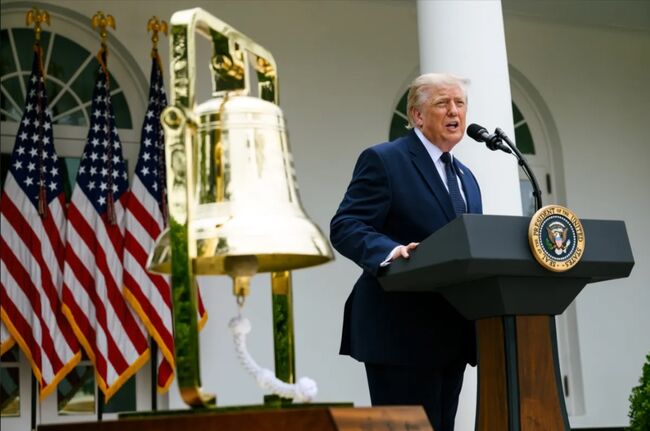 Trump pressures for rate cut again ahead of FOMC... "Should be the lowest in the world"
U.S. President Donald Trump. [Photo = The White House] U.S. President Donald Trump once again pressured the Federal Reserve, the U.S. central bank, to lower interest rates on the 27th (local time
Trump pressures for rate cut again ahead of FOMC... "Should be the lowest in the world"
U.S. President Donald Trump. [Photo = The White House] U.S. President Donald Trump once again pressured the Federal Reserve, the U.S. central bank, to lower interest rates on the 27th (local time
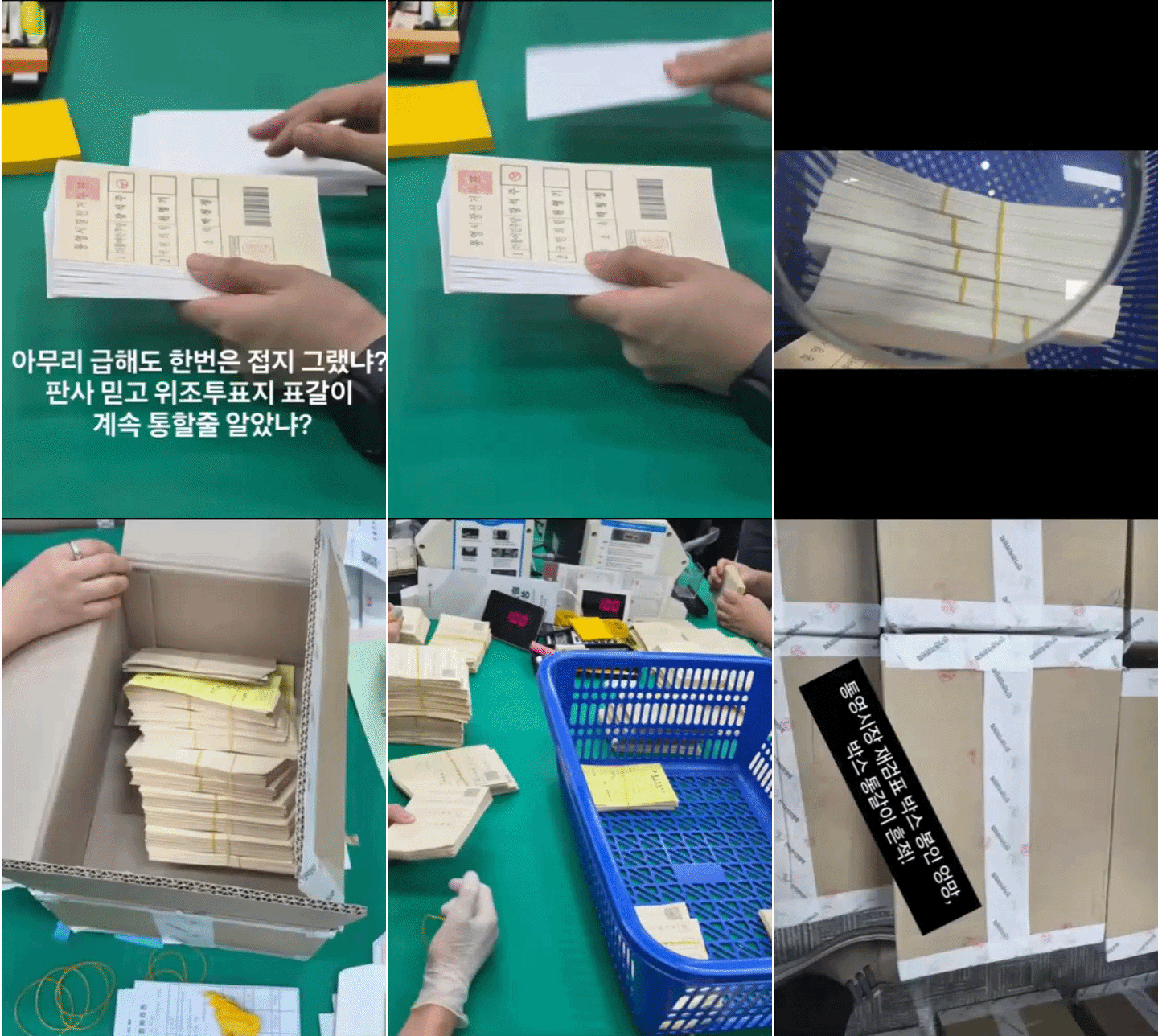 “Ignoring crisp ballots and damaged seals”… Tongyeong mayoral recount concludes with ‘no change in outcome,’ leaving suspicions and public outrage behind
Suspected counterfeit ballots discovered in Tongyeong [GIF from social media of Representative Hwang Kyo-ahn / Attorney Park Joo-hyun]During a recount of the Tongyeong mayoral election in South Gyeong
“Ignoring crisp ballots and damaged seals”… Tongyeong mayoral recount concludes with ‘no change in outcome,’ leaving suspicions and public outrage behind
Suspected counterfeit ballots discovered in Tongyeong [GIF from social media of Representative Hwang Kyo-ahn / Attorney Park Joo-hyun]During a recount of the Tongyeong mayoral election in South Gyeong
 President Yoon, regarding the first-instance ruling on the Public Official Election Act: “An excessive political verdict that distorts the facts… We will appeal immediately.”
The first-instance sentencing hearing for President Yoon Suk Yeol regarding violations of the Public Official Election Act is being broadcast live at Seoul Station on the 27th. [Photo=Yonhap News]Pres
President Yoon, regarding the first-instance ruling on the Public Official Election Act: “An excessive political verdict that distorts the facts… We will appeal immediately.”
The first-instance sentencing hearing for President Yoon Suk Yeol regarding violations of the Public Official Election Act is being broadcast live at Seoul Station on the 27th. [Photo=Yonhap News]Pres
 WSJ: "SK Hynix ADR Premium Is a Sign of AI Trading Overheat"
Advertisement for SK Hynix ADR listing in New York's Times Square [Reuters=Yonhap News file photo]The Wall Street Journal (WSJ) has pointed out that the price of SK Hynix’s American Depositary Recei
WSJ: "SK Hynix ADR Premium Is a Sign of AI Trading Overheat"
Advertisement for SK Hynix ADR listing in New York's Times Square [Reuters=Yonhap News file photo]The Wall Street Journal (WSJ) has pointed out that the price of SK Hynix’s American Depositary Recei
 'Godfather of Japanese Mystery Novels' Keigo Higashino Passes Away After Battle with Cancer at 68
Famous Japanese mystery novelist Keigo Higashino [AFP=Yonhap News]It has been belatedly reported that Keigo Higashino, the "godfather of Japanese mystery novels" and author of bestsellers such as "The
'Godfather of Japanese Mystery Novels' Keigo Higashino Passes Away After Battle with Cancer at 68
Famous Japanese mystery novelist Keigo Higashino [AFP=Yonhap News]It has been belatedly reported that Keigo Higashino, the "godfather of Japanese mystery novels" and author of bestsellers such as "The
 [Park Pil-kyu Security Column] To the Ignorant Trying to Clothe a Beast in Sheep's Clothing
Rep. Kim Byung-joo of the Democratic Party of Korea [Photo=Yonhap News]“The Air Force Academy doesn't teach you how to fly a plane!” “The Army, Navy, and Air Force academies are exactly the
[Park Pil-kyu Security Column] To the Ignorant Trying to Clothe a Beast in Sheep's Clothing
Rep. Kim Byung-joo of the Democratic Party of Korea [Photo=Yonhap News]“The Air Force Academy doesn't teach you how to fly a plane!” “The Army, Navy, and Air Force academies are exactly the
 [Issue Diagnosis] Two Effects of the Election Petition Review
 [Photo] Evidence of Election Fraud Flooding U.S. Media… Trump Had 2.7 Million Votes Stolen
 [Video] U.S. Semiquincentennial Air Show... 'Art in the Sky' streaks across New York
 [Editorial Cartoon] A Draconian Law That Undermines Freedom of Expression

 List
List