특검은 본래 검찰의 남용을 견제하기 위한 예외적 장치였다. 그러나 2025년 현재, 대한민국은 세 개의 특검이 동시에 작동하고 있다. 김건희 특검, 내란 특검, 채상병 특검이 모두 인권침해 논란 속에 병행되면서, 제도가 법의 이름으로 인간을 심문하는 구조로 변하고 있다. 본 기획은 세 특검의 실체를 제도·헌법적 관점에서 재구성하고, ‘법의 폭력’이라는 새로운 문제의식을 제시한다. <편집자 주>
 At the end of a corridor facing three closed doors, a cold blade lies atop the Constitution and the Penal Code. In the silence of those unopened doors, the law questions its own definition of justice. Graphic by Hanmi Ilbo
South Korea is currently the only country where three special counsel investigations are operating simultaneously. As the Kim Keon-hee special counsel, the insurrection special counsel, and the Marine Corps Cpl. Chae special counsel conduct parallel investigations, the special counsel system—originally designed as an exceptional measure—has entered a phase of permanent routine. While the government pushes for reforms to reduce the Prosecution Service to a mere “Public Prosecution Agency,” it is simultaneously operating three separate special investigations. In the name of curbing the prosecution’s power, another form of power is being created.
The constitutional purpose of a special counsel was to guarantee the basic rights of citizens and compensate for the limitations of a prosecution service beholden to power. However, recent operations of special counsels are far from their original goal of protecting human rights. As coercive interrogations, excessive investigations, and controversies over political motives persist, "violence exercised in the name of the law" is being reproduced within the system.
The Kim Keon-hee special counsel is led by Special Prosecutor Min Joong-ki. Its official title is the "Act on the Appointment of a Special Counsel to Investigate Truths, Including State Affairs Interference and Illegal Election Intervention Related to Kim Keon-hee, Myung Tae-kyun, and Geonjin Beopsa." The scope of the investigation includes allegations of misconduct by Kim Keon-hee and her family, political interference involving Myung Tae-kyun and Geonjin Beopsa, and preferential treatment in the development of the Gongheung District in Yangpyeong.
However, the legitimacy of the investigation was questioned from its inception when a Yangpyeong County public official took his own life. His suicide note stated, "They keep pressing me even when I say I don't know." Although the National Forensic Service concluded there were "no signs of foul play," concerns regarding potential human rights violations—such as late-night interrogations and long hours of waiting—remain. Special Prosecutor Min Joong-ki stated, "There was no coercion." Yet, this case stands as a symbolic example of how a special investigation, claiming to "realize justice," failed to protect an individual’s right to life and personal dignity.
The insurrection special counsel is the most politically symbolic case. The bill is titled the "Act on the Appointment of a Special Counsel to Investigate the Truth Behind Acts of Insurrection and Treason by Former President Yoon Suk Yeol and Others." It is concurrently managing the maintenance of public prosecution for a case already indicted, while conducting supplementary investigations into allegations of treason and abuse of power.
In other words, while "insurrection" is the core of its title, the actual investigation centers on power struggles and allegations of abuse of authority during the administrative process. While insurrection implies an attempt to overthrow the state, the current investigation resembles a probe into administrative overreach. Nevertheless, the special counsel’s retention of the term "insurrection" is seen as prioritizing political symbolism over legal reality.
Article 13, Paragraph 1 of the Constitution prohibits double jeopardy for the same incident. Yet, the insurrection special counsel is tasked with both maintaining an existing prosecution and conducting parallel investigations. This structure creates a collision between procedural justice and constitutional principles. When an investigative body manages both the maintenance of an indictment and new investigations simultaneously, it risks undermining the principle of checks and balances. Although special counsels are legally independent, the controversy persists precisely because that independence can become a blind spot for accountability.
The Marine Corps Cpl. Chae special counsel was launched following the 2023 death of a Marine. Its official title is the "Act on the Appointment of a Special Counsel to Investigate the Truth Regarding the Obstruction of the Investigation and Cover-up of the Deceased Marine's Case." Initially intended to clarify the circumstances of the soldier's death, the scope expanded as the investigation proceeded to cover general allegations of external pressure and cover-ups by state institutions, including the Ministry of National Defense, the Presidential Office, and the Human Rights Commission.
With a staff of over 150 and nearly 200 subjects of investigation, ranging from military generals to public officials and the bereaved family, critics argue it has "devolved into a massive, oversized investigative agency." The Ministry of Justice raised concerns about potential human rights infringements, but Special Prosecutor Lee Myung-hyun countered that the process was "in accordance with normal procedures." However, the special counsel’s logic of "necessary investigation" has consistently pushed the boundaries of human rights.
All three special counsels reveal common problems. First, controversies over human rights abuses are recurring. Second, the scope of the investigations is expanding beyond legal limits into political interpretation. Third, there are no oversight mechanisms. Since special counsels are not part of the executive branch, they are not subject to inspection by the Ministry of Justice, and the National Assembly fails to exercise meaningful ex-post supervision. Ultimately, in the name of "prosecution reform," a power has been created that is stronger and less accountable than the prosecution itself.
The government is currently pushing for a reform to transform the prosecution into a "Public Prosecution Agency," with the intent of separating investigative and prosecutorial powers to prevent abuse. Yet, by running three special counsels simultaneously, the result is the emergence of a phenomenon where a single body monopolizes the powers of investigation, indictment, and maintenance of public prosecution. This stands in direct contradiction to the reformist rationale of reducing the prosecution's power. If the prosecution was the "sword of power," the special counsel is becoming a "political sword wielding the name of justice."
The violence of the law begins with institutional numbness. The violence of the special counsel is not found in torture or arrest, but in an indifference toward procedural legitimacy. The moment the phrase "I followed the law" can cover up all controversy, the law ceases to be a tool of justice and becomes a tool of power. When a special counsel strays outside the fence of human rights guaranteed by the Constitution, the result is not the realization of justice, but the violation of human rights.
The Kim Keon-hee special counsel claimed the life of a public servant; the insurrection special counsel is shaking the balance of procedure by digging into a case already indicted; and the Marine Corps Cpl. Chae special counsel is causing systemic fatigue by turning entire state institutions into suspects. The recurring mantra in all three cases is the same: "I followed the law." However, if the law cannot protect human beings, the legitimacy of that law collapses on its own.
The contradiction of reducing the prosecution's authority while operating three separate special counsels is testing the fundamental trust in South Korea’s judicial system. The special counsel is no longer an "agent of justice" but a symbol of unchecked power. Who will watch the watchers? That question is the reality currently facing the rule of law in Korea.
#ViolenceOfTheLaw #KimKeonHeeSpecialCounsel #InsurrectionSpecialCounsel #CplChaeSpecialCounsel #HumanRightsAbuse #PublicProsecutionReform #ExcessiveSpecialCounsels #ConstitutionAndHumanRights #HanmiIlboFocus

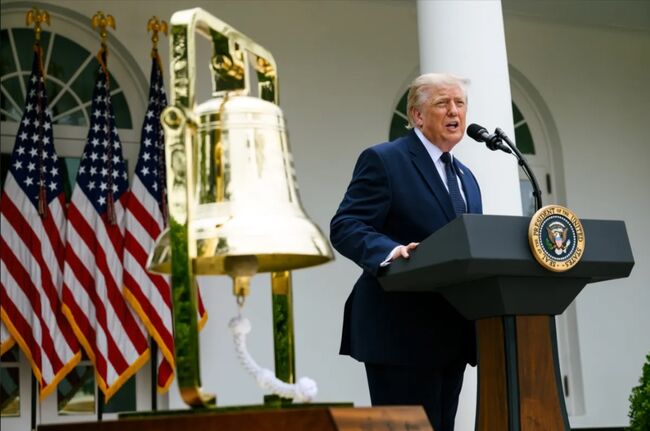 Trump pressures for rate cut again ahead of FOMC... "Should be the lowest in the world"
U.S. President Donald Trump. [Photo = The White House] U.S. President Donald Trump once again pressured the Federal Reserve, the U.S. central bank, to lower interest rates on the 27th (local time
Trump pressures for rate cut again ahead of FOMC... "Should be the lowest in the world"
U.S. President Donald Trump. [Photo = The White House] U.S. President Donald Trump once again pressured the Federal Reserve, the U.S. central bank, to lower interest rates on the 27th (local time
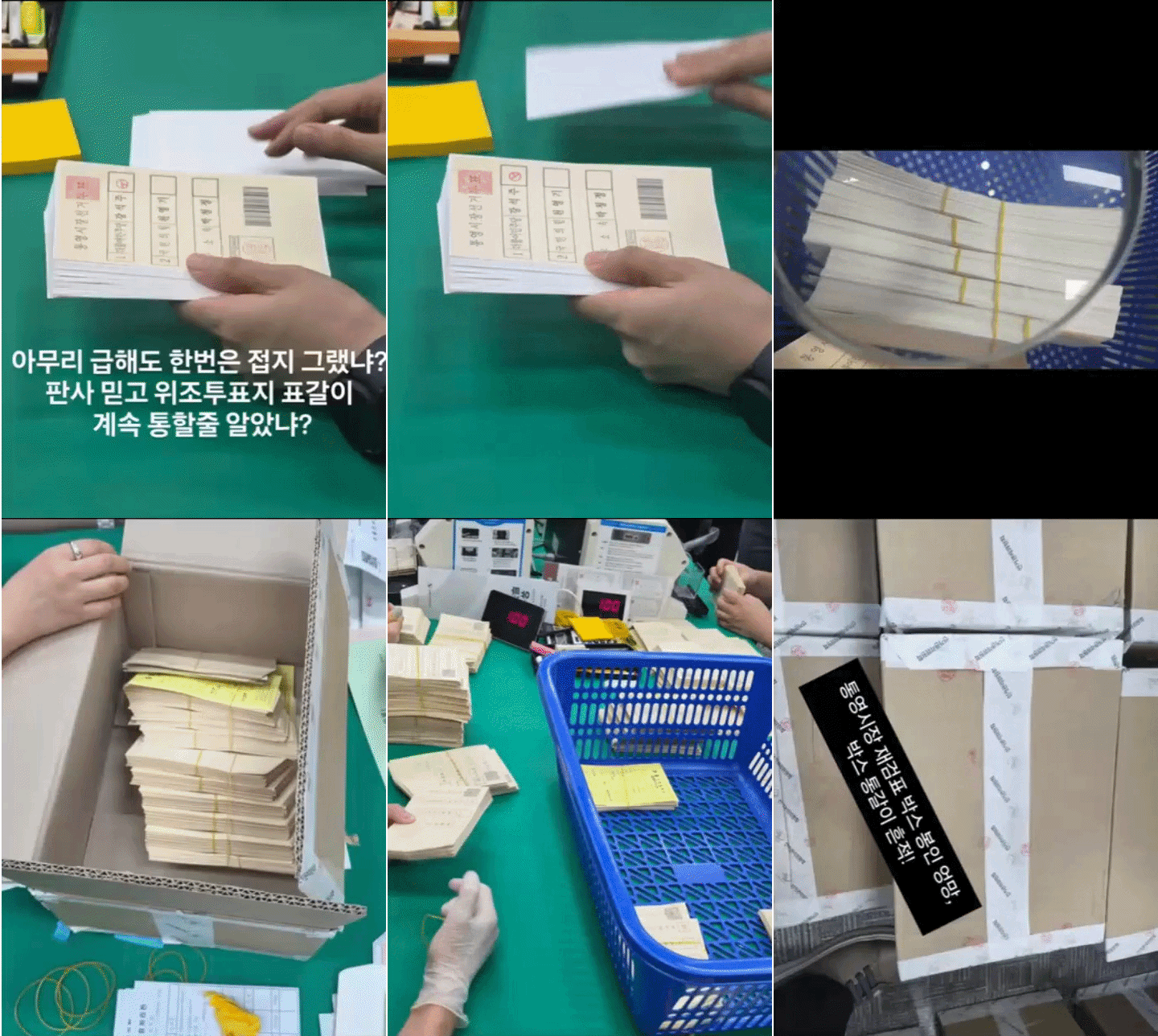 “Ignoring crisp ballots and damaged seals”… Tongyeong mayoral recount concludes with ‘no change in outcome,’ leaving suspicions and public outrage behind
Suspected counterfeit ballots discovered in Tongyeong [GIF from social media of Representative Hwang Kyo-ahn / Attorney Park Joo-hyun]During a recount of the Tongyeong mayoral election in South Gyeong
“Ignoring crisp ballots and damaged seals”… Tongyeong mayoral recount concludes with ‘no change in outcome,’ leaving suspicions and public outrage behind
Suspected counterfeit ballots discovered in Tongyeong [GIF from social media of Representative Hwang Kyo-ahn / Attorney Park Joo-hyun]During a recount of the Tongyeong mayoral election in South Gyeong
 President Yoon, regarding the first-instance ruling on the Public Official Election Act: “An excessive political verdict that distorts the facts… We will appeal immediately.”
The first-instance sentencing hearing for President Yoon Suk Yeol regarding violations of the Public Official Election Act is being broadcast live at Seoul Station on the 27th. [Photo=Yonhap News]Pres
President Yoon, regarding the first-instance ruling on the Public Official Election Act: “An excessive political verdict that distorts the facts… We will appeal immediately.”
The first-instance sentencing hearing for President Yoon Suk Yeol regarding violations of the Public Official Election Act is being broadcast live at Seoul Station on the 27th. [Photo=Yonhap News]Pres
 WSJ: "SK Hynix ADR Premium Is a Sign of AI Trading Overheat"
Advertisement for SK Hynix ADR listing in New York's Times Square [Reuters=Yonhap News file photo]The Wall Street Journal (WSJ) has pointed out that the price of SK Hynix’s American Depositary Recei
WSJ: "SK Hynix ADR Premium Is a Sign of AI Trading Overheat"
Advertisement for SK Hynix ADR listing in New York's Times Square [Reuters=Yonhap News file photo]The Wall Street Journal (WSJ) has pointed out that the price of SK Hynix’s American Depositary Recei
 'Godfather of Japanese Mystery Novels' Keigo Higashino Passes Away After Battle with Cancer at 68
Famous Japanese mystery novelist Keigo Higashino [AFP=Yonhap News]It has been belatedly reported that Keigo Higashino, the "godfather of Japanese mystery novels" and author of bestsellers such as "The
'Godfather of Japanese Mystery Novels' Keigo Higashino Passes Away After Battle with Cancer at 68
Famous Japanese mystery novelist Keigo Higashino [AFP=Yonhap News]It has been belatedly reported that Keigo Higashino, the "godfather of Japanese mystery novels" and author of bestsellers such as "The
 [Park Pil-kyu Security Column] To the Ignorant Trying to Clothe a Beast in Sheep's Clothing
Rep. Kim Byung-joo of the Democratic Party of Korea [Photo=Yonhap News]“The Air Force Academy doesn't teach you how to fly a plane!” “The Army, Navy, and Air Force academies are exactly the
[Park Pil-kyu Security Column] To the Ignorant Trying to Clothe a Beast in Sheep's Clothing
Rep. Kim Byung-joo of the Democratic Party of Korea [Photo=Yonhap News]“The Air Force Academy doesn't teach you how to fly a plane!” “The Army, Navy, and Air Force academies are exactly the
 [Issue Diagnosis] Two Effects of the Election Petition Review
 [Photo] Evidence of Election Fraud Flooding U.S. Media… Trump Had 2.7 Million Votes Stolen
 [Video] U.S. Semiquincentennial Air Show... 'Art in the Sky' streaks across New York
 [Editorial Cartoon] A Draconian Law That Undermines Freedom of Expression

 List
List









