A new study revealing that the U.S. drug supply is heavily reliant on China for key pharmaceutical ingredients is sounding alarms in Washington and the pharmaceutical industry, Newsmax reported on Thursday.
Experts warn that this vulnerability could threaten public health and national security.
An analysis published in the U.S. Pharmacopeia's latest Drug Supply Map report indicates that the components used to make the building blocks for America's most critical medicines, known as Key Starting Materials (KSMs), are overwhelmingly sourced from a tiny number of countries.
Most concerningly, 41% of these essential materials are sourced exclusively from China, with another 16% coming solely from India.
"Fifty-eight percent of KSMs used in U.S.-approved drugs are single-sourced," the report concluded.
"Such concentration poses a significant risk of disruption in the event of geopolitical conflict, export restrictions, or natural disasters," the report noted.
KSMs are necessary to synthesize Active Pharmaceutical Ingredients (APIs), which are then used to make the final drug products.
Without these materials, the production of everything from antibiotics to heart medications could be halted.
According to USP, half of all U.S.-approved APIs rely on at least one KSM produced in a single country, with China monopolizing the supply for about 680 critical drugs.
India provides sole-source KSMs for another 400 APIs, while the U.S. produces only four KSMs on its own.
This means that if Chinese or Indian suppliers impose export restrictions, the medications millions of Americans depend on daily could be at risk.
The report highlighted amoxicillin, one of the most commonly prescribed antibiotics in the U.S., as a stark example of this vulnerability.
While amoxicillin appears to be produced worldwide, its synthesis ultimately relies almost entirely on four KSMs made in China.
The most critical of these, 6-aminopenicillanic acid or 6-APA, is also used to produce several other penicillin-based antibiotics, such as ampicillin, dicloxacillin, and piperacillin.
"Any disruption, such as factory closures or export restrictions, could rapidly impact global supply chains," the authors warned, adding that "diversified API manufacturing offers little protection when all rely on the same upstream sources."
The findings echo growing bipartisan concern in Washington over America's reliance on foreign adversaries for essential goods, ranging from semiconductors to medical equipment.
Lawmakers and national security experts have repeatedly pointed to China's potential to weaponize its pharmaceutical leverage in the event of a geopolitical crisis.
The COVID-19 pandemic already exposed the fragility of global supply chains, with shortages of basic medicines and medical supplies spreading worldwide.
However, the new data from USP suggests that the structural risks have only deepened since then.
"The concentration of KSM production in just two countries, China and India, represents a systemic vulnerability that could threaten access to life-saving medicines," said Gabriela Grasa Mannino, one of the study's lead authors.
To mitigate the risks, USP researchers are urging policymakers to take immediate action to diversify the pharmaceutical supply chain.
They recommend annual vulnerability assessments, increased transparency from manufacturers, and new incentives for domestic or "friend-shoring" production, meaning manufacturing in allied nations.
"Effectively strengthening the pharmaceutical supply chain begins with the ability to understand it," the report stated. "Federal policymakers must mandate regular, data-driven assessments to identify and mitigate risks before they reach patients."
USP also suggests the federal government modernize its procurement rules to prioritize supply reliability and resilience, not just cost.
The authors also call for funding research into alternative synthetic routes and advanced manufacturing techniques that could make domestic production more economically feasible.
Experts believe technologies like continuous flow manufacturing could enable U.S. producers to create KSMs and APIs more efficiently and affordably, reducing reliance on overseas suppliers.
"Bringing more production of essential medicines and ingredients back to the U.S. and its allies requires innovative chemistry and scalable manufacturing," the report stated. "Advanced synthetic approaches can enhance our rapid response capabilities and bolster national security."
USP's Drug Supply Map paints a stark picture of a global system that has prioritized efficiency over resilience for decades.
While globalization has lowered the cost of many medications, the U.S. has been left dangerously exposed to disruptions far beyond its borders.
"Globalization has increased access to quality medicines at lower costs, but supply chains have become longer, more complex, and fragmented, leading to a lack of visibility and an increased risk of vulnerabilities," the study concluded.
As a nation that spends over $600 billion annually on prescription drugs, the report is a stark reminder that America's medicine cabinet is currently heavily dependent on the goodwill of foreign powers, particularly China, Newsmax relayed.
By U.S. NNP=Hong Seong-gu, Chief Reporter / Special Contributor NNP info@newsandpost.com

 [Statement by the Seobeokka KMA Patriots Association] ㉛ Recount the ballots openly, as the previous recount covered up election fraud
Recount of the Tongyeong mayoral election [Photo=Yonhap News]South Korea's liberal democracy is dying. The National Election Commission (NEC), which has degraded into a criminal organization through t
[Statement by the Seobeokka KMA Patriots Association] ㉛ Recount the ballots openly, as the previous recount covered up election fraud
Recount of the Tongyeong mayoral election [Photo=Yonhap News]South Korea's liberal democracy is dying. The National Election Commission (NEC), which has degraded into a criminal organization through t
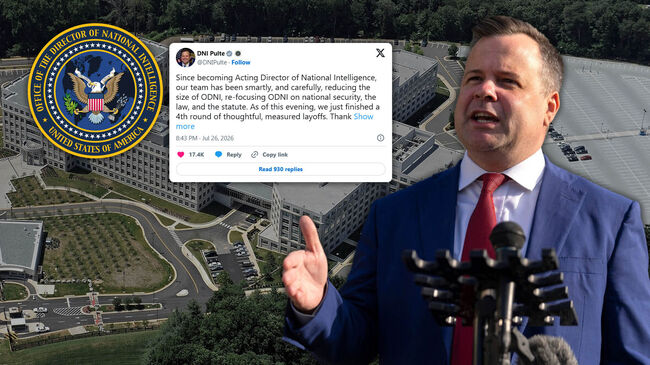 Bill Pulte to Restructure ‘Deep State’… Announces 4th Round of Layoffs at the Office of the Director of National Intelligence
Acting Director of National Intelligence Bill Pulte announced Sunday that he has carried out a fourth "deliberate and measured" reduction in personnel since taking office on June 19, as part of the Tr
Bill Pulte to Restructure ‘Deep State’… Announces 4th Round of Layoffs at the Office of the Director of National Intelligence
Acting Director of National Intelligence Bill Pulte announced Sunday that he has carried out a fourth "deliberate and measured" reduction in personnel since taking office on June 19, as part of the Tr
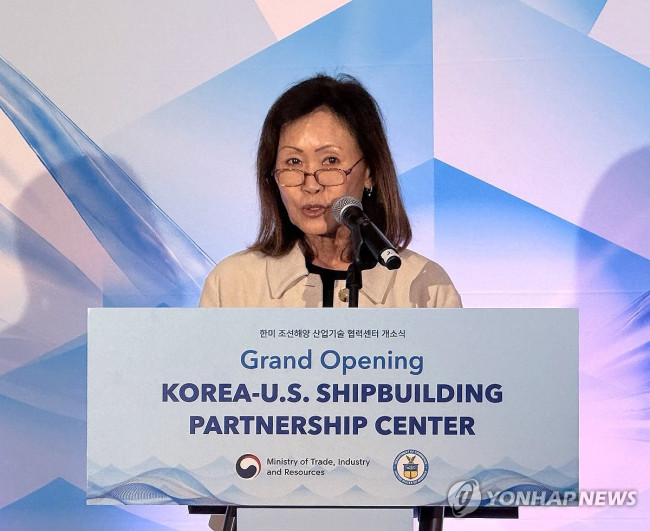 First U.S. Ambassador of Trump's Second Term to Arrive This Week… Will It Provide Momentum to Resolve Pending Issues?
U.S. Ambassador to South Korea Michelle Steel speaks at the opening ceremony of the Korea-U.S. Shipbuilding Cooperation Center held at the Mayflower Hotel in Washington, D.C., on the 23rd (local time)
First U.S. Ambassador of Trump's Second Term to Arrive This Week… Will It Provide Momentum to Resolve Pending Issues?
U.S. Ambassador to South Korea Michelle Steel speaks at the opening ceremony of the Korea-U.S. Shipbuilding Cooperation Center held at the Mayflower Hotel in Washington, D.C., on the 23rd (local time)
 President Yoon, regarding the first-instance ruling on the Public Official Election Act: “An excessive political verdict that distorts the facts… We will appeal immediately.”
The first-instance sentencing hearing for President Yoon Suk Yeol regarding violations of the Public Official Election Act is being broadcast live at Seoul Station on the 27th. [Photo=Yonhap News]Pres
President Yoon, regarding the first-instance ruling on the Public Official Election Act: “An excessive political verdict that distorts the facts… We will appeal immediately.”
The first-instance sentencing hearing for President Yoon Suk Yeol regarding violations of the Public Official Election Act is being broadcast live at Seoul Station on the 27th. [Photo=Yonhap News]Pres
 91% of Net Influx of MZ Generation Goes to Seoul Metropolitan Area… Population Migration Also Shows 'K-shaped Polarization' by Industry
[Provided by Leaders Index]Over the past four years, the MZ generation population has become increasingly concentrated in the Seoul metropolitan area and the Chungcheong region. While cities cen
91% of Net Influx of MZ Generation Goes to Seoul Metropolitan Area… Population Migration Also Shows 'K-shaped Polarization' by Industry
[Provided by Leaders Index]Over the past four years, the MZ generation population has become increasingly concentrated in the Seoul metropolitan area and the Chungcheong region. While cities cen
 'Godfather of Japanese Mystery Novels' Keigo Higashino Passes Away After Battle with Cancer at 68
Famous Japanese mystery novelist Keigo Higashino [AFP=Yonhap News]It has been belatedly reported that Keigo Higashino, the "godfather of Japanese mystery novels" and author of bestsellers such as "The
'Godfather of Japanese Mystery Novels' Keigo Higashino Passes Away After Battle with Cancer at 68
Famous Japanese mystery novelist Keigo Higashino [AFP=Yonhap News]It has been belatedly reported that Keigo Higashino, the "godfather of Japanese mystery novels" and author of bestsellers such as "The
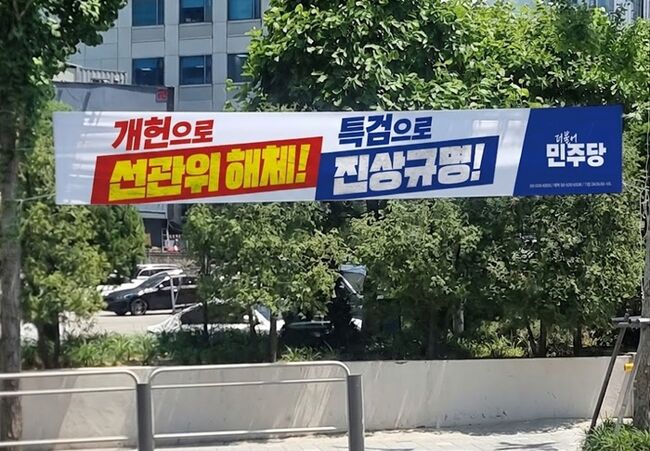 [Cho Yang-geon Column] The NEC: Facing a Fate of "Discarding the Dog After the Hunt"
Banner calling for the "dissolution of the NEC" posted by the Democratic Party. [AI-generated image]Banners calling for the "dissolution of the National Election Commission (NEC)" posted by the Democr
[Cho Yang-geon Column] The NEC: Facing a Fate of "Discarding the Dog After the Hunt"
Banner calling for the "dissolution of the NEC" posted by the Democratic Party. [AI-generated image]Banners calling for the "dissolution of the National Election Commission (NEC)" posted by the Democr
 [Photo] Evidence of Election Fraud Flooding U.S. Media… Trump Had 2.7 Million Votes Stolen
 [Video] U.S. Semiquincentennial Air Show... 'Art in the Sky' streaks across New York
 [Editorial Cartoon] A Draconian Law That Undermines Freedom of Expression

 List
List